
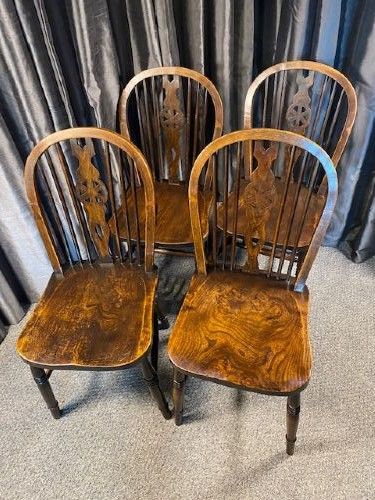
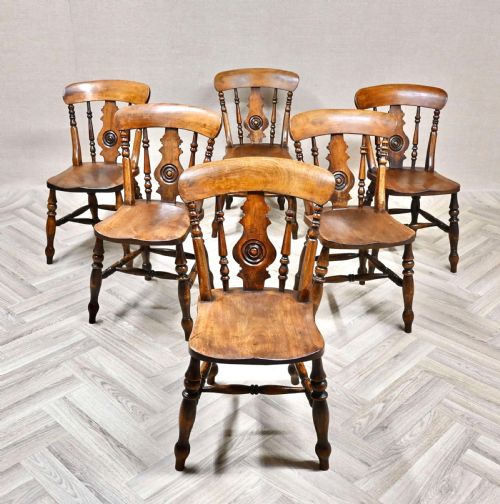
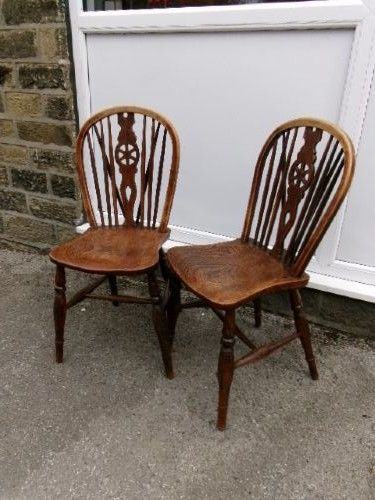
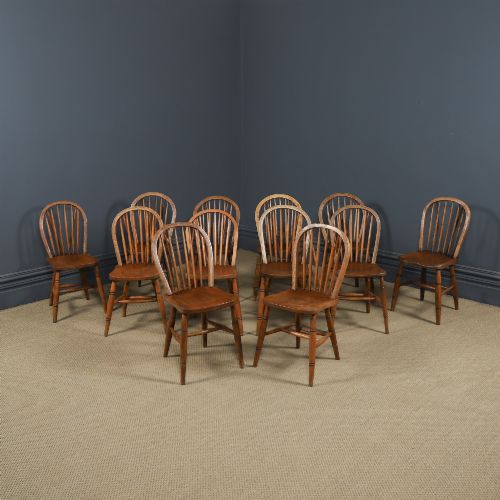
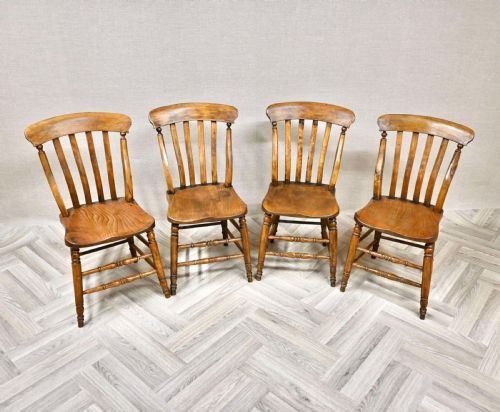


Solid Elm Dining Chair
A solid elm dining chair brings honest vernacular timber and enduring country utility straight to the modern table.
Solid Elm Dining Chair
When you search for a solid elm dining chair, you encounter sturdy vernacular seating shaped by English country makers across the nineteenth and early twentieth centuries. These pieces span robust kitchen armchairs, high back Windsor forms, and generous sets of dining chairs designed for everyday domestic use.
The versions most frequently met on this page showcase traditional country styles such as English Country Vernacular, Victorian Country, and Georgian Vernacular. Makers combined solid elm seats with supporting timbers like ash, beech, and oak to build resilient chairs that endure through generations.
Materials and construction methods
Makers selected solid elm for the saddle-shaped seats because the interlocking grain resisted splitting under heavy daily sitting. Elm was routinely paired with ash or beech for the spindles, legs, and bentwood hoops, providing contrasting flexibility and rigidity where each timber was most effective.
Joinery relied heavily on traditional Windsor and stick back construction, where turned legs and upright spindles were wedged directly into bored holes in the thick wooden seat slab. This created a remarkably stable frame without relying on complex metal hardware.
The inventory records both single armchairs and large matched dining sets originating from English country traditions.
Judging quality in country seating
Quality rests primarily in the depth and comfort of the sculpted elm seat and the integrity of the original joints. Superior examples maintain balanced proportions across larger sets, whereas lesser pieces show heavy replacement parts or mismatched timbers.
The refinement of the turnery on the legs and spindles separates standard farmhouse utility from finer vernacular output. Subtle details in the shaping of the comb backs or wheel backs reveal the hand of a more skilled rural carpenter.
The Solid Elm Dining Chair Glossary
- Vernacular
- Everyday furniture made by regional craftsmen for local use rather than high-style urban workshops. These pieces prioritise functional durability over academic stylistic convention.
- Windsor
- A chair built with a solid wooden seat into which the legs and back sticks are independently inserted. This construction method forms the backbone of traditional country seating.
- Saddle seat
- A wooden chair seat carved into a hollowed, concave shape that follows the contours of the body. Makers utilised the tough grain of elm to carve these comfortable depressions.
- Stick back
- A chair back constructed from multiple slender turned rods or sticks secured into a bentwood bow or top rail. It represents a simpler relative of the pierced splat or wheelback design.
Solid Elm Dining Chair: Frequently Asked Questions
Are solid elm chairs comfortable for daily dining?
The sculpted wooden saddle seats offer surprising ergonomic support during long meals.
Adding loose seat pads provides extra softness while keeping the timber visible.
How do I care for antique elm furniture?
Keep the wood away from direct heat sources and sudden humidity shifts to prevent timber movement.
Applying a traditional beeswax polish occasionally maintains the natural lustre of the grain.
Can I mix different styles of country chairs?
Matched sets remain desirable, but pairing complementary vernacular forms creates an authentic country aesthetic.
Similar seat heights and shared materials like ash and elm help unify a mismatched grouping.
How can I tell the age of a country chair?
Examine the tool marks beneath the seat and the wear patterns on the footrests and spindles.
Hand-turned components and timber shrinkage provide reliable clues to nineteenth-century manufacture.