


Dark Elm Chair
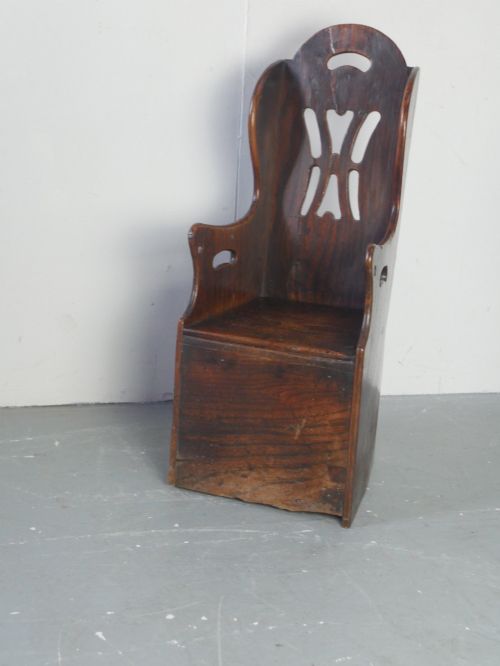
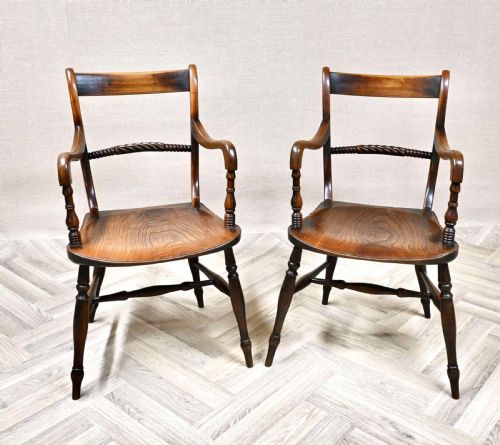
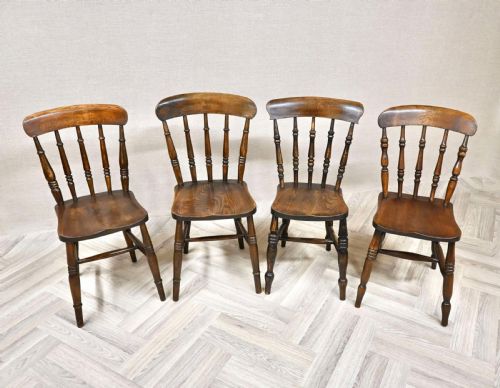
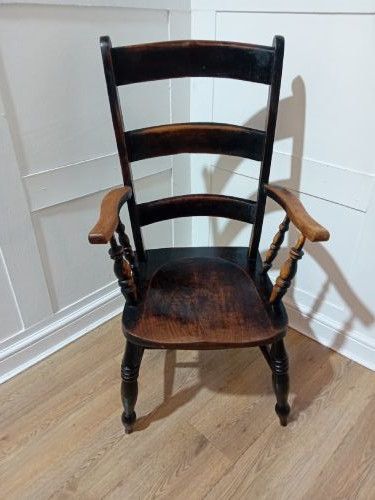
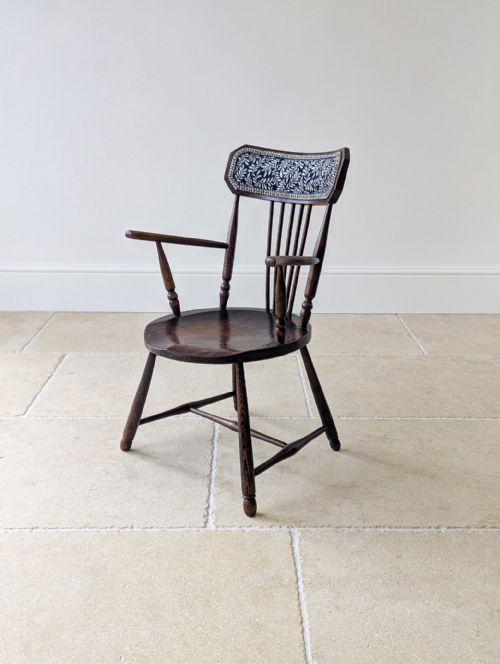
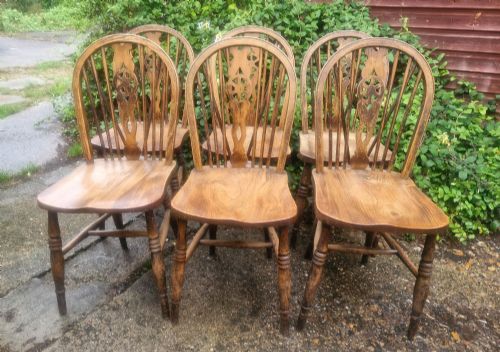
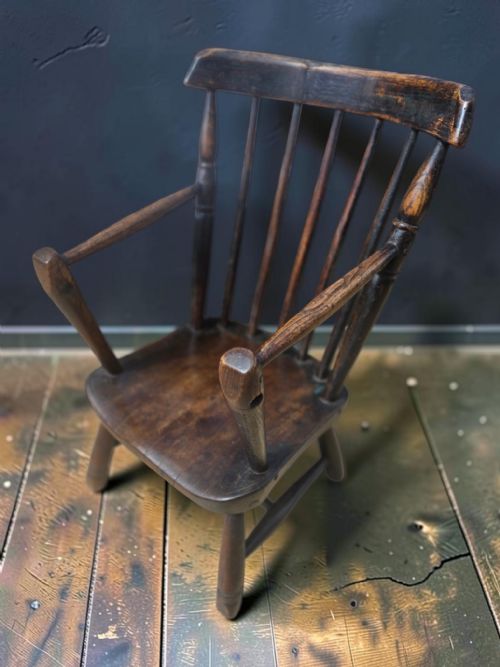
A dark elm chair brings robust vernacular character into a room, offering tactile warmth and honest country construction through centuries of domestic use.
Dark Elm Chair
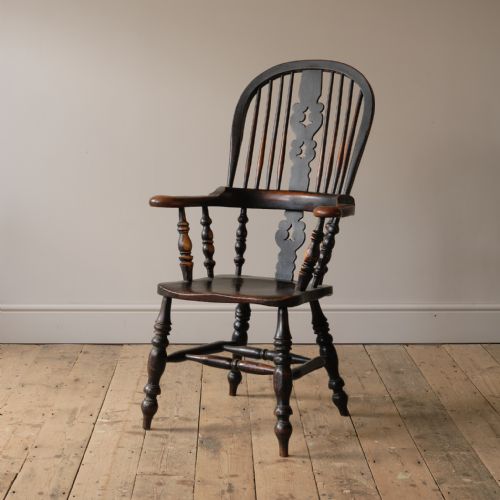
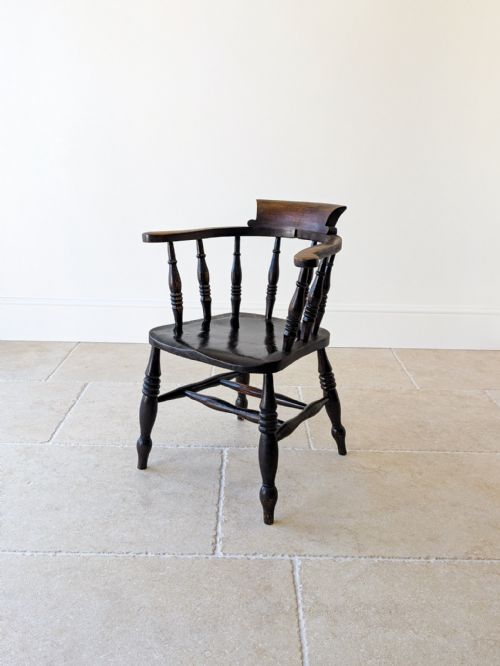
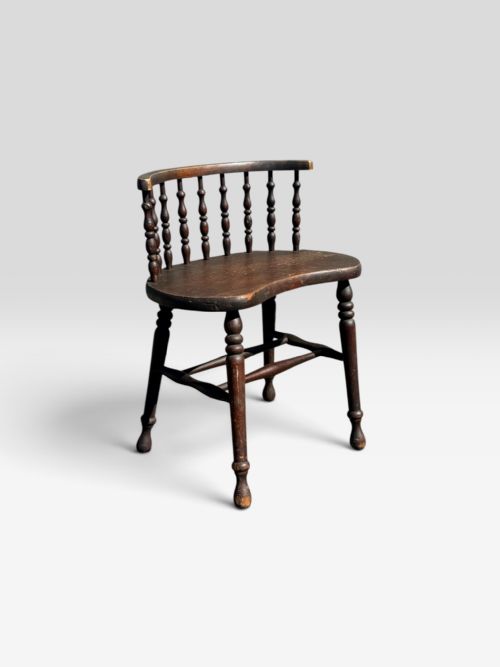
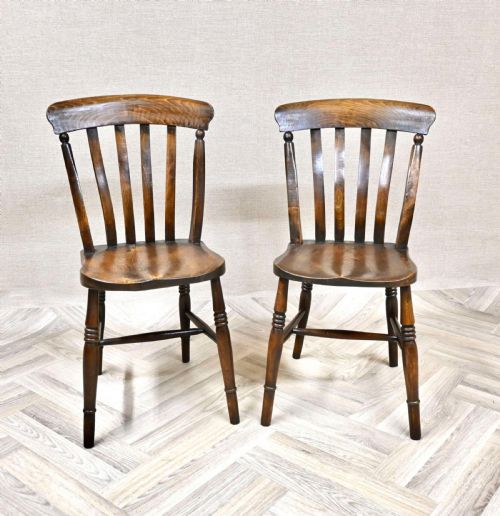
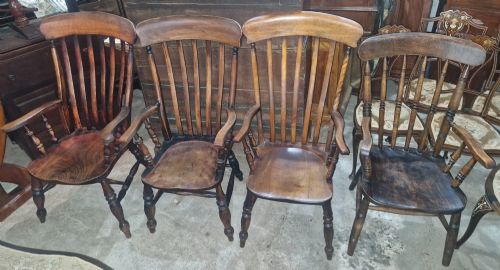
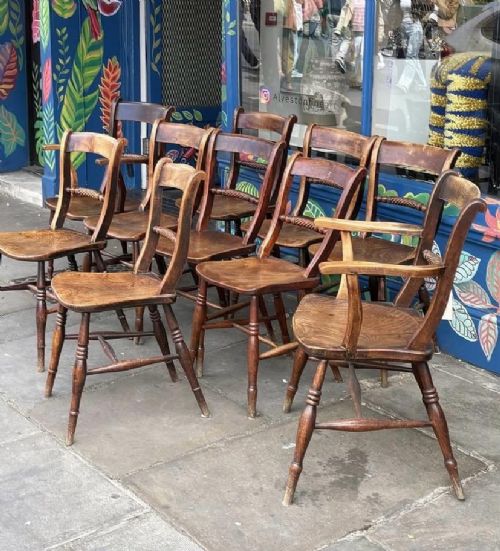
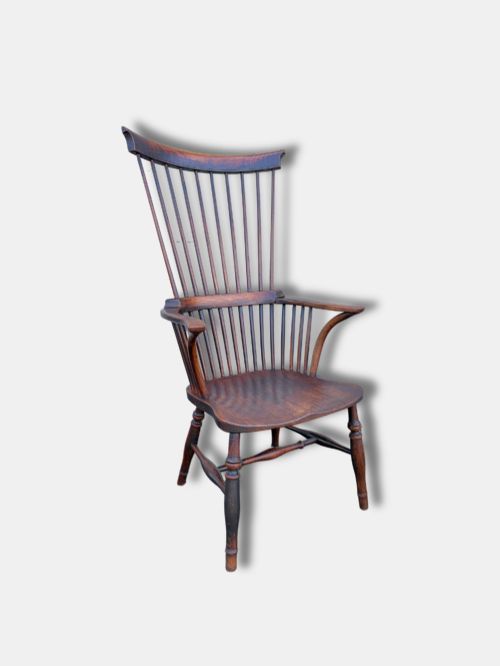
A dark elm chair encompasses a variety of vernacular seating forms, most notably Windsor armchairs, farmhouse kitchen chairs, and smokers bows originating from the eighteenth and nineteenth centuries. These pieces reflect traditional English country and Victorian domestic life, where utilitarian strength dictated the design.
The most common examples on this page are nineteenth-century Windsor chairs, featuring distinct wheelbacks, barbacks, or high comb backs. Makers constructed these seats for heavy daily use in farmhouses, kitchens, and studies, resulting in enduring forms shaped by practical necessity.
Regional variations appear across the selection, ranging from Thames Valley and West Country outputs to Scottish and Lancashire pieces. Each region imparted subtle differences in the turning of spindles and the shaping of the solid elm seats.
Materials and Construction
Makers relied on a combination of timbers to achieve structural integrity, pairing solid elm seats with ash, beech, or oak for the spindles, legs, and bentwood bows. Elm provided a tough, interlocked grain that resisted splitting when shaped into thick saddle seats.
Traditional construction involved boring holes directly into the solid wood seat slab to receive the undercarriage legs and the upright spindles of the back. Steam-bending techniques allowed craftsmen to form continuous bows and arm rails from single lengths of hardwood.
The listings on this page span the eighteenth, nineteenth, and early twentieth centuries, featuring ash, beech, and oak alongside solid elm.
Defining Quality
Quality rests in the depth of the timber's figuring, the preservation of the original surface finish, and the harmonious balance of the turned components. An unblemished, deep patina accumulated through decades of use elevates an example significantly above stripped or overly restored counterparts.
Structural honesty and the comfort of the sculpted seat dictate the higher end of the range. Ergonomically carved saddle seats and tight, original joints demonstrate superior vernacular craftsmanship by regional joiners and chair bodgers.
The Dark Elm Chair Glossary
- Windsor chair
- A chair built with a solid wooden saddle seat into which the legs and back spindles are independently tenoned. This construction method creates a sturdy, resilient frame typical of country furniture.
- Wheel back
- A chair back featuring a pierced splat shaped like a cartwheel. It became a popular decorative motif in nineteenth-century farmhouse dining chairs.
- Smokers bow
- A low-backed Windsor armchair designed for domestic or tavern use, combining a rounded arms rail with spindle supports. It is sometimes known as a captain's chair.
- Saddle seat
- A wooden chair seat sculpted with hollowed depressions to fit the human form. This shaping provided comfort in utilitarian seating before the widespread use of upholstery.
Dark Elm Chair: Frequently Asked Questions
How do I care for a dark elm chair?
Keep the wood nourished by applying traditional beeswax periodically, avoiding direct sunlight and sudden temperature changes that cause the timber to dry and split.
Check the undercarriage wedges occasionally to ensure the legs remain tightly secured into the seat base without relying on modern glues.
Were these chairs used only in kitchens?
While farmhouse kitchens were their primary home, sturdy vernacular seating served throughout the house, including studies, parlours, and rural inns.
Captain's chairs and smokers bows specifically appeared in offices and public houses for comfortable fireside or desk seating.
How do I distinguish eighteenth-century pieces from Victorian ones?
Earlier eighteenth-century examples often display broader proportions, primitive joinery, and deep, undulating saddle seats shaped by hand with adzes and drawknives.
Victorian versions frequently show more uniform mechanical turning on the legs and spindles due to the adoption of powered lathes in regional workshops.
What is a chair bodger?
Bodgers were itinerant or woodland-based woodworkers who turned green timber components like legs and spindles on pole lathes in the woods near the felling site.
They supplied these precise parts to urban or village chairmakers who assembled and finished the final seating forms.