
Smokers Bow Tub Chair
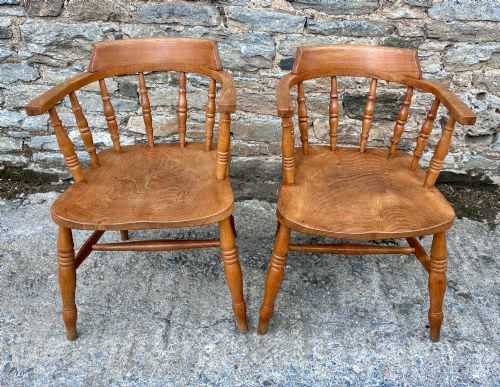
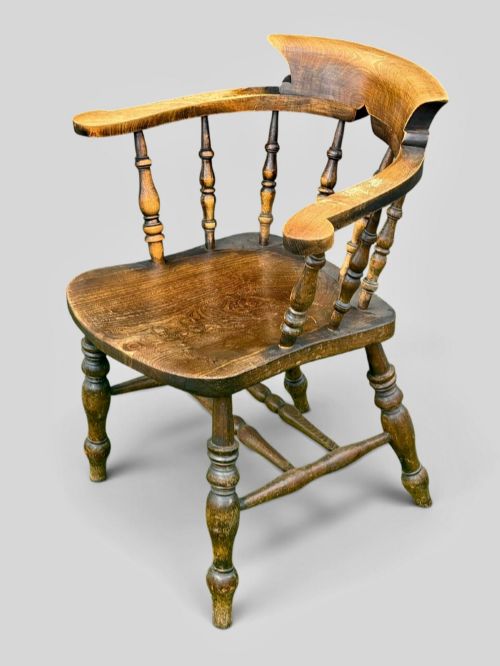
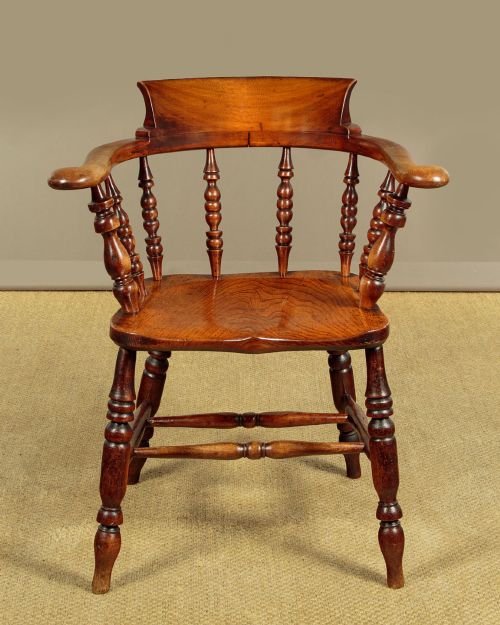
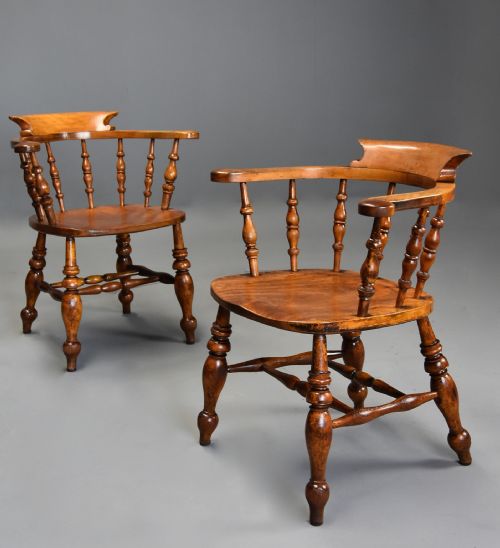
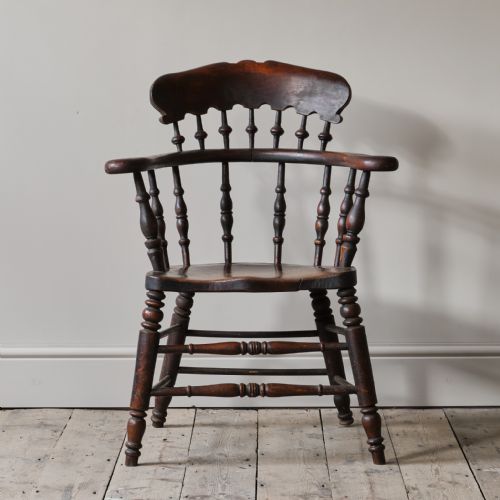
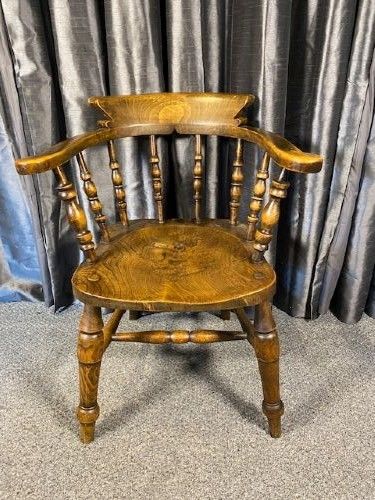
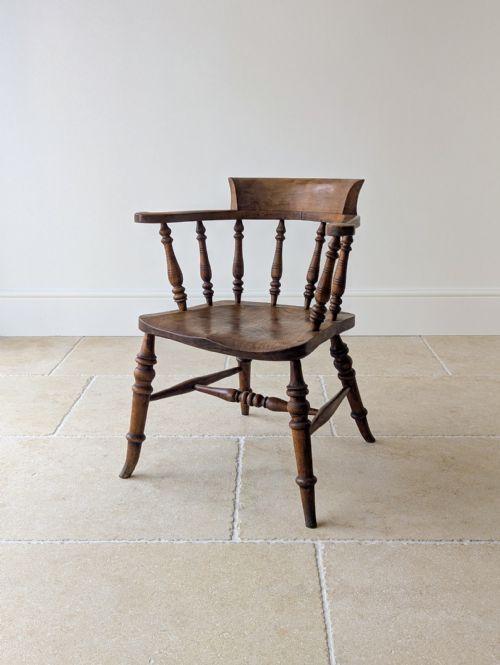
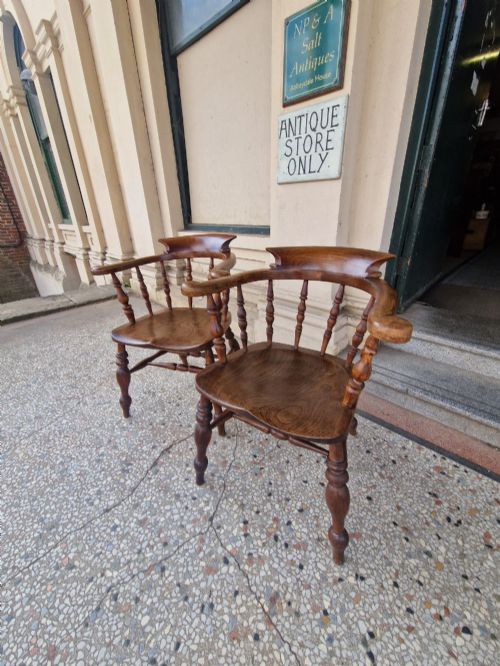
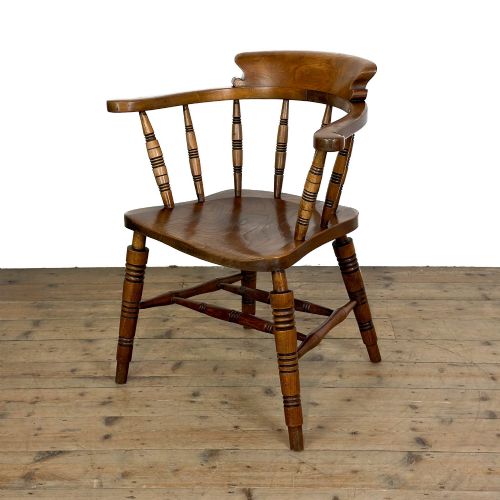
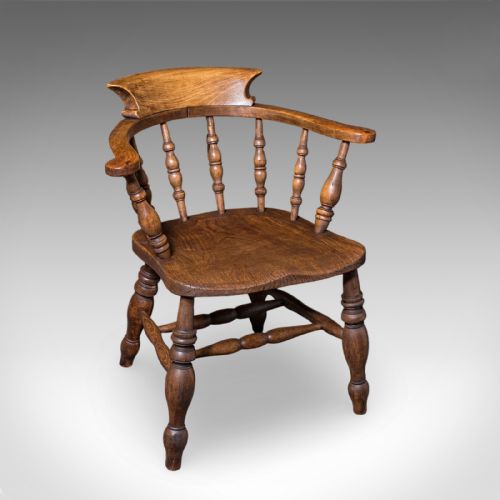
A smokers bow tub chair is a robust low-backed timber armchair designed for comfort, offering sturdy elbow support and a welcoming curved rail.
Smokers Bow Tub Chair
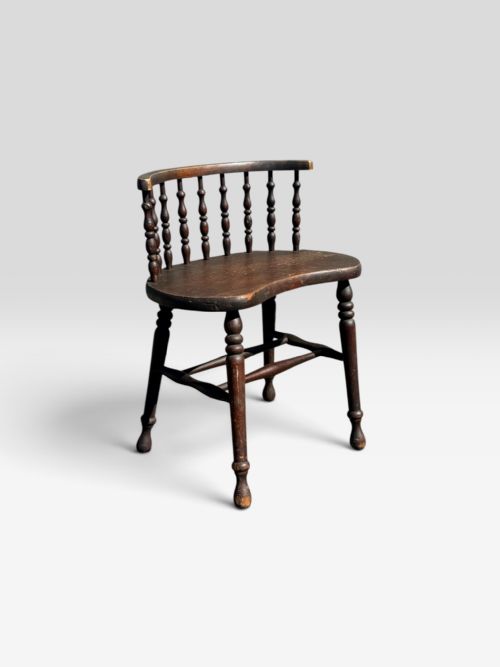
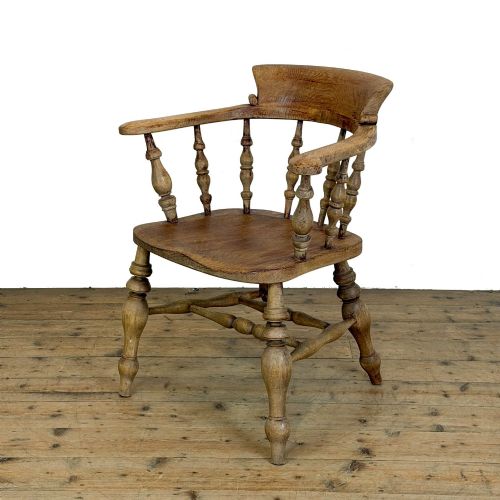
A smokers bow tub chair is a traditional low-backed armchair built for domestic and commercial use, often encountered as a sturdy Windsor variant with a continuous curved back rail. These pieces frequently appear from the Victorian and Edwardian periods, reflecting practical English country house and office seating.
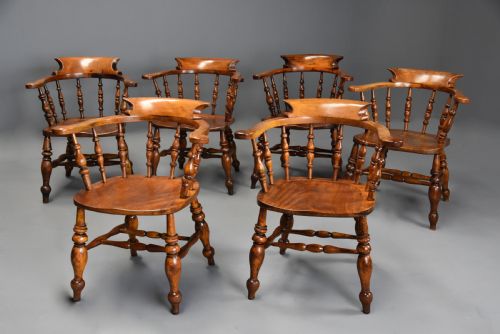
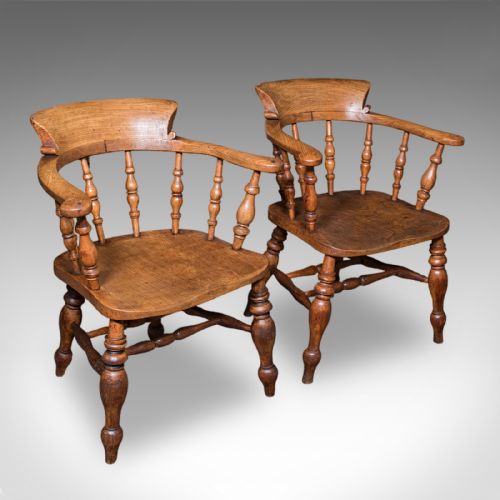
The form bridges the gap between a standard Windsor chair and an office armchair, serving well as a desk chair or a fireside elbow seat. Most examples on this page pair a shaped elm seat with turned beech or ash spindles and legs.
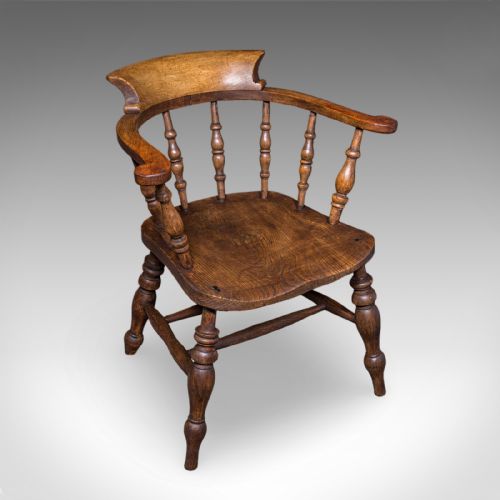
Makers shaped these chairs for daily utility, resulting in survivors that show genuine wear from decades of use in studies, libraries and smoking rooms. The common denominator is the low, arched backrest supported by thick turned spindles.
How they were made
Constructed primarily using traditional joinery, these chairs combine solid elm for the saddle seats with resilient timbers like beech, ash and oak for the turned legs and spindles. Woodturners shaped the vertical components on lathes before assembling the frames with wedged tenon joints.
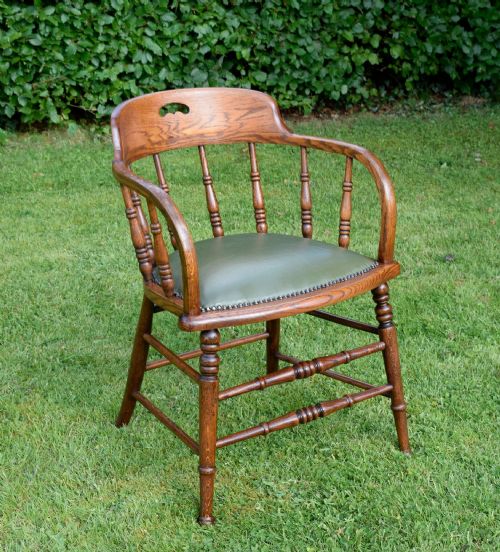
The characteristic curved crest rail is steam-bent from a single piece of timber to form the continuous arm and back bow. Some variants incorporate upholstered leather pads or seats supported by brass tacks over walnut or mahogany frames.
Listings feature timbers such as elm, beech, oak, ash, birch, walnut, mahogany and yew, spanning the Victorian and Edwardian periods.
What varies in quality
Quality rests primarily in the timber selection and the depth of the seat carving, where thick, figured elm boards provide superior visual weight and comfort. The crispness of the spindle turnings and the tightness of the frame joints also distinguish finer examples from standard workshop production.
Proportion and stance dictate the visual success of the chair, with better examples maintaining balanced arm sweeps and well-angled legs. Patina accumulates naturally over decades of friction, separating dry, honest surfaces from stripped or over-restored timber.
The Smokers Bow Tub Chair Glossary
- Smoker's bow
- A low-backed Windsor armchair featuring a rounded, continuous wooden back and arm rail. This form originated in the nineteenth century for use in public houses and private smoking rooms.
- Windsor
- A chair constructed with a solid wooden seat into which the legs, back spindles and bow are independently inserted. This method creates a sturdy, rigid frame without relying on a central box frame.
- Elm
- A tough, interlocking timber frequently used for chair seats because it resists splitting when nailed or bored. Its distinctive grain pattern provides substantial character to the upper surface.
- Spindle
- A slender, turned vertical wooden element supporting the arm rail of the chair. Spindles distribute weight and provide structural rigidity to the back assembly.
- Patina
- The surface sheen and colour acquired by wood through decades of handling, polishing and exposure to light. This gradual ageing process reveals the genuine history of the piece.
Smokers Bow Tub Chair: Frequently Asked Questions
Where did smokers bow chairs originate?
These chairs developed from traditional Windsor forms in English workshops during the nineteenth century. They gained popularity in domestic studies, country houses and rural inns.
Craftsmen adapted the low-backed design to provide sturdy support for sitting and writing over extended periods. The regional variations reflect the local availability of elm, beech and ash.
Are these chairs suitable for modern desks?
The low height and supportive curved arms make these chairs well suited for standard writing desks and tables. Many examples function effectively as desk chairs in contemporary home offices.
Buyers should check the seat height against their specific desk clearance before purchasing. The solid wooden saddle seats accommodate small cushions if additional height is required.
How do I care for a wooden armchair?
Maintain the timber by applying traditional beeswax periodically to nourish the surface and preserve the historic finish. Avoid placing the chair near direct heat sources or in strong sunlight.
Gentle dusting with a soft, dry cloth prevents the accumulation of dirt in the turned spindles and joints. The durable construction requires minimal intervention beyond stable environmental conditions.
What is the difference between a captains chair and a smokers bow?
The terms are often used interchangeably in the trade to describe low-backed Windsor elbow chairs. Both types feature a curved wooden rail supported by turned spindles above a saddle seat.
Minor variations in the height of the back rail and the profile of the armrests usually distinguish one regional workshop style from another. Both forms share the same robust domestic ancestry.