






Brown Leather Smokers Chair
These brown leather smokers chair pieces offer robust seating with deep history, built for studies and libraries from sturdy timbers.
Brown Leather Smokers Chair
When you search for a brown leather smokers chair, you find robust seating designed for studies, offices, and libraries. These forms bridge the gap between heavy armchairs and functional desk seating.
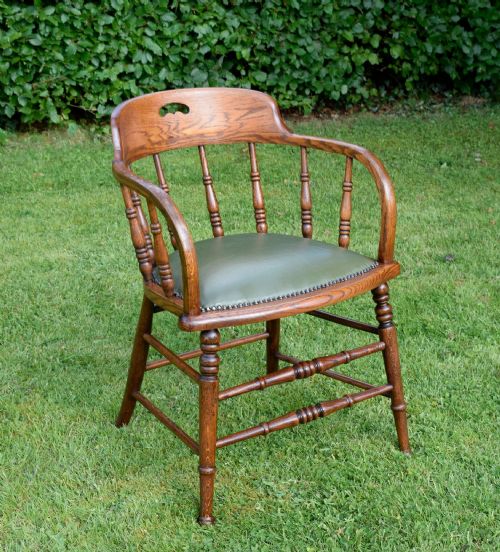
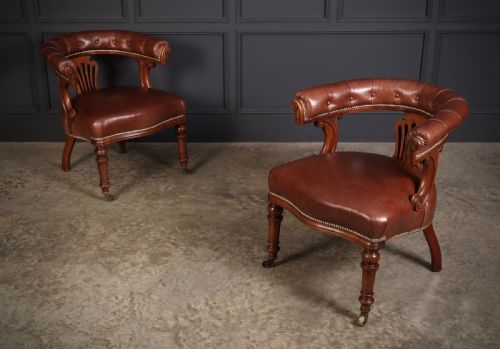
The versions you meet most frequently on this page date from the nineteenth century and the early twentieth century. They span Victorian, Edwardian, and Arts and Crafts styles, appearing as captain's chairs, desk armchairs, and smoker's bows.
Makers built these chairs using solid timbers such as oak, mahogany, walnut, and elm. Leather upholstery provides the seat surface, often paired with brass details.
How they were made
Cabinet makers constructed the frames using hardwoods like oak, mahogany, walnut, and elm to ensure structural strength. Joinery relied on traditional methods to support daily use in studies and offices.
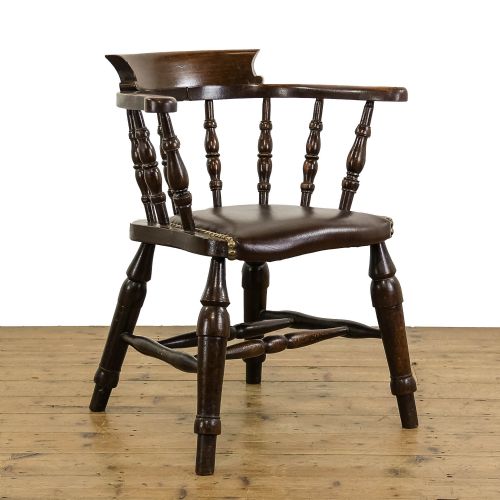
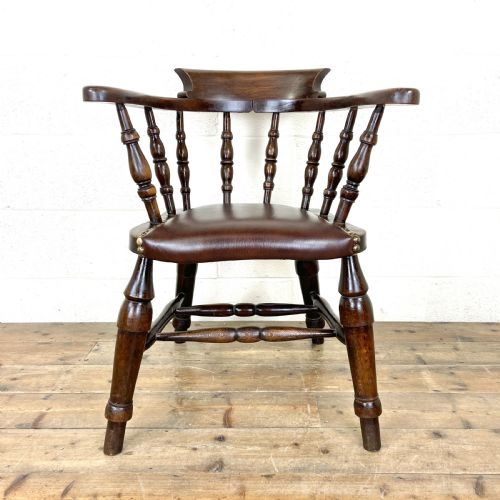
Upholsterers fitted leather seats and panels into the timber frames, sometimes securing them with brass tacks. Turned spindles and curved arm rails characterise the wooden components of the smoker's bow designs.
Materials recorded across these items include leather, brass, oak, metal, mahogany, walnut, and elm.
What varies in quality
The choice of timber dictates the foundational quality of each chair, with dense woods like mahogany and walnut offering superior grain and durability. Oak and elm versions display distinct regional character through their simpler turned spindles.
The execution of the leather upholstery and its integration into the wooden frame separates standard seating from finer workshop productions. Better examples maintain tight joinery and well-preserved leather surfaces that reflect their nineteenth-century origins.
The Brown Leather Smokers Chair Glossary
- Smoker's Bow
- A sturdy wooden armchair with a low, curved back rail and turned spindles, originating in the nineteenth century. These chairs frequently feature solid timber or upholstered leather seats.
- Captain's Chair
- A swivel or stationary desk chair with a rounded backrest supported by vertical spindles. They were designed for use at office desks and ship cabins alike.
- Club Elbow Chair
- A low, upholstered armchair providing comfortable seating for reading and relaxation. Victorian versions often combine mahogany or oak frames with leather upholstery.
- Arts and Crafts
- A design movement spanning the late nineteenth and early twentieth centuries emphasising honest construction and visible materials. Pieces from this period focus on simple utility and solid timber construction.
Brown Leather Smokers Chair: Frequently Asked Questions
What is a brown leather smokers chair?
A brown leather smokers chair is a nineteenth or early twentieth-century armchair designed for studies, offices, and libraries. They combine sturdy wooden frames with leather seats for daily use.
These pieces typically appear as captain's chairs, desk armchairs, or smoker's bows. They draw on Victorian, Edwardian, and Arts and Crafts design traditions.
How were these chairs used historically?
People used these chairs as functional seating at desks, writing tables, and in libraries. Their sturdy construction supported long hours of work or reading.
The curved back rails and upholstered seats provided comfort during use in private studies and offices.
How do I tell Victorian from Edwardian pieces?
Victorian pieces, dating from the nineteenth century, often feature heavier mahogany or walnut frames with ornate turnings. They lean towards formal office and library settings.
Edwardian and early twentieth-century examples tend toward lighter oak construction and simpler Arts and Crafts influences. Timber selection and framing details help distinguish between the two eras.
What timbers were used to build them?
Makers utilised a range of hardwoods including oak, mahogany, walnut, and elm for the frames. Each timber offered different grain patterns and structural properties.
Oak and elm provided robust utility for regional designs, whilst mahogany and walnut appeared in more formal nineteenth-century desk chairs.