


Antique Leather Seated Chair
An antique leather seated chair brings tactile warmth and enduring utility to a study or drawing room.
Antique Leather Seated Chair
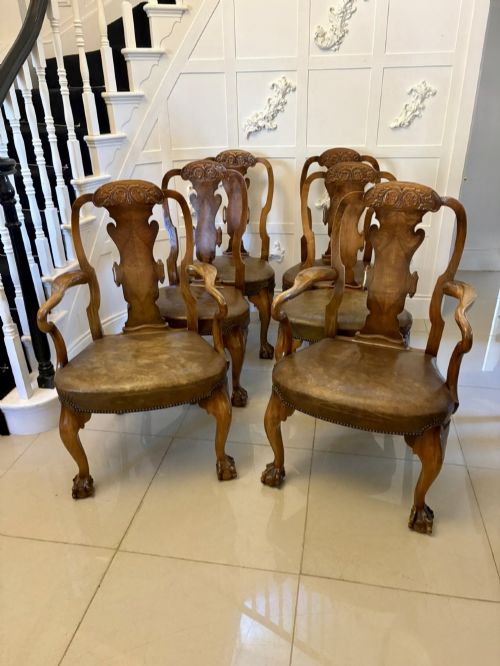
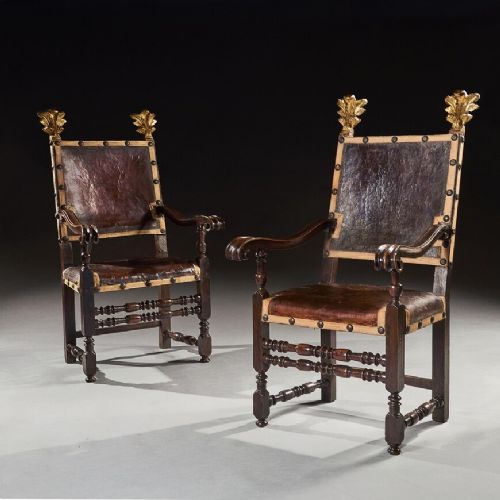
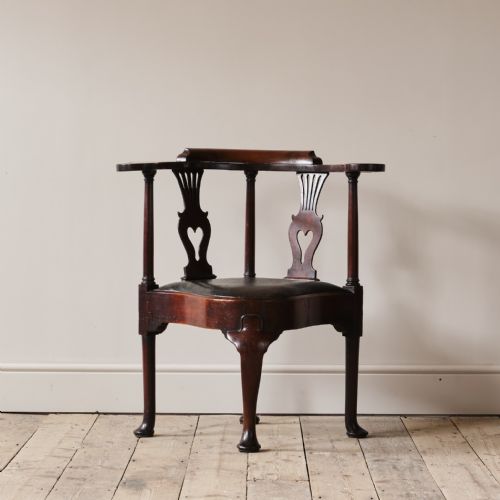
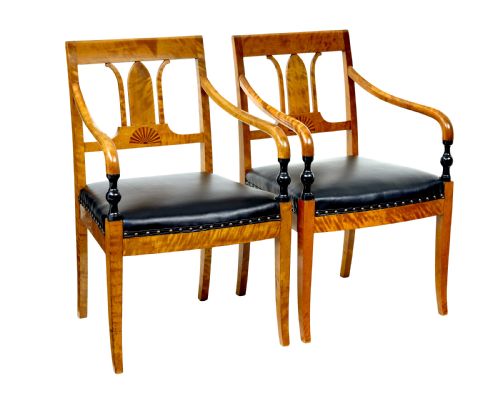
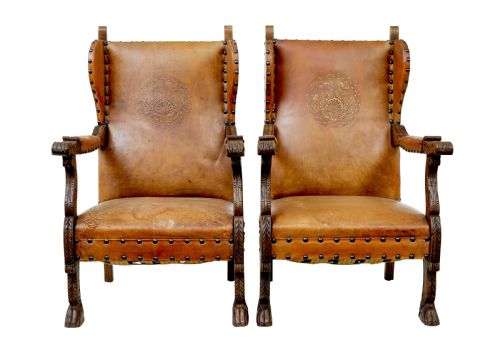
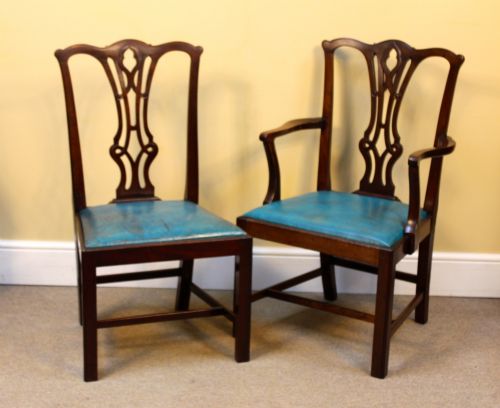
When you search for an antique leather seated chair, you encounter a wide array of seating forms ranging from heavy library armchairs and revolving desk chairs to sets of dining chairs and compact stools. The examples on this page span several centuries, drawing on Georgian, Victorian, Edwardian, and Art Deco design traditions.
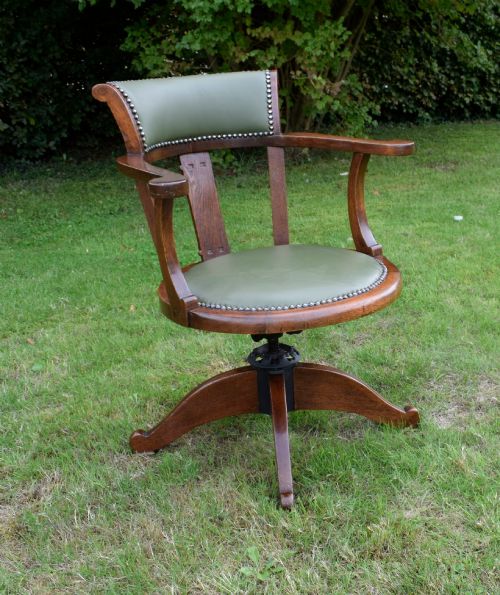
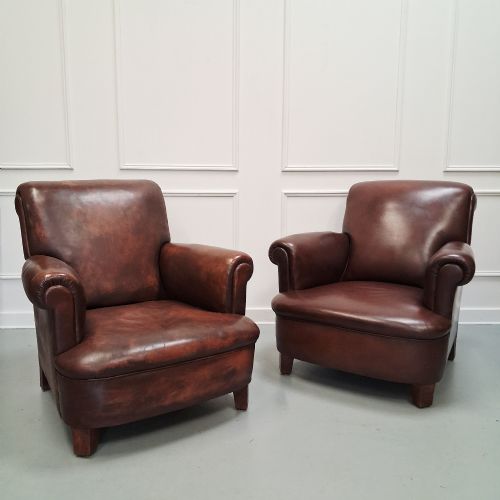
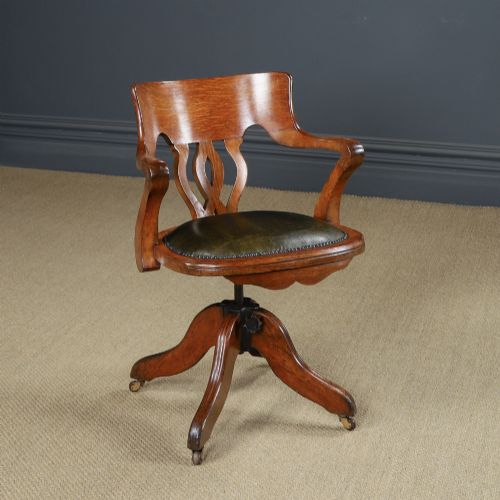
You are most likely to meet mahogany or oak frames paired with hide or leather upholstery, whether configured as a swivel office chair, a low fireside seat, or a large club chair. These pieces served practical functions in studies, offices, and formal dining rooms, which accounts for their robust construction and varied forms.
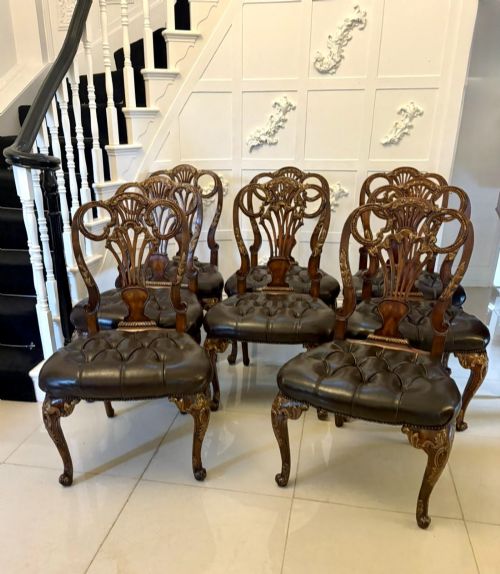
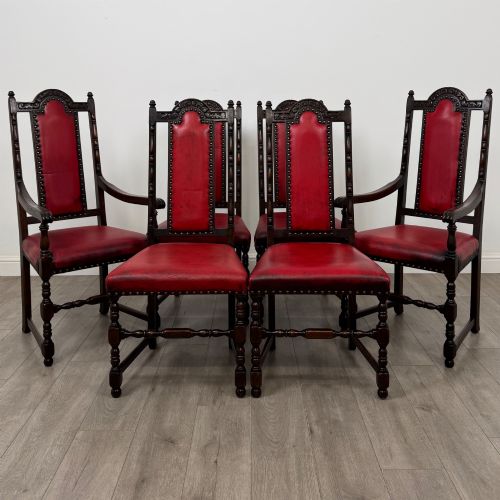
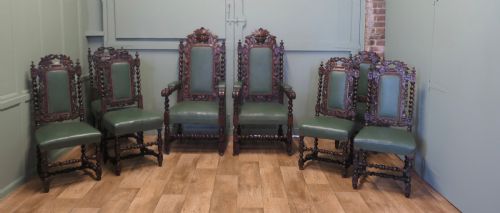
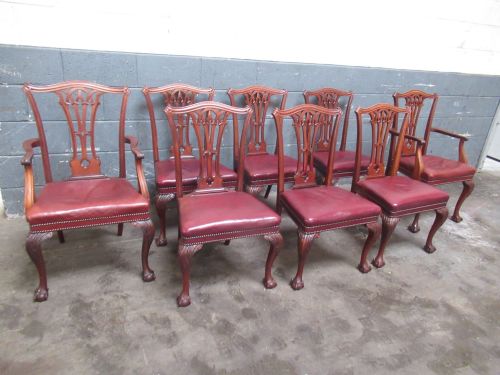
The selection includes single library chairs alongside matched sets of dining chairs, offering choices for both a singular writing desk and a large dining table. Regional variations appear across English, French, and Scandinavian workshops, each applying local timbers and distinct stylistic flourishes to the leather seat form.
Materials and Construction
Cabinetmakers constructed the frames primarily using hardwoods such as mahogany, oak, walnut, and birch, often incorporating carved details or turned supports. Joinery techniques relied on mortise and tenon joints to ensure stability under daily use.
Upholsterers fitted the seats and backs using durable leather hides, frequently secured with brass tacking or finished with embossing. Supporting structures beneath the leather utilised webbing, springs, or traditional stuffing materials to provide firmness and resilience.
Listings feature oak, mahogany, walnut, and birch timber frames paired with leather upholstery across Georgian, Victorian, Edwardian, and Art Deco periods.
Distinctions in Quality
The degree of hand-carving on the wooden frame marks a clear division between standard seating and exceptional commissions. Elaborate blind carving, parcel-gilding, or intricate Gothic revival tracery separates bespoke library and dining chairs from simpler utilitarian production.
The selection of timber grain and the treatment of the leather upholstery determine the visual impact of the piece. Fine grain walnut, burr walnut, or figured mahogany combined with hand-dyed English hide represent the higher end of the range.
Harry and Lou Epstein
The Antique Leather Seated Chair Glossary
- Gainsborough chair
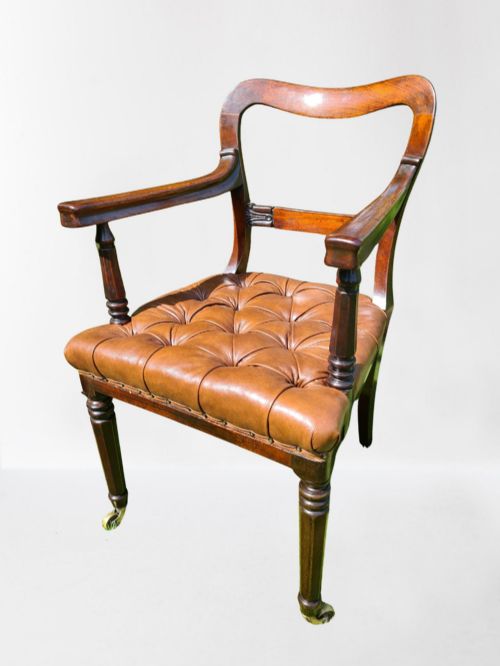
- A wide, open-armed armchair with a padded seat and back, standing on short cabriole or straight legs. Makers designed these upholstered seats specifically for writing desks and libraries during the Georgian period.
- Club chair
- A deep, low-slung upholstered armchair with padded arms and a supportive back. French and Art Deco examples frequently pair this form with supple leather upholstery.
- Revolving desk chair
- A swivelling office or library seat mounted on a central pivot and a multi-legged base. These chairs often feature adjustable height mechanisms and leather-upholstered bucket backs.
- Parcel-gilt
- Partially covered or highlighted with gold leaf applied over a prepared surface. This decorative technique accentuates specific carved elements on walnut and mahogany frames.
- Shield back
- A chair back shaped in the outline of a heraldic shield, popular in late eighteenth-century dining chair design. Hepplewhite and related neoclassical styles frequently employed this openwork motif.
Antique Leather Seated Chair: Frequently Asked Questions
How do I identify a Georgian chair?
Georgian frames display rich mahogany timbers with restrained proportions and classical carving motifs such as cabriole legs or ball and claw feet. The joinery is entirely manual, utilising pegged mortise and tenon joints.
Desk chairs and Gainsborough armchairs from this era prioritize ergonomic comfort through gently curved arms and supportive rake backs upholstered in leather.
Are swivel chairs Victorian?
Many revolving desk chairs date to the Victorian period, when office furniture evolved to meet the demands of growing administrative workplaces. These pieces combine oak or mahogany frames with heavy cast iron or wooden swivel mechanisms.
They frequently feature button-tufted leather upholstery and sturdy wheel castors for mobility around a study.
How were dining chairs sold?
Dining chairs were produced in sets of varying sizes, ranging from small quartets to large groups of twelve or more. Sets often included matching armchairs, sometimes called carvers, intended for the heads of the table.
Walnut and oak predominated in these large suites, particularly during the Victorian and Edwardian revivals of earlier historical styles.