




Vintage Pub Desk Chair
A vintage pub desk chair brings sturdy timber character and honest utility straight into a modern study.
Vintage Pub Desk Chair
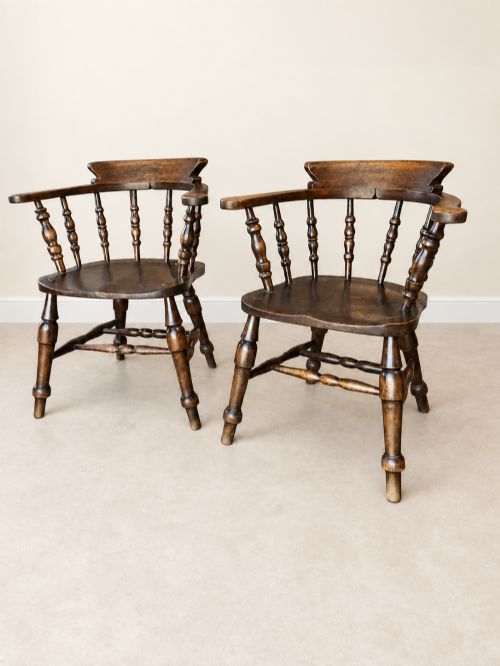
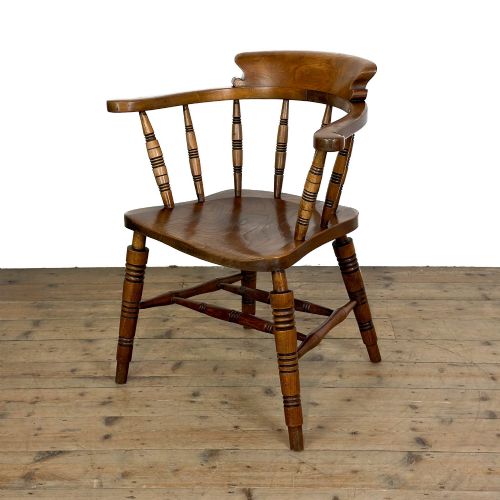
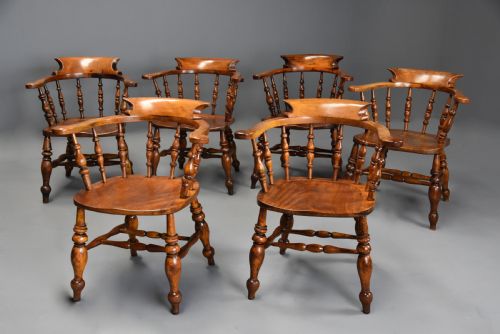
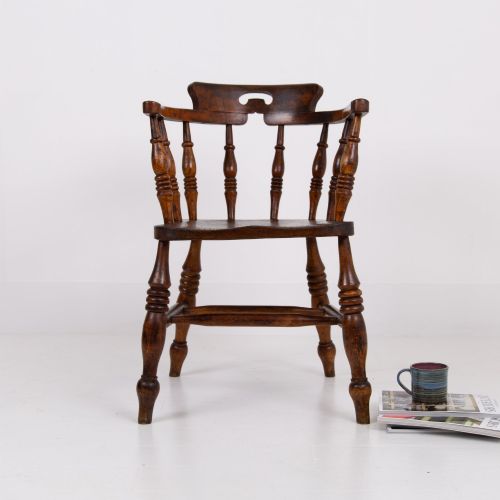
A vintage pub desk chair is a sturdy vernacular seat built for commercial or domestic workspaces during the nineteenth century. These sturdy wooden forms appear across Victorian Country and English Country styles, designed to handle daily service.
The selections on this page concentrate on robust armchairs, Windsor variations, smoker's bows, and clerk's stools. Buyers frequently encounter low-backed armchairs alongside tall seating originally devised for high desks and counters.
Origins stretch from the 1870s through the Edwardian period, capturing an era when furniture prioritised ergonomic comfort through steam-bent wood. Makers constructed these seats primarily in matching sets or substantial single items intended for heavy use.
Materials and construction
Makers combined solid timbers such as elm, oak, beech, and ash to build frames that resisted heavy daily wear. Elm often provided resilient seats capable of taking deep saddle scoops, while beech and ash formed responsive spindles and steam-bent backrails.
Joinery relied on traditional wedged through-tenons and turned components fixed securely into thick wooden seats. Brass fittings and occasional leather upholstery appear on specific examples to add targeted comfort or reinforcement.
Judging quality in vernacular seating
Quality rests in the weight of the timber selection and the depth of the sculpted seat. Superior examples reveal thick elm planks shaped by hand to fit the body, whereas lesser pieces utilise thinner, flatter boards.
The integrity of the steam-bent bow rail separates finer seating from utilitarian replacements. Smoothly integrated joints and matched timber grain demonstrate superior workshop standards.
The Vintage Pub Desk Chair Glossary
- Smoker's bow
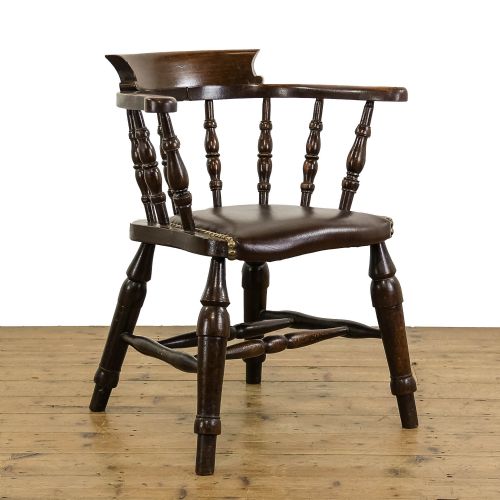
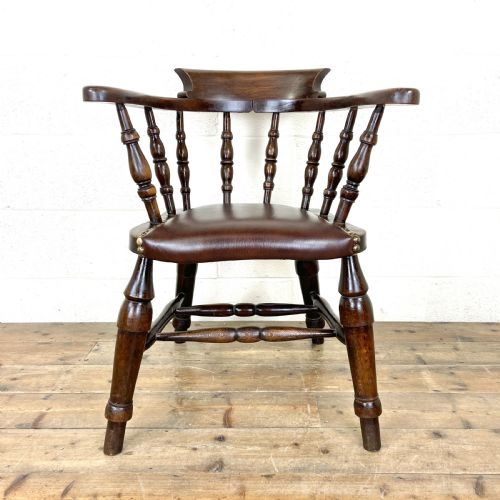
- A low-backed Windsor armchair featuring a continuous bentwood rail curving around the arms. This design evolved from earlier country armchairs to provide compact support in public houses.
- Captain's chair
- A sturdy low-backed wooden armchair designed for office or tavern use. These pieces typically feature spindle-supported backrests.
- Clerk's stool
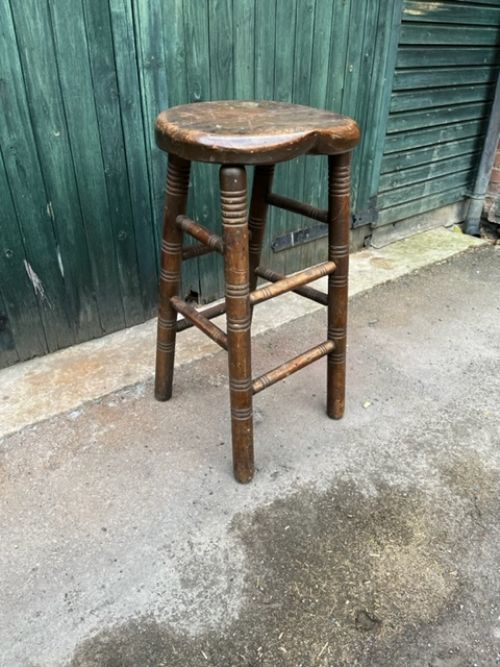
- A tall wooden seat raised on long turned legs with perimeter stretchers for foot support. They were historically paired with high slant-top writing desks.
- Windsor
- A chair construction method where legs and back spindles are wedged directly into a solid wooden seat. This technique creates a remarkably stable framework without relying on a box frame.
Vintage Pub Desk Chair: Frequently Asked Questions
What is a smoker's bow chair?
A smoker's bow is a sturdy vernacular armchair with a low, continuous bentwood back and arm rail. It gained popularity in nineteenth-century public houses and offices for its compact, durable profile.
These seats feature thick wooden saddles carved for comfort, supported by turned spindles and robust legs.
How do I identify a clerk's stool?
A clerk's stool stands taller than standard dining seating, featuring long turned wooden legs connected by low stretchers. These stretchers served as footrests for workers perched at high standing desks.
They appear in nineteenth-century workshops and offices, built entirely from hardwoods like beech and ash to withstand constant shifting.
Were these chairs used in pubs?
Many nineteenth-century Windsor and smoker's bow armchairs served communal spaces in public houses and taverns. Their heavy timber construction endured the rigours of busy hospitality environments.
Pubs required robust seating that could be arranged easily and withstand heavy daily use by patrons.
How do I care for antique elm seats?
Maintain antique elm and beech timber by keeping it away from direct heat sources and sudden humidity changes. Apply natural beeswax periodically to nourish the dry wood and preserve the surface sheen.
Avoid commercial liquid polishes, which can build up on nineteenth-century finishes and dull the natural grain.