




Set Six Walnut Chairs
A set six walnut chairs gathers people around a table with substance and proportion, offering a matching suite built to endure centuries of daily use.
Set Six Walnut Chairs
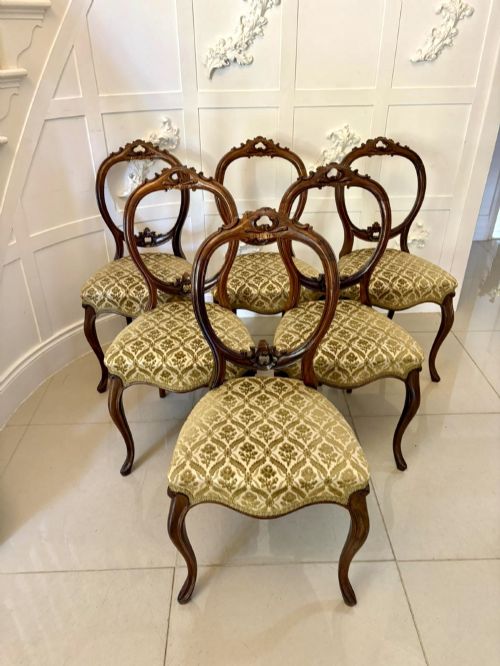
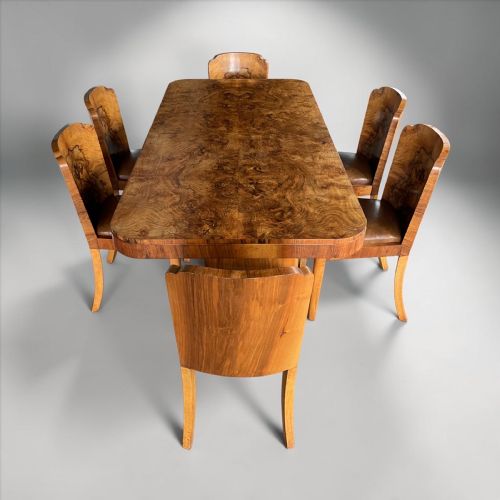
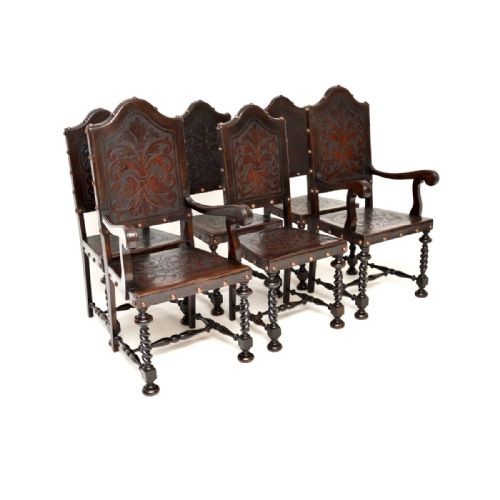
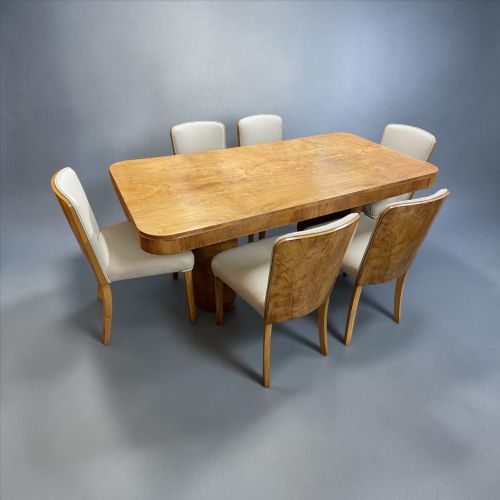
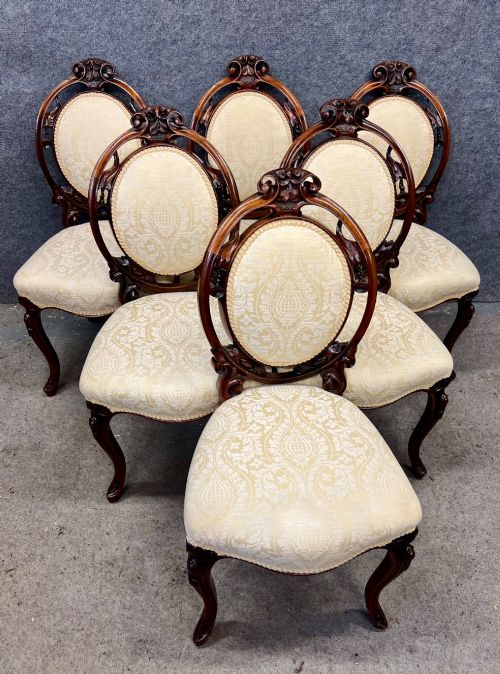
A set six walnut chairs comprises dining seats produced as a matching group, most frequently encountered from the Victorian era and the 1930s. These seating groups serve dining rooms with consistent design, matching timber grain, and uniform proportions across all pieces.
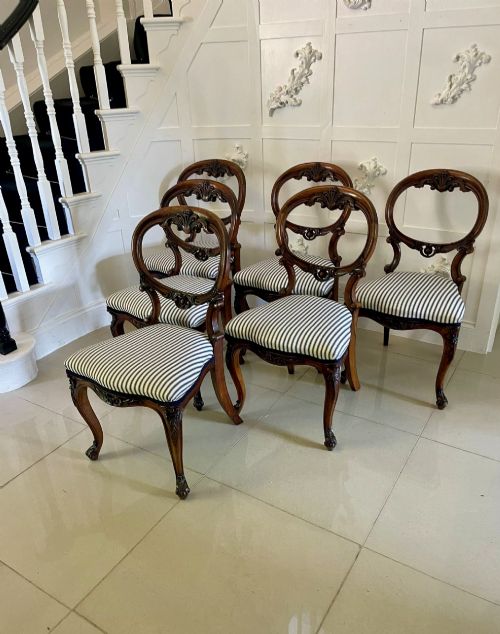
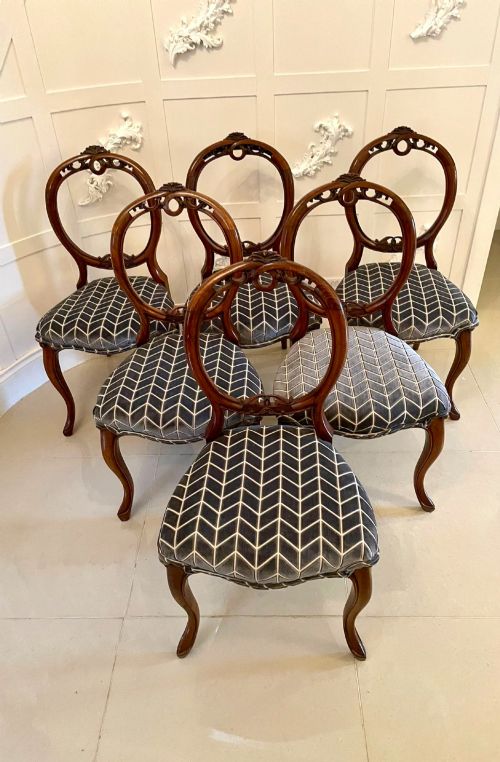
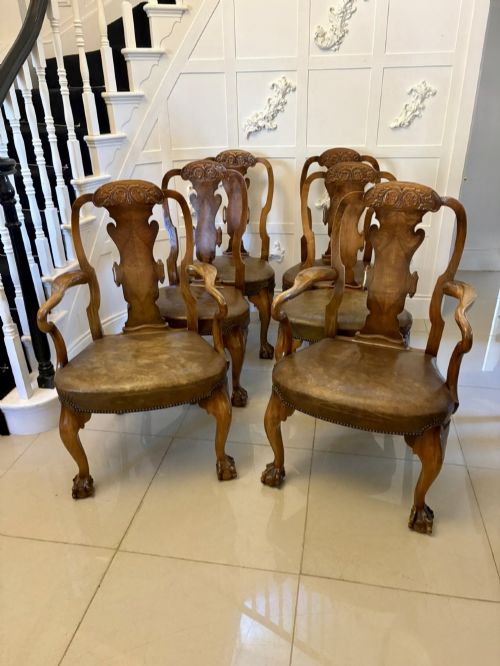
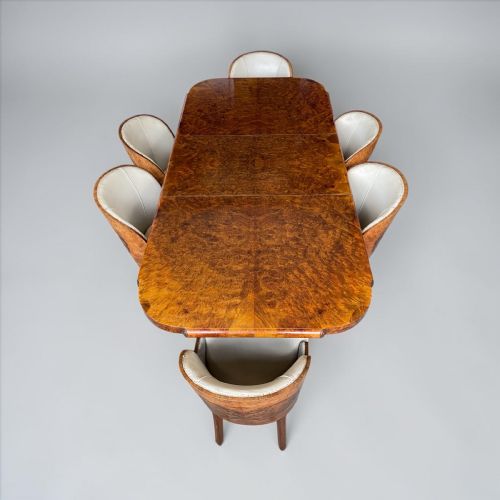
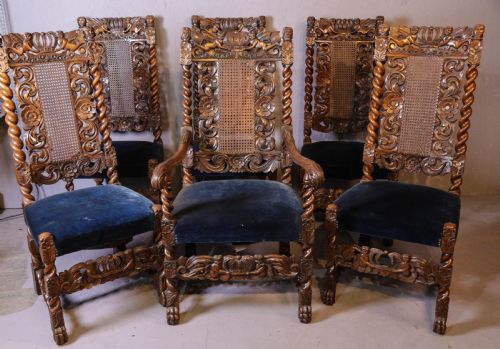
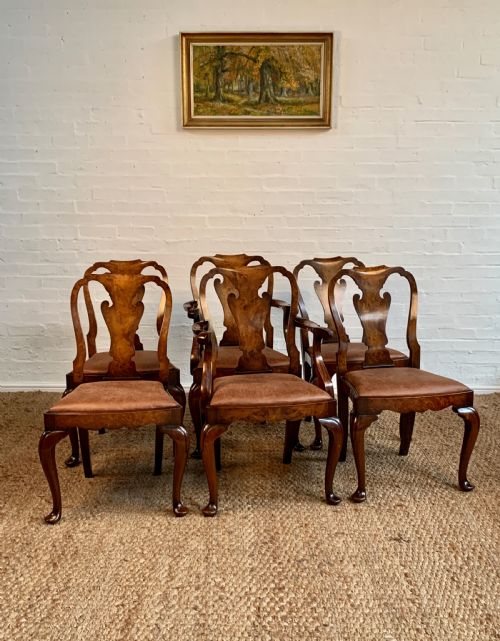
The selections span distinct historical revivals and periods, including Queen Anne style curves, balloon-back silhouettes, and Art Deco geometry. Buyers encounter everything from carved mid-century Victorian frames to early twentieth-century burr walnut interpretations of eighteenth-century forms.
How they were made
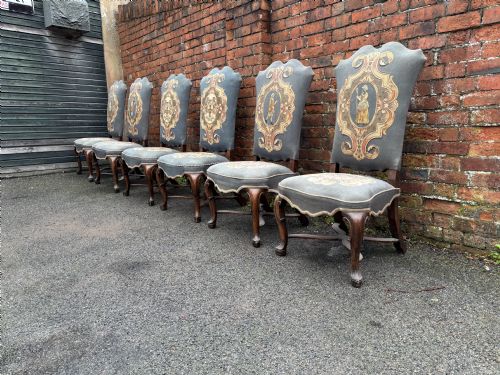
Cabinet makers utilised solid walnut and decorative burr veneers applied to structural frames, often integrating brass fittings and hand-carved details. Upholstery techniques varied by period, employing horsehair stuffing beneath leather, velvet, textile, or rush seating.
Joinery methods relied on mortise and tenon construction to sustain the weight of daily dining, supplemented by cabriole legs, hoof feet, or parcel-gilding depending on the regional style.
Some dining chairs arrive standing on carved animal hoof feet, ready to trot straight into the dining room.
What varies in quality
The distinction between tiers rests upon the depth of hand-carving, the uniformity of the timber selection across all six frames, and the preservation of original patination. Sets featuring matched burr walnut veneers or intricate carving require superior carpentry compared to plain production models.
Cohesion within the group dictates long-term appeal, as uniform fading, matching grain patterns, and untouched structural integrity elevate a gathering above assembled or mismatched assemblies.
Maurice Adams·Harry and Lou Epstein·Blyth and Sons·Morison and Co
The Set Six Walnut Chairs Glossary
- Burr walnut
- A figured veneer taken from the growth excrescences of a walnut tree, prized for swirling grain patterns.
- Balloon-back
- A rounded, oval-shaped backrest profile popular during the Victorian era that supports the spine comfortably.
- Cabriole leg
- A furniture leg featuring a double curve resembling the shape of an animal's leaping leg, ending in a pad or hoof foot.
- Parcel-gilt
- Partially gilded with gold leaf applied to specific carved highlights to contrast against the dark walnut timber.
- Marquetry
- Decorative veneer work forming intricate pictorial designs or geometric patterns across the wooden surfaces.
Set Six Walnut Chairs: Frequently Asked Questions
How do I spot a matched set?
Examine the timber grain, leg profiles, and joinery details across all six pieces to ensure uniform manufacturing origin.
Consistent wear patterns and identical dimensions confirm the chairs were produced together as a unified dining suite.
Are these chairs comfortable for daily use?
Victorian and twentieth-century dining models offer robust back support, though seat heights and cushioning vary by decade.
Many examples feature newly updated upholstery while retaining the historical wooden frame underneath.
How do I tell Victorian from earlier styles?
Victorian examples frequently display balloon-backs, heavy carved walnut frames, and cabriole legs typical of nineteenth-century production.
Queen Anne and Georgian revivals mimic eighteenth-century proportions with high backs and pad feet, executed in later walnut.
What is the difference between walnut and burr walnut?
Standard walnut displays a straight, rich brown grain pattern across the chair backs and structural legs.
Burr walnut utilises highly figured veneer harvested from tree growths, creating turbulent, decorative patterns across the main surfaces.