


Smiths English Clock
A Smiths English clock brings robust mechanism and striking design into a room, spanning industrial stations, military service, and domestic mantelpieces.
Smiths English Clock
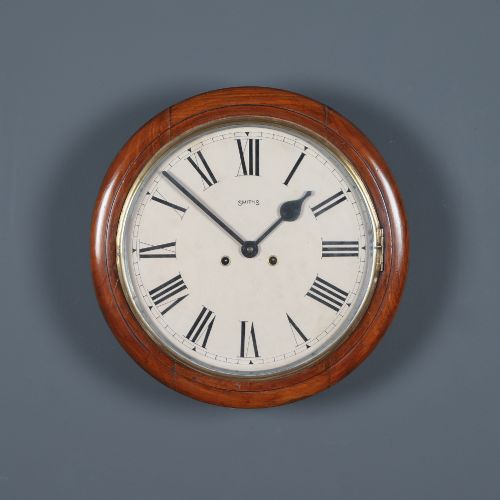
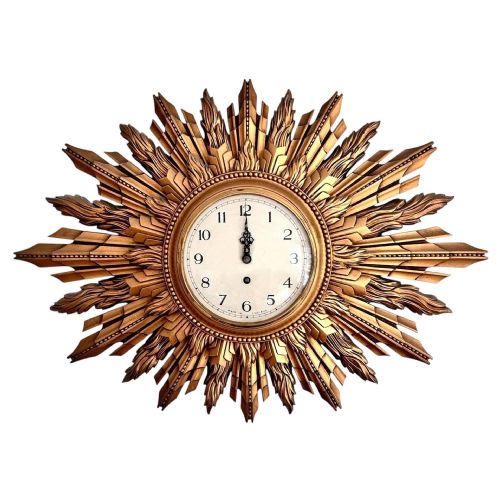
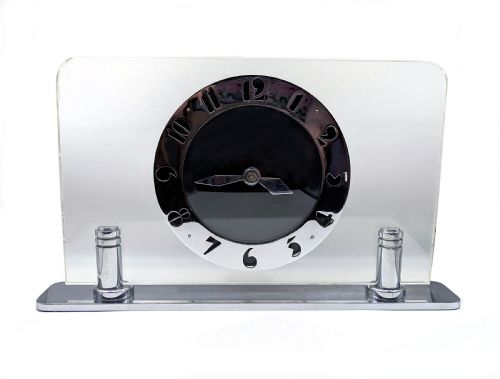
When you search for a smiths english clock, you encounter a wide variety of timepieces ranging from utilitarian station dials to domestic mantelpieces. The selection on this page leans heavily towards the 1930s, featuring Art Deco styling with distinct geometric forms and mirrored glass finishes.
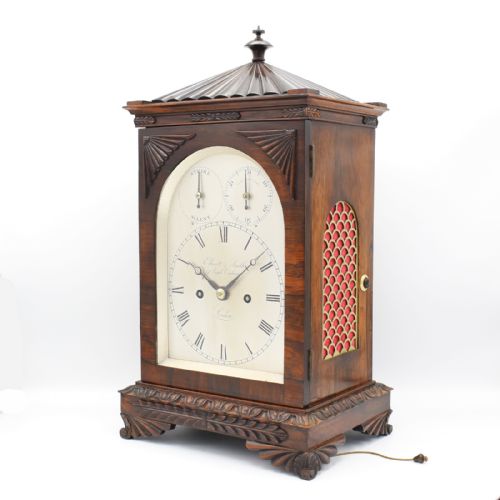
Beyond the domestic mantel models, the evidence reveals robust industrial and transport pieces, including factory clocks, double-sided railway station dials, and ships bulkhead clocks. Earlier centuries also appear through traditional bracket and longcase clocks signed by various makers named Smith.
The dominant aesthetic across the inventory remains the 1930s Art Deco period, though military issues from the 1940s and 1950s provide a different, purposeful utility. Buyers therefore choose between decorative coloured glass designs and hard-wearing public service timepieces.
Materials and construction
These clocks utilise a diverse range of materials recorded across the listings, combining glass, brass, chrome, and metal with traditional timbers such as mahogany. Bakelite and iron also appear in utilitarian and mid-century contexts, while peach and blue mirror glass define the decorative Art Deco mantelpieces.
Movements vary from mechanical 8-day wind-up mechanisms to electric systems and fusee movements found in earlier bracket and longcase pieces. Cases are constructed using traditional cabinetmaking techniques for wood, alongside stamped metal and cast housings for industrial and transport environments.
Listed periods range from mid-18th century longcase clocks to mid-20th century military wall pieces.
Distinctions in quality
Quality in these clocks rests upon the integrity of the movement and the preservation of the original housing materials. Pieces retaining their original coloured or mirrored glass without compromise sit apart from those with replacement components.
The distinction also lies in the intended context of the timepiece, separating mass-produced domestic models from specialised military issues, transport board clocks, and signed 18th-century bracket clocks with intricate fusee movements.
Ellicott and Smith·James Smith London·Henry Smith·William Smith London·Percy Webster
The Smiths English Clock Glossary
- Fusee
- A conical pulley used in mechanical clocks to maintain an even pull on the movement as the mainspring unwinds.
- Bracket clock
- A portable household clock originally designed to sit on a bracket, often featuring a striking mechanism and a handle.
- Bulkhead clock
- A heavy-duty timepiece designed to be mounted directly to the wall of a ship cabin or bridge.
- Twin fusee
- A movement incorporating two fusees, typically separating the time-keeping train from the striking or chiming train.
Smiths English Clock: Frequently Asked Questions
How do I wind an 8 day Smiths clock?
Mechanical 8-day models require a key to tension the mainspring through the dial holes. Care must be taken not to over-wind the mechanism.
Ensure the key turns smoothly and stop immediately when resistance is felt to protect the internal brass teeth.
Are Smiths factory clocks electric or mechanical?
The listings show both mechanical wind-up systems and electric movements depending on the production era and intended building use.
Industrial models often ran on master clock systems in large factories or transport networks.
How do I identify a 1930s Art Deco Smiths clock?
These models are distinguished by peach or blue mirror glass, chrome bezels, and starburst or stepped geometric wooden frames.
The dials frequently display distinct modernist numerals and clear Smiths branding from the period.
Where were military Smiths clocks used?
Military issue pieces served across RAF stations, British Army quarters, and transport boards during the mid-twentieth century.
They were built for durability and legibility in demanding operational environments.