


Small Watercolour Portrait
A small watercolour portrait captures the intimate likeness of an earlier sitter, offering a remarkably personal glimpse into Georgian and Victorian life.
Small Watercolour Portrait
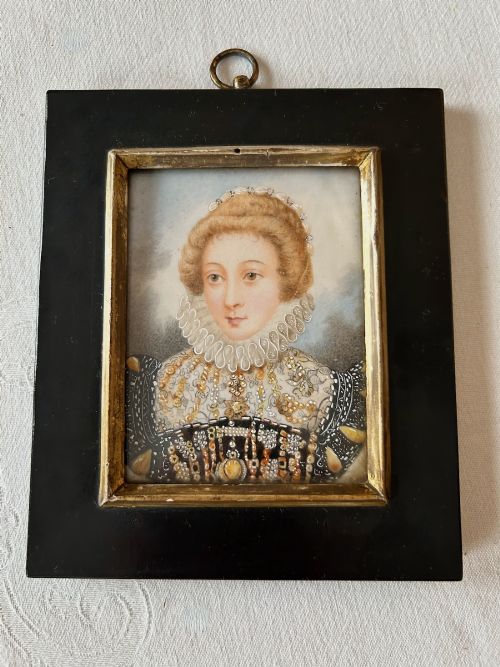
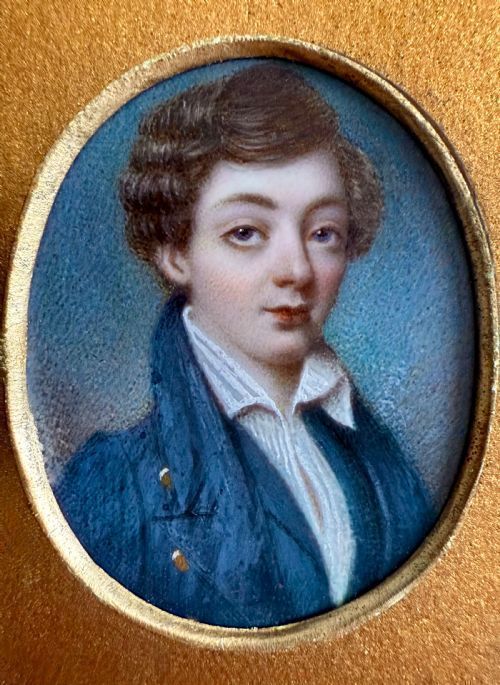
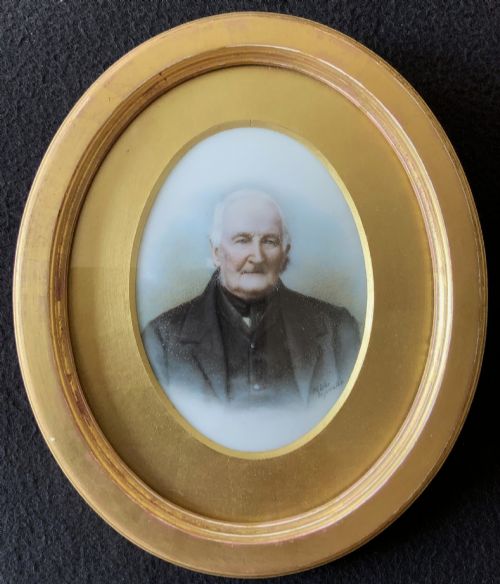
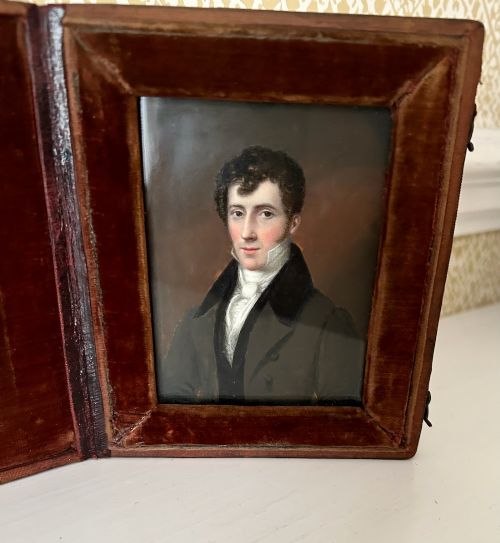
A small watercolour portrait is a miniature painting executed on paper, ivory, or glass, designed to be held in the hand, worn, or displayed in a compact domestic space. These works depict single sitters, children, couples, or historical figures, rendered with striking precision on a tiny scale.
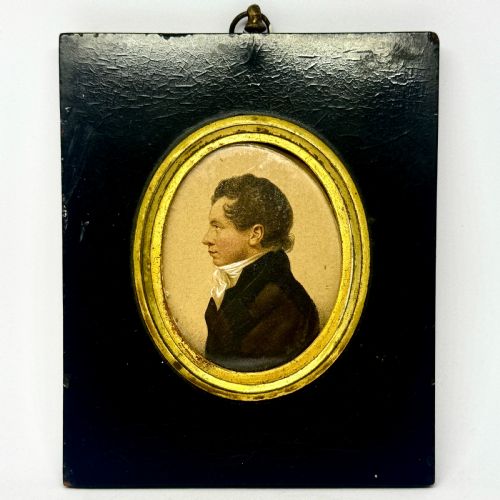
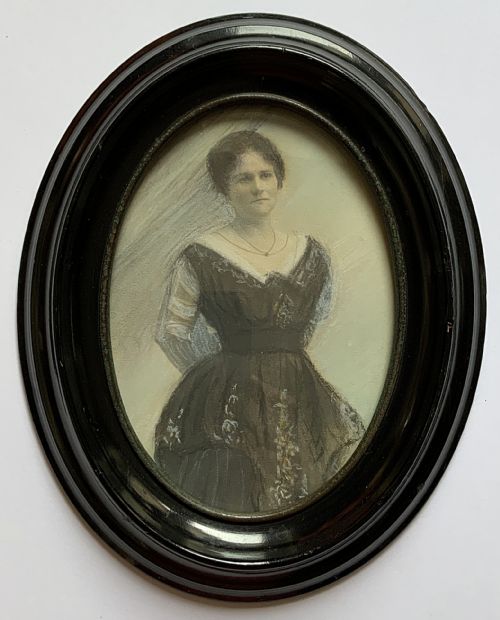
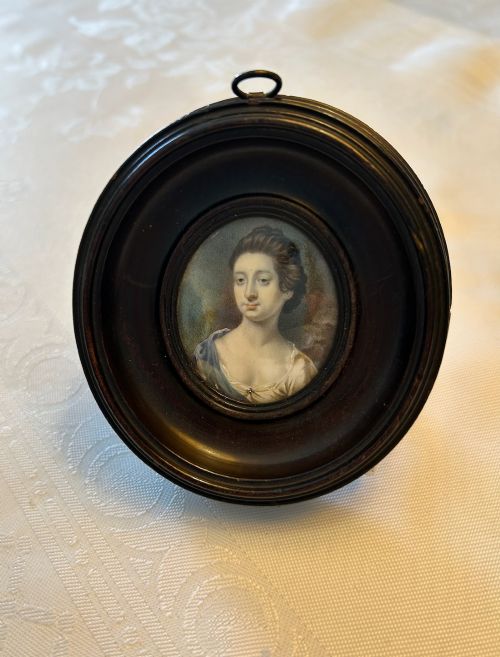
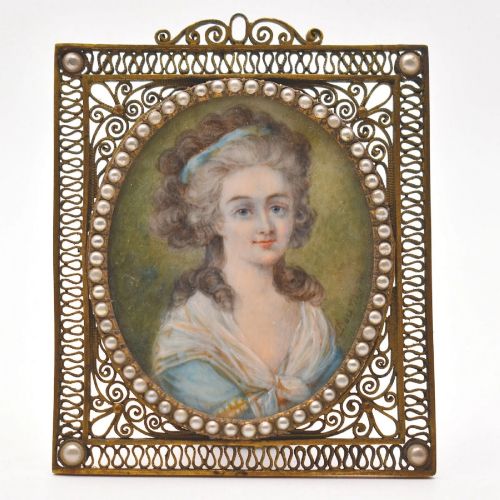
The versions most commonly met on this page date from the eighteenth and nineteenth centuries, spanning the Georgian, Regency, and Victorian periods. They frequently appear framed in ebonised wood or mounted within gilt metal and brass surrounds.
Makers and schools recorded in the evidence range from British and continental artists to distinct named painters, presenting subjects from nobility and actresses to private family members.
How they were made
Artists applied watercolour, gouache, and pastel onto thin sheets of paper or prepared ivory, sometimes working directly behind glass to protect the delicate pigment. This technique required immense control due to the miniature scale of the support.
Frames and mounts played a vital role in the construction, utilising ebonised wood, gilt metal, brass, and seed pearls to house and elevate the miniature painting. Companion pairs often shared matching wooden or cast metal frames.
Listings feature works spanning the Georgian, Regency, and Victorian periods, executed in watercolour, gouache, and pastel on paper, ivory, and glass.
What varies in quality
The fidelity and psychological depth of the likeness separate standard portrait studies from exceptional works by named artists. Skilled hands capture the individuality of the sitter's expression, costume details like ringlets or lace, and the subtle play of light on fabric.
The quality of the housing is equally telling, as fine contemporary ebonised frames, original convex glass, and intricate gilt metal stands or seed pearl settings elevate the entire object.
Henri Fradelle·Richard Cosway·Dumont·George Hargreaves·Emma Kendrick·Isaac Wane Slater·Elisabeth Vigee Le Brun·Andrew Robertson
The Small Watercolour Portrait Glossary
- Portrait miniature
- A small-scale painting depicting a specific person, historically created for private devotion, remembrance, or betrothal. These works range from shoulder-length studies to detailed half-length depictions.
- Ebonised wood
- Timber treated to imitate ebony, commonly used for the dark, polished oval frames characteristic of nineteenth-century miniatures. It provides a sharp visual contrast to the gilt mount and the watercolour within.
- Gouache
- An opaque watercolour medium containing a white pigment filler, used by artists to build solid highlights and dense areas of colour. It frequently appears alongside transparent watercolour in miniature painting.
- Gilt metal
- Base metal treated with a thin layer of gold to give a metallic sheen, often cast into ornate borders for portrait frames and stands. It added a sense of luxury to small domestic art objects.
Small Watercolour Portrait: Frequently Asked Questions
How were small watercolour portraits displayed?
These pieces were designed to be kept in private spaces, often hung closely together on walls in small wooden frames or placed on surfaces using gilt metal stands.
Owners also kept them tucked inside travel cases or wore them as personal mementoes close to the heart.
Are these portraits painted on ivory or paper?
Surviving examples utilise both materials, with artists choosing thin sheets of paper or fine slices of ivory depending on the desired luminosity.
Watercolour applied to ivory produces a distinctive glowing skin tone due to the reflective nature of the underlying material.
How can I tell a Georgian portrait from a Victorian one?
Georgian and Regency examples often feature softer facial styling and distinctive early hairstyles like structured curls or powdered wigs, housed in simple ebonised frames.
Victorian pieces frequently display bolder pastel highlights, richer dress colours, and broader gilt surrounds.
Why do some miniatures feature two paintings together?
Companion pairs or double paintings were commissioned to keep married couples, family members, or parents and children visually united.
Artists occasionally painted companion oval portraits of a lady and gentleman on the same date to mark an engagement or anniversary.