
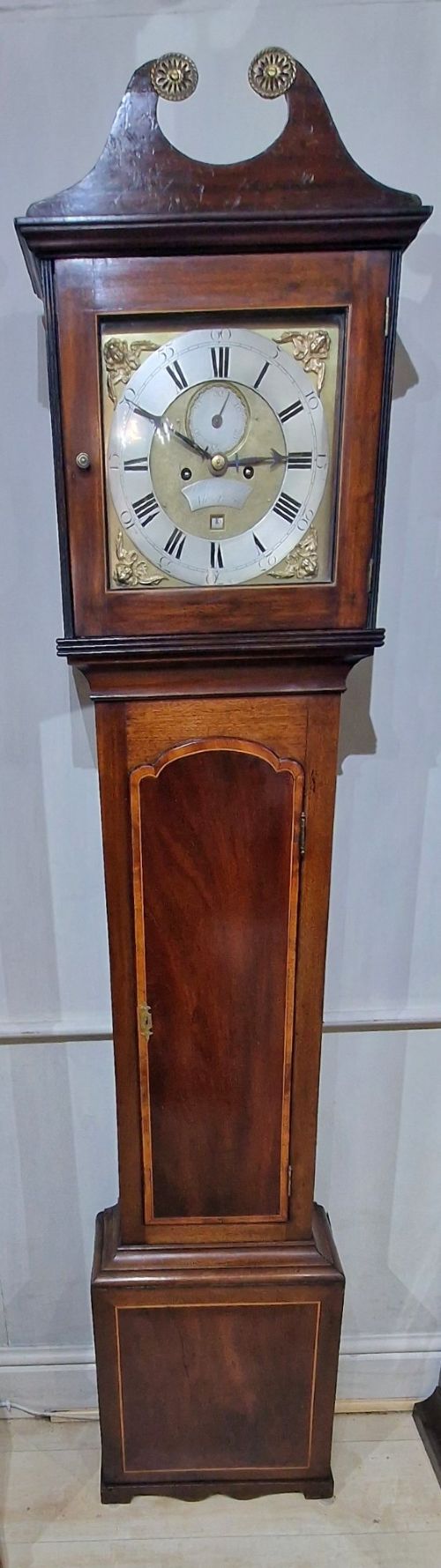
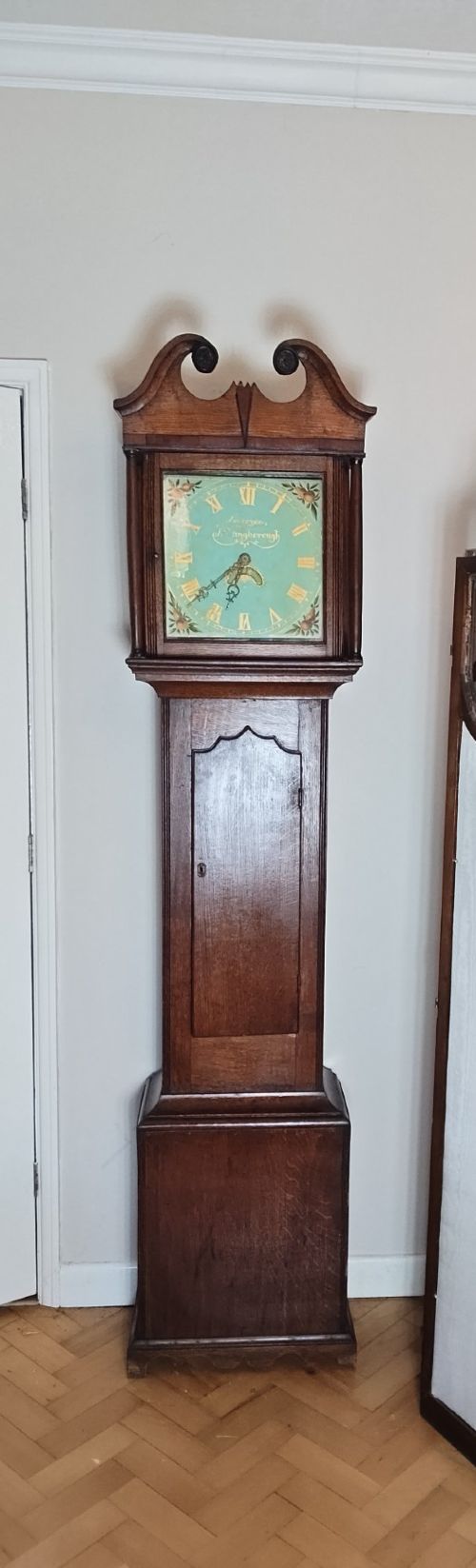
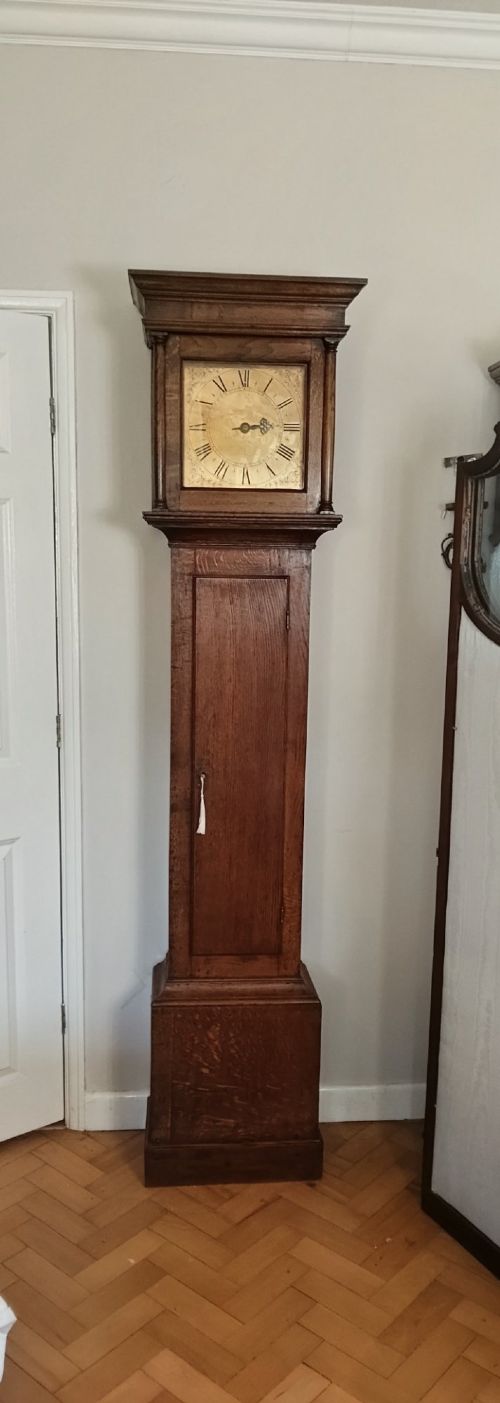
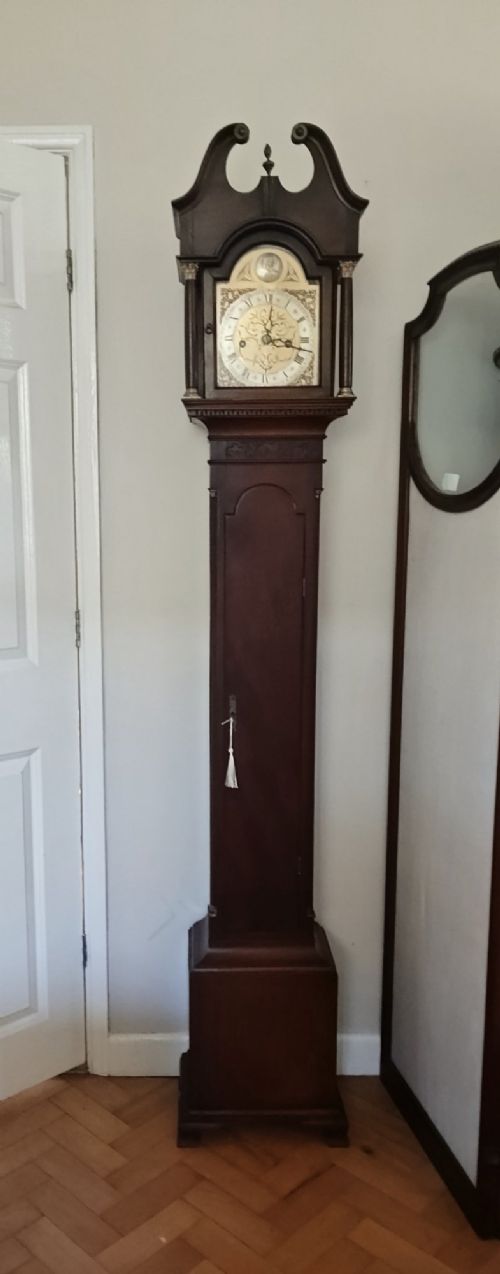

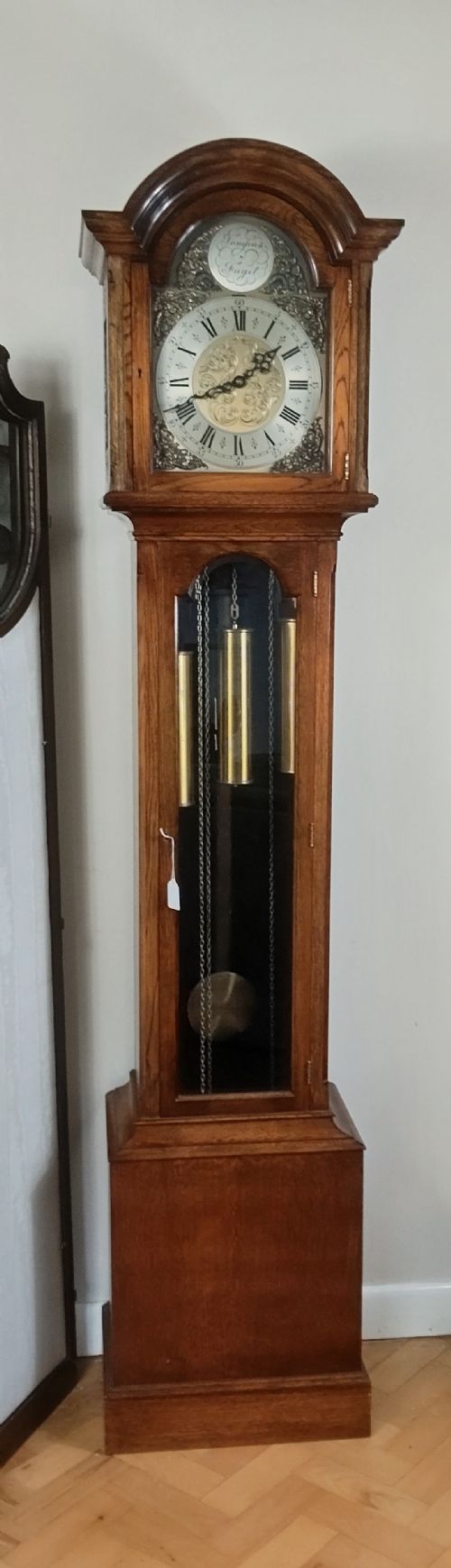
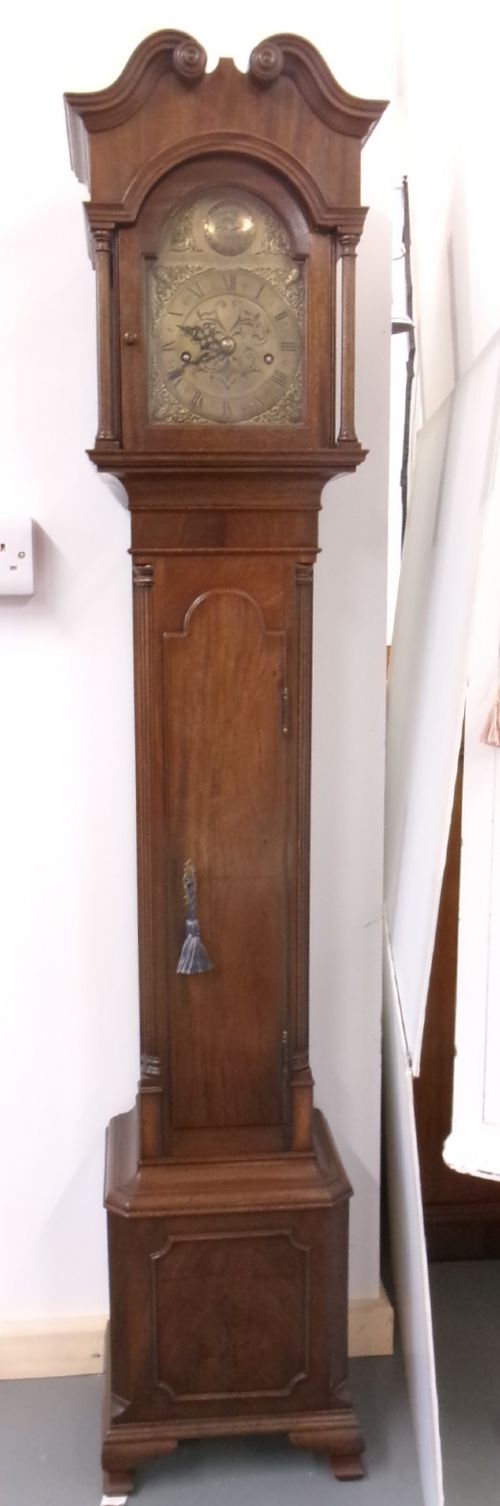
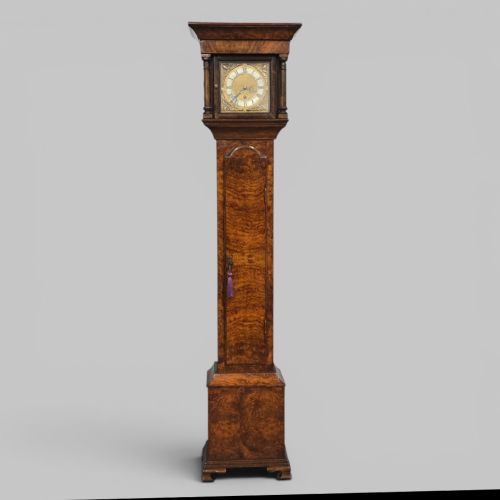


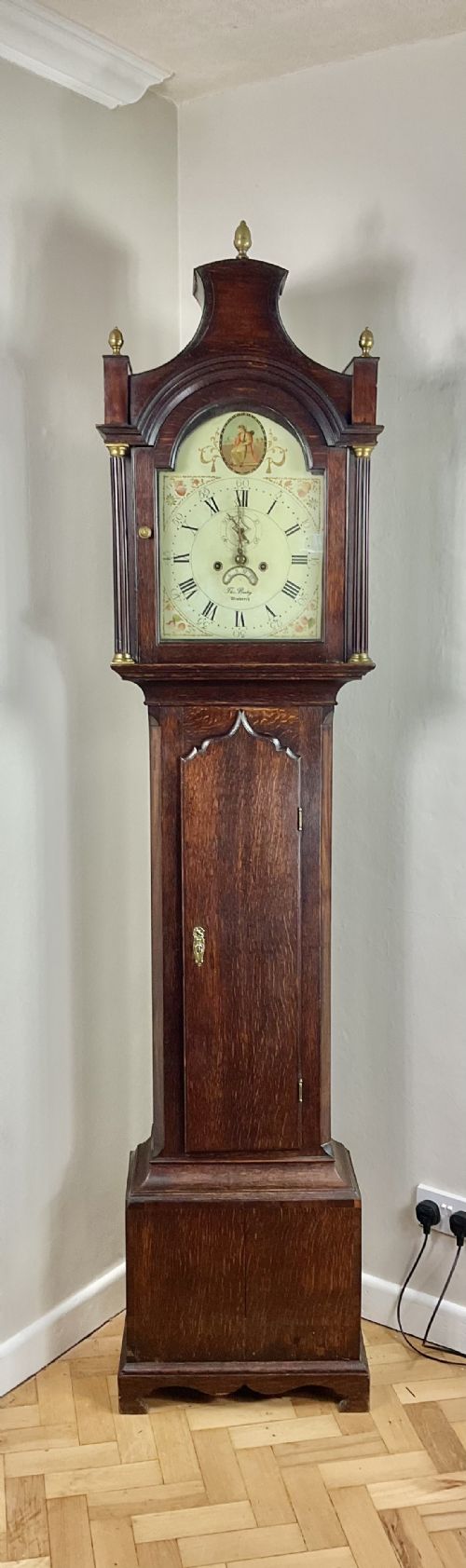

Small Tallcase Clock
A small tallcase clock brings timekeeping and vertical presence into restricted spaces, offering the architectural authority of a full-size floor clock in miniature proportions.
Small Tallcase Clock
When you search for a small tallcase clock, you encounter diminutive floor-standing timepieces that trade height for placement versatility without sacrificing mechanical complexity.
The versions most common on this page span the Georgian and 19th Century periods, alongside Edwardian and later revivals, typically taking the form of oak or mahogany grandfather, grandmother, and granddaughter clocks.
Makers constructed these scaled-down cases to fit smaller domestic rooms while retaining traditional brass dials, weighted movements, and pendulum regulation.
How they were made
Craftsmen built these cases primarily using solid timber such as oak, mahogany, and burr walnut, occasionally applying ebonised finishes or paint to pine substrates.
Dial construction combined engraved brass plates with painted iron faces and protective glass bezels, housing mechanical movements driven by weights, springs, or twin fusee setups.
Movements range from simple 30-hour trains to complex quarter chiming and musical mechanisms.
What varies in quality
Quality rests in the proportion of the case cabinetry, where disciplined reduction of scale maintains the harmonious architectural rhythm of a full-size clock.
Movement execution distinguishes standard striking mechanisms from quarter chiming or musical gear trains signed by accomplished regional and London makers.
Harrods·Dent of London·Hampston Prince and Cattles of York·Frederick Rowe of Great Marlow·William Noke of Shropshire
The Small Tallcase Clock Glossary
- Grandmother clock
- A smaller version of the traditional grandfather clock, generally standing under six feet tall. These pieces emerged primarily in the 20th Century and Victorian periods.
- Granddaughter clock
- An even more compact floor-standing clock than the grandmother variant. They share the same weighted or spring-driven movement principles.
- Longcase clock
- The formal term for a pendulum clock enclosed in a tall wooden case that protects the weights and pendulum. They rely on gravity to power the movement.
- Regulator clock
- A precision timekeeper designed for high accuracy, often featuring a finely calibrated dial layout. These movements prioritise exact timekeeping over striking complications.
- Twin fusee
- A mechanical system using conical drums and chains or cords to equalise the pull of the mainspring as it unwinds. This mechanism provides consistent force to the gear train for better accuracy.
Small Tallcase Clock: Frequently Asked Questions
What is a small tallcase clock?
A small tallcase clock is a floor-standing timekeeper built to reduced dimensions, fitting domestic spaces where standard tall clocks prove too large.
These pieces maintain traditional mechanical movements and weighted pendulums inside cabinetry scaled down for smaller rooms.
Where do you place a tall clock?
These clocks require stable floor placement and enough vertical clearance to accommodate their reduced case heights. Hallways, landings, and principal reception rooms suit their narrow footprints best.
Keep them away from direct heat sources and damp exterior walls to protect the timber case and delicate internal brass movements.
How do you wind these clocks?
Winding involves using a key or pulling cords to raise the internal weights or tension the spring mechanisms, depending on the specific movement type. Most 30-hour and eight-day movements require weekly or daily attention.
Regular maintenance ensures the pendulum maintains a consistent beat and the chiming train operates correctly.
How do you date a tall clock?
Dating relies on examining the timber species, dial style, casework proportions, and the signature of the maker inscribed on the brass or painted face. Georgian and 18th-century examples display different moulding profiles compared to Edwardian or 1930s revivals.
Internal movement construction and fastener types also provide evidence for chronological assessment.