
Small Study Desk
A small study desk provides a compact workspace, combining fitted drawers and writing surfaces in periods from the Georgian era to the Edwardian period.
Small Study Desk
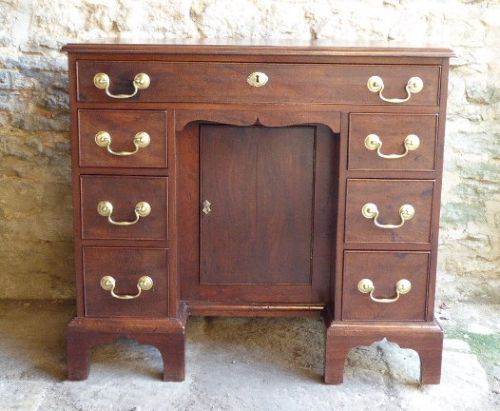
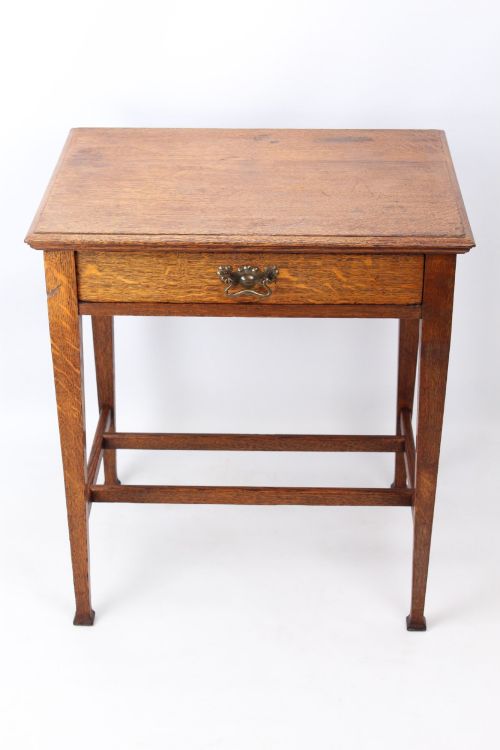
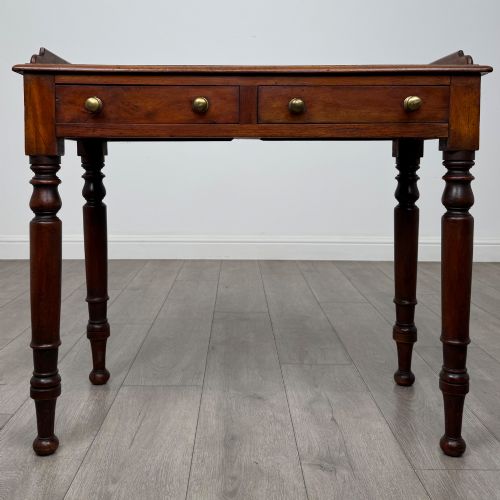
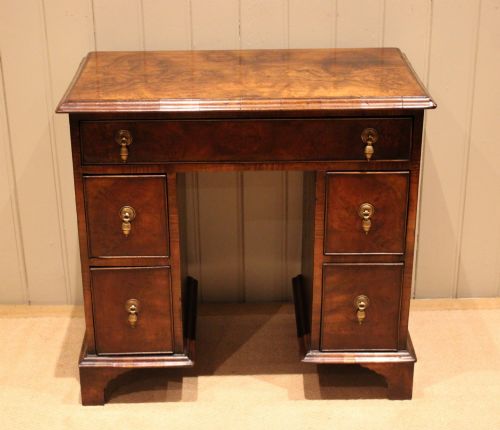
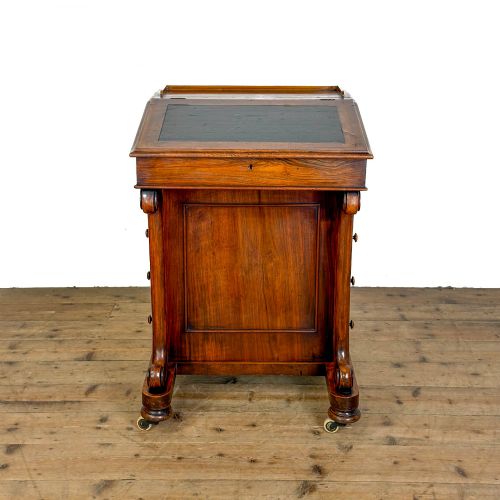
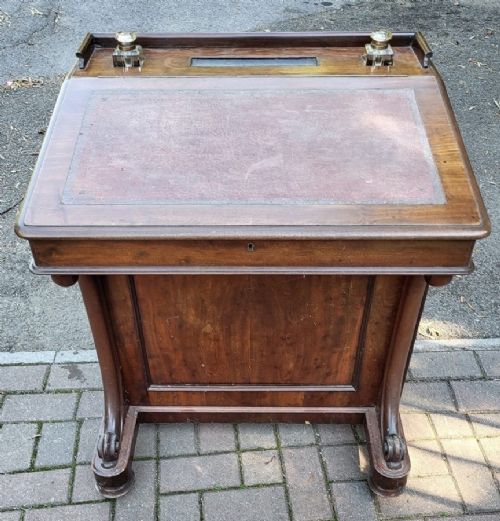
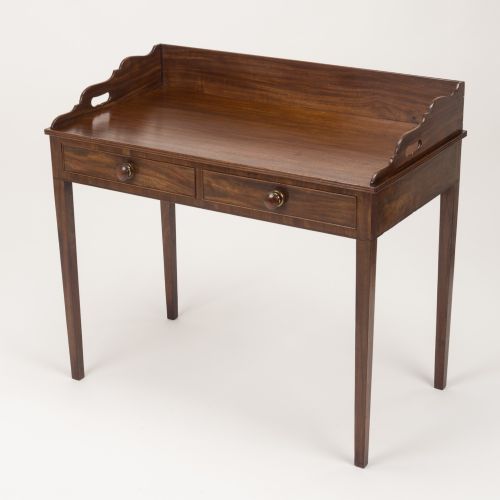
When you search for a small study desk, you encounter compact writing furniture designed for domestic use rather than large offices. The selections here include kneehole desks, writing tables, and Davenport desks.
Most examples originate from the Victorian and Edwardian periods, alongside Georgian pieces. These forms offer functional writing surfaces and storage drawers within modest proportions suitable for smaller rooms.
Materials and construction
Cabinetmakers utilised hardwoods such as mahogany, oak, walnut, and rosewood for the primary frames and drawer structures. Inlays of lighter timbers and brass hardware often complement these main woods.
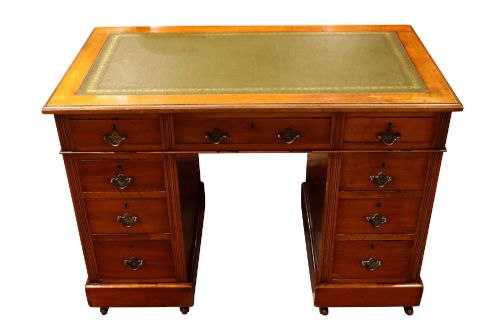
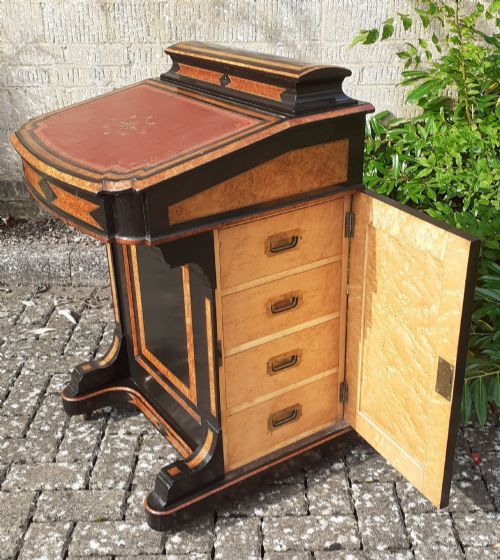
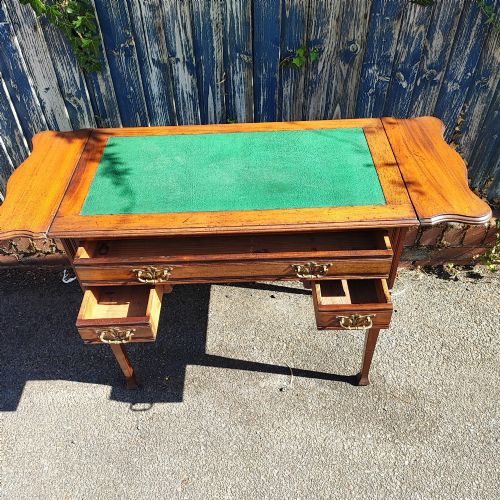
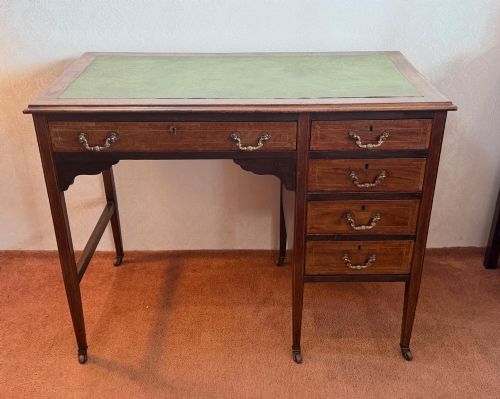
Writing surfaces frequently incorporate inset leather panels, sometimes tooled with gilt borders. Davenport desks integrate sloping desk lids above sets of side drawers.
Listings feature woods including mahogany, oak, burr walnut, rosewood, and satin birch across the Georgian, Victorian, and Edwardian periods.
Assessing quality and craftsmanship
Quality rests in the selection of figured timber veneers, such as burr walnut or pollard oak, matched across drawer fronts and desk lids. Cabinetmaking standards show in smooth drawer running and tight joints.
The integrity of secondary woods inside drawers and the retention of original brass handles or leather inserts distinguish superior examples from altered pieces.
Gillows·Jenners·Dora Heber
The Small Study Desk Glossary
- Davenport desk
- A compact pedestal desk featuring a sloping writing top and drawers accessed from the side. This form became popular during the nineteenth century for ladies' studies.
- Kneehole desk
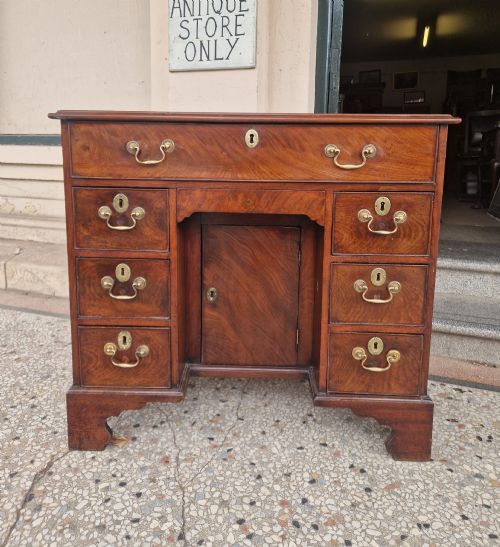
- A freestanding desk with a central recess for the user's legs, flanked by pedestals of drawers. Georgian and Victorian makers produced these in reduced proportions.
- Writing table
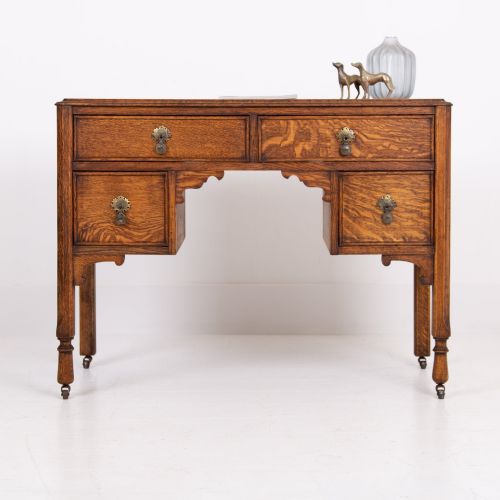
- A freestanding table with one or more drawers beneath the top surface, used primarily for correspondence. These pieces often feature turned legs or slender supports.
- Pollard oak
- Oak timber showing clustered knots and growth marks that create a decorative pattern. Cabinetmakers utilised this figured wood for high-status furniture fronts.
- Inlay
- A technique where pieces of contrasting timber, brass, or shell are set into recesses flush with the surface. Edwardian and Victorian desks frequently display decorative wood inlay.
Small Study Desk: Frequently Asked Questions
What is a Davenport desk?
A Davenport desk is a compact writing cabinet with a sloping, hinged top for correspondence and a bank of drawers opening to the side.
Originating in the nineteenth century, this form provides enclosed stationary storage while occupying minimal floor space.
How do I identify a Georgian desk?
Georgian desks display classical proportions, often executed in solid mahogany or oak with straightforward brass pulls. Their construction relies on hand-cut dovetails and traditional joinery.
These pieces prioritise architectural balance and structural simplicity over heavy surface ornamentation.
Were these desks used in offices?
Smaller desks served primarily in domestic studies, bedrooms, or ladies' sitting rooms rather than commercial offices. They accommodated letter writing and personal accounts.
Writing tables and kneehole desks offered portable or fixed surfaces for private correspondence in the home.
What woods were commonly used?
Mahogany and oak form the backbone of most surviving examples, offering durability and rich grain patterns. Walnut and rosewood appear frequently in decorative nineteenth-century pieces.
Cabinetmakers also selected burr walnut and pollard oak veneers to create striking visual textures on drawer fronts and writing surfaces.