
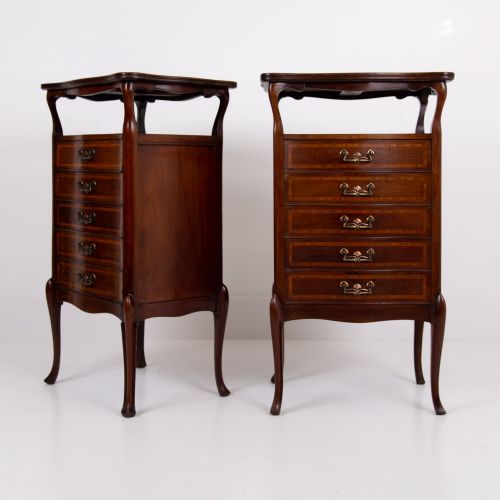
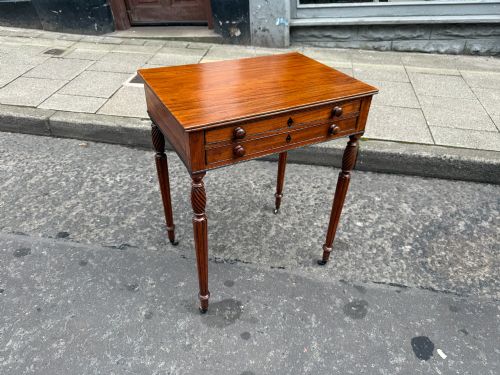
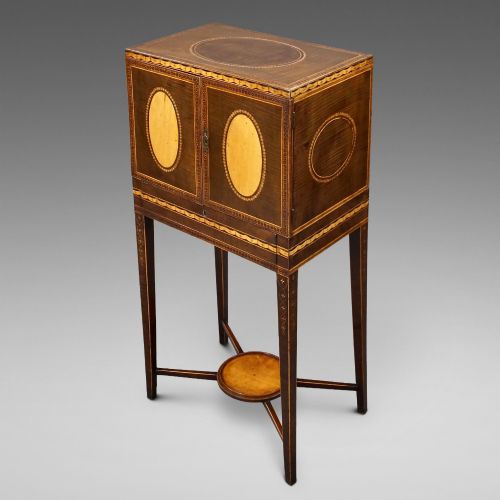
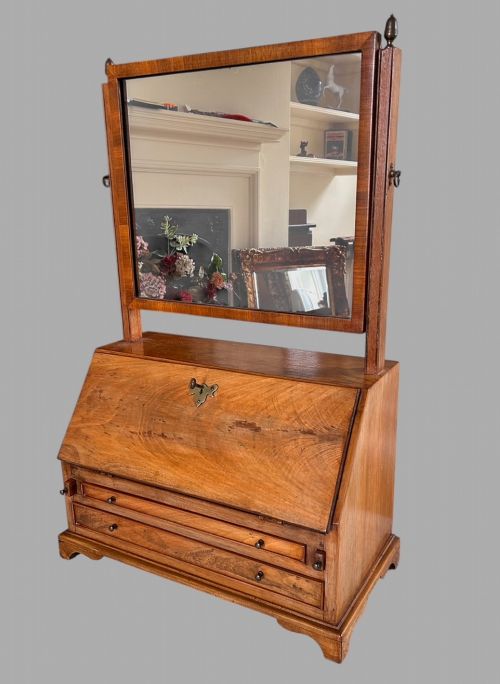
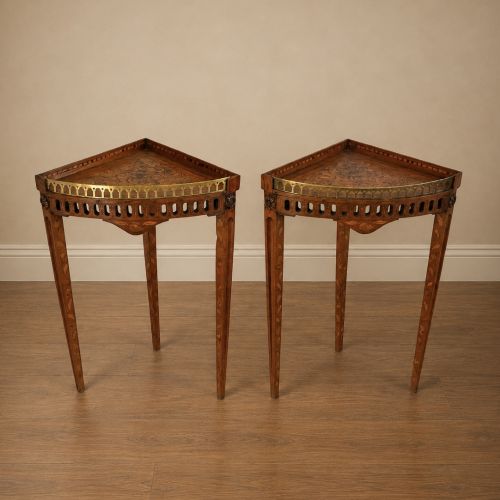


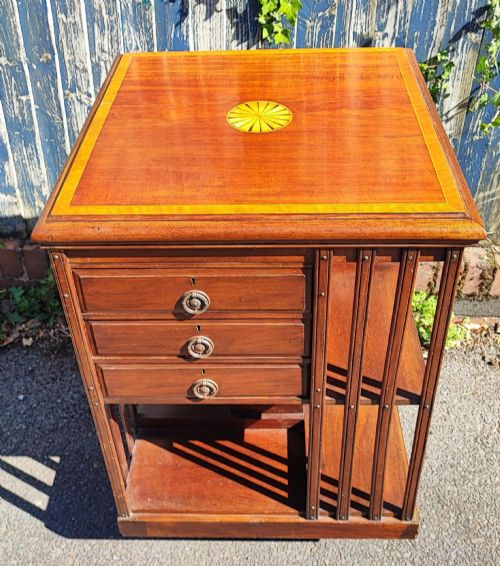
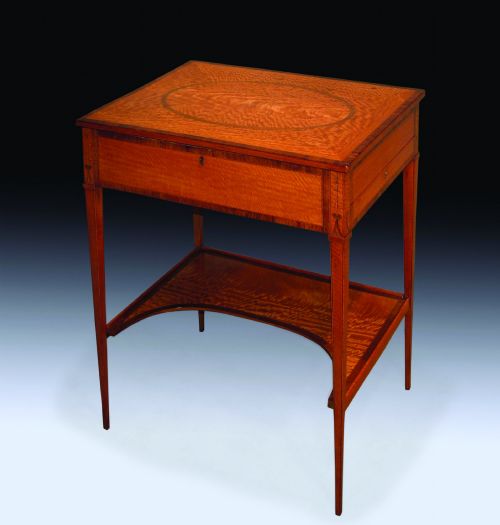
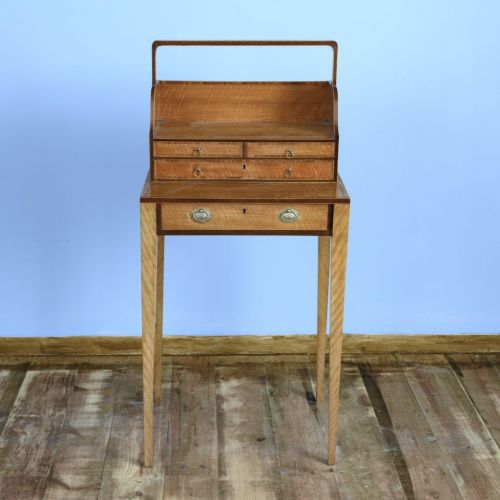

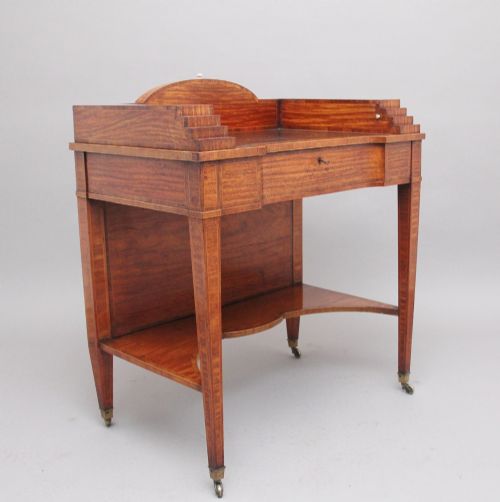
Small Satinwood Table
A small satinwood table brings a luminous, golden warmth to a room, pairing fine cabinet-making with compact proportions.
Small Satinwood Table
When you search for a small satinwood table, you encounter compact furnishings designed for sitting rooms, boudoirs and libraries. The selection spans the eighteenth century through to the Edwardian era, encompassing George III, Regency and Sheraton Revival styles.
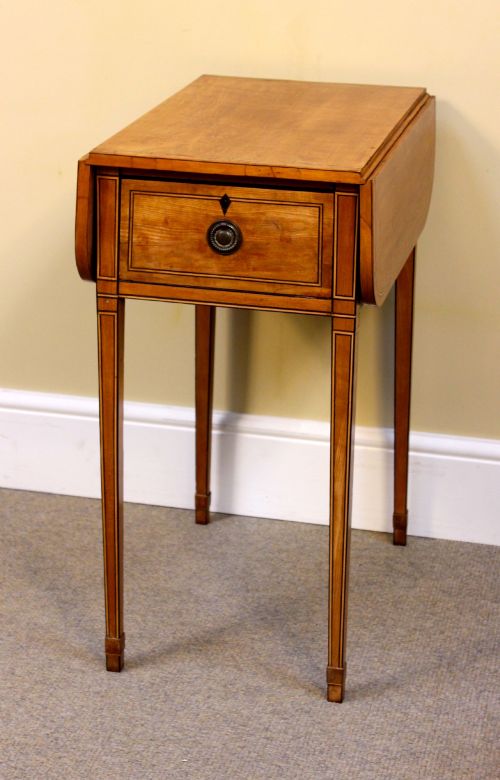
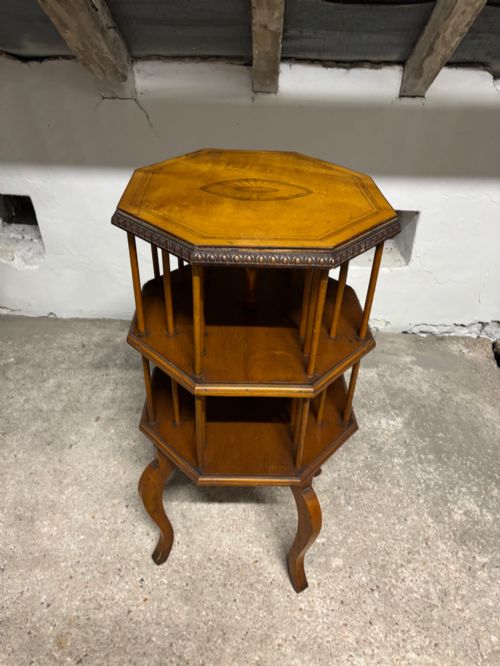
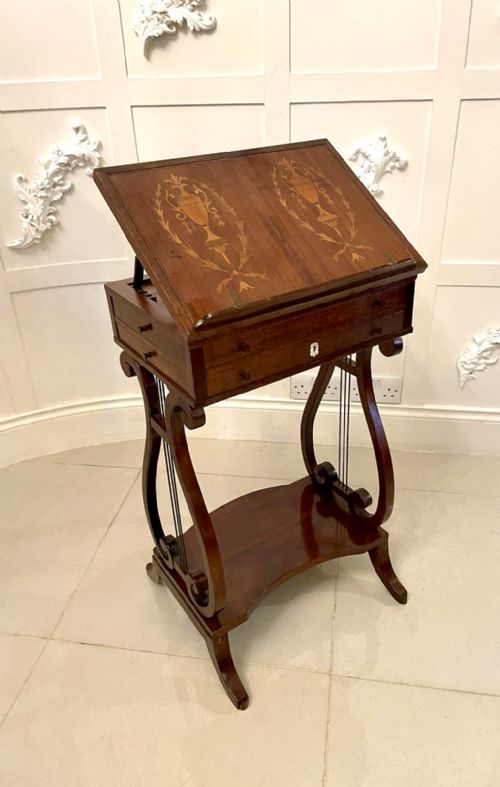
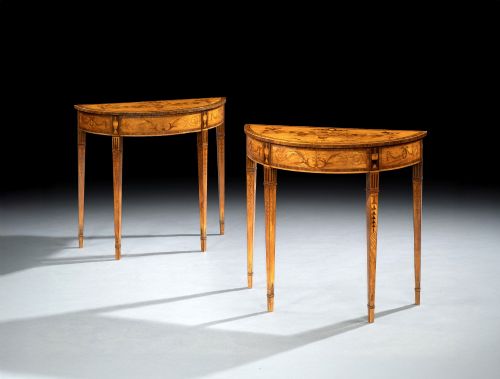
Occasional tables, demi-lune side tables and Pembroke tables dominate the offerings. You also find specialised forms such as ladies writing tables, card tables and small Pembroke lamp tables.
Edwardian and late nineteenth-century interpretations appear frequently alongside Georgian and Regency originals. These pieces utilise light timbers to brighten domestic interiors while maintaining practical surfaces for daily use.
How they were made
Cabinet-makers utilised satinwood veneers applied over foundational timbers such as mahogany or pine to achieve a lustrous, light-reflecting surface. Artisans enhanced these golden veneers with contrasting stringing and banding in woods like boxwood, rosewood and harewood.
Marquetry and inlay techniques form the decorative core of these tables, frequently depicting floral motifs, ribbons or neoclassical urns. Skilled craftsmen also incorporated painted decoration directly onto the satinwood panels, particularly during the Sheraton Revival and Edwardian periods.
Materials appearing across the inventory include brass, mahogany, boxwood, glass, leather and rosewood.
What varies in quality
The sophistication of the timber selection and the precision of the inlay dictate the standing of a piece. Finer examples display meticulously matched grain patterns across the top, alongside crisp, tight joints in the marquetry work rather than crude painted substitutions.
Proportion and structural integrity separate standard production from superior craftsmanship. The best tables retain delicate, tapering legs and original brass hardware that complement the refined character of the satinwood veneer.
Maple & Co·J Shoolbred·Gillows·Edwards and Roberts
The Small Satinwood Table Glossary
- Satinwood
- A hard, durable tropical timber known for its natural golden sheen and satiny texture. It served as the primary decorative veneer for high-end neoclassical furniture.
- Demi-lune
- A half-moon shape characteristic of side and console tables designed to sit flush against a wall. This form gained immense popularity during the Georgian and Sheraton periods.
- Marquetry
- The art of applying pieces of veneer to a structure to form decorative patterns and pictures. Craftsmen used various contrasting woods to create shaded floral and architectural designs.
- Stringing
- A thin, inlay line of contrasting wood used to outline borders and panels. This technique defines the geometric framing on eighteenth and nineteenth-century tabletops.
Small Satinwood Table: Frequently Asked Questions
Where were small satinwood tables used?
Georgian and Regency households placed these versatile pieces in drawing rooms, parlours and private boudoirs. They served as lamp tables, tea tables or writing surfaces for correspondence.
Later Edwardian homes utilised them similarly as occasional tables for display or beside seating arrangements. Their compact footprints suited smaller parlours and bedrooms alike.
How can I distinguish Regency from Edwardian pieces?
Regency pieces date from the early nineteenth century and typically display restrained classical lines, heavier brass mounts and deep, rich patination on the timber. The construction relies on traditional hand-joinery characteristic of the period.
Edwardian items, built around 1900, often reflect the Sheraton Revival style with lighter proportions, painted floral swags and machine-assisted precision in the inlay work.
What is the difference between satinwood and mahogany?
Satinwood is a dense, pale timber prized for its distinct golden-yellow colour and shimmering chatoyancy. It reflects light in a way that darker woods cannot.
Mahogany is a reddish-brown timber known for structural stability and deep grain patterns. Makers frequently combined the two, using mahogany for frames and satinwood for decorative veneered surfaces.