

Writing Table with Gallery
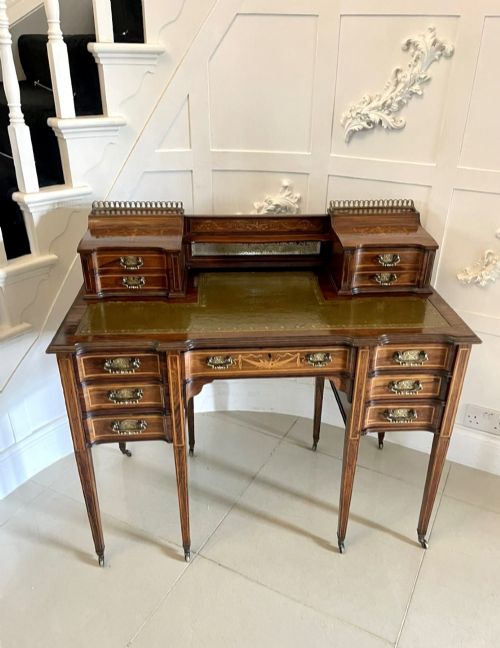
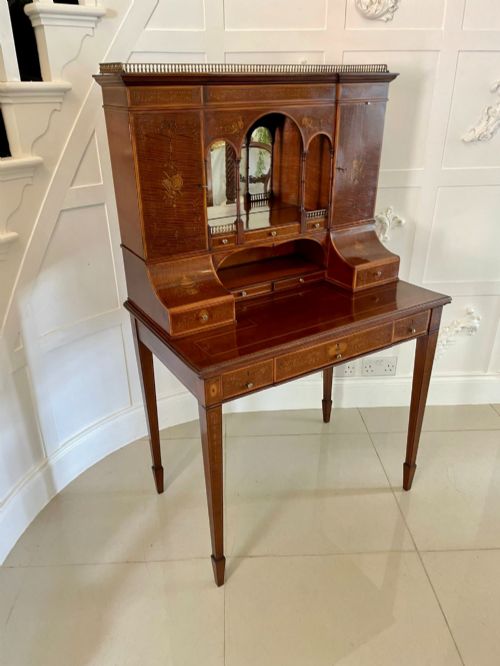
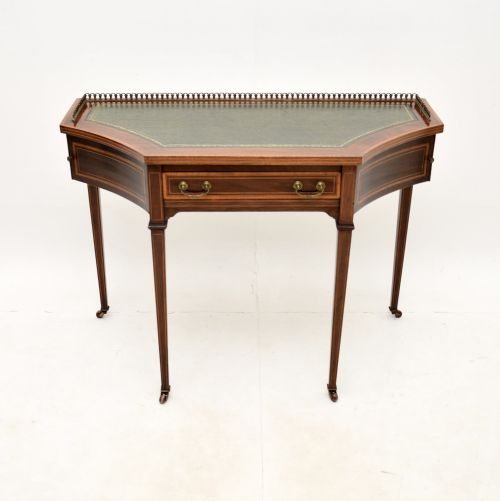
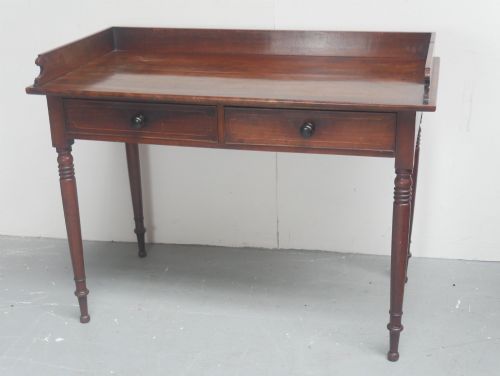
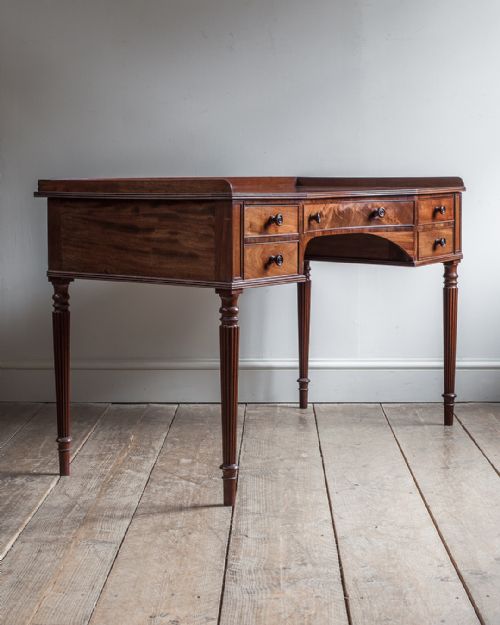
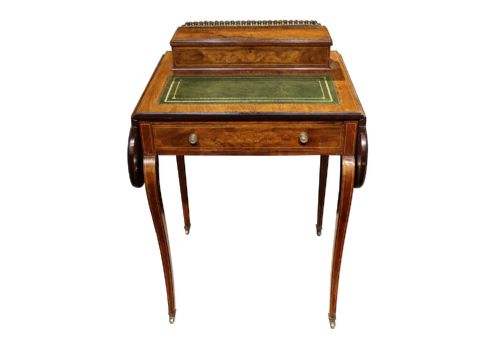
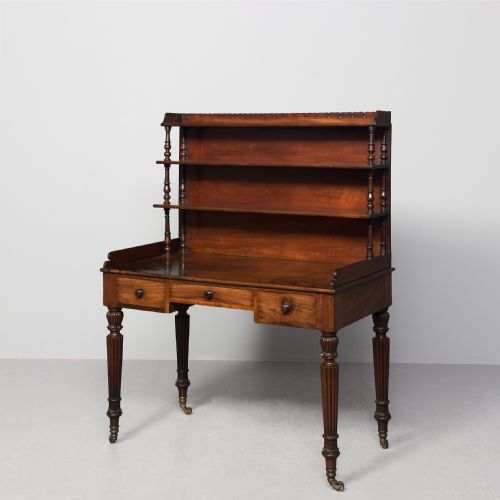
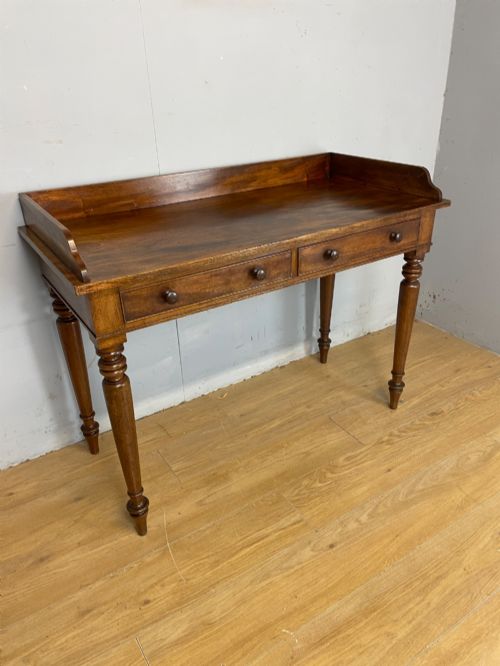
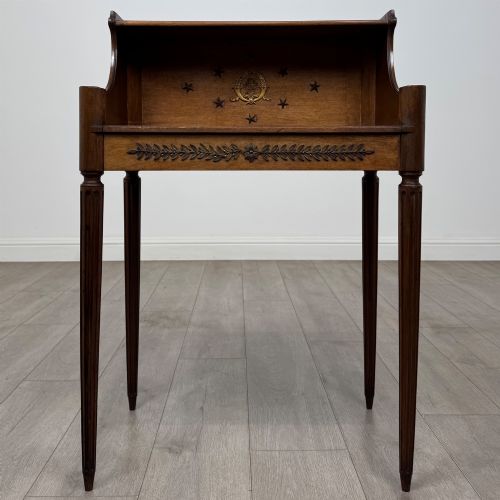
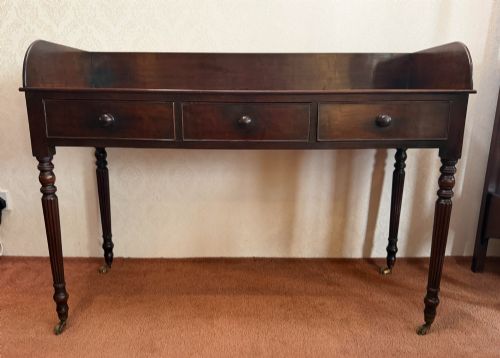
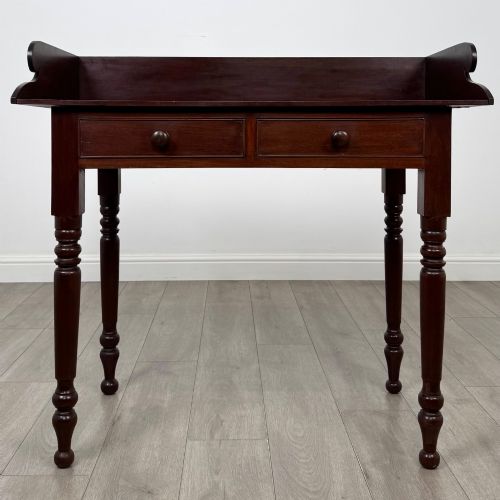
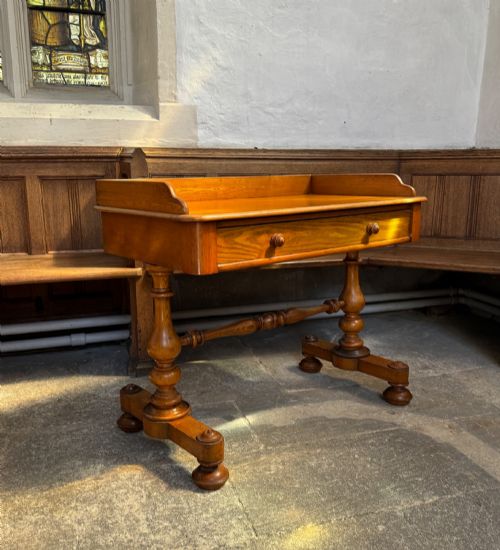
A writing table with gallery brings functional elegance to any room, offering a raised shelf at the back to secure papers and pens.
Writing Table with Gallery
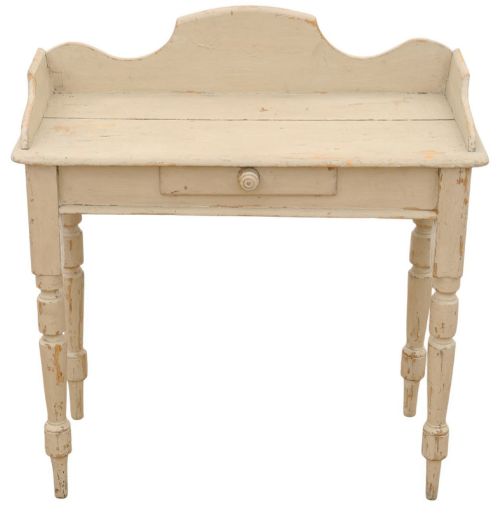
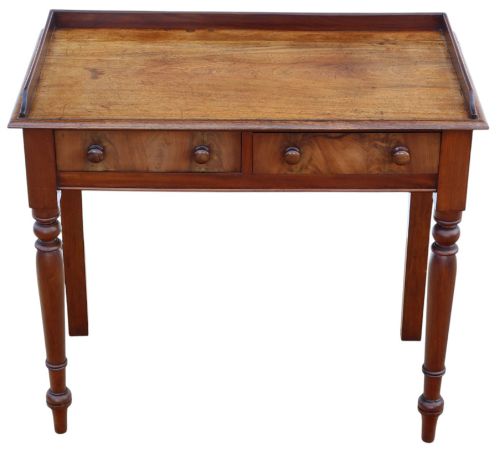
A writing table with gallery is a dedicated desk featuring a low raised rail or shelf along the rear edge, designed to keep stationery from sliding off. These pieces appear most frequently from the Victorian, Edwardian, and Georgian eras, spanning the nineteenth and early twentieth centuries.
The versions most commonly met on this page include mahogany pedestal desks, satinwood Carlton House models, and rosewood ladies' writing tables. They manifest in various regional styles, from simple vernacular side tables to sophisticated Sheraton Revival and Regency creations.
Standards of craftsmanship
Quality in a writing table with gallery rests on the crispness of the timber selection and the precision of the joinery in the drawers and gallery frame. Pieces featuring figured veneers, meticulous satinwood inlay, and original brass hardware stand apart from simpler utilitarian items.
The integration of the gallery back dictates the overall harmony of the design, where slender turned spindles or solid pierced upstands are securely jointed to the main writing surface rather than merely pinned on.
A tiny brass gallery prevents an errant inkwell from tumbling onto the carpet during particularly hurried moments of correspondence.
James Mein of Kelso·Maple of London·Gillow and Co·Liberty
The Writing Table with Gallery Glossary
- Gallery
- A raised wooden or brass railing fitted along the back or sides of a desk to prevent items from falling off. It often incorporates small compartments or stationery slots.
- Crossbanding
- A strip of veneer applied perpendicularly to the grain of the main surface around the border of a drawer front or tabletop. This technique creates a neat framing effect.
- Carlton House desk
- A distinctive horseshoe-shaped writing desk featuring a permanent tiered superstructure of drawers and pigeonholes fitted with a gallery. It gained popularity during the late eighteenth century and saw revivals later.
- Parquetry
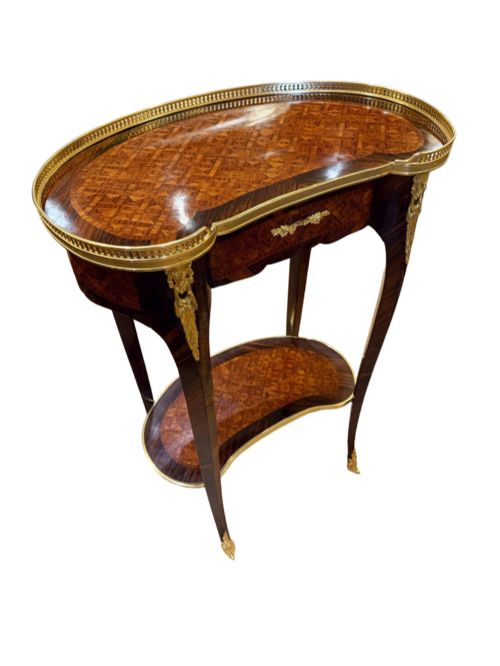
- Geometric patterns formed by small pieces of fitted veneer inlaid into a desktop. It showcases the maker's skill in precision woodworking.
- Ormolu
- Gilded bronze mounts and decorative details applied to furniture. It appears frequently on continental pieces of the nineteenth century.
Writing Table with Gallery: Frequently Asked Questions
What is a gallery back?
A gallery back is a raised shelf, rail, or compartment structure attached to the rear of a writing table. It provides a secure border that stops books, inkwells, and papers from sliding off the working surface.
Historically, these additions also served to hold small letters or stationery upright, keeping the main desk clear for writing.
How do I date these desks?
Dating relies on identifying the prevailing stylistic influences, timber choices, and construction methods characteristic of specific reigns and decades. Georgian pieces tend to show simpler rectilinear forms, while Victorian and Edwardian examples often feature richer veneers and revived historical motifs.
Examining the drawer linings, handle styles, and secondary woods helps confirm the period of manufacture.
Where were they used?
These tables served primarily in private libraries, drawing rooms, and master bedrooms as designated spots for correspondence and record-keeping. Smaller ladies' writing desks were often kept in private boudoirs for personal letter writing.
Larger pedestal variants functioned as primary workspaces for gentlemen managing household estates or businesses.
Are the leather tops original?
Leather inset writing surfaces can be either original or replaced during later conservation work. Many nineteenth-century desks retain their aged hide with gilt tooling, while others have been re-leathered to ensure a smooth writing surface.
Both conditions appear frequently, with original leather showing natural wear and later replacements offering a pristine texture.