
Small Round Occasional Table
A small round occasional table brings useful surface space and compact form to any corner, drawing on centuries of cabinet-making in mahogany, oak and walnut.
Small Round Occasional Table
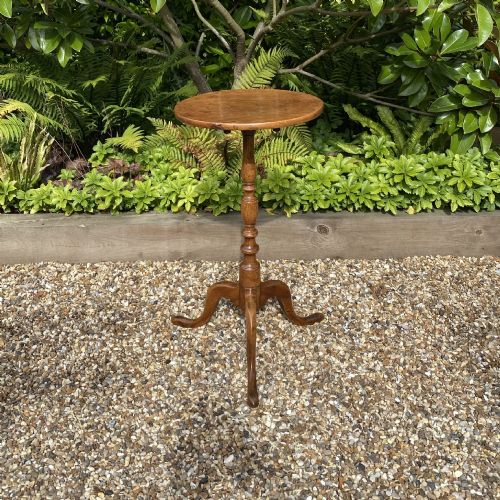
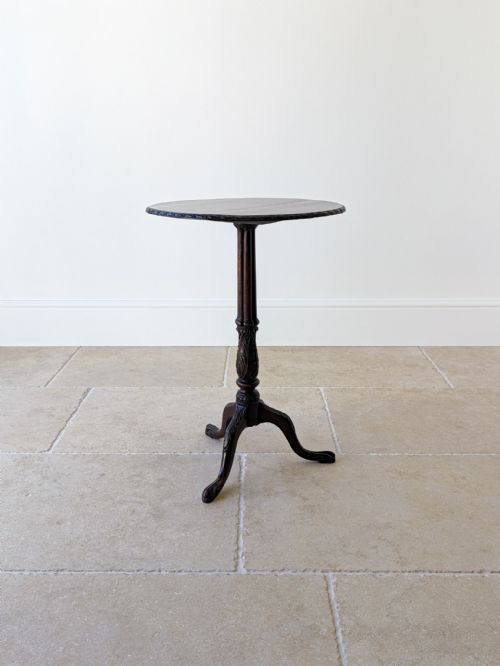
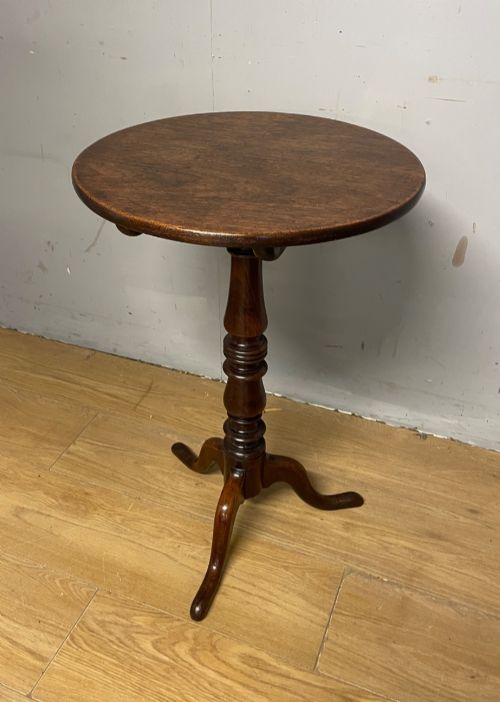
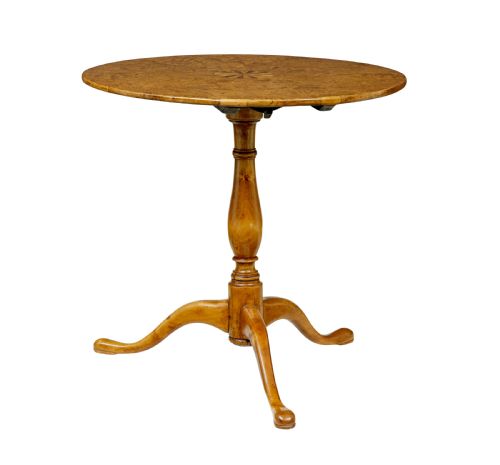
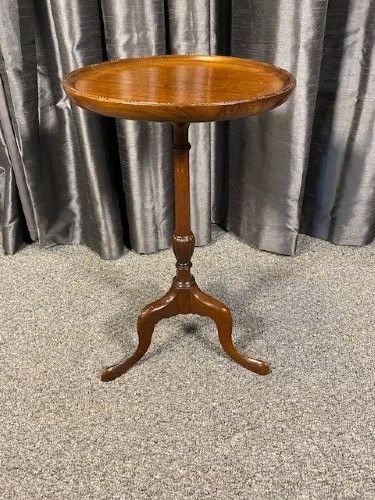
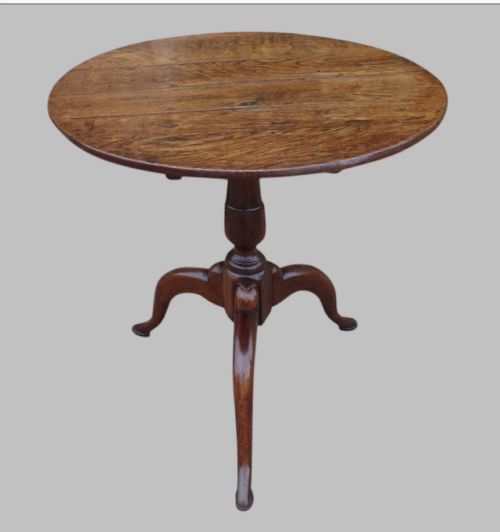
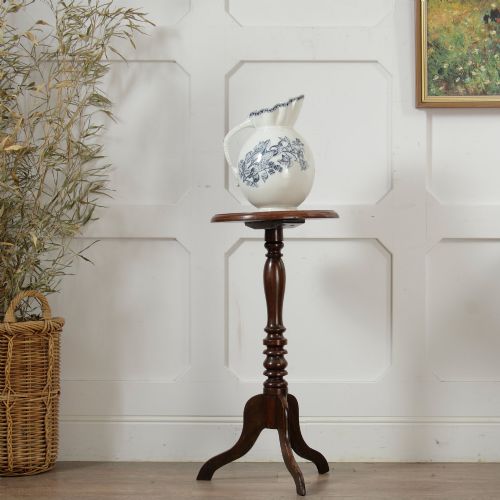
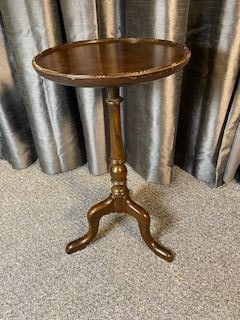
A small round occasional table serves as a versatile piece for lamps, drinks or display, taking up minimal floor space while offering a distinct period character. When searching this phrase, buyers encounter forms ranging from Georgian tripod wine tables to Edwardian inlaid side tables and rustic oak cricket tables.
The pieces on this page span the 18th, 19th and early 20th centuries, covering styles from William IV and Regency to Arts and Crafts and various revivals. Tripod bases, pedestal columns and tilt-top mechanisms appear frequently among the listings.
Originating largely from British workshops alongside continental examples in burr birch or painted finishes, these tables bridge practical utility and traditional craftsmanship. The selection relies heavily on mahogany, oak and walnut timbers.
How they were made
Cabinet-makers relied on solid hardwoods like mahogany, oak and walnut, often turning pedestal shafts on a lathe and shaping tripod legs by hand. Tops were joined from single planks or multiple boards, sometimes featuring tilt-top mechanisms with brass catches.
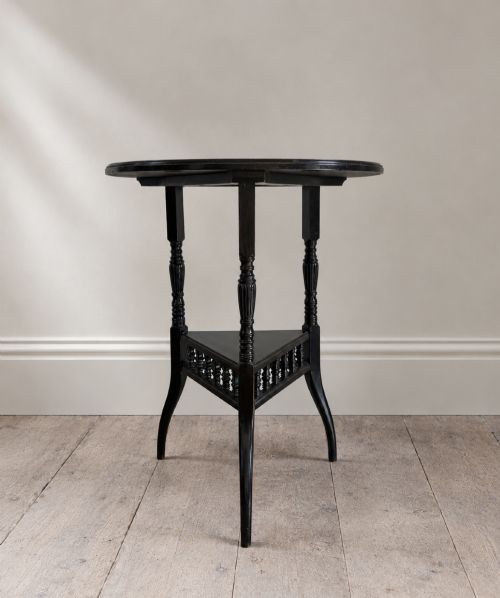
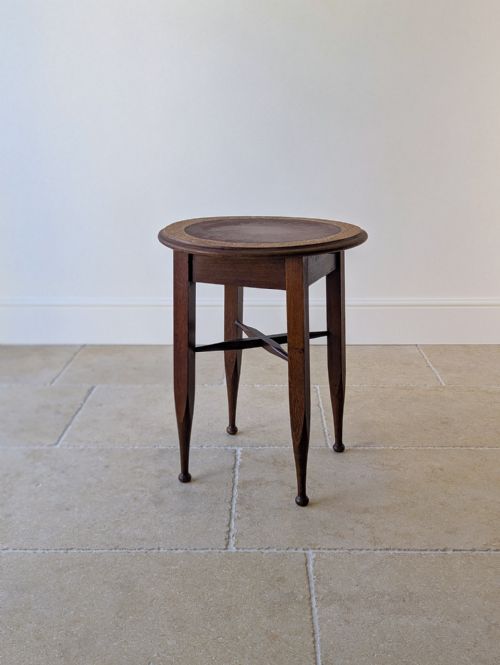
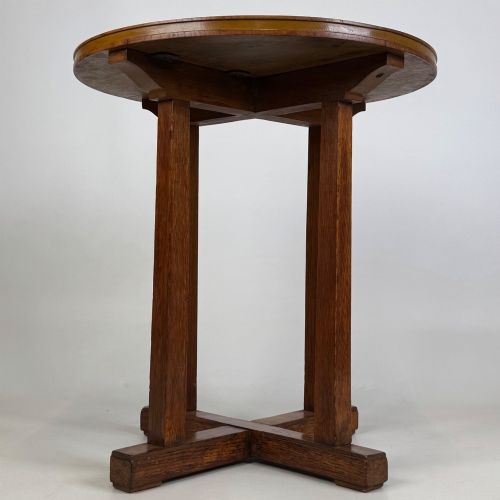
Inlaid details incorporated satinwood and ebonised elements, while Arts and Crafts pieces utilised exposed pegged joints and occasionally copper tops. French polish, wax or paint completed the surfaces, protecting the timber while highlighting natural grain patterns.
Some tables retain copper tops hammered by Arts and Crafts guilds, ready for generations of tea cups.
What varies in quality
Quality rests on the choice of timber and the precision of the joinery, particularly where the central pillar meets the tripod legs and the table top. Superior examples display well-figured mahogany or walnut, balanced proportions and original turning without clumsy later repairs.
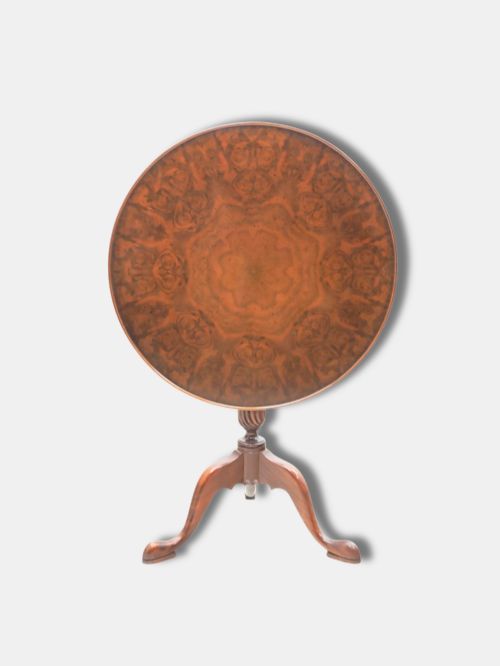
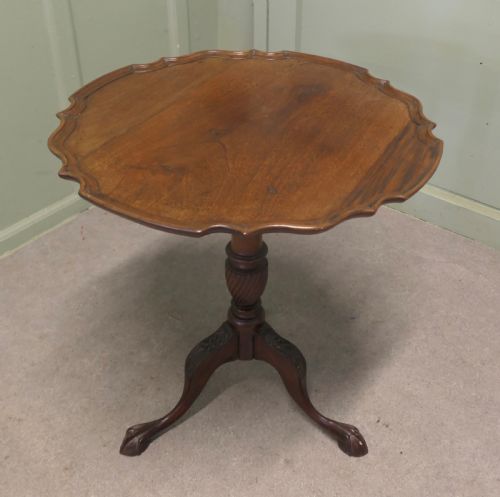
The refinement of carved details, such as pie-crust edges or subtle tripod cabriole legs, separates standard utilitarian pieces from high-workshop production. Hardware integrity, including original brass tilt mechanisms and stable pillar attachments, dictates the lasting stability of the piece.
EW Godwin·Liberty and Co·Waring and Gillow
The Small Round Occasional Table Glossary
- Tripod table
- A small circular table supported by a central pillar resting on three legs. This form became popular in the 18th century for serving wine or holding tea equipment.
- Tilt-top
- A table top mounted on a hinge mechanism that allows the surface to tilt vertically when not in use. This design saved space in smaller rooms.
- Cricket table
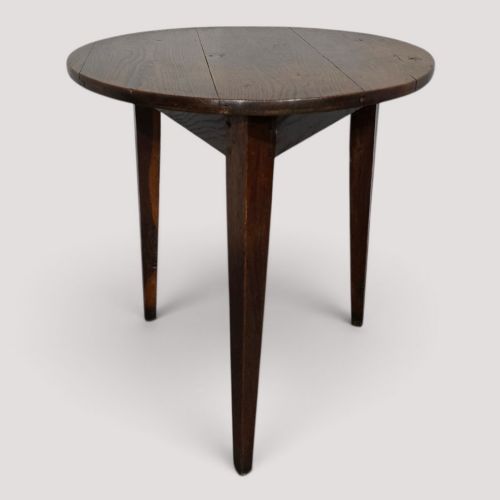
- A sturdy three-legged wooden table with a round top, traditionally associated with country houses. The triangular base provided stability on uneven stone floors.
- Wine table
- A compact occasional table designed to hold a single bottle and glasses. They frequently feature small tops and slender pedestals.
- Pedestal table
- A table supported by a single central column rather than traditional corner legs. This construction allowed greater legroom for seated users.
Small Round Occasional Table: Frequently Asked Questions
What is a tilt top table used for?
A tilt top table allowed owners to store the surface flat against a wall when not in use, saving valuable floor space in period rooms.
Today, these tables function as decorative lamp or side surfaces while retaining their original folding mechanism.
How do I identify a Georgian wine table?
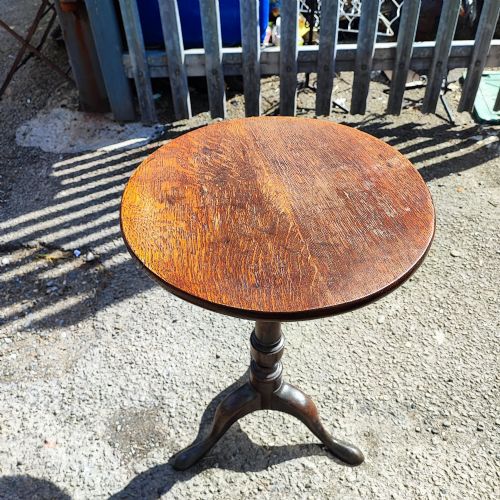
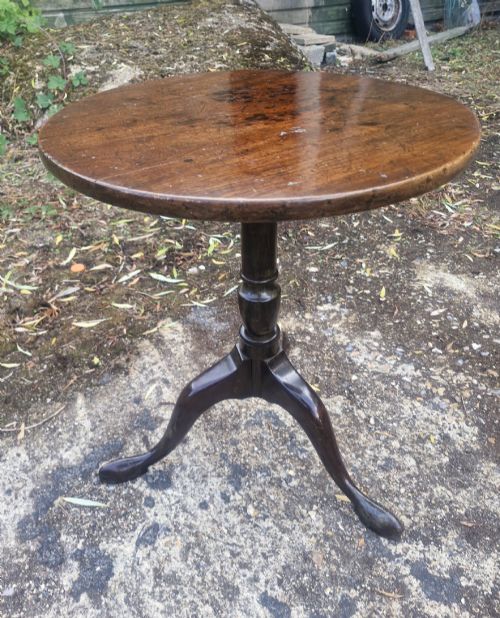
Georgian wine tables typically feature solid mahogany or oak timbers, slender turned columns and tripod legs ending in pad or snake feet.
Many examples include birdcage or tilt-top mechanisms beneath the circular top to facilitate easy adjustment.
Where should I place an occasional table?
These compact tables fit easily beside armchairs, in narrow hallways or in unused corners to hold lamps, books or drinks.
Their small footprint allows them to complement larger seating arrangements without cluttering the room layout.
What is a cricket table?
A cricket table is a rustic three-legged table with a circular wooden top and triangular underframe, built for stability on uneven floors.
Most surviving examples feature plain oak or elm construction dating from the 18th and 19th centuries.