




Small Rosewood Furniture
Small rosewood furniture brings rich dark timbers and compact proportions into compact spaces, offering practical surfaces and storage without dominating a room.
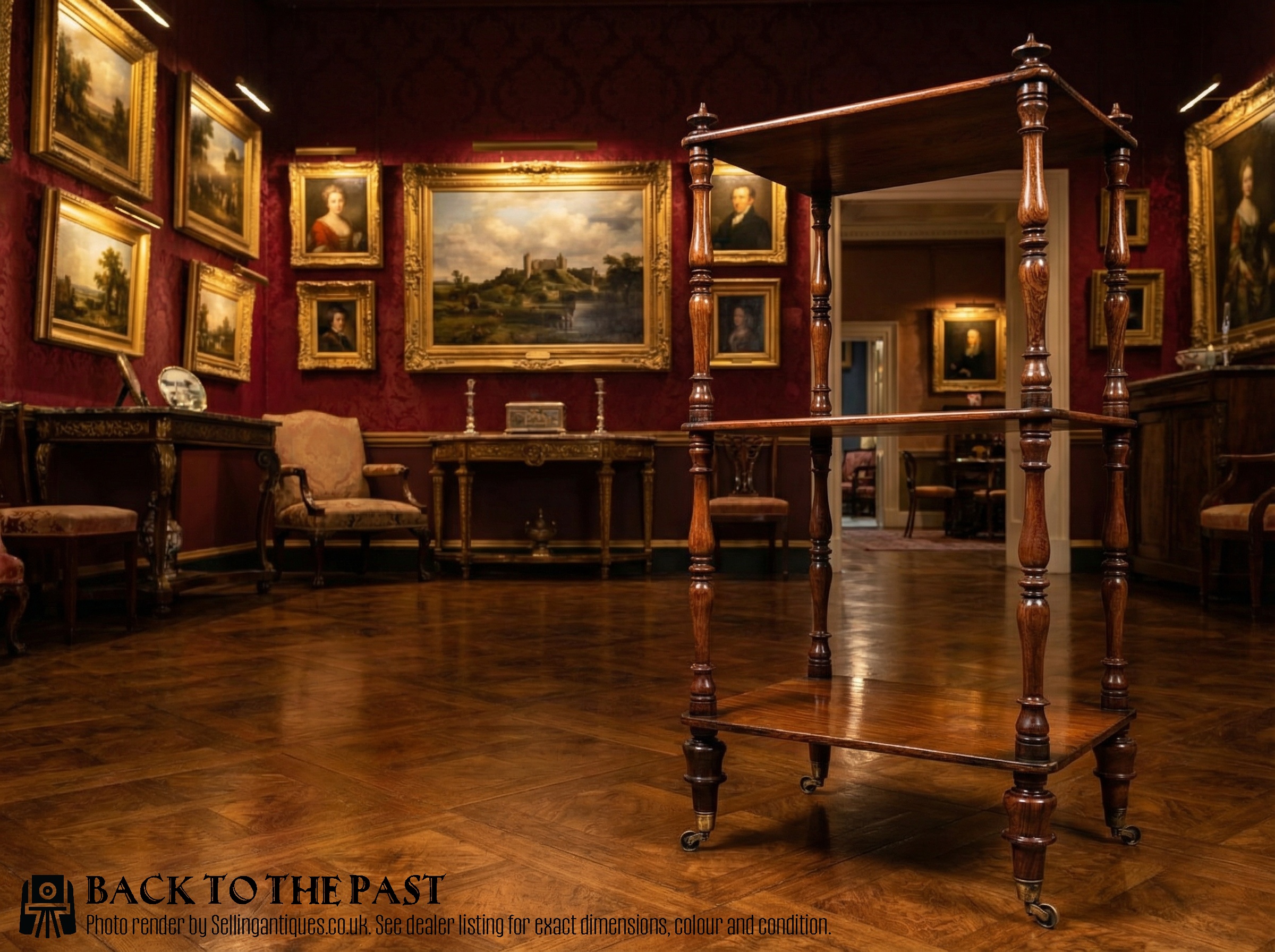
Small Rosewood Furniture
Small rosewood furniture encompasses compact items designed for domestic utility across the Georgian, Regency, William IV, and Victorian periods. Buyers search for these pieces to fit modest spaces while retaining the deep figure and dark warmth characteristic of the timber.
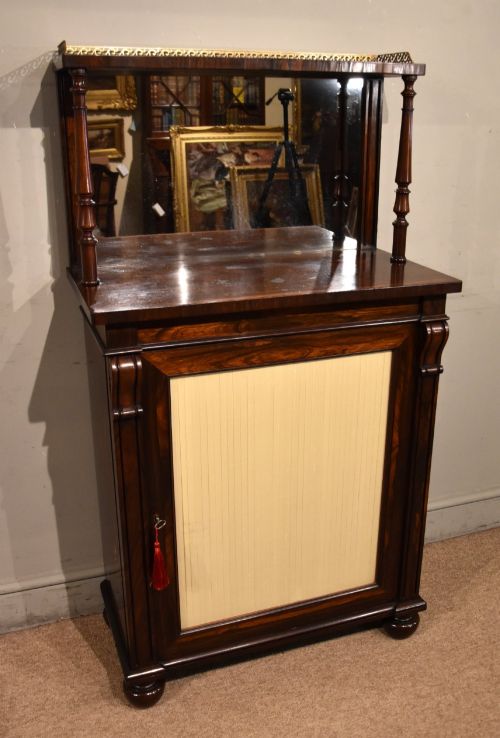
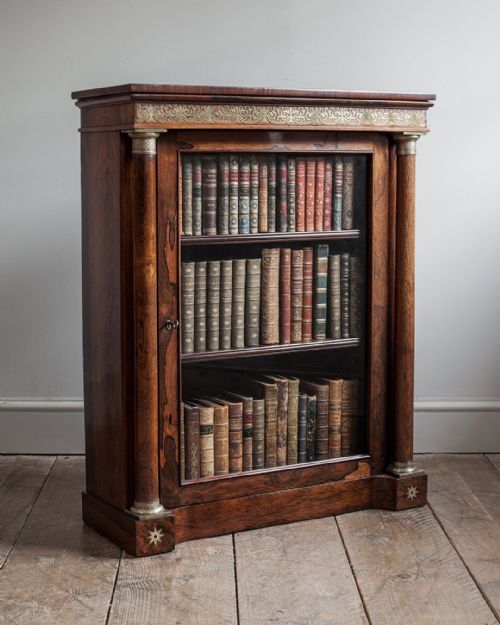
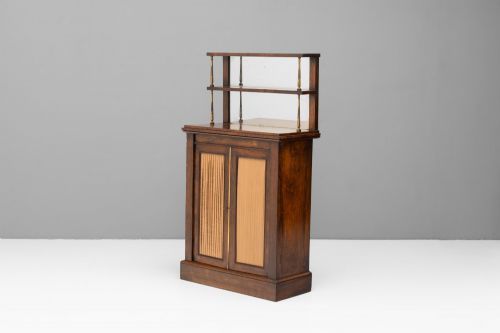
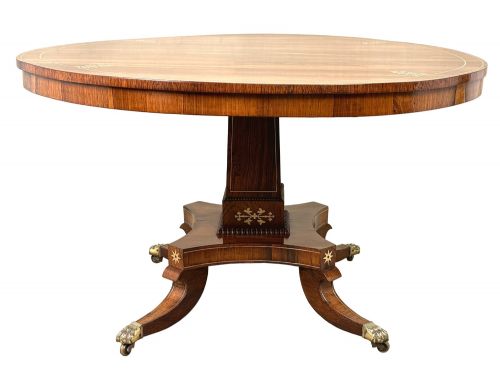
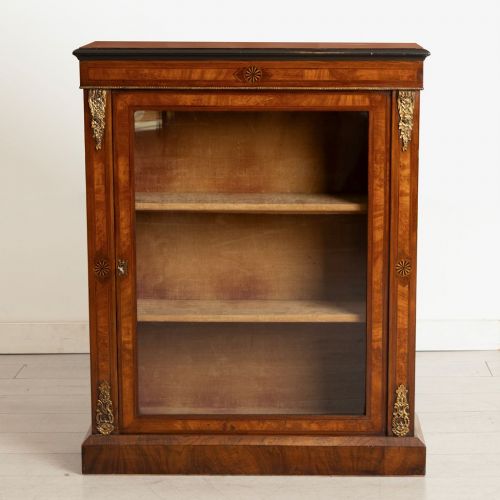
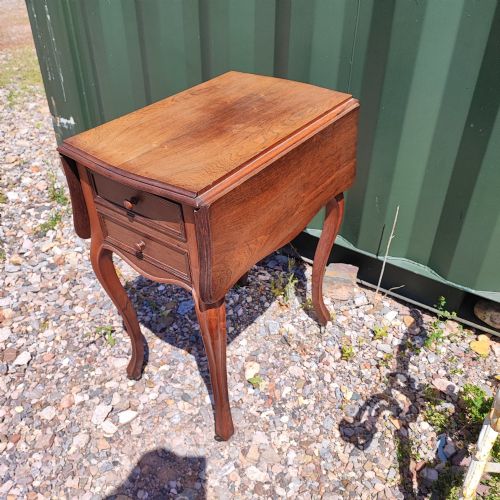
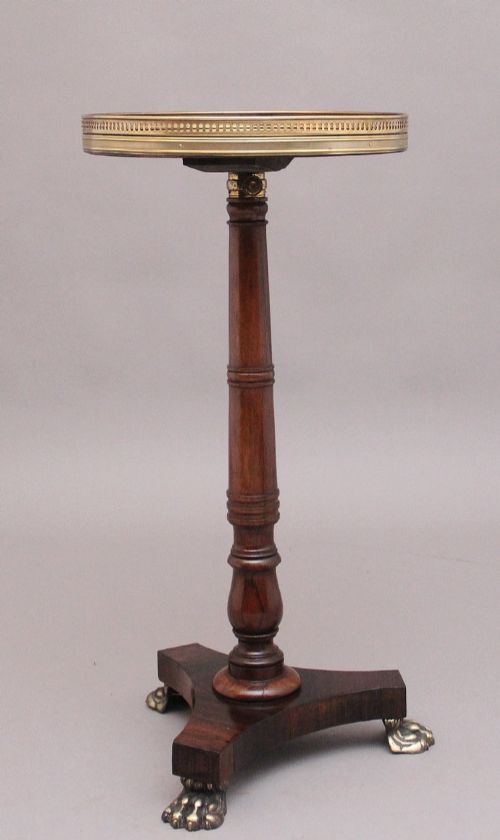
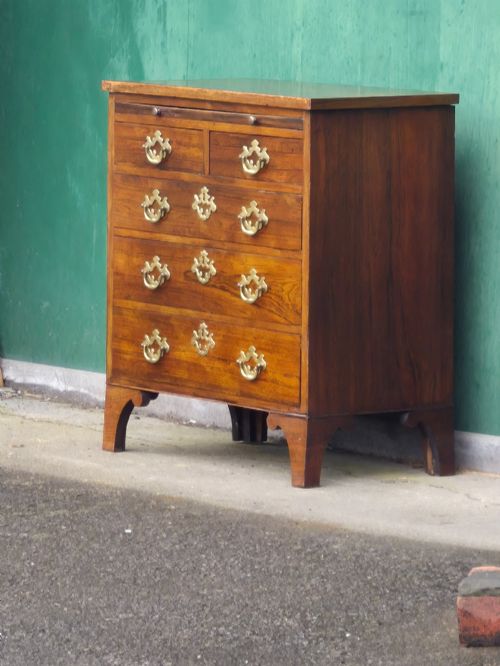
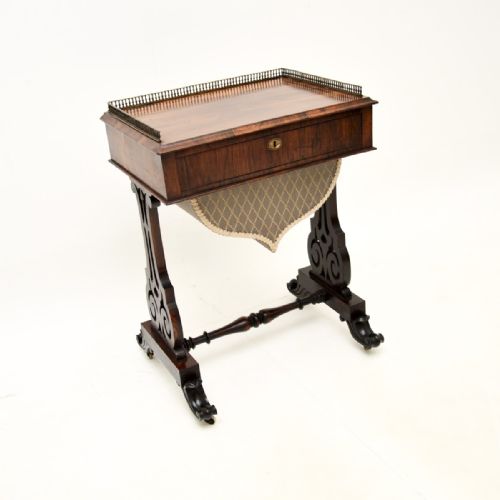
The selections encountered here lean heavily towards nineteenth-century examples, spanning practical forms like whatnots, chiffoniers, pier cabinets, and davenport desks. Tables range from occasional and lamp formats to drop-leaf and centre pieces scaled for neat proportions.
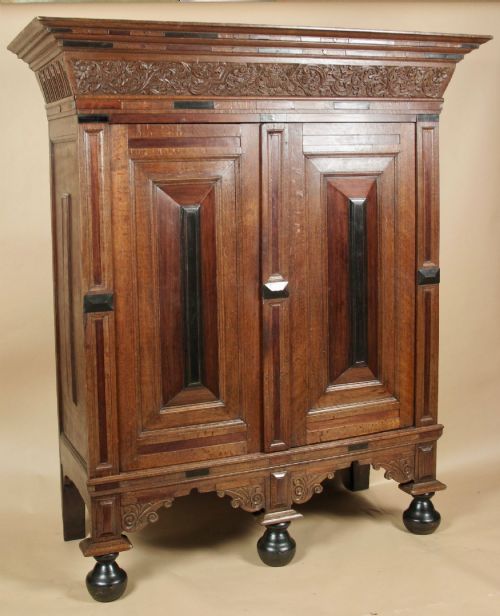
Regional and stylistic variations appear alongside standard British production, including Anglo-Indian, Chinese Export, Dutch Baroque, and French Provincial influences. These diverse origins bring distinct carving, structural layouts, and decorative flourishes to the fundamental forms.
How small rosewood furniture was made
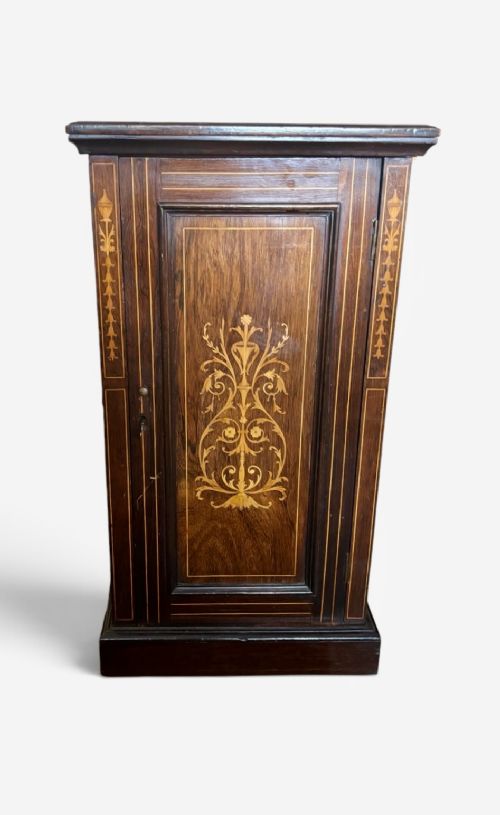
Construction relies upon dense rosewood timber selected for its dark grain and ability to take a fine polish, often combined with secondary hardwoods. Makers frequently employed crossbanding, intricate inlay, and contrasting woods like satinwood, ebony, and burr walnut to articulate drawer fronts, cabinet doors, and table tops.
Decorative detailing incorporates precise brass inlay, delicate carving, and turned supports, particularly visible on pier cabinets, bookcases, and occasional tables. Interior elements often utilise mahogany for drawer linings and shelving, ensuring durability alongside refined exterior surfaces.
Materials appearing across items include rosewood, brass, leather, glass, fabric, hardwood, ebony, and marble.
What varies in quality
Quality reveals itself in the crispness of timber selection and the precision of decorative inlays such as brass, satinwood, or ebony. Superior pieces maintain harmonious proportions, intact original surfaces, and structural integrity without heavy restoration or replaced components.
Refinement in secondary details, from the dovetailing of miniature drawers to the carving on shelf supports and side cabinets, separates standard utility items from exceptional workshop productions. The handling of hardware, sliding elements, and internal fittings further distinguishes the grade of manufacture.
Gillow
The Small Rosewood Furniture Glossary
- Whatnot
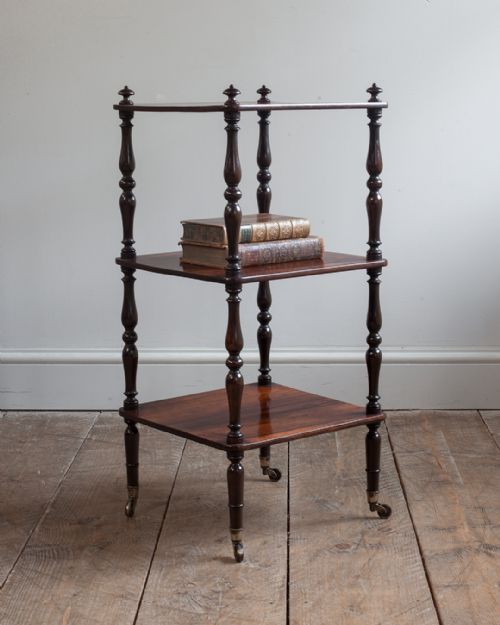
- A tiered set of open shelves supported by slender pillars, used for displaying or storing small objects. These pieces often feature multiple tiers and compact footprints.
- Chiffonier
- A compact sideboard or cabinet featuring lower enclosed storage topped by a shelf or tiers, popular throughout the Regency and Victorian eras. They served both display and storage functions in smaller reception rooms.
- Pier Cabinet
- A narrow display cabinet designed to fit the wall space between windows. They typically incorporate glazed doors and fine inlay work.
- Davenport
- A small desk featuring a sloping writing surface above a pedestal of drawers. Many examples include internal stationery compartments and sliding mechanisms.
- Crossbanding
- A decorative border technique where strips of veneer are laid running perpendicular to the main grain. This frames table tops and cabinet doors with a contrasting linear pattern.
Small Rosewood Furniture: Frequently Asked Questions
What rooms suit small rosewood furniture?
Compact rosewood pieces suit sitting rooms, studies, and bedrooms where floor space is limited. Their modest proportions allow them to function as lamp tables, side cabinets, or writing desks without overcrowding a room.
Their rich colour and grain provide a distinct focal point, pairing well with both period interiors and simpler modern spaces.
How do I identify a Regency rosewood piece?
Regency items often display classical restraint, clean architectural lines, and occasional brass inlay or simulated rosewood finishes. Look for balanced proportions and dark, heavily figured timber.
These pieces frequently include practical elements like drop leaves or sliding tops designed for flexible use in nineteenth-century interiors.
Where were davenport desks used?
Davenport desks served as compact writing stations for correspondence in private parlours or bedrooms. Their small footprint made them ideal for writing letters without requiring a full-sized study desk.
The sloped top lifts to reveal stationery storage, while side drawers provide secure space for writing materials.
What is a pier cabinet?
A pier cabinet is a narrow, flat-backed cabinet built to occupy the narrow wall sections between windows. They typically feature glass doors for displaying collected items or books.
Victorian examples often showcase elaborate inlay using rosewood, burr walnut, and ebony to enhance their vertical proportions.
How should I care for rosewood?
Rosewood benefits from regular dusting with a soft cloth and occasional treatment with suitable furniture wax to maintain its lustre. Avoid placing pieces in direct sunlight or near heat sources to prevent timber movement.
Keeping environmental conditions stable protects the delicate brass and lighter wood inlays often found on these surfaces.