


Small Rosewood Drawers
Small rosewood drawers bring dense grain and rich colour to compact furniture forms, offering practical storage with distinct period character.
Small Rosewood Drawers
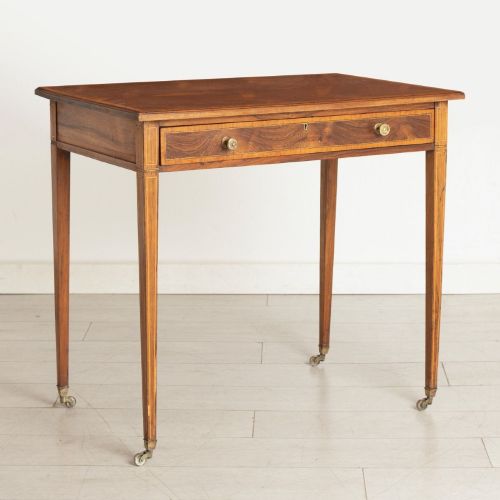
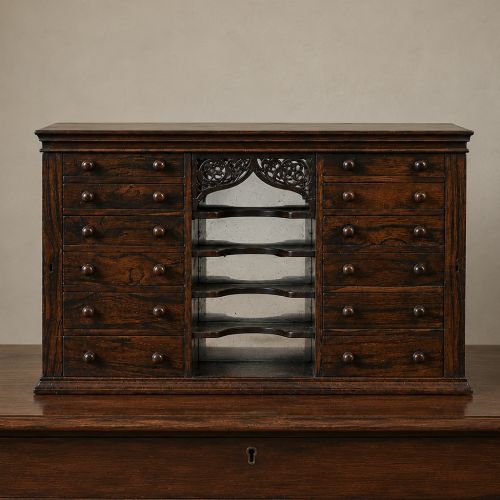
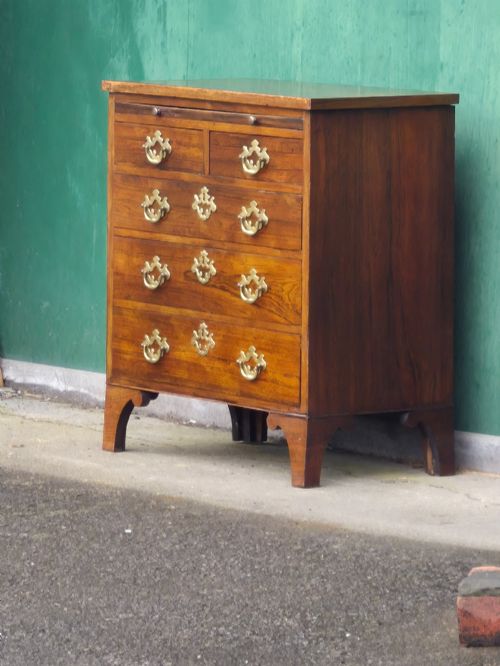
Small rosewood drawers appear primarily in forms like compact chests, collectors cabinets, and writing desks such as Davenports. These pieces emerge across the Regency, Victorian, and Edwardian periods, demonstrating how cabinetmakers adapted dense tropical hardwoods for intimate domestic spaces.
The chest of drawers and the Davenport desk dominate the selection, often featuring auxiliary elements like sliding tops, brass handles, or inlaid wood decoration. Buyers encounter variants ranging from simple workboxes to elaborate specimen cases and marble-topped commodes.
What varies in quality
Quality rests in the selection and matching of the rosewood grain across the visible drawer fronts and top surfaces. Superior examples display harmonious figure patterns rather than mismatched or erratic timber cuts.
Refinement in secondary details elevates a piece, from the crispness of boxwood inlay and parquetry to the substantial weight of brass handles and the tight fit of internal drawers.
A small rosewood pincushion workbox proves that nineteenth-century artisans believed even pins deserved a grand home.
The Small Rosewood Drawers Glossary
- Rosewood
- A dense, heavy timber prized for its dark purple-brown heartwood and distinct aromatic scent. It takes a high polish and shows dramatic figuring.
- Davenport
- A compact form of writing desk featuring a sloping, leather-lined writing surface above a pedestal of drawers. The side often conceals dummy drawers to balance the design.
- Parquetry
- Geometric mosaic woodwork arranged in patterns resembling tiling. It provides decorative contrast on drawer fronts and table tops.
- Wellington chest
- A tall, narrow chest of drawers secured by a locking hinged side pilaster bar. This mechanism holds all the drawers shut simultaneously.
Small Rosewood Drawers: Frequently Asked Questions
What periods do these pieces date from?
The pieces span the Regency, Victorian, and Edwardian eras, with additional examples from the early twentieth century. Most items reflect nineteenth-century cabinetmaking traditions.
Stylistic markers help place each item, ranging from crisp Regency lines to more ornate late Victorian and Edwardian interpretations.
How were Davenport desks used originally?
Davenport desks served as compact writing stations for correspondence and record keeping in private rooms. The sloping top provided a comfortable angle for writing letters.
Internal compartments and side drawers held stationery, inkwells, and important documents within easy reach of the seated user.
Are all these pieces strictly English in origin?
While many items reflect English workshop traditions, French influences also appear through forms like marble-topped commodes and Louis XV styles. Asian export pieces occasionally enter the selection.
Examining the internal secondary timbers and construction methods helps clarify the likely geographic origin of individual cabinets.
How do I care for rosewood furniture?
Keep rosewood pieces away from direct sunlight and extreme humidity fluctuations to prevent the dense timber from splitting or fading. Regular dusting with a dry, soft cloth maintains the polished surface.
Avoid silicone-based polishes and instead use appropriate traditional waxes sparingly to nourish the wood grain over time.