


Rosewood Collector Cabinet
A rosewood collector cabinet is a dense, timber-rich repository for small treasures, built to house everything from coins to natural specimens with discreet authority.
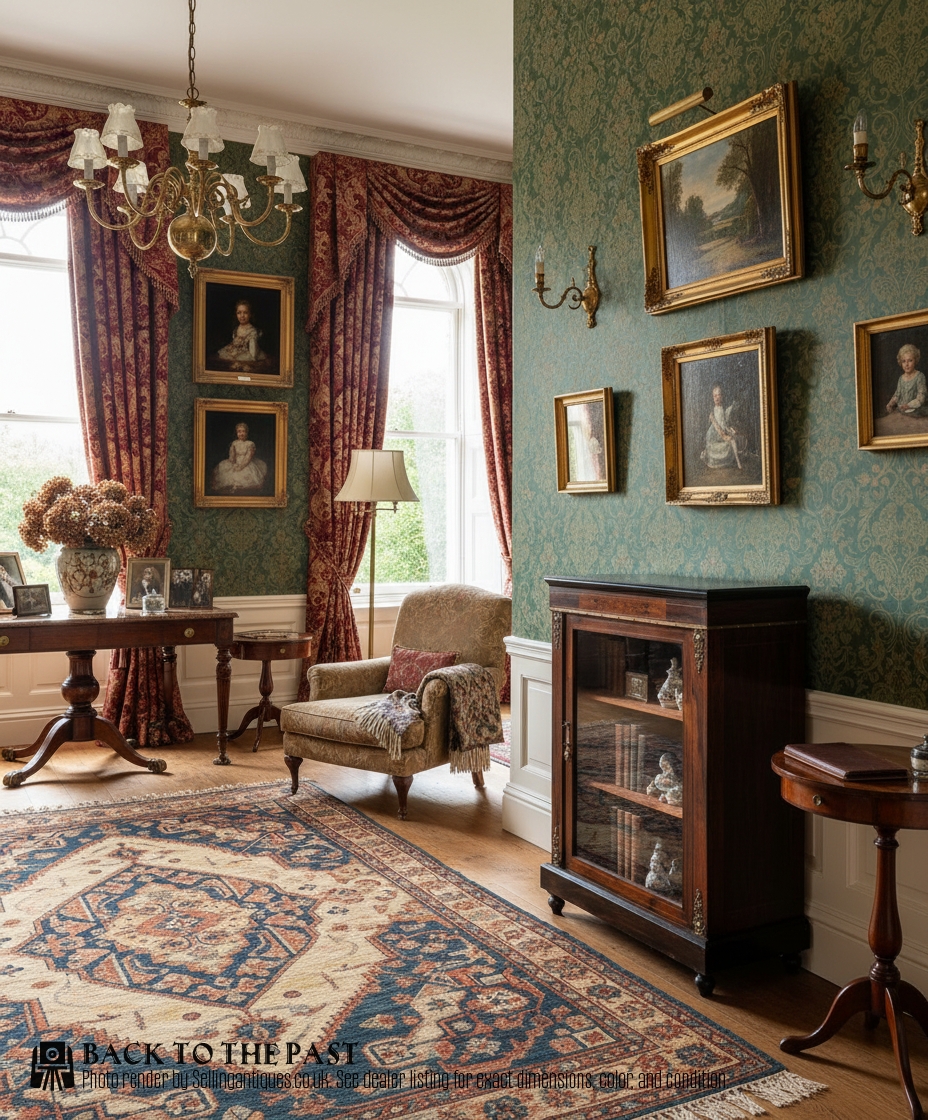
Rosewood Collector Cabinet
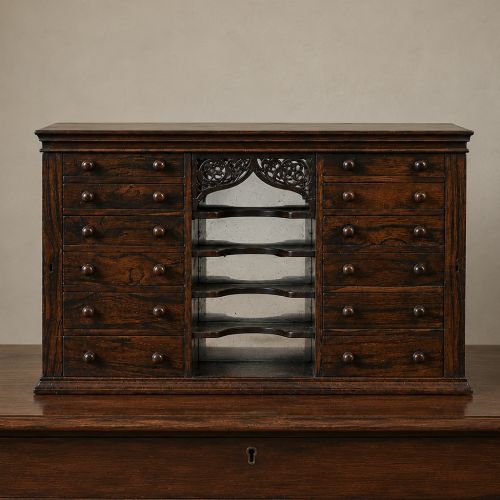
When you search for a rosewood collector cabinet, you encounter compact repositories designed for storing specimens, coins, jewellery, and small curiosities. The pieces on this page span several distinct forms, including Wellington chests, miniature chests of drawers, pier cabinets, cabinets on stand, and table cabinets.
The versions you are most likely to meet originate from the Regency, Victorian, and Edwardian eras, alongside Georgian and mid-nineteenth-century examples. They frequently employ multi-drawer internal configurations behind locking stiles or glazed doors to protect delicate contents from dust and handling.
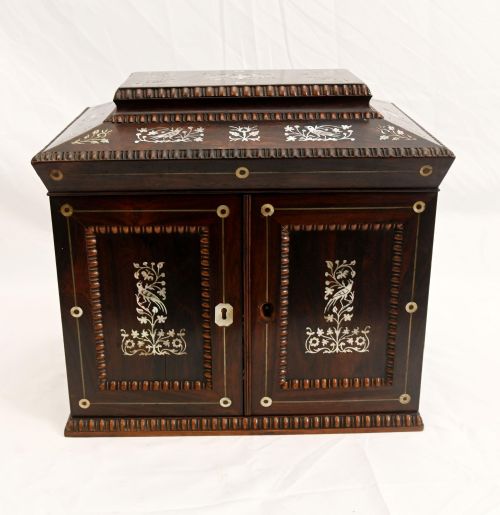
Makers from these periods adapted the housing to specific contents, producing chess-top variations, mirrored Wellington chests, and mother-of-pearl inlaid gentleman's table cabinets. Foreign influences also appear, ranging from Portuguese Baroque and French Rococo Revival styles to Chinese Republic period specimen cases.
Assessing build quality and execution
The distinction between standard examples and the finest items rests on the grain selection of the rosewood veneer and the precision of internal drawer construction. Superior pieces maintain uniform timber matching across multiple small drawers and incorporate fully functioning locking mechanisms for securing cabinets and stiles.
Decorative embellishments also dictate rank, where hand-cut mother-of-pearl inlay, fine boxwood stringing, and heavy brass or ormolu mounts demonstrate superior craftsmanship. The inclusion of specialised top surfaces, such as integrated chess boards or mirrored Wellington configurations, elevates the complexity and desirability of the work.
Listings feature periods spanning from Georgian and Regency eras through Victorian and Edwardian decades, alongside mid-nineteenth-century items.
The Rosewood Collector Cabinet Glossary
- Wellington Chest
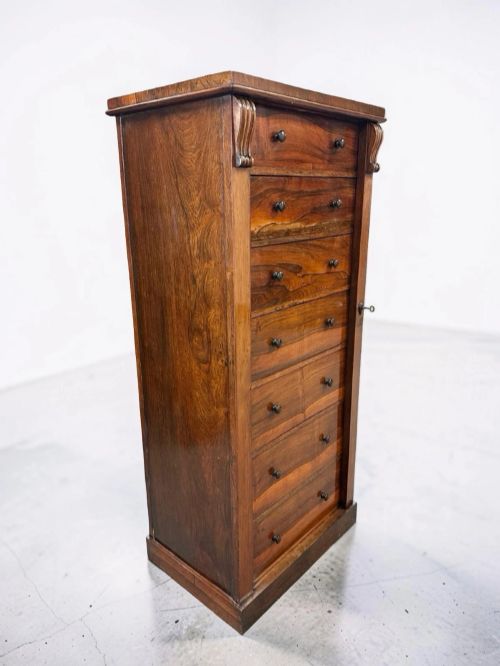
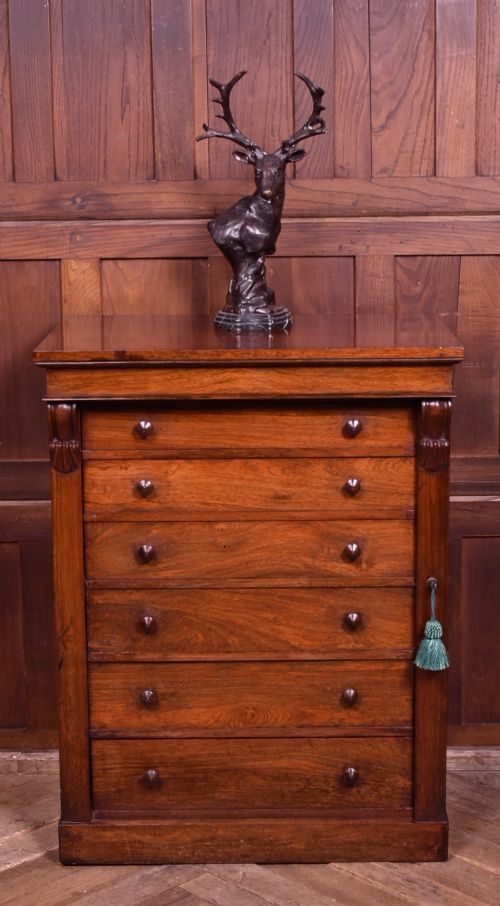
- A tall, slender chest of drawers featuring a hinged locking stile on one side that secures all drawers simultaneously when locked. This form originated in the nineteenth century and is frequently encountered in rosewood.
- Pier Cabinet
- A narrow display or storage cabinet designed specifically to stand against the wall space between windows. These pieces often feature glass doors to showcase collected specimens or decorative objects.
- Ormolu
- Gilded bronze cast into decorative mounts, feet, or handles, frequently applied to furniture during revival periods. It provides a bright, metallic contrast to dark tropical woods.
- Gonçalo-Alvez
- A dense Brazilian hardwood with striking dark brown and amber striping, often utilised in place of or alongside rosewood during the Regency period.
- Specimen Case
- A specialised cabinet or box fitted with numerous shallow drawers intended for organising natural history samples, coins, or medals.
Rosewood Collector Cabinet: Frequently Asked Questions
What fits inside these cabinets?
These cabinets are designed to hold small, valued items such as coins, medals, geological specimens, shells, and jewellery. The shallow internal drawers prevent delicate objects from shifting or sustaining damage during retrieval.
Larger configurations, such as pier cabinets or display vitrines, provide shelf space for viewing porcelain or curiosities behind glass rather than housing them in partitioned drawers.
How do I spot a Wellington chest?
A Wellington chest is identified by its narrow, vertical proportions and a vertical locking bar, known as a stile, attached to one side by hinges. When the key turns in this side stile, a tongue engages the drawer edges to lock the entire stack.
This mechanism allowed collectors to secure numerous small drawers containing valuable specimens using a single lock.
Where were they placed originally?
Table cabinets and miniature chests rested upon larger desks, sideboards, or dedicated stands within libraries and studies. Larger floor-standing variants like pier cabinets occupied specific wall spaces between windows in formal reception rooms.
They functioned as accessible working tools for amateur scientists and collectors rather than merely decorative furnishings.
How do I care for rosewood?
Rosewood benefits from stable indoor humidity levels and protection from direct sunlight, which can fade the deep brown and purple tones of the grain. Dusting with a dry, soft cloth prevents particulate buildup without introducing moisture.
Avoid applying modern silicone-based polishes, as they can penetrate historic finishes and accumulate within fine inlaid details like mother-of-pearl or boxwood stringing.