


Small Rosewood Desk
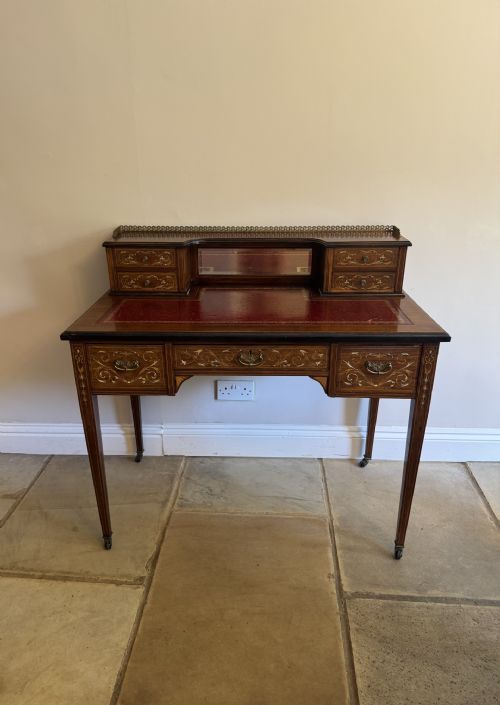
A small rosewood desk brings warmth and compact utility to a room, offering a surface for correspondence anchored by rich, dark timber.
Small Rosewood Desk
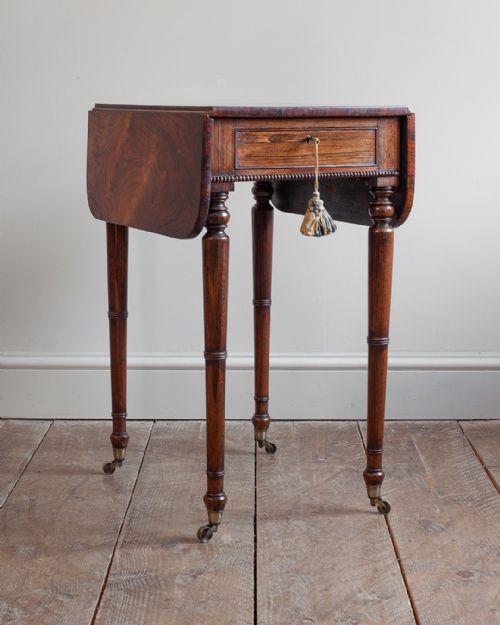
When you search for a small rosewood desk, you encounter compact writing furniture designed for domestic use rather than grand administrative spaces. These pieces span the nineteenth century, including Regency, William IV, and Victorian eras, alongside Edwardian examples.
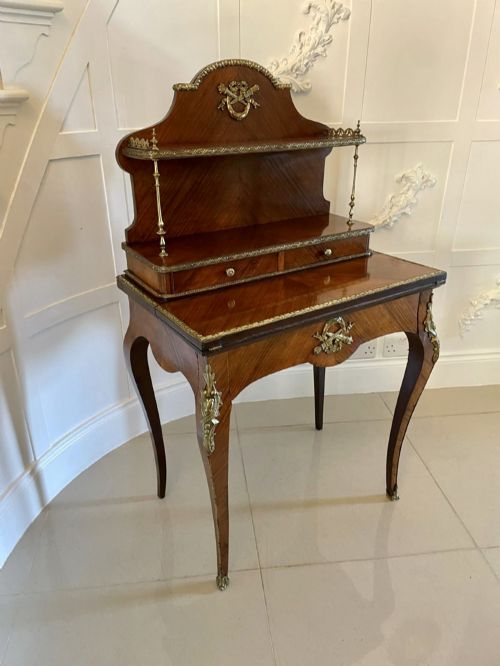
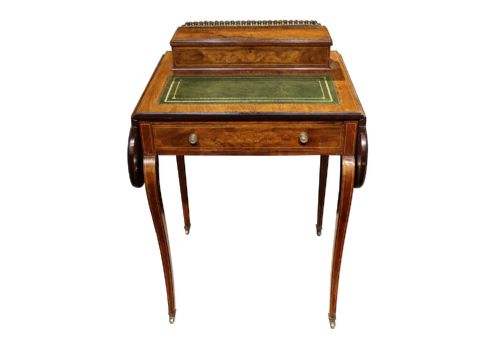
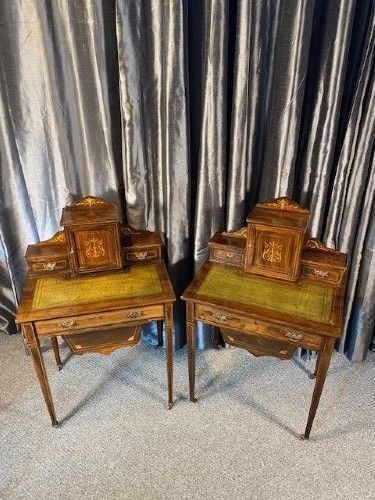
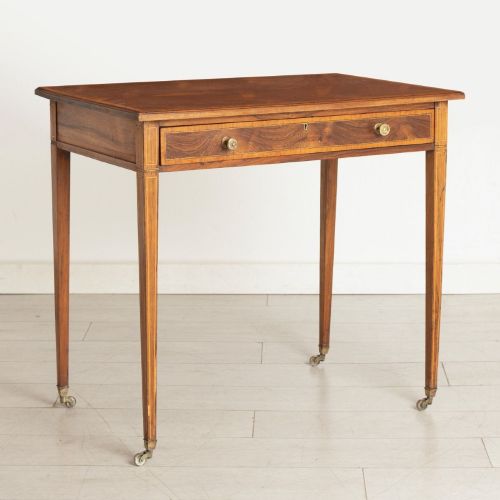
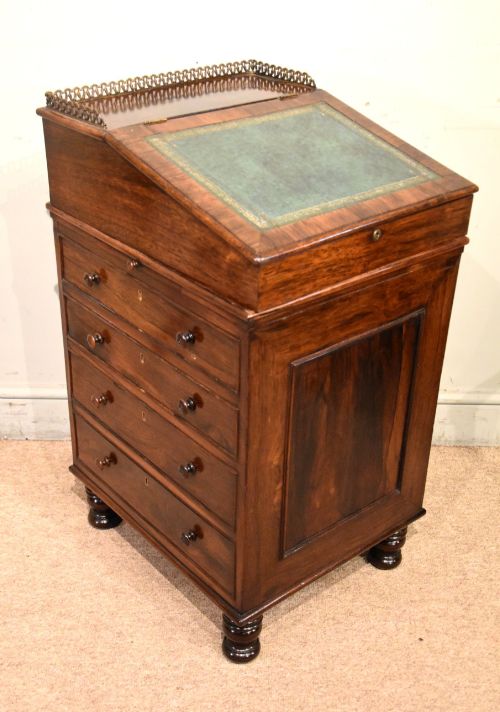
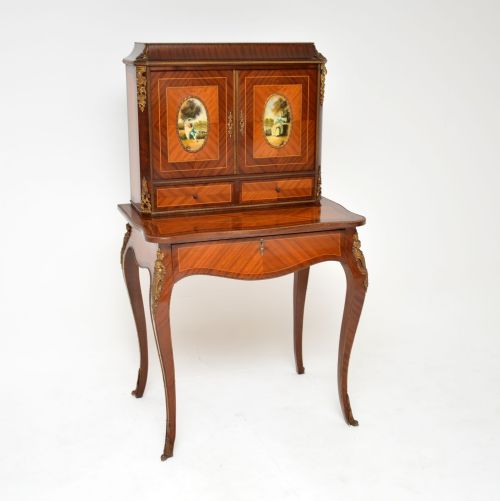
The Davenport desk dominates the selection, featuring a sloping top above a pedestal of drawers. You also find lady's writing tables, bonheur du jour variants, and freestanding writing tables scaled for smaller rooms.
Origins vary between English workshops and French cabinet makers, with styles ranging from austere Regency lines to ornate Victorian and French Rococo Revival interpretations.
Materials and Construction
Cabinet makers built these desks using dense rosewood timber, often selecting veneers to showcase striking grain patterns. Secondary woods provided structural stability beneath the polished exterior.
Detailing relied on contrasting materials such as satinwood inlay, brass galleries, and ormolu mounts. Writing surfaces were frequently inset with leather or fabric panels to provide a smooth plane for ink and paper.
Internal compartments of writing tables and Davenports incorporated small drawers and pigeonholes, demonstrating precise joinery in miniature.
Small Rosewood Desk Retail Price Guide 2026
Typical asking prices for small rosewood desk among the pieces listed under this phrase on Sellingantiques today, from the lower quarter to the upper quarter. They describe what is for sale here now, not the wider market.
Listings feature nineteenth-century periods including Regency, William IV, Victorian, and Edwardian eras, executed in rosewood with brass, leather, and satinwood inlay.
Distinctions in Quality
Quality rests in the crispness of the timber's figure and the restraint or elegance of the brass and inlaid decoration. Pieces retaining their original fitted interiors and working locks command greater appreciation.
Construction methods reveal the maker's hand, seen in the seamless matching of rosewood veneers across drawer fronts and the solid weight of ormolu mounts rather than light pressed metal.
Edwards and Roberts·John McLean·Gillows
The Small Rosewood Desk Glossary
- Davenport desk
- A compact writing desk featuring a sloping lid that lifts to reveal a storage compartment, positioned above a pedestal of side drawers. It gained popularity during the Regency and Victorian periods for domestic correspondence.
- Bonheur du jour
- A light lady's writing desk featuring a small cabinet, shelves, or drawers superstructure above the main writing surface. These pieces often display delicate inlay and were favoured in nineteenth-century boudoirs.
- Ormolu
- Gilded bronze mounts applied to furniture for decorative effect, commonly found on French-influenced pieces from the nineteenth century. The technique involves applying a gold amalgam to bronze.
- Satinwood inlay
- Contrasting light-coloured wood inserted into the darker rosewood surface to create geometric or floral patterns. This technique highlights the skill of the cabinet maker.
- Palisander
- A term frequently used historically to describe dark timbers from the Dalbergia family, encompassing the dense rosewoods utilised in Regency and Victorian cabinet making.
Small Rosewood Desk: Frequently Asked Questions
What is a Davenport desk?
A Davenport is a compact nineteenth-century writing desk with a sloping, hinged writing surface and a set of drawers accessed from the side. It was originally designed as a space-saving desk for domestic use.
Most examples feature a small stationery compartment on top and rest on casters for easy movement around a room.
How do I date a rosewood desk?
Dating relies on stylistic clues, construction methods, and hardware. Regency and William IV pieces show classical restraint or bold grain, while Victorian and Edwardian examples often incorporate elaborate inlay or ormolu mounts.
Examine the secondary woods inside the drawers and the style of the brass handles to confirm the period of manufacture.
Where were these desks used?
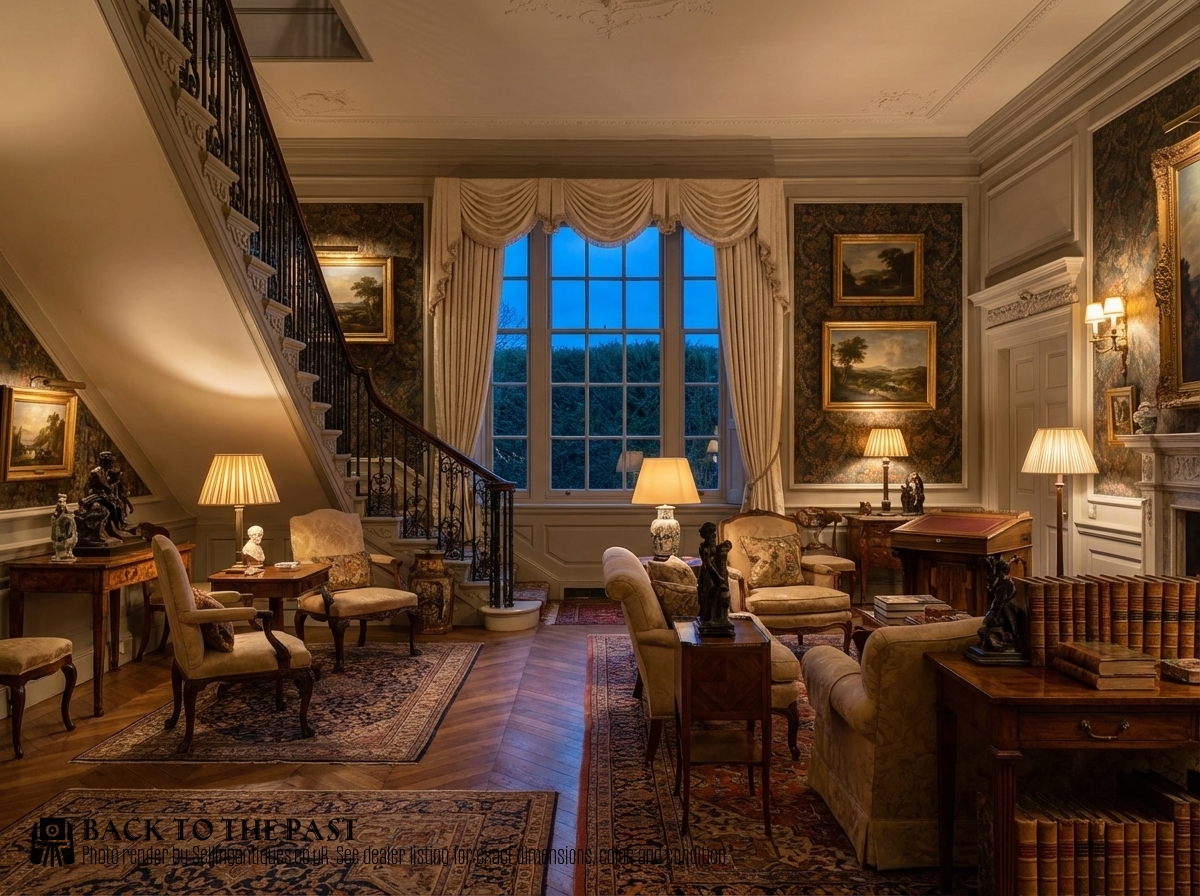
These compact desks served private correspondence in bedrooms, small sitting rooms, and drawing rooms. Their modest scale allowed them to sit against a wall or freestanding in the centre of a room.
Unlike large partners desks, they were personal writing spaces for individuals rather than administrative hubs.
How do I care for rosewood furniture?
Protect rosewood from direct sunlight and dramatic humidity changes to prevent the timber from fading or the veneer from lifting. Regular dusting with a soft, dry cloth preserves the polished surface.
Avoid silicone-based polishes, opting instead for traditional beeswax applied sparingly to maintain the natural lustre of the wood.