


Small Red Rug
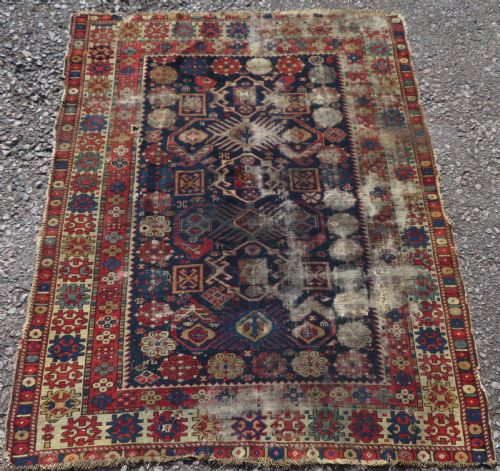
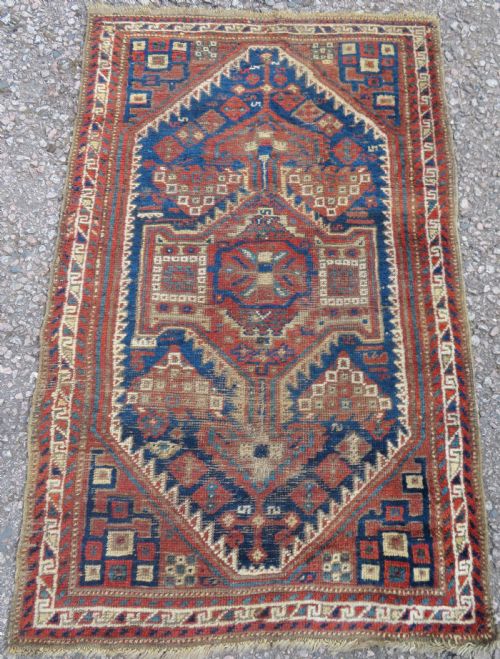
A small red rug brings warmth and grounded pattern to a floor through centuries of village and tribal weaving traditions.
Small Red Rug
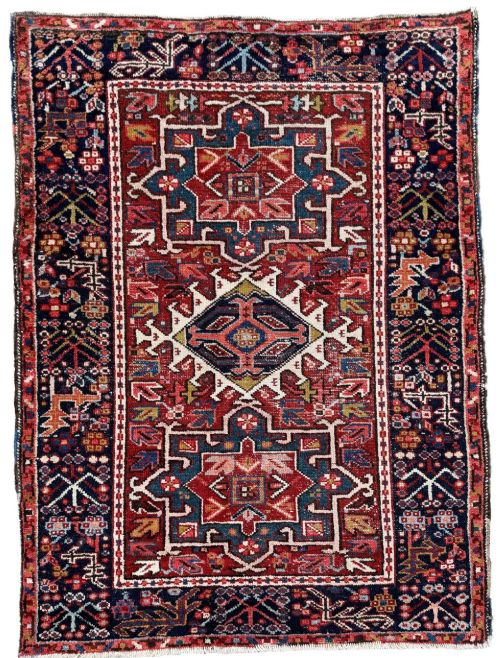
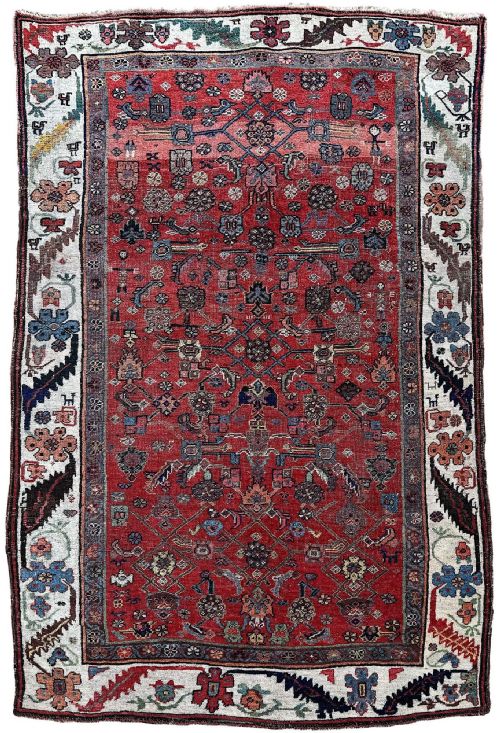
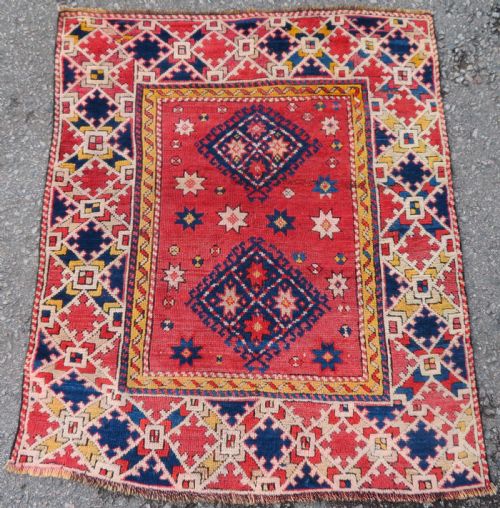
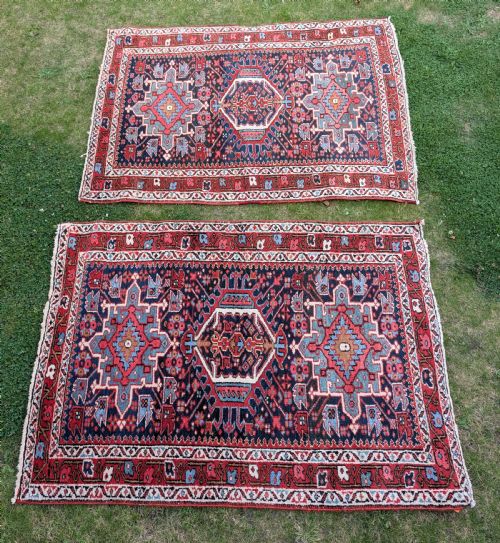
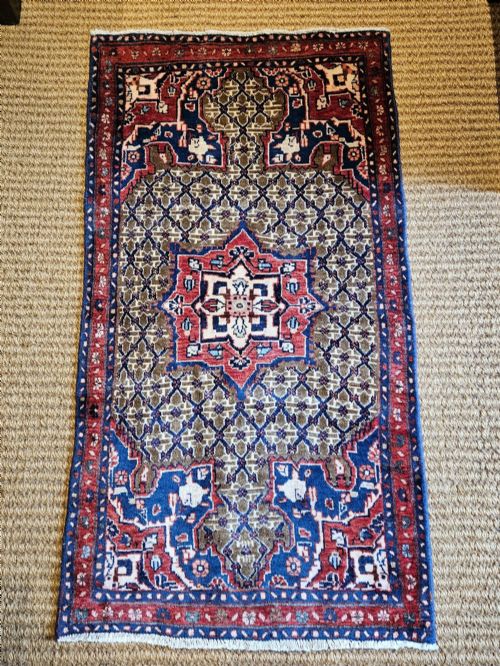
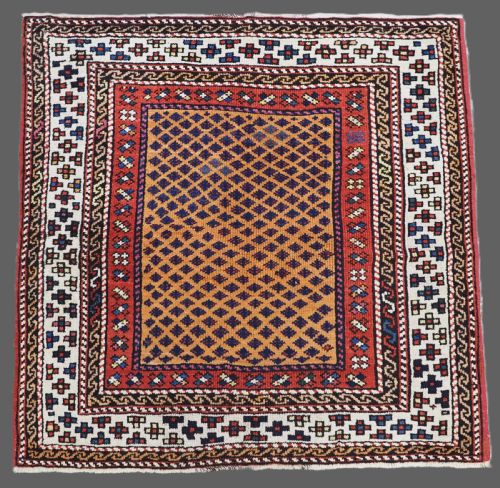
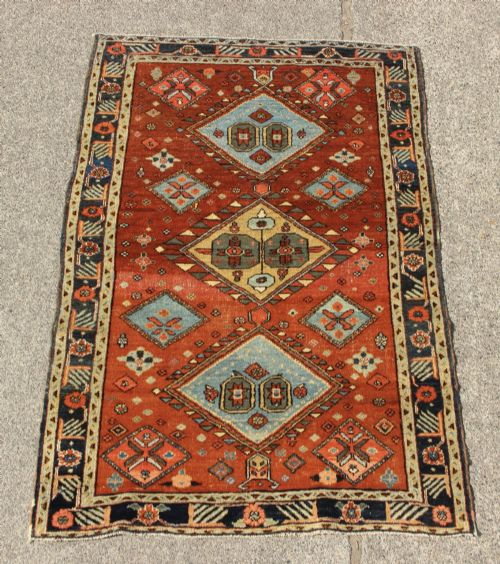
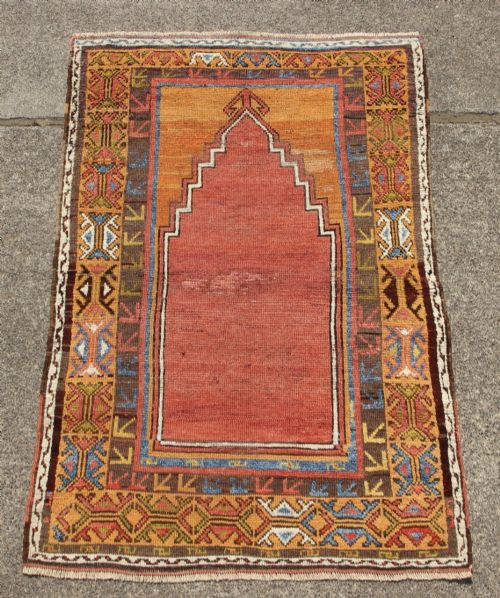
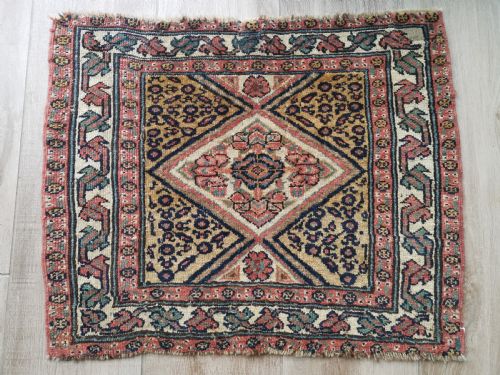
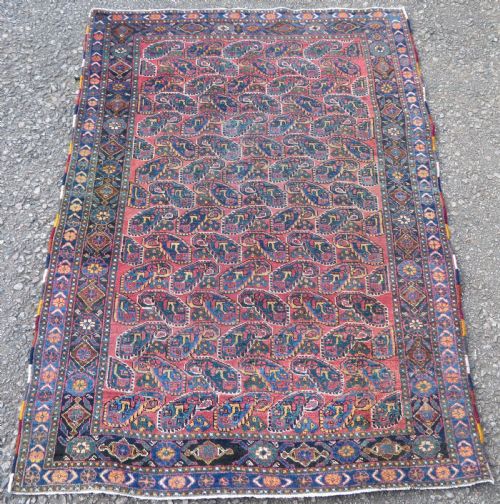
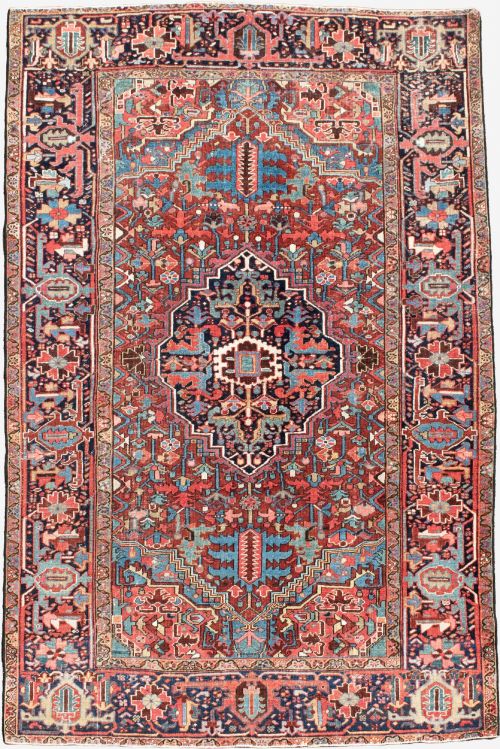
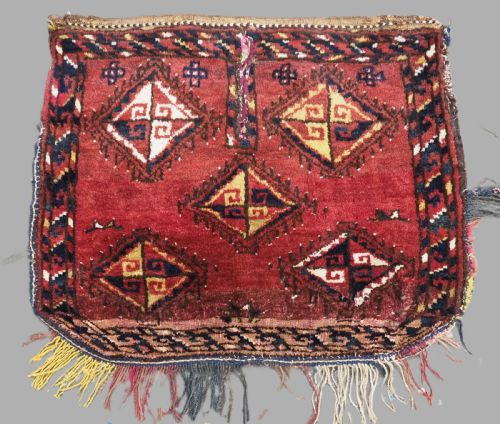
When you search for a small red rug, you encounter hand-knotted floor coverings and nomadic textiles originating from Persian, Anatolian, Caucasian, and Central Asian weaving traditions. These compact pieces include village formats like Karaja and Bidjar alongside tribal bagfaces, saddle covers, and prayer rugs created for utilitarian domestic use.
The dominant crimson, madder, and terracotta tones derive from regional dyeing methods applied to wool. Most examples date from the late nineteenth century through the early decades of the twentieth century, reflecting traditional village and nomadic craftsmanship.
Surviving formats range from square hearth rugs and small runner proportions to portable tribal containers. Their scale makes them adaptable for placement in compact interior spaces or as wall-hung textile art.
What varies in quality
The standard of a small red rug rests on the depth and complexity of its natural dye palette, where subtle shifts in hue indicate skilled dye-vats rather than uniform synthetic baths. Superior examples display lustrous, high-lanolin wool that retains resilience and yields crisp geometric or curvilinear motifs.
Structural integrity and precision of the knotting distinguish finer village and tribal pieces from more utilitarian output. Edge finishes, pile depth preservation, and the balance of the central field against the border system complete the assessment of an exemplary weave.
Materials recorded on this site include hand-spun wool, cotton foundations, and natural dye traditions from Persian and Anatolian makers.
The Small Red Rug Glossary
- Pile
- The vertical or slanted wool fibres standing up from the foundation that form the usable surface of the rug. This surface absorbs foot traffic and displays the woven design.
- Warp
- The stationary longitudinal threads stretched tightly on the loom before weaving begins. Wefts and knots are built upon this foundational grid.
- Weft
- The horizontal threads passed back and forth across the warp threads to lock the rows of knots in place. They provide structural stability to the textile.
- Madder
- A natural red dye derived from the root of the Rubia tinctorum plant. It produces the characteristic earthy crimson and terracotta tones found in antique tribal rugs.
- Gul
- A medallion-like primary motif frequently repeated across Turkmen and Central Asian carpets. Each pattern often identifies the specific tribe or clan that wove the textile.
Small Red Rug: Frequently Asked Questions
Where were these small rugs made?
The pieces originate across regions spanning Persia, Anatolia, the Caucasus, and Central Asia. Nomadic confederations and settled village communities produced them for daily domestic use.
Specific weaving centres such as Heriz, Karaja, Bidjar, and regions inhabited by Shahsevan, Baluch, and Tekke Turkmen groups generated distinct local patterns and colour variations.
How do I care for an antique wool rug?
Regular gentle vacuuming without a beater bar prevents dust accumulation in the wool pile. Professional cleaning by specialists in antique textiles ensures the natural dyes remain stable.
Keeping the rug out of direct, harsh sunlight preserves the strength of the wool and prevents the crimson and madder red tones from fading over time.
What is the difference between a village rug and a tribal piece?
Village rugs typically stem from settled communities working in fixed workshops with more established geometric or floral traditions. They often feature sturdier cotton foundations alongside wool.
Tribal pieces are created by nomadic or semi-nomadic groups, resulting in spontaneous designs, completely wool construction, and portable formats like saddle bags and tent door rugs.
How can I tell the age of a red rug?
Age is determined by evaluating the type of wool, the presence of natural dyes, structural wear patterns, and the style of the motifs. Nineteenth-century examples often exhibit softer, hand-spun wool and nuanced vegetable dye variations.
Later twentieth-century pieces tend to show different structural rigidity and chemical dye usage, helping distinguish older nomadic output from more recent village weaving.