


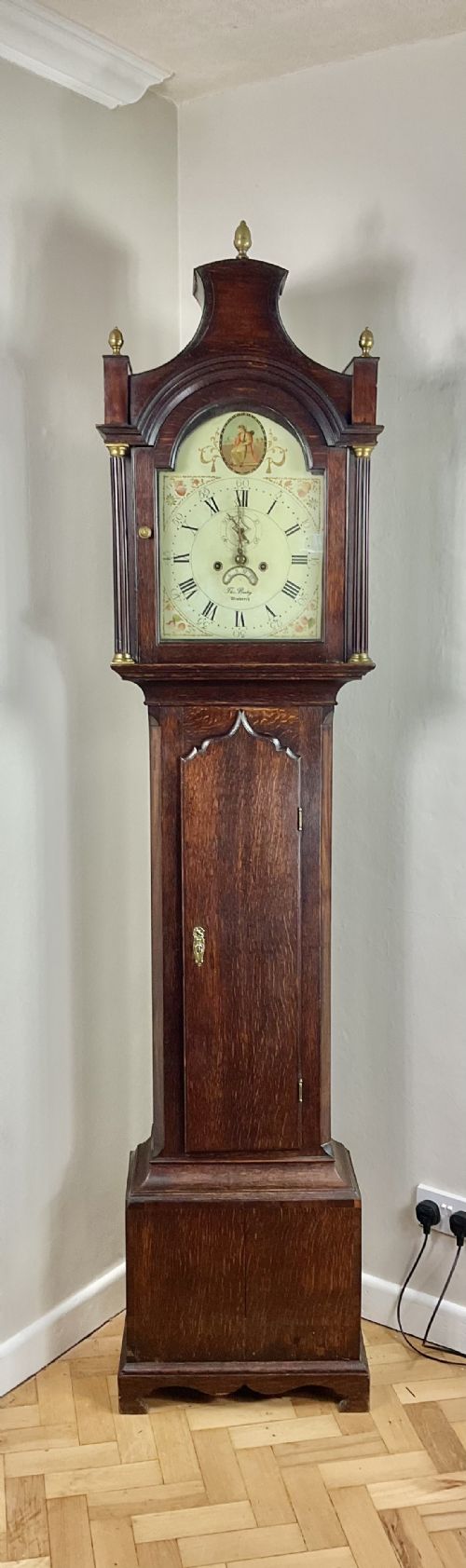


Small Oak Grandfather Clock
When you search for a small oak grandfather clock, you enter a tradition of domestic horology where reduced height meets the warmth of native timber.
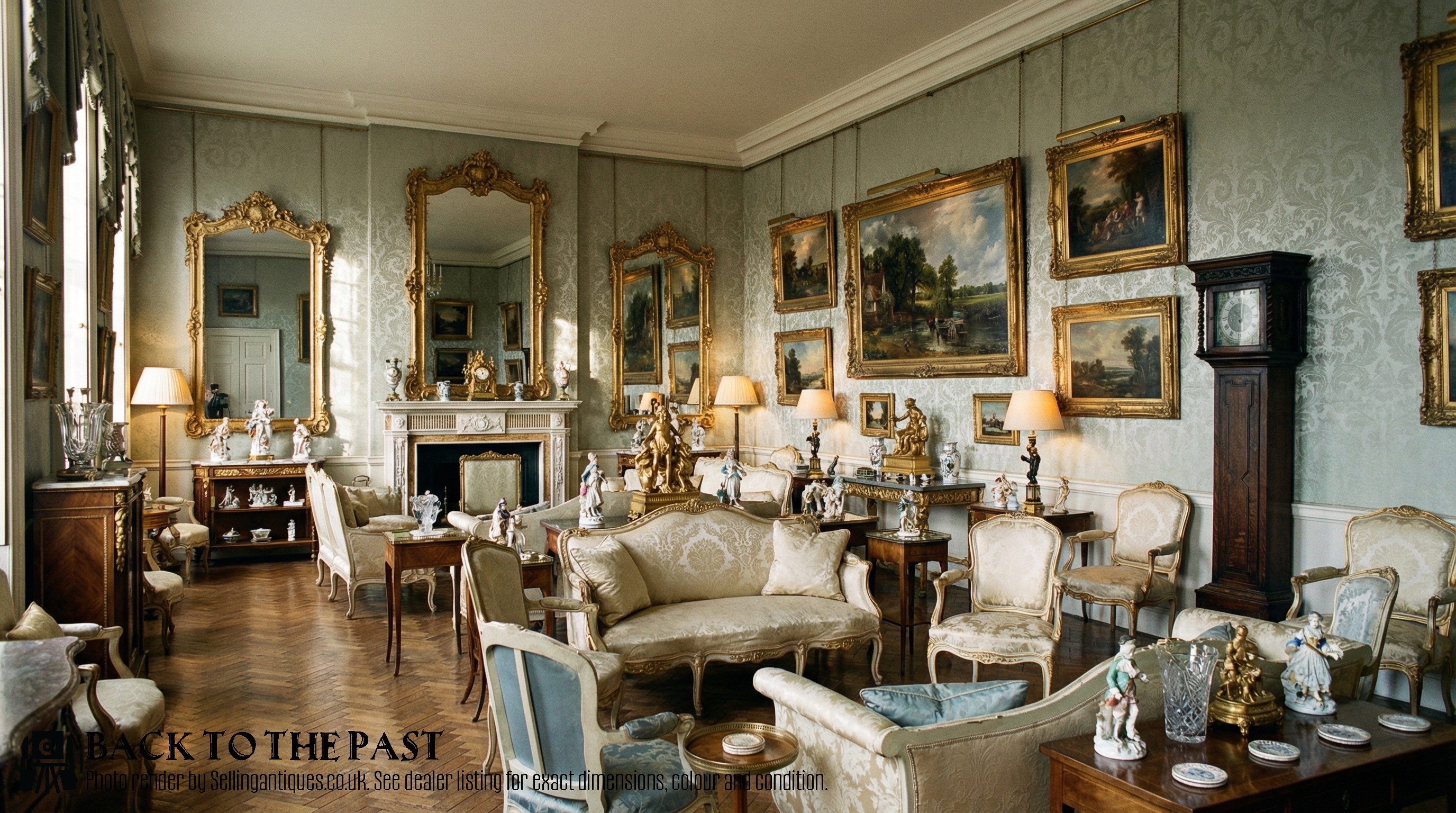
Small Oak Grandfather Clock
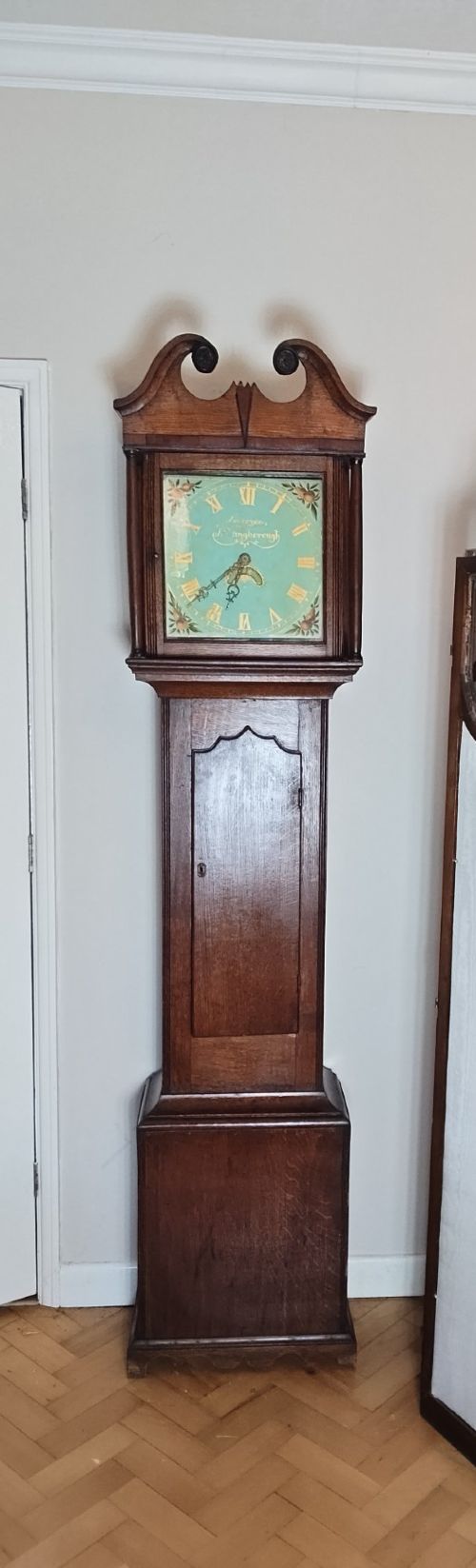
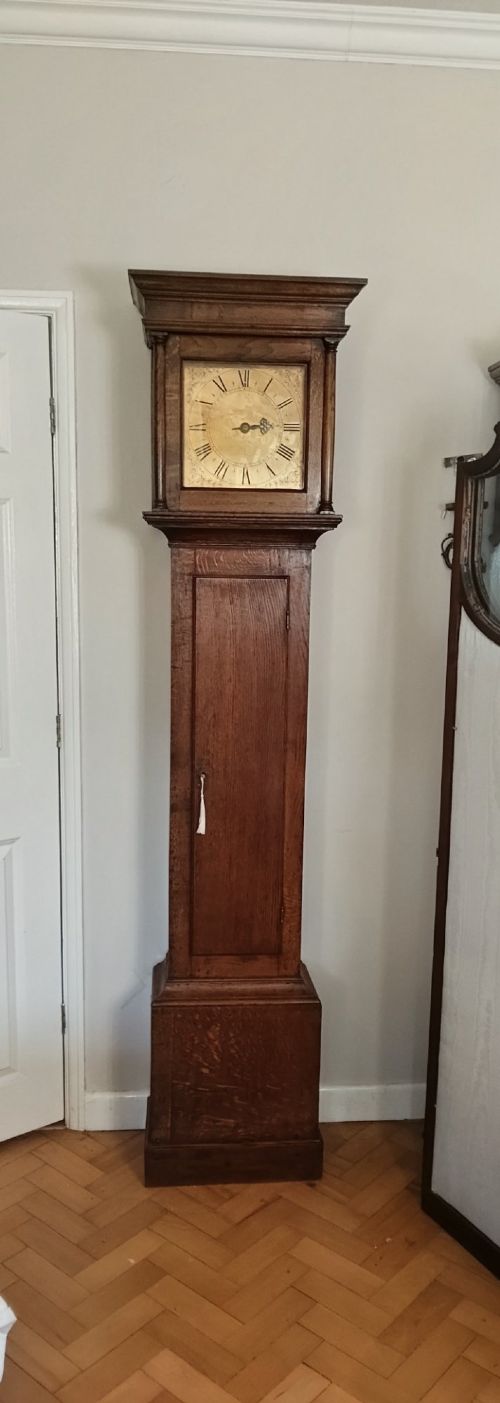
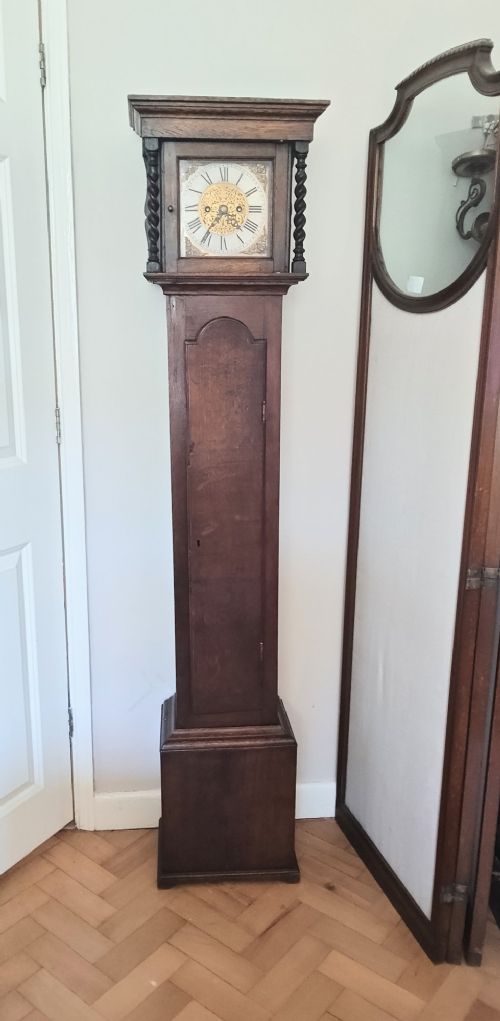
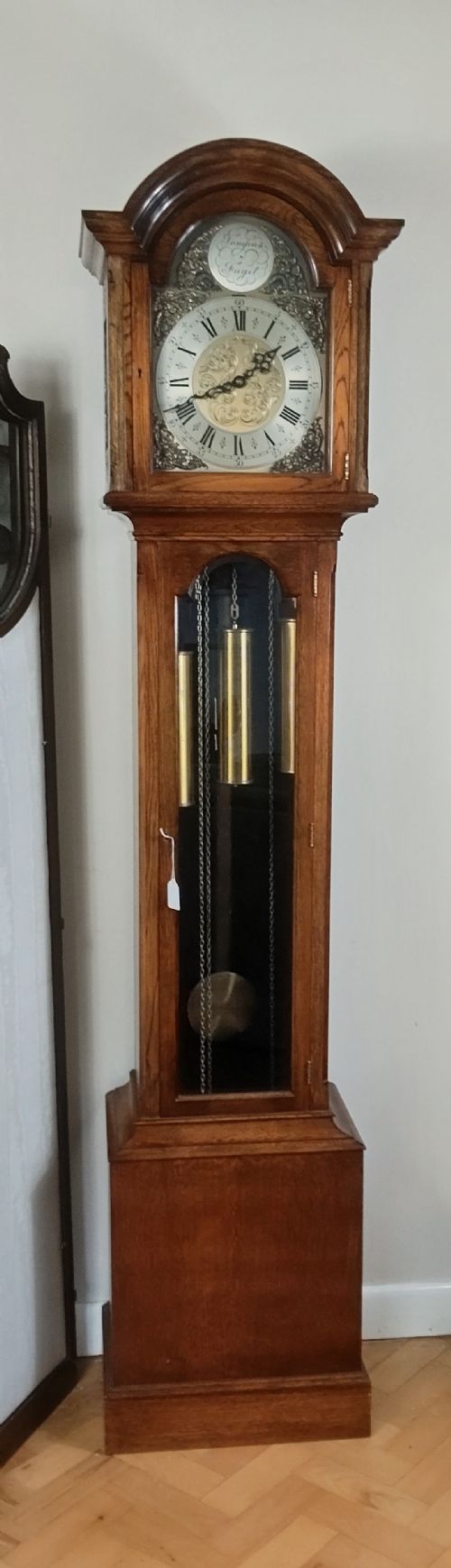
A small oak grandfather clock, frequently styled in the trade as a grandmother clock or floor clock, serves domestic spaces with reduced ceiling heights while retaining the dignity of a tall case timekeeper. These pieces span from seventeenth-century provincial work through Georgian periods and into Edwardian and later twentieth-century revivals.
The material presence is dominated by oak, often accented with mahogany or walnut, housing brass or painted iron dials behind glass panels. Buyers encounter formats ranging from thirty-hour movements with modest dials to complex triple-weight chiming mechanisms housed in slim, golden, or honey-coloured cases.
Originating largely from English workshops and provincial makers, these clocks balance architectural proportion with mechanical utility. Whether fitted with duck egg blue highlights, astragal glazed doors, or barley twist columns, they offer an intimate scale without sacrificing traditional horological craft.
What varies in quality
Proportion and scale dictate the visual success of the piece, with narrower trunks and harmonious hood details commanding greater attention. The crispness of dial engraving, the complexity of the movement, and the integration of musical or chiming trains elevate certain examples above standard timepieces.
The integrity of the timber case, including the depth of the natural grain and the retention of original brass hardware or glass panels, defines the standing of an individual clock within the range.
Listings feature oak cases paired with brass, painted iron, and glass, spanning periods from the seventeenth century through the Georgian era to Edwardian revivals.
Harrods·Herbert of Haversham·William Noke of Shropshire·Smith of Chester·John Morse of Malmesbury·John Higgs of Wallingford·Kirk of Kibworth·Thomas Storer of Derby·Barkers of Kensington
The Small Oak Grandfather Clock Glossary
- Grandmother clock
- A domestic floor-standing timekeeper of slender proportions, generally shorter than a traditional grandfather clock.
- Dial
- The face of the clock, typically formed of brass or painted iron, displaying the hours and minutes.
- Longcase clock
- The formal horological term for a pendulum clock enclosed in a tall wooden case, commonly known as a grandfather clock.
- Weight train
- The system of hanging weights that provides the driving power for the clock movement.
- Astragal glazed
- A glass door divided by wooden or metal bars into smaller panes, allowing a view of the swinging pendulum.
Small Oak Grandfather Clock: Frequently Asked Questions
How tall is a small grandfather clock?
These domestic timekeepers generally measure under the standard height of traditional floor clocks, often sitting around seventy inches or slightly lower.
This reduced stature was designed for rooms with lower ceilings while preserving the presence of a tall case clock.
What is the difference between a grandfather and a grandmother clock?
The primary distinction lies in overall height and proportion, with grandmother clocks offering a more slender and compact footprint.
Both utilise similar weight-driven movements and oak cases, but the latter is scaled specifically for more intimate interior spaces.
How do eight-day movements work?
An eight-day movement requires winding via the dial approximately once a week to maintain the tension of the driving weights.
This mechanism uses a train of brass gears regulated by a swinging pendulum to track time accurately.
Where should I place an oak longcase clock?
Position the piece against a stable interior wall away from direct sunlight and major sources of heat to protect the timber case.
Ensuring the floor is level helps the pendulum swing evenly and keeps the movement running reliably.