


Small Oak Folding Table
A small oak folding table brings centuries of practical timber craftsmanship into a compact modern room.
Small Oak Folding Table
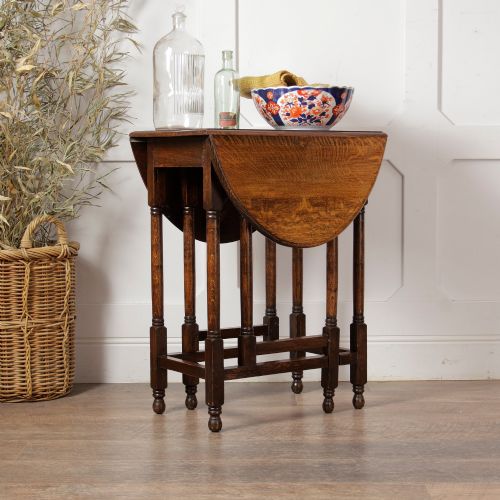
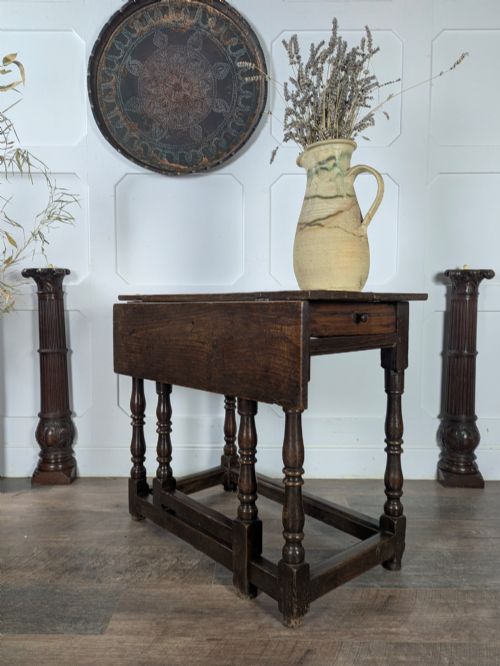
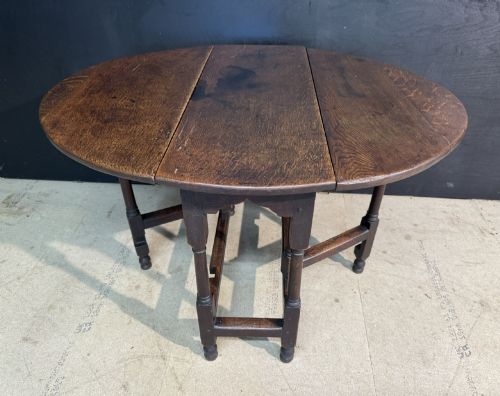
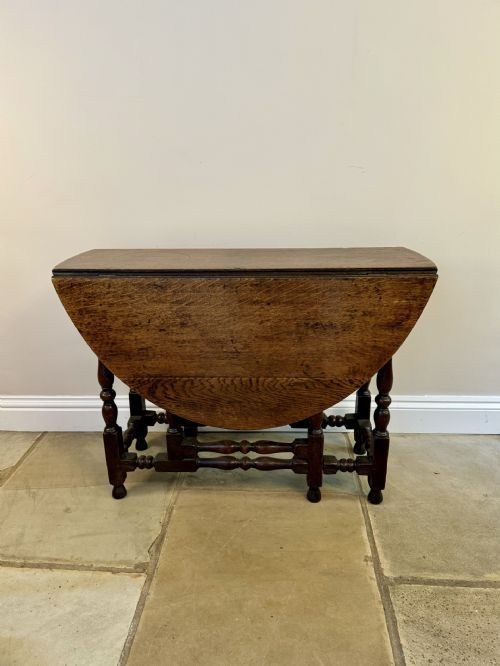
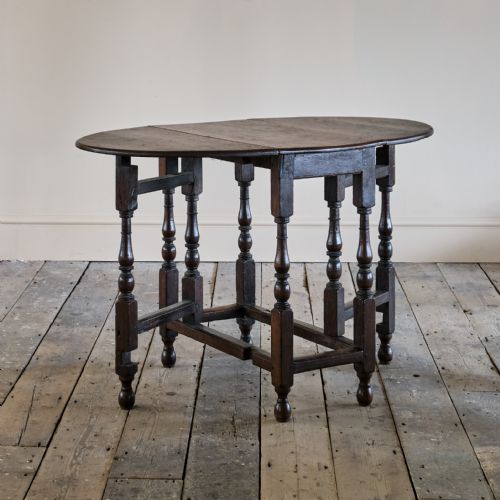
A small oak folding table combines sturdy domestic utility with space-saving cleverness, appearing frequently as a gateleg, drop-leaf or swivel-top design across periods spanning from the eighteenth century to the early twentieth century.
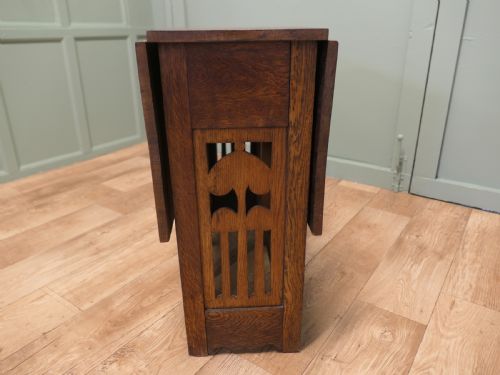
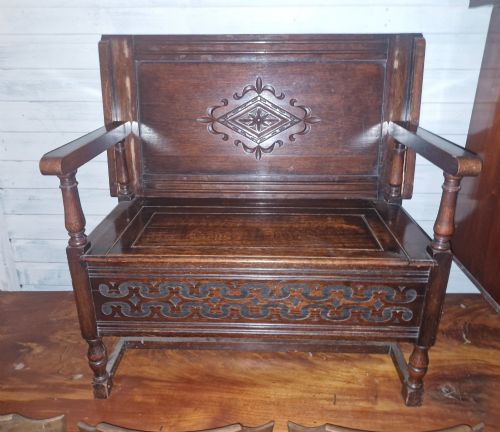
The selections visible here run from substantial eighteenth-century gateleg dining pieces down to compact early twentieth-century occasional tables and coffee tables in honey or golden oak.
Common regional variations include English country pieces employing elm alongside oak, alongside revival pieces adopting Jacobean or Queen Anne proportions for smaller footprints.
Craft and condition
Quality rests upon the integrity of the timber movement and the snugness of the joints where the folding leaves meet the fixed top.
Early eighteenth-century examples display hand-planed surfaces and pegged tenons, whereas later Victorian and Edwardian iterations show machine-turned timber and lighter hardware.
A superior piece maintains smooth gate movement without sagging leaves and preserves a rich, warm surface patina accumulated through use.
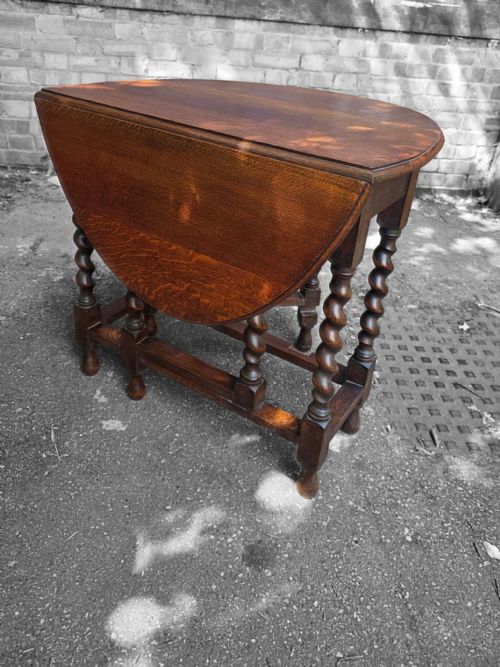
Listings span from the 1700s through the Arts and Crafts era, featuring solid oak, brass fittings and turned barley twist legs.
The Small Oak Folding Table Glossary
- Gateleg table
- A table with hinged leaves supported by legs that swing out like a gate. This design provides a large surface area that collapses into a slim profile.
- Barley twist
- A type of woodturning shaped like a spiral or screw. It appears frequently on the legs of seventeenth-century revival and early twentieth-century tables.
- Drop leaf
- A table top with movable flaps that fold down at the sides. These leaves allow the furniture to change size according to need.
- Swivel top
- A table top that rotates on its base to support folding leaves when opened. This mechanism secures the leaves in a flat horizontal position.
- Occasional table
- A small, light table intended for intermittent use around a room. These pieces function easily as bedside stands or coffee tables.
Small Oak Folding Table: Frequently Asked Questions
How do I spot an 18th-century folding table?
Eighteenth-century examples typically display hand-cut peg joints, deeper surface patination, and heavier solid timber construction than their later revival counterparts.
Look underneath the top to inspect the drawer runners and hinge fixings, as older blacksmith-made ironwork differs markedly from twentieth-century brass fittings.
Are gateleg tables stable when fully opened?
A well-made gateleg table remains sturdy when open provided the swinging leg locks firmly into its designated alignment slot.
Wobble usually indicates loose joints in the swing gate rather than a structural fault in the main tabletop.
Can I use an antique oak table daily?
Solid oak surfaces withstand regular daily use exceptionally well because the timber is dense and hard-wearing.
Protect the antique finish from moisture rings by using coasters and avoid placing the table directly beside modern heat sources that dry out old wood.
What is the difference between a gateleg and a drop leaf?
A gateleg table uses pivoting legs to support its folding flaps, whereas a drop leaf table may rely on swing-out brackets or simpler pull-out wooden arms.
Gateleg designs generally offer greater load-bearing strength across larger open surfaces.