




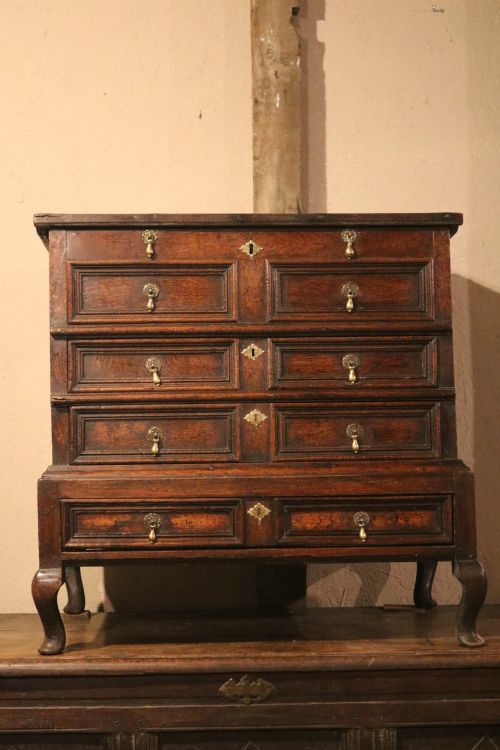


Small Oak Collector Chest
A small oak collector chest is a sturdy tabletop cabinet built to house specimens or miniature drawers, prized for compact grain and clever internal joinery.
Small Oak Collector Chest
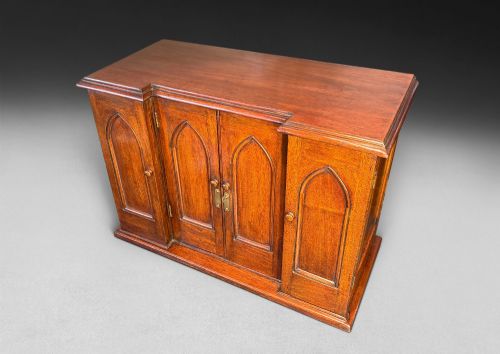
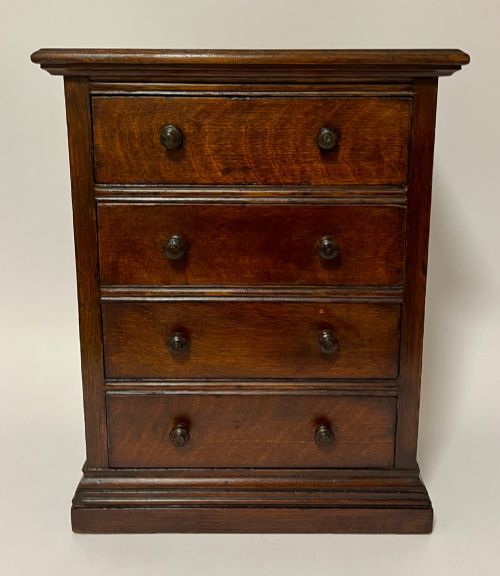
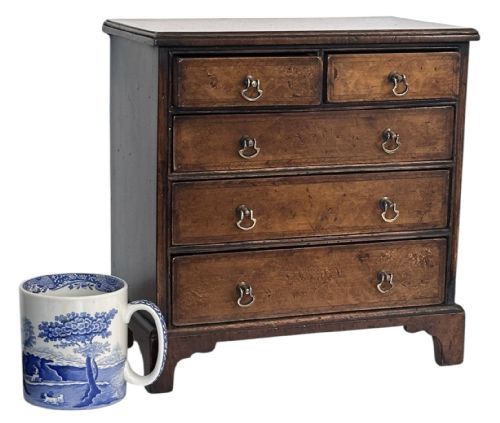
When searching for a small oak collector chest, buyers encounter a diverse range of tabletop forms spanning the eighteenth century through to the interwar period. The selection includes miniature chests of drawers, spice cabinets, apprentice pieces, and specialised watchmaker or specimen cases.
Most examples originate from the Georgian, Victorian, and Edwardian eras, constructed primarily to hold small valuables, natural history specimens, or documents on a desktop. These pieces range from rustic provincial work to refined Regency and Arts and Crafts designs.
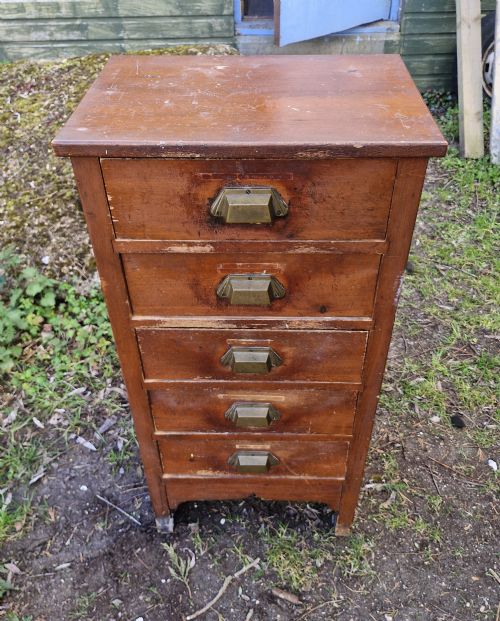
Buyers are most likely to meet Victorian and 1920s versions on this page, often featuring multiple shallow drawers fitted with brass handles and sometimes retaining their original locking keys.
What varies in quality
The distinction between ordinary and superior pieces rests on the selection of timber and the crispness of the internal joinery. Figure in the oak grain, well-fitted dustboards between drawers, and original period brasswork elevate a piece significantly.
Proportion and execution define the better examples, particularly in miniature furniture and apprentice pieces where small scale demands high precision. Cabinets retaining original keys, working locks, and unaltered surfaces demonstrate superior preservation.
The listings span from the eighteenth century through the Georgian, Victorian, and Edwardian eras into the 1930s, using oak, burr oak, pine, brass, glass, iron, and steel.
The Small Oak Collector Chest Glossary
- Apprentice piece
- A small-scale item of furniture made by a trainee craftsman to demonstrate mastery of joinery techniques before admission to a guild.
- Specimen case
- A specialised tabletop cabinet designed with shallow drawers to organise natural history objects, fossils, or small collectibles.
- Spice cabinet
- A small wall-mounted or tabletop chest traditionally used for storing culinary spices, typically featuring a central door enclosing several tiny internal drawers.
- Tallboy
- A tall chest of drawers formed by stacking one cabinet on top of another, found in miniature form in eighteenth-century Welsh workshops.
- Escutcheon
- A protective metal plate surrounding a keyhole, frequently cast in brass on period oak cabinetry.
Small Oak Collector Chest: Frequently Asked Questions
What were small oak collector chests used for?
These compact cabinets served multiple purposes depending on their internal configuration, ranging from storing apothecary supplies and botanical specimens to keeping personal documents and watchmaker tools.
Many functioned as desktop storage units for households or offices, while others were made as trade test pieces or miniature furniture models.
How do I date a small oak collector chest?
Dating relies on observing construction methods, timber selection, and hardware styles across different historical periods. Eighteenth-century pieces often display hand-sawn timbers and simpler rustic joints, whereas Victorian examples may incorporate Gothic Revival or Arts and Crafts decorative motifs.
Drawer construction provides a strong clue, as hand-cut dovetails generally precede later machine-made variations found in twentieth-century office filing units.
Are these chests heavy?
Despite their modest tabletop dimensions, solid oak construction gives these chests a surprising heft. The dense hardwood carcase combined with multiple drawers and brass hardware adds considerable weight.
They remain portable enough to move between rooms or desks, yet heavy enough to stay firmly planted during daily use.
Can I use a collector chest for modern storage?
The shallow drawers suit modern stationery, jewellery, fountain pens, craft supplies, and small electronic accessories rather than bulky items. Placing them on a desk, sideboard, or countertop provides practical storage while displaying the grain of the oak.