
Small Mahogany Dresser
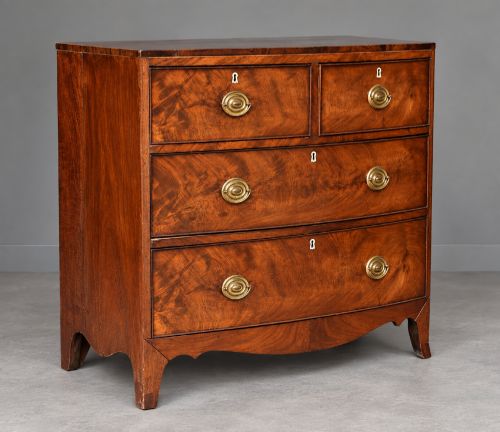
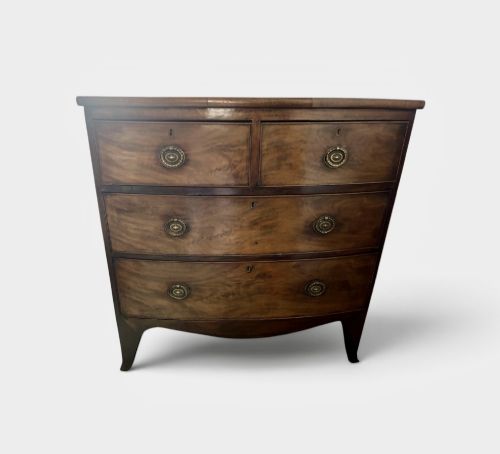
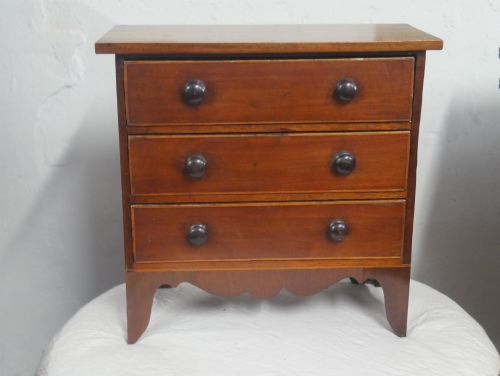
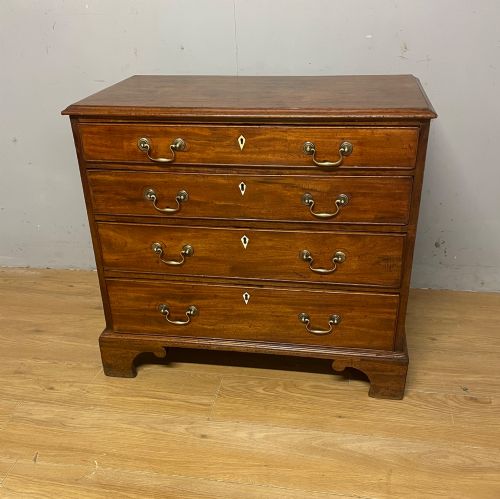
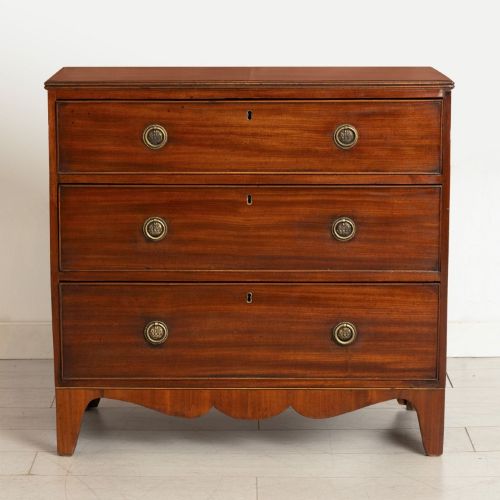
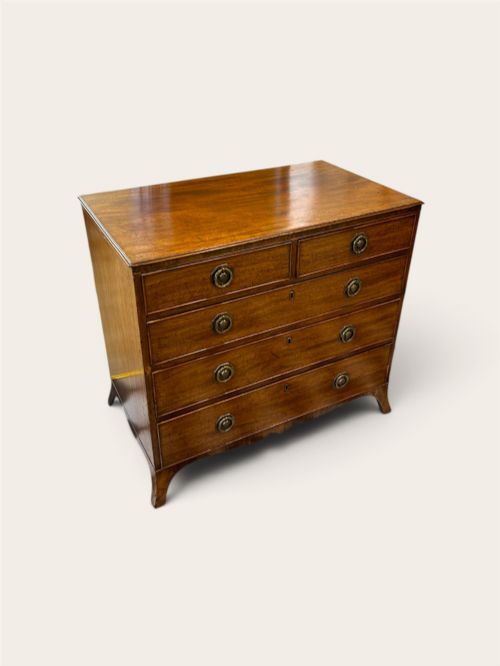
A small mahogany dresser meets the eye as a compact case piece built for storage, prized for its dense timber and neat proportions.
Small Mahogany Dresser
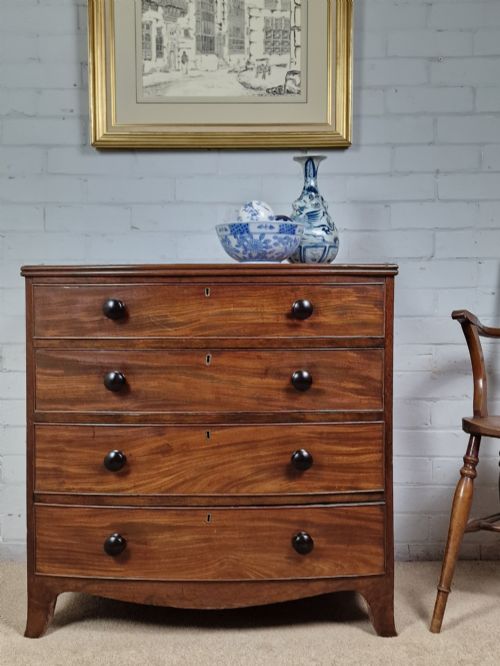
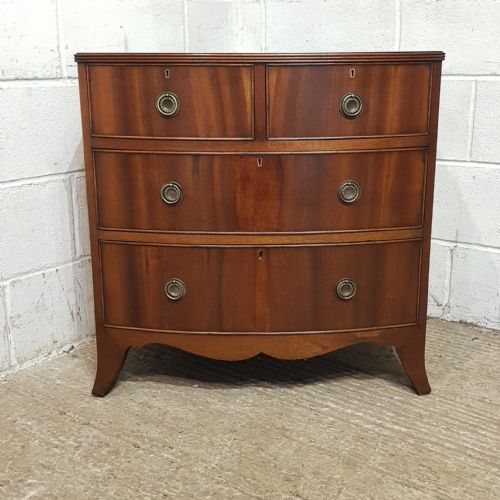
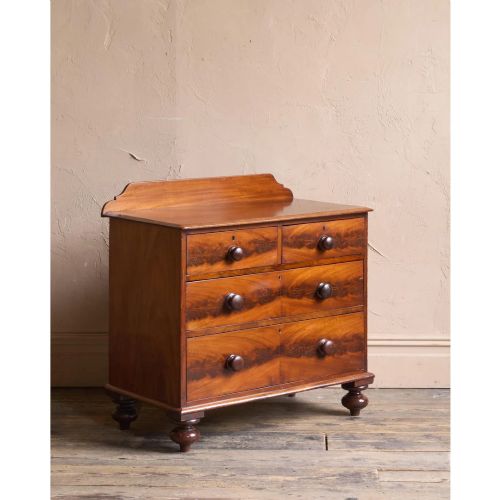
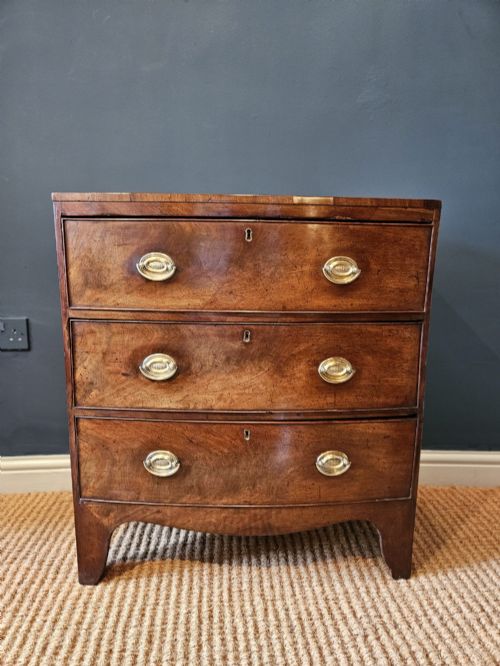
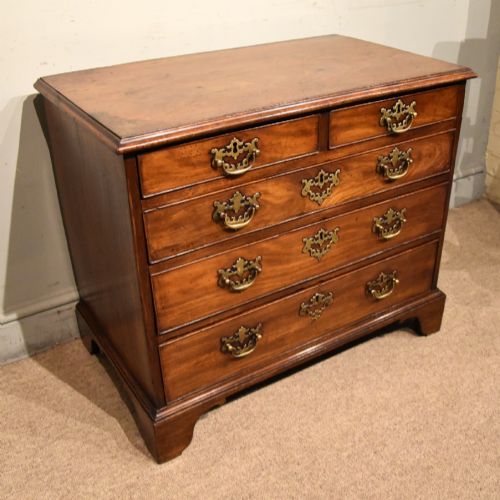
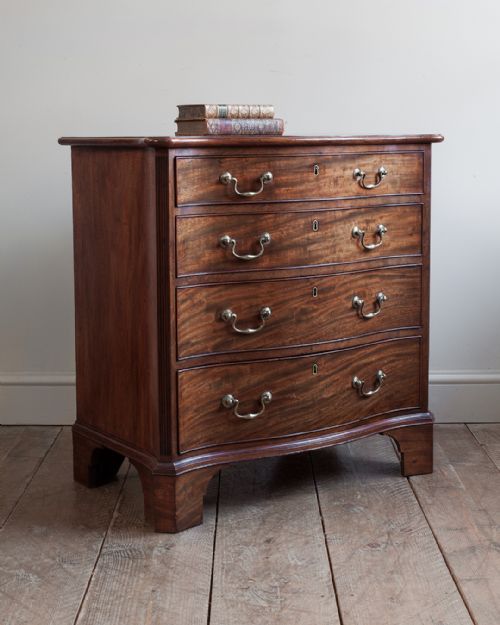
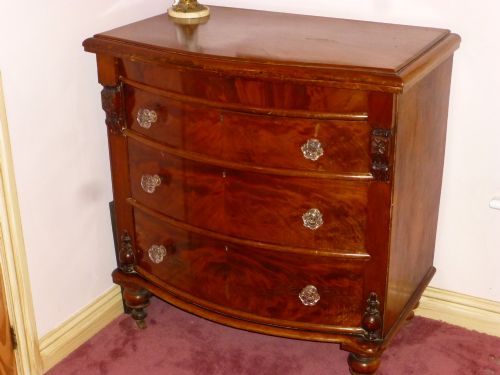
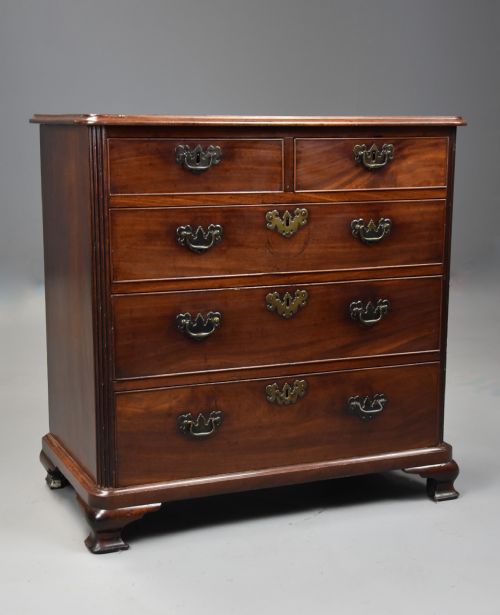
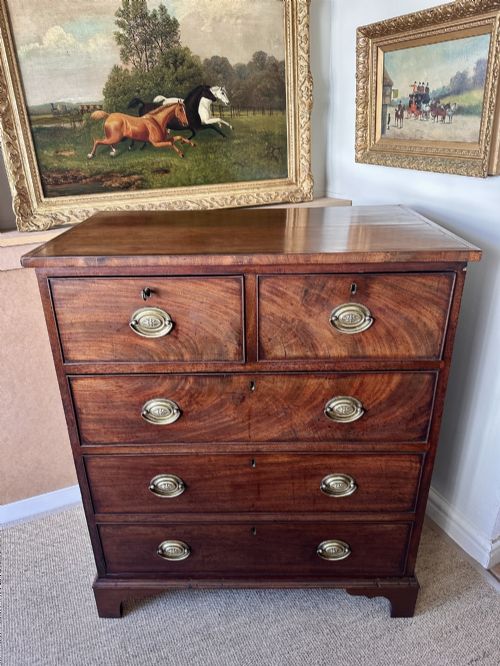
When you search for a small mahogany dresser, you encounter pieces designed primarily as chests of drawers, often taking compact forms suitable for modest rooms. The examples on this page span several distinct eras, appearing most frequently in Georgian, Regency, and Victorian styles.
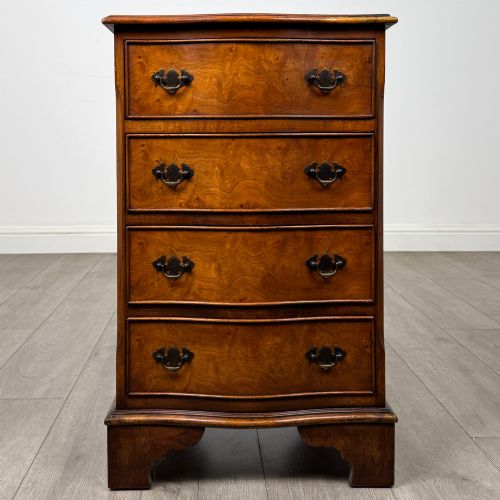
The dominant forms include bowfront chests, straight-front four-drawer chests, and specialised variations such as bachelor's chests equipped with brushing slides. You will also find serpentine fronts, sideboards, chiffoniers, and miniature furniture, alongside revival pieces from the early twentieth century.
Origins stretch across the eighteenth and nineteenth centuries, taking in Scottish regional pieces, Welsh designs, and English workshop traditions. These items served practical domestic storage needs in bedrooms and parlours, valued then as now for their restrained footprint.
Materials and construction
Makers built these pieces primarily from solid mahogany and flame mahogany veneer, frequently supported by secondary timbers like oak and pine. Details often incorporated brass handles, working locks, and occasionally bone inlay or burr walnut accents.
Joinery techniques relied on traditional dovetailed drawer construction and bracket feet, with crossbanded borders applied to top surfaces for visual contrast. Specialised additions, such as secret drawers and pull-out brushing slides, required precise cabinet-making skills.
Timber selection emphasised rich grain patterns and deep natural patination, enhanced through polishing rather than heavy surface pigmentation. Carved elements remained restrained, allowing the figuring of the wood to define the aesthetic.
Small Mahogany Dresser Retail Price Guide 2026
Typical asking prices for small mahogany dresser among the pieces listed under this phrase on Sellingantiques today, from the lower quarter to the upper quarter. They describe what is for sale here now, not the wider market.
Several chests hide secret compartments behind their drawers, offering a clever spot for midnight snacks or clandestine love letters.
Judging quality and proportion
The distinction between ordinary and superior pieces rests on the crispness of the timber's figuring and the depth of its natural patina. Finer examples display carefully matched veneer grain across the drawer fronts and well-proportioned bracket feet that elevate the case cleanly from the floor.
Original hardware and functional details, such as working keys and smooth-running drawers with tight dovetails, signal higher workshop standards. Alterations to feet, handles, or secondary woods diminish the integrity of the piece, whereas undisturbed surfaces retain their historical character.
The Small Mahogany Dresser Glossary
- Bowfront
- A convex curved cabinet front that swells outward in the centre. This shape softens the profile of a room and appeared frequently in late eighteenth and nineteenth-century case furniture.
- Brushing slide
- A pull-out shelf located just beneath the top surface of a chest. It provided a temporary writing or dressing surface without requiring a dedicated desk.
- Serpentine
- A front design featuring a concave curve flanked by two convex curves, resembling the undulating movement of a snake. It demands advanced woodworking skill to execute cleanly.
- Crossbanding
- A narrow strip of veneer applied to the borders of a tabletop or drawer front with the grain running perpendicular to the main panel. This frames the primary timber for decorative contrast.
- Patina
- The deep, lustrous surface sheen developed on wood over decades of handling, polishing, and exposure to light. Collectors prize an undisturbed patina as a sign of age and careful maintenance.
Small Mahogany Dresser: Frequently Asked Questions
What is a bachelor's chest?
A bachelor's chest is a compact set of drawers featuring a pull-out brushing slide directly beneath the top surface. These pieces were designed for smaller bedchambers where a full dressing table or desk would take up too much space.
They offer storage alongside a convenient ledge for writing or grooming. The presence of the original slide often indicates a higher quality Georgian workshop origin.
How do I spot a bowfront chest?
A bowfront chest is easily identified by its curved front, which arches outward toward the middle. This profile helps a heavy wooden case look less boxy in a compact room.
Cabinet-makers used this shape extensively across the Georgian and Regency periods. The curve required precise timber bending or shaping from solid stock.
What distinguishes Georgian from Victorian pieces?
Georgian pieces generally display more restrained classical proportions, delicate bracket feet, and finer mahogany grain selection. They date from the eighteenth and early nineteenth centuries.
Victorian items tend to feature heavier proportions, bolder turnings, and sometimes darker finishes. Both eras prioritized functional storage, but the decorative details reflect the changing tastes of their respective decades.
Where should I place a small chest?
These compact chests suit hallways, landings, and bedrooms where floor space is limited. Their modest depth allows them to sit against narrow walls without obstructing pathways.
They function well as bedside tables or accent storage units in living rooms. Keeping them away from direct heat sources helps protect the mahogany timber and veneer.