


Small Library Table
A small library table offers compact workspace and refined period character, combining practical writing surfaces with rich timber grains.
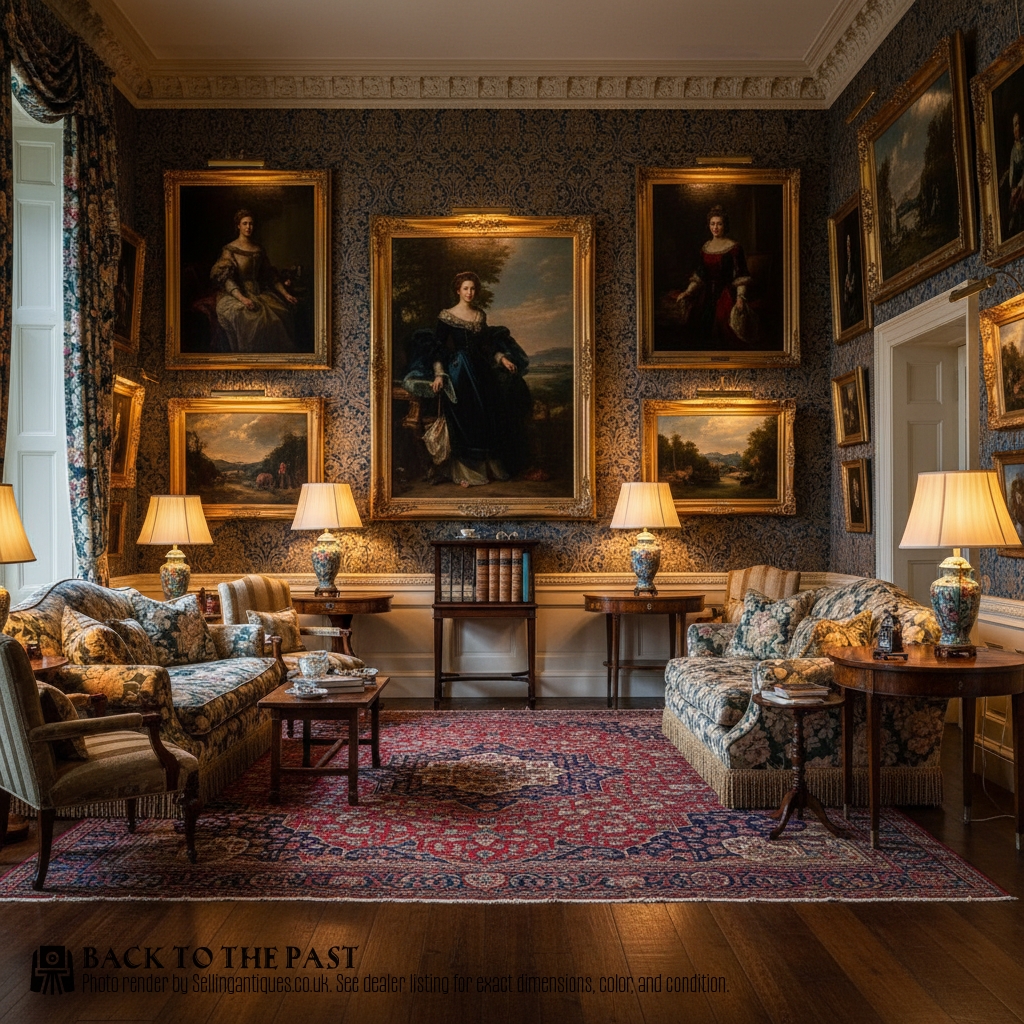
Small Library Table
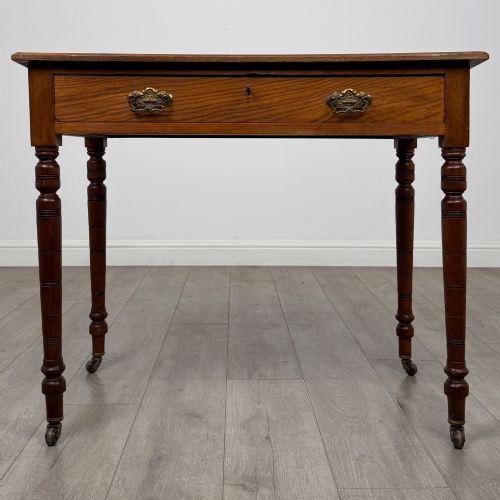
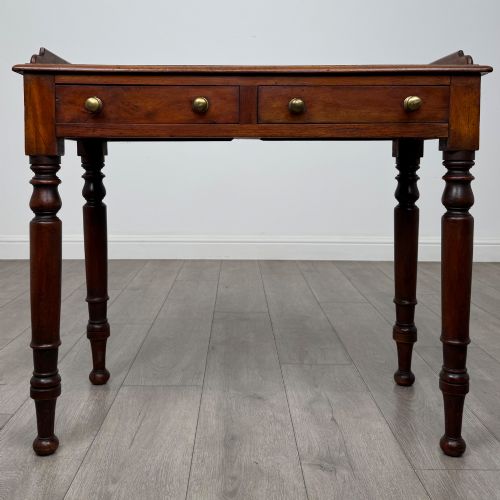
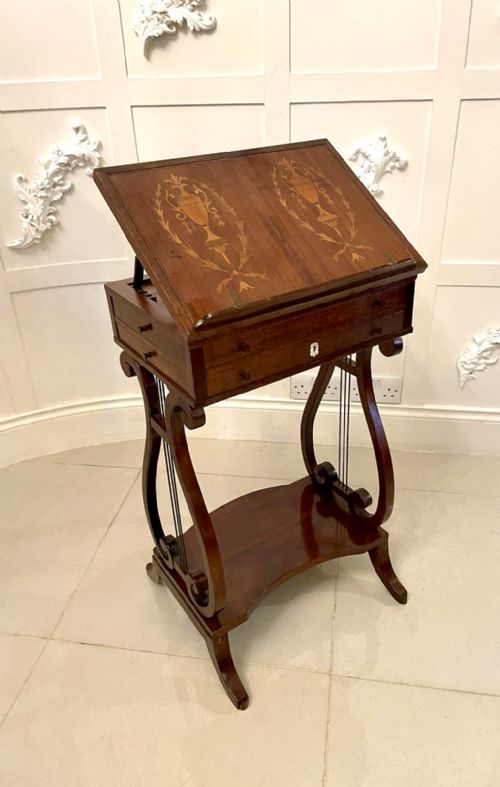
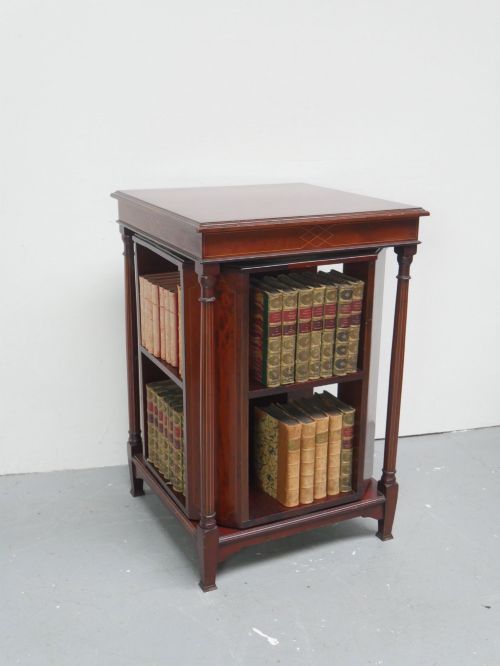
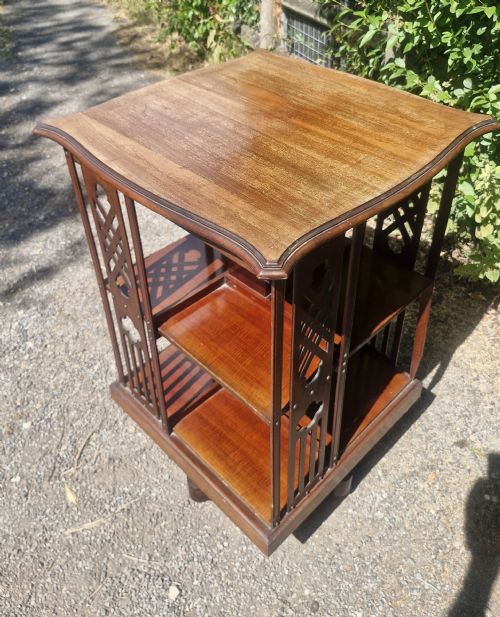
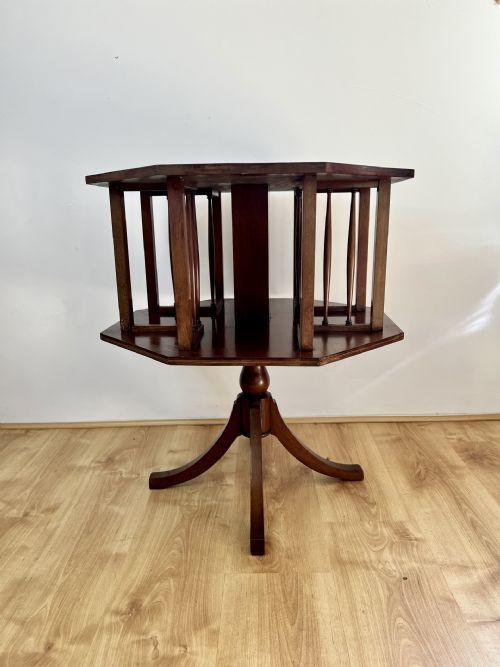
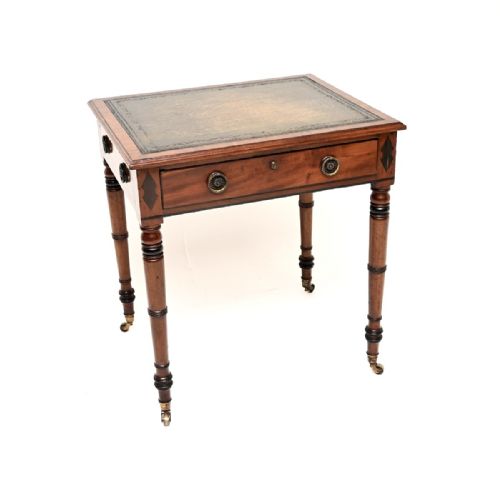
A small library table functions as a compact writing desk or centre table, designed for domestic studies and reception rooms. Buyers encounter writing tables, drum tables, and revolving bookcases from periods spanning the eighteenth century to the Edwardian era.
The materials recorded in these forms include mahogany, oak, walnut, rosewood, and satinwood, often fitted with leather writing surfaces. Construction encompasses freestanding desks, multi-tiered etageres, and compact rotating book stands intended for smaller domestic spaces.
Materials and construction
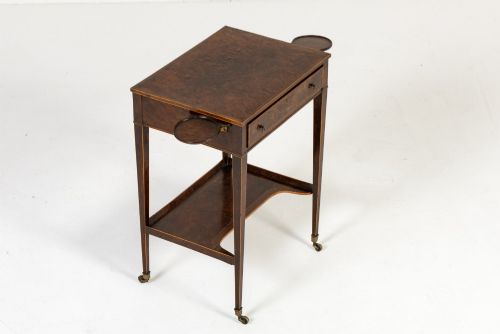
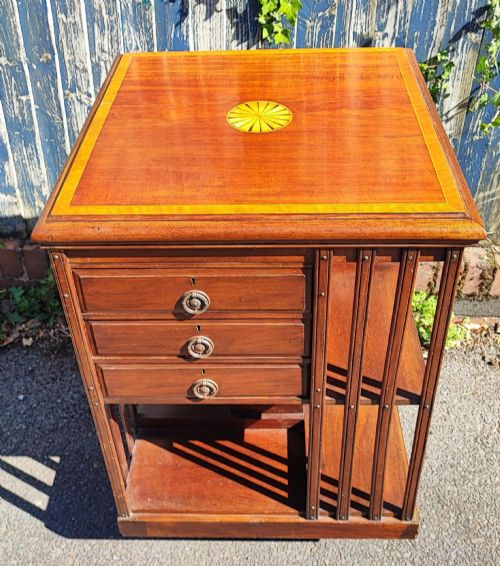
Cabinet makers utilised dense hardwoods such as mahogany, walnut, and oak to build stable frames, frequently applying figured veneers like burr yew, pollard oak, and satinwood to primary surfaces. Inlaid decoration incorporating contrasting timbers and delicate stringing defines Edwardian and Sheraton revival pieces.
Leather insert writing panels appear frequently on desk tops, whilst revolving book stands rely on internal wooden or brass pivot mechanisms to achieve smooth rotation. Structural joinery employs traditional techniques suitable for freestanding placement within a room.
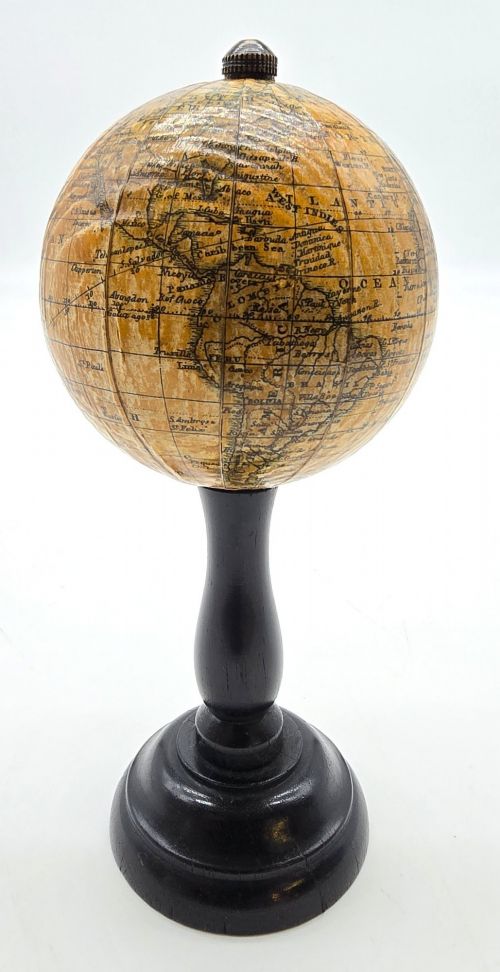
A miniature desk globe on an ebony stand allows scholars to conquer the entire world whilst remaining seated at a small library table.
Variations in quality
The selection of timber grain and veneer figure dictates visual impact, with choice cuts of burr walnut, pollard oak, and bird's-eye maple elevating standard forms. Finer examples display meticulous marquetry inlay, precision brass hardware, and secondary framing timbers of equal grade.
Structural integrity and proportion separate basic utilitarian furniture from exceptional cabinet work produced by prominent workshops. The crispness of carved details, the smoothness of drawer movement, and the retention of original leather surfaces indicate superior manufacturing standards.
James Shoolbred·Sir John Bennett·Gillows
The Small Library Table Glossary
- Drum table
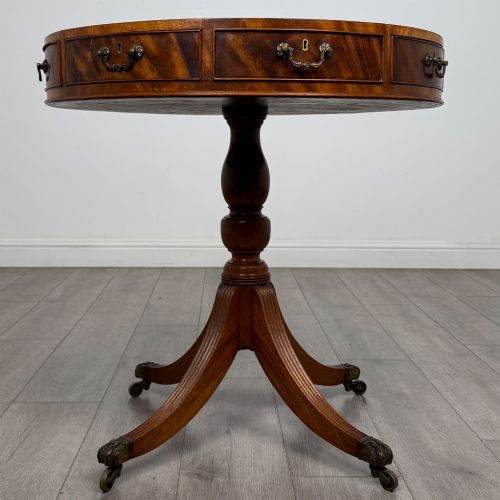
- A circular library table with a deep top containing drawers, usually supported on a central pillar with tripod legs. This form originated in the eighteenth century and continued into the Regency and Victorian periods.
- Revolving bookcase
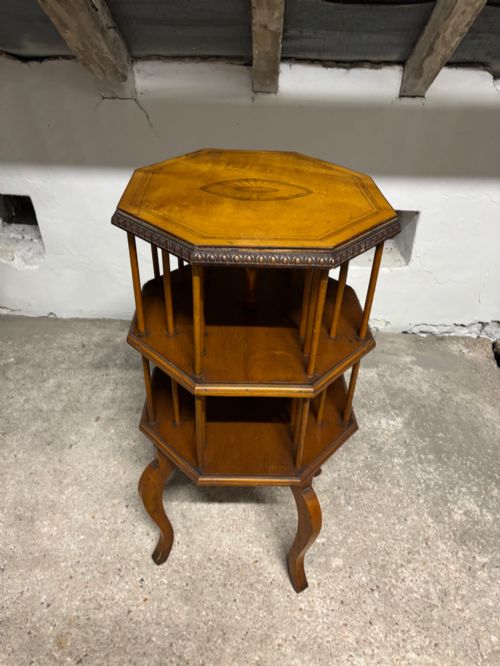
- A freestanding tiered bookcase designed to rotate on a central base for easy access to volumes. Edwardian and late Victorian examples frequently utilise inlaid mahogany or walnut.
- Pollard oak
- Oak timber taken from trees that have been pollarded, producing a dense, highly figured grain pattern with clustered knots. Regency cabinet makers prized this material for small library tables.
- Etagere
- An open tiered piece of furniture used for displaying books or small decorative objects. These compact stands appear in walnut and mahogany across the nineteenth and early twentieth centuries.
- Sheraton style
- A neoclassical furniture design style popularised in the late eighteenth century and revived during the Edwardian period, characterised by straight lines, satinwood veneers, and delicate inlay.
Small Library Table: Frequently Asked Questions
How were these tables used?
They served as dedicated surfaces for correspondence, reading, and organising personal volumes in studies, libraries, and withdrawing rooms. Many featured leather writing inserts and drawers for stationery.
Revolving variants and tiered bookcases placed reference books within arm's reach around the room.
How do I identify the period?
Period identification relies on matching timber choices, construction techniques, and stylistic ornament to known eras. Georgian and Regency pieces demonstrate structural restraint and figured veneers like pollard oak, whilst Edwardian examples often feature Sheraton revival inlay.
Secondary woods, drawer linings, and hardware styles provide further chronological markers for dating.
Where should I place one?
These compact tables suit studies, living rooms, and hallways as freestanding centre pieces or writing desks. Their finished backs allow placement in the middle of a room rather than strictly against a wall.
Revolving bookcases fit easily beside armchairs or in corners to utilise vertical space efficiently.