
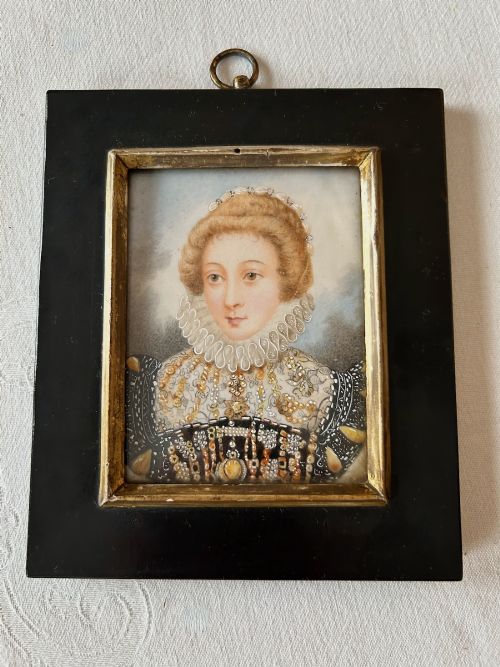
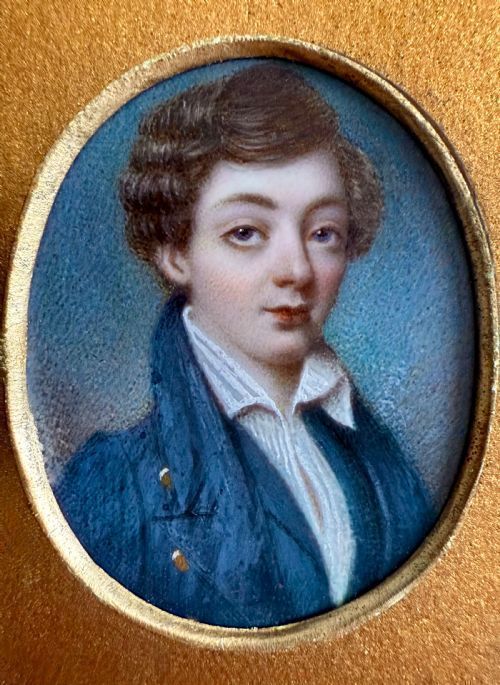
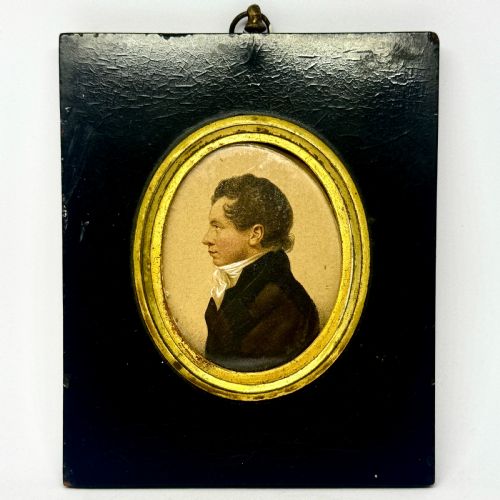
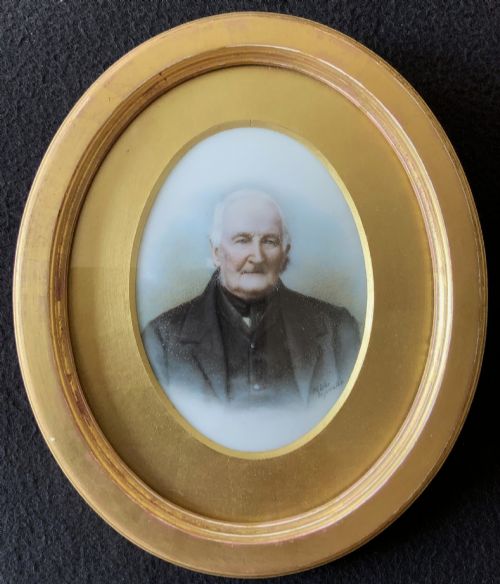
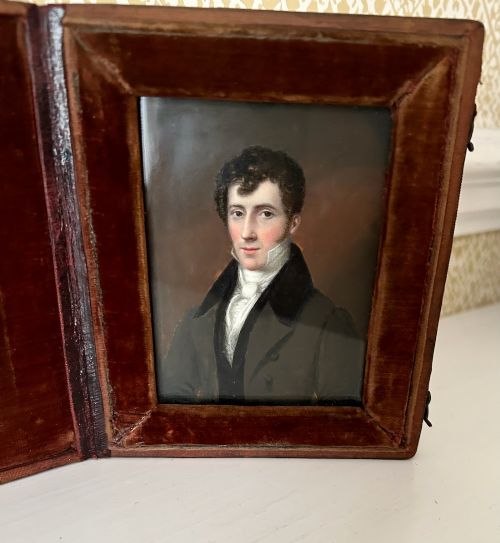
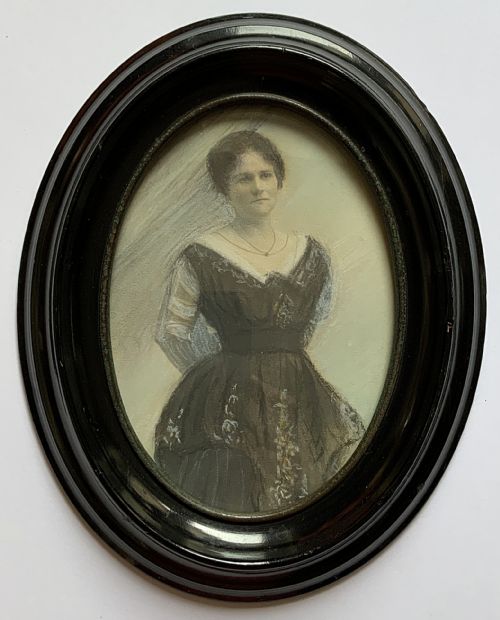
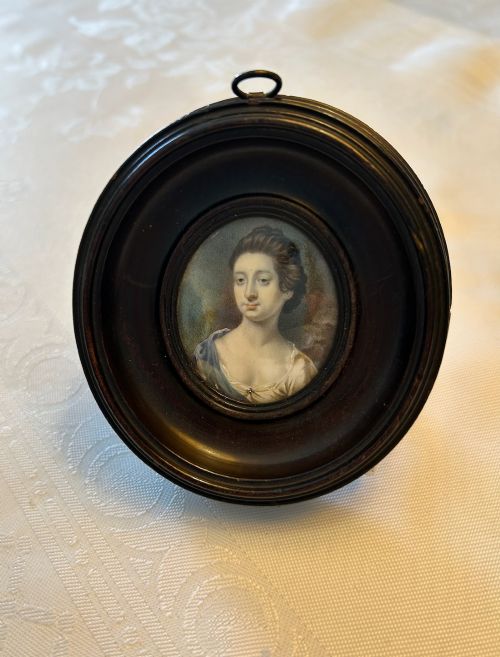
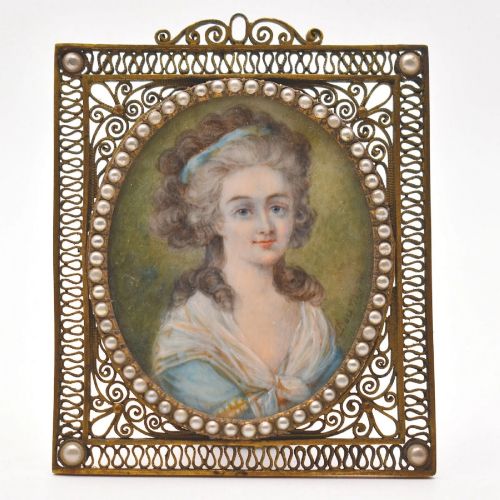


Small Framed Watercolour Portrait
A small framed watercolour portrait captures a lifelike likeness in miniature, offering an intimate window into past lives that collectors prize for their exquisite detail.
Small Framed Watercolour Portrait
A small framed watercolour portrait appears as a delicate miniature painting, most frequently encountered from the Georgian, Regency, and Victorian periods.
These works depict subjects ranging from named nobility and actors to anonymous gentlemen, ladies, and children.
The format spans individual studies, pairs of companions, and oval paintings housed within protective surrounds.
Materials and Techniques
Artists painted these miniature portraits primarily in watercolour on paper or ivory, occasionally incorporating gouache and pastel.
Makers housed the delicate painted surfaces behind glass to protect the pigment.
Protective surrounds utilise ebonised wood, gilt metal, brass, and gilt wood.
One miniature links directly to the historical origins of Earl Grey tea and Lord Byron.
Assessing Quality
The precision of the brushwork and the psychological depth of the sitter's expression separate superior portrait miniatures from simpler studies.
The choice of housing, from heavy ebonised frames to ornate gilt metal stands with seed pearls, contributes to the overall distinction of the piece.
Henri Fradelle·Richard Cosway·Dumont·George Hargreaves·Emma Kendrick·Isaac Wane Slater·Elisabeth Vigee Le Brun
The Small Framed Watercolour Portrait Glossary
- Portrait Miniature
- A small painting depicting a person, executed with fine detail. These works were often carried or displayed in private rooms.
- Ebonised Wood
- Timber treated to resemble ebony, frequently used for dark, contrasting frames during the Georgian and Regency eras.
- Gilt Metal
- Metal treated with a gold-coloured finish or plating, providing decorative mounts for miniature paintings.
- Gouache
- An opaque watercolour medium used to build solid areas of colour and highlight details in miniature painting.
Small Framed Watercolour Portrait: Frequently Asked Questions
How were small framed watercolour portraits displayed?
Owners typically hung these miniature portraits on parlour walls in tight groupings or placed them on tables using small folding stands.
Some pieces were designed for personal portability, allowing individuals to keep likenesses of family members close during travel.
What subjects appear in these portraits?
Subjects include aristocrats, literary figures, actors, and ordinary children and adults from the eighteenth and nineteenth centuries.
Artists also copied famous oil paintings on a small scale for patrons who desired affordable versions of well-known artworks.
How do I identify a Regency period miniature?
Regency examples often feature specific hairstyles, clothing cuts, and frame styles characteristic of the early nineteenth century.
Examining the backing material and the fastening pins can also provide clues to the approximate date of assembly.
Can I hang these portraits in direct sunlight?
Watercolour pigments and paper are sensitive to ultraviolet light and can fade significantly if exposed to bright sun.
Display these pieces on interior walls away from direct windows to preserve the integrity of the original colours.