
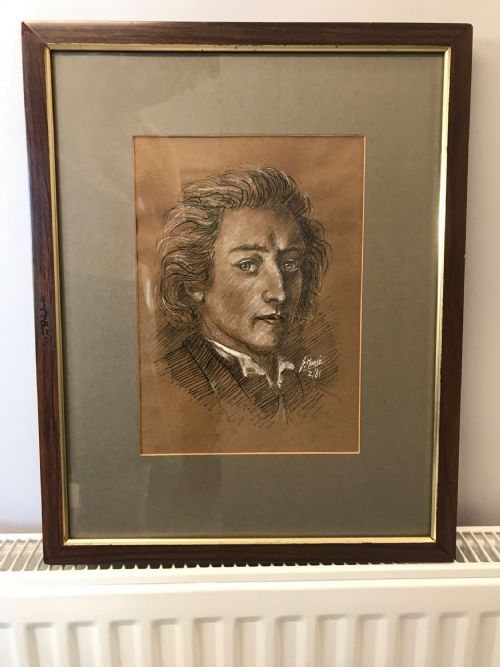


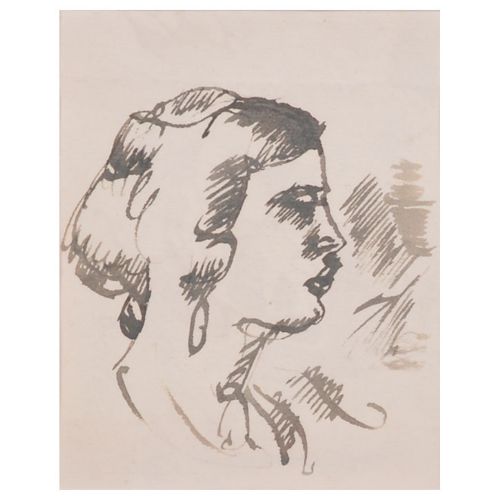


Antique Profile Portrait Drawing
These antique profile portrait drawing examples capture likenesses in paper, pencil, and wash across centuries of careful handwork.
Antique Profile Portrait Drawing
An antique profile portrait drawing presents a subject in side view, rendered on paper or related works on paper through various graphic mediums. These pieces range from intimate 17th century Italian works and 18th century plumbago studies to 19th century pencil sketches and Edwardian ink studies.
Buyers exploring this selection encounter framed art, pastel portrait paintings, and silhouette forms produced across Georgian, Regency, and Edwardian periods. The majority of items on this page lean towards framed drawings and portraits created with pencil, charcoal, and watercolour.
Materials and execution
Draftsmen relied primarily on paper supports, applying pencil, graphite, charcoal, and chalk to build delicate lines and tonal gradients. Many works incorporate watercolour, pen ink wash, and gouache to add depth and colour to the primary monochrome sketching.
Framing materials typically involve wood and glass, protecting the delicate surfaces of works on paper from environmental degradation. Older examples frequently feature carved Florentine frames or gilded surrounds that complement the period aesthetic of the drawing within.
Listings feature works spanning the 17th, 18th, and 19th centuries, alongside Edwardian and later modernist examples executed in pencil, charcoal, watercolour, and chalk.
Judging the range
The distinction between standard works and exceptional examples lies in the confidence of the line and the precision of the sitter's likeness. Master draftsmen achieved distinct characterisation with minimal strokes, whereas lesser pieces rely on stiff outlines and flat shading.
Condition and preservation heavily influence the standing of a piece, particularly given the vulnerability of paper, charcoal, and pastel over centuries. Intact original frames and minimal foxing elevate a drawing, while heavy fading or water staining diminishes the visual impact.
James Ferguson·Ozias Humphry·Nathaniel Bermingham·John Duncan Fergusson·Baden Powell·John Seymour Lucas·Francis Frank O A Haviland·Leo Klin·Sir Nathaniel Dance Holland
The Antique Profile Portrait Drawing Glossary
- Plumbago
- A drawing executed in graphite, which was historically known as plumbago before the modern pencil nomenclature took hold. These works often show extreme precision and fine detail.
- Gouache
- An opaque watercolour paint consisting of pigment, water, and a binding agent such as gum arabic. It provides solid areas of colour and highlights in mixed media portraits.
- Silhouette
- A solid shape of a person's profile, usually filled in black or executed as a cut-out paper form. These are frequently mounted against a contrasting background.
- Foxing
- Brown spots or patches of discolouration that develop on old paper due to chemical reactions over time. Its presence and extent affect the overall visual clarity of the drawing.
- Works on paper
- A broad category encompassing drawings, watercolours, prints, and pastel paintings executed on paper supports. This term is standard across museum and dealer cataloguing.
Antique Profile Portrait Drawing: Frequently Asked Questions
How do I care for antique profile drawings?
Keep works on paper away from direct sunlight to prevent the fading of pencil, ink, and watercolour pigments. Maintain stable indoor humidity levels to protect both the paper support and any historic wooden framing.
Avoid hanging these pieces in damp environments such as kitchens or unheated spaces. Professional framing with UV-filtering glass offers essential protection for long-term preservation.
What periods do these profile drawings cover?
The available selection spans from the 17th century through the 18th century, Regency, and 19th century, extending into Edwardian and later 1960 examples. Georgian and 19th century realisms are heavily represented.
Earlier pieces often use plumbago or charcoal, while later Victorian and Edwardian examples incorporate mixed media and photography influences. Each period brings distinct clothing styles and framing conventions to the portraits.
How can I tell an 18th century drawing from a later copy?
Examine the paper stock under magnification for handmade laid lines, watermark evidence, and natural ageing characteristics typical of the period. Eighteenth-century papers differ significantly in texture and composition from modern machine-made alternatives.
Consider the medium and subject dress, as Georgian and Regency sitters wear specific costume details consistent with documented eras. Signatures, inscriptions, and framing methods also provide reliable context for dating a piece accurately.