

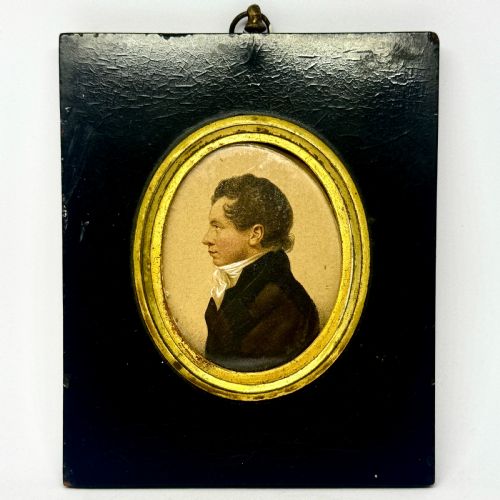


Black Papier Mache Frame
A black papier mache frame frames delicate silhouette portraits and miniature paintings from the Georgian and Regency eras.
What they are
A black papier mache frame houses silhouette portraits, miniature paintings, and wall art produced during the Georgian and Regency periods. These small wall art pieces display likenesses of gentlemen, ladies, and children captured through paint, gold leaf, and profile cutting.
Most examples found in this search phrase take the form of miniature portrait frames holding hand-painted or cut paper silhouettes behind glass. The dark moulded surrounds provide a sharp contrast to the pale faces and gilded highlights within.
Makers from the late eighteenth and early nineteenth centuries utilised these lightweight housings to present intimate likenesses for domestic display. The resulting objects combine portrait miniature traditions with durable pressed paper structures.
How they were made
The physical housings combine compressed paper pulp with paint and ebonised wood elements to create a sturdy, lightweight profile. Craftsmen pressed the papier-mache into moulds before applying dark finishes and sometimes integrating brass hangers or bezels.
Glazed fronts protect fragile painted paper and glass silhouettes, while backing boards secure the portrait miniatures within the frame. Artisans applied delicate paint details and gilded highlights directly to the glass or paper components.
Retail Price Guide 2026
Typical UK retail prices for black papier mache frame, calculated from the Sellingantiques database of over a million retail prices indexed since 2003. This retail price guide relies exclusively on Sellingantiques data; no external sources or auction records are used, so the figures do not describe the wider market.
Current listings span the Georgian and Regency periods, featuring materials such as brass, glass, paper, and papier-mache.
What varies in quality
Distinction across the range lies in the crispness of the moulded papier-mache edge and the finesse of the portrait within. Finer items exhibit precise brushwork, clear gilded silhouettes, and well-preserved glass panels.
The integration of original brass fitments and stable backing structures elevates a piece above simpler, later alternatives. Material integrity in the paper and the depth of the dark finish dictate the overall standing of the object.
The Black Papier Mache Frame Glossary
- Silhouette
- A portrait profile filled in with a solid dark colour, typically black, against a pale background. This technique captures a person's likeness through outline alone.
- Portrait miniature
- A small-scale painting or likeness produced during the Georgian and Regency eras. These detailed works require fine brushes and steady hands.
- Regency
- An English design period spanning the early nineteenth century known for classical elegance. Pieces from this era often feature refined proportions and restrained ornament.
- Georgian
- The architectural and decorative style spanning the reigns of the Hanoverian kings. This period produced the early iterations of these dark profile frames.
- Ebonised wood
- Timber treated to resemble expensive ebony through staining or painting. This dark material often complements the papier-mache housings.
Frequently Asked Questions
What is a black papier mache frame?
A black papier mache frame is a lightweight decorative housing made from compressed paper pulp finished with a dark coating. These surrounds typically hold small portrait miniatures, silhouette paintings, or cut paper likenesses.
Originating in the Georgian and Regency periods, the dark moulded borders provide a striking visual contrast to the pale faces depicted inside. They remain collectable examples of early nineteenth-century domestic portraiture.
How do I hang a portrait miniature?
These small frames generally feature integrated brass loops or hangers specifically designed for wall mounting. Because the objects are lightweight, simple picture hooks support them securely.
Place them at eye level in small groupings to appreciate the fine painted details and silhouette work up close. Avoid positioning them in direct sunlight to protect the fragile paper and pigments inside.
How can I tell a Regency frame from a Georgian one?
Dating these pieces relies on observing the clothing, hair styles, and artistic techniques of the portrait contained within. Georgian examples often display the powdered wigs and attire of the late eighteenth century.
Regency pieces shift towards classical draping, natural hair, and bolder gilded highlights on glass or paper. The frame styles themselves evolved alongside these changing portrait conventions.
What materials make up these antique frames?
The primary structure consists of pressed papier-mache finished with dark paint or lacquer to create a smooth, durable surface. Many examples incorporate glass fronts to protect the delicate painted silhouettes behind them.
Additional components often include brass bezels, hangers, and wooden backing boards. Some pieces pair the papier-mache surrounds with ebonised wood elements for added rigidity.