




Original Art Deco Drawing
An original art deco drawing brings sharp lines and period elegance straight to your wall, capturing the distinct spirit of the interwar years.
Original Art Deco Drawing
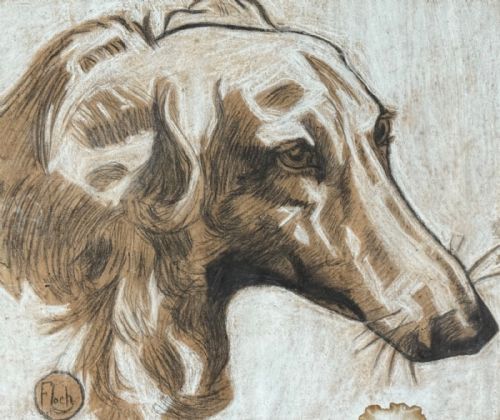
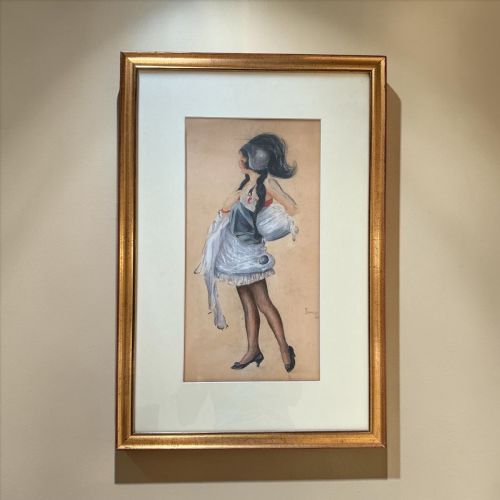
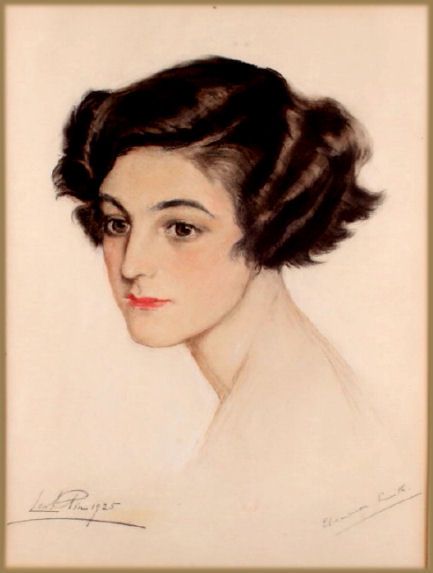
An original art deco drawing encompasses works on paper created primarily between the nineteen-tens and the nineteen-forties, capturing the distinct aesthetic of the interwar period. These pieces frequently appear as portraits, fashion illustrations, and studies of the human figure or animals, executed by European artists.
The selection on this page centres heavily on French and British works, spanning intimate portrait drawings and commercial artwork intended for publication. You will encounter framed drawings and sketches that showcase subjects from Parisian scenes to exotic dancers and classical nudes.
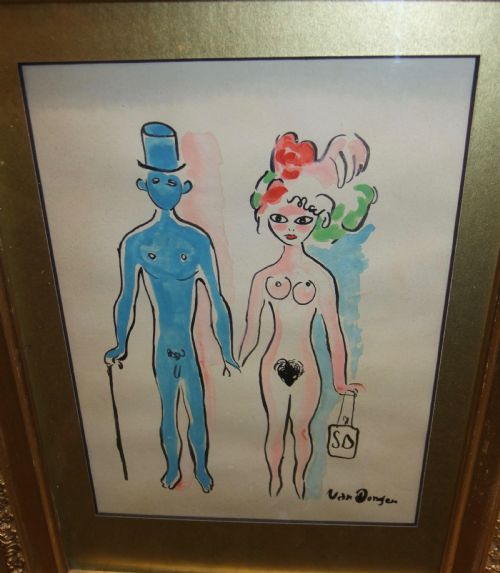
Buyers seeking this style find works reflecting the modernist and Fauvist tendencies of the early twentieth century. The drawings range from spare linear compositions to richly coloured watercolours and gouaches on various tinted papers.
How they were made
Artists relied on paper supports, often buff or tinted sheets, building their compositions with ink, charcoal, graphite, chalk, pastel, watercolour, and gouache. Many of these graphic works combine media, layering pencil with gouache or watercolour to achieve depth and tactile contrast.
Framed presentation is common, frequently utilising wood and glass to protect fragile works on paper from atmospheric damage. The techniques employed mirror the commercial and fine art demands of the period, balancing rapid illustrative skill with considered studio execution.
The listings span the decades from nineteen-ten to nineteen-forty, incorporating paper, glass, ink, chalk, watercolour, wood, charcoal, and graphite.
What varies in quality
The distinction between ordinary and exceptional works rests on the surety of the draughtsmanship and the strength of the composition. A piece with confident, economic lines demonstrates the artist's mastery over the medium more effectively than hesitant or laboured execution.
Provenance and attribution also differentiate these drawings, as works by identified practitioners or those with documented exhibition history carry greater art historical weight. The condition of the paper and the preservation of fugitive pigments like pastel or watercolour further influence the integrity of the piece.
Lucien Gibert·Andrè Maurice·Kees van Dongen·Henry Bird·Leo Klin
The Original Art Deco Drawing Glossary
- Gouache
- An opaque water-based paint that dries to a matte finish, allowing artists to apply light highlights over darker washes.
- Buff paper
- A pale brownish-yellow paper commonly used in the early twentieth century as a warm middle tone for chalk and pastel work.
- Fauvism
- An early twentieth-century style characterised by strong colours and painterly qualities rather than realistic or naturalistic values.
- Modernist
- A style reflecting the rejection of traditional Victorian forms in favour of simplified geometry and experimental approaches to subject matter.
Original Art Deco Drawing: Frequently Asked Questions
How do I date an art deco drawing?
Dating relies upon stylistic markers such as modernist geometry, period fashion, and typography, alongside inscriptions or signatures left by the artist.
Paper characteristics and framing methods also offer clues, though exhibition labels and gallery provenance provide the most secure verification.
Where should I hang works on paper?
Hang original drawings away from direct sunlight to prevent delicate watercolours, chalks, and papers from fading over time.
Maintaining stable indoor humidity protects both the paper substrate and any historic wooden framing from warping or deterioration.
What subjects are most common?
Portraits of women dominate the period, ranging from society figures and theatrical performers to exotic dancers and stylised nudes.
Commercial illustrations for advertisements and atmospheric European landscape scenes also appear frequently across the selection.
How do sketches differ from finished drawings?
Sketches are typically rapid exploratory studies capturing posture or composition, whereas finished drawings present fully resolved artistic statements.
Both formats hold equal appeal for collectors, depending on whether one prefers spontaneous gesture or complete execution.