





Cream Paper Portrait Drawing
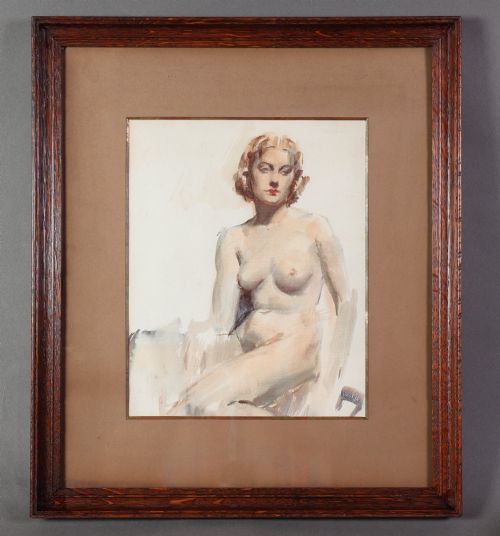
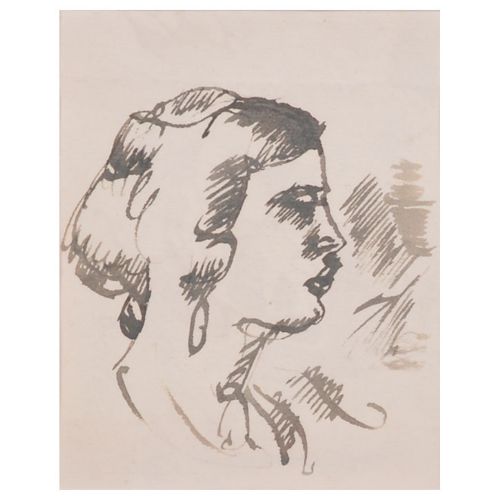
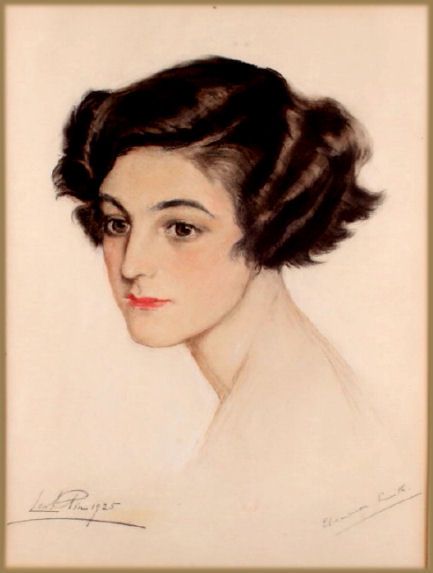
These cream paper portrait drawing works capture individual likenesses through pencil, ink, and watercolour across several centuries.
Cream Paper Portrait Drawing
A cream paper portrait drawing presents a rendered likeness upon a warm paper support, spanning eras from the Regency period through the mid twentieth century. These works encompass framed artwork, drawings, and sketches created by various British and European hands.
The pieces on this page range from naive historical depictions to academic realism, capturing subjects from children and writers to stage performers. One frequently meets works executed in pencil, ink, and watercolour upon the characteristic cream paper stock.
How they were made
Artists executed these works on paper utilising mediums such as pencil, ink, watercolour, and gouache to build form and tone. The support material provides a warm cream background that interacts with the dry and wet media applied upon it.
Framed behind glass within wooden surrounds, these works on paper received protection from environmental damage while preserving the delicate pigments and graphite marks.
One Regency portrait unusually documents a three-month-old infant named Robert Spearman Swinburne recorded at the ripe old age of three years.
What varies in quality
The precision of the draughtsmanship and the expressive capture of the sitter distinguish the finer examples from simpler student or naive pieces. Handling of light and shadow through watercolour wash or pencil hatching dictates the visual depth of the portrait.
The significance of the subject, whether an identified historical figure or a named personality, influences the interest of the drawing alongside the documented attribution to a known artist.
John Duncan Fergusson·Dame Laura Knight·Theobald Chartran·Henry Edridge·Leo Klin·Alexander Melville
The Cream Paper Portrait Drawing Glossary
- Gouache
- An opaque watercolour medium containing a white pigment filler, producing a denser and flatter surface than traditional transparent watercolour. Artists often applied it over pencil to highlight details in a portrait.
- Regency
- A British historical period dating from the early nineteenth century, characterised in art by refined neoclassical drawing styles and delicate portraiture. Works from this era frequently employ fine pencil lines with subtle watercolour washes.
- Naive art
- Artwork produced by an artist without formal academic training, often displaying a charming disregard for strict perspective and proportion. These pieces rely on direct observation and linear expression.
- Academic realism
- A style of painting and drawing stemming from the standards of European art academies, prioritising accurate anatomy and lifelike representation. Such works demonstrate rigorous training through careful tonal gradation.
Cream Paper Portrait Drawing: Frequently Asked Questions
How should I frame a paper portrait?
Protect these works behind glass with acid-free mounts to prevent direct contact between the paper and the glazing. This safeguards the delicate pencil, ink, and watercolour media from atmospheric moisture and physical contact.
Keep framed pieces away from direct sunlight to prevent the cream paper support and pigments from fading over time. Stable indoor humidity levels ensure the paper remains free from cockling or foxing.
What periods do these drawings cover?
The selection spans from the Regency era and the early nineteenth century through to Edwardian and twentieth-century modernist works. Each era brings distinct clothing styles, hairstyles, and draughtsmanship techniques.
Earlier pieces often feature refined pencil and watercolour, while later twentieth-century examples embrace bolder ink and gouache application. Examining the signature, costume, and paper type helps determine the likely date of execution.
Are all sitters identified?
Many portraits record named individuals, ranging from literary figures and stage performers to historical royals and family members. Inscribed margins or backboards frequently provide biographical details about the sitter.
Other works depict anonymous subjects, such as studies of foreign types or unrecorded sitters from the British School. The value and interest in these pieces often rest equally on the artistic execution and the identity recorded.
What media were used on these drawings?
Artists employed a combination of pencil, ink, watercolour, and gouache applied directly to cream-coloured paper supports. These mixed media compositions allowed creators to combine fine linear detail with broader washes of colour.
The interaction between the dry drawing materials and wet paint creates varied textures across the surface of the paper. Protective glass framing helps preserve these fragile water-soluble and graphite elements.