



Small Framed Wall Art
Small framed wall art brings focus to compact spaces through centuries of portrait miniatures, landscape oils and delicate watercolours.
Small Framed Wall Art
When searching for small framed wall art, buyers encounter a diverse selection of compact historical paintings and miniatures designed for intimate domestic spaces. The pieces span centuries from the eighteenth century through the nineteenth century, capturing subjects from botanical studies to maritime scenes and personal portraits.
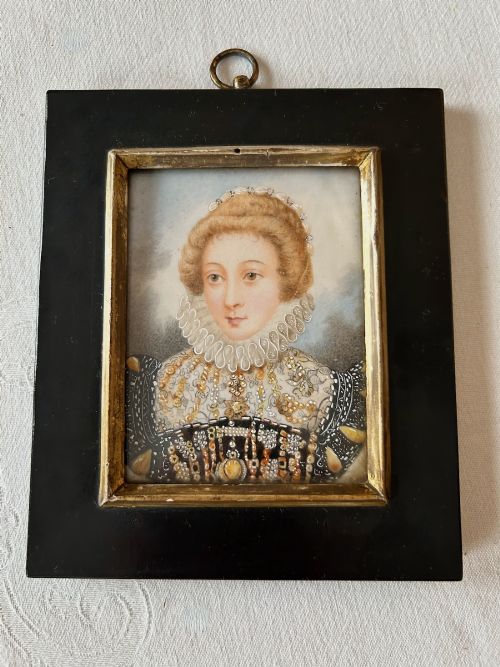
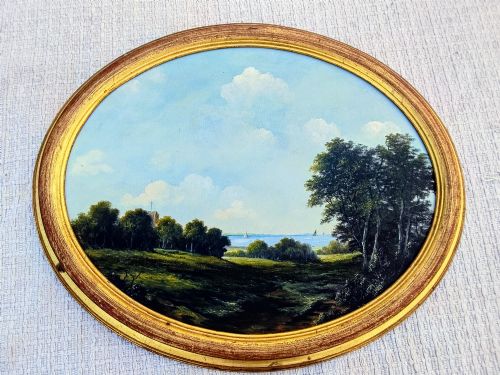
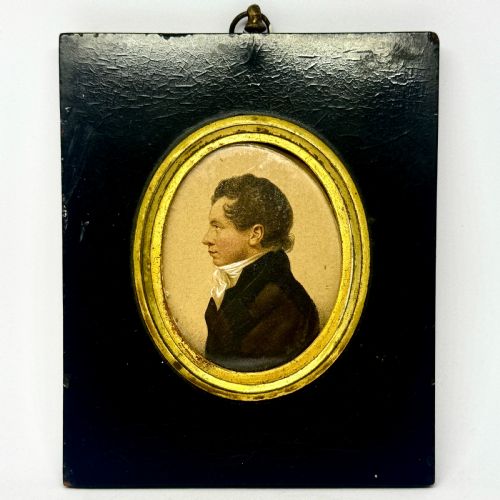
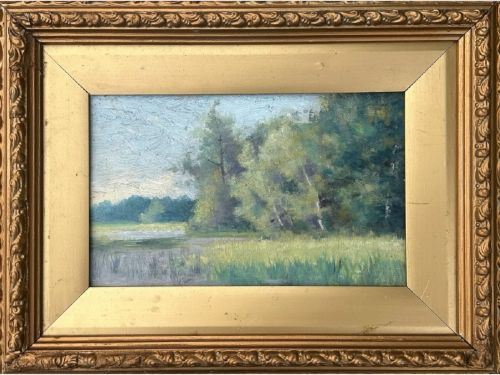
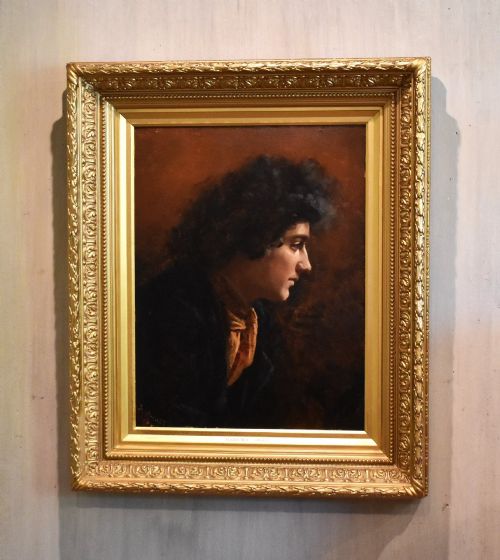
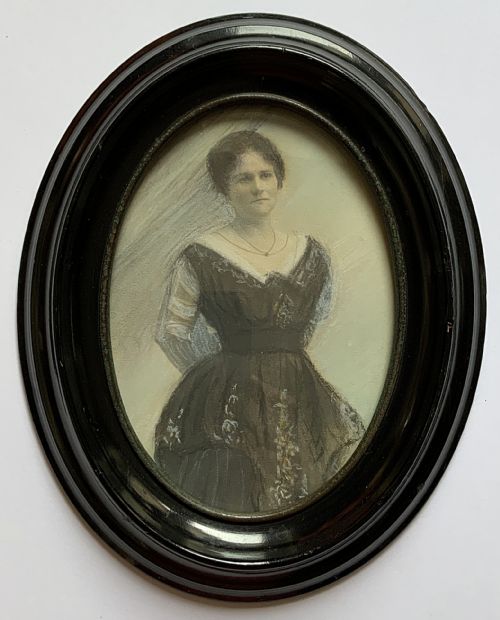
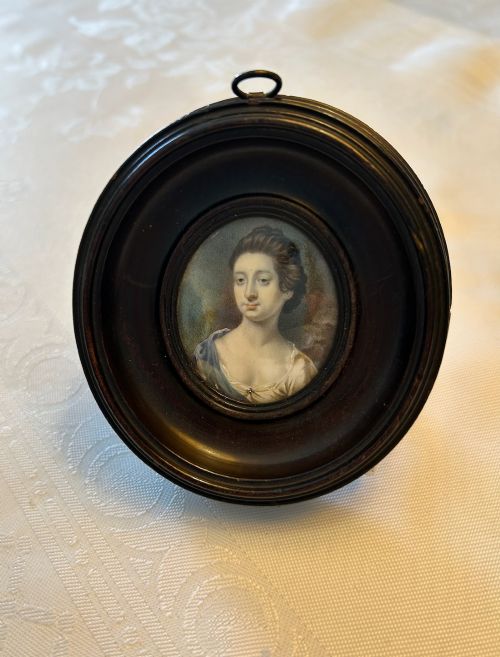
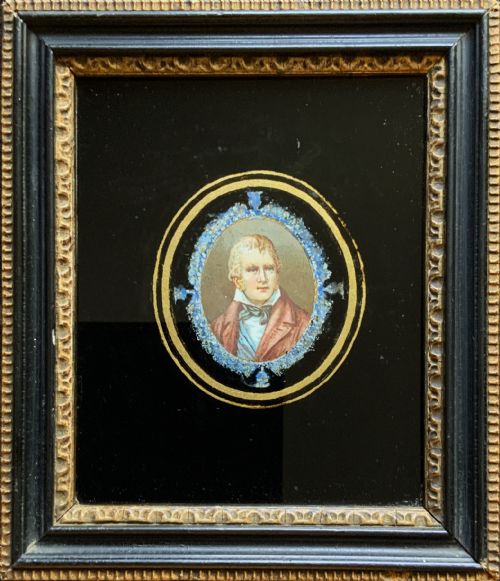
Portrait miniatures dominate the selection, often rendered in watercolour or oil upon ivory, paper, or panel, and housed in ebonised wood or gilt surrounds. Alongside these miniatures, buyers find small landscape oils on canvas or board, alongside delicate watercolours depicting coastal views and river scenes.
The objects originate from various traditions including British school works, continental pieces, and Grand Tour acquisitions. Each item offers a concentrated focal point for wall display, combining historical painting techniques with compact proportions.
Materials and construction
Makers utilised traditional supports including wooden panels, copper, tin, canvas, and paper, applying oil paint, watercolour, or pastel to build the image. Miniature portraits frequently utilised delicate surfaces such as ivory, requiring immense precision from the artist.
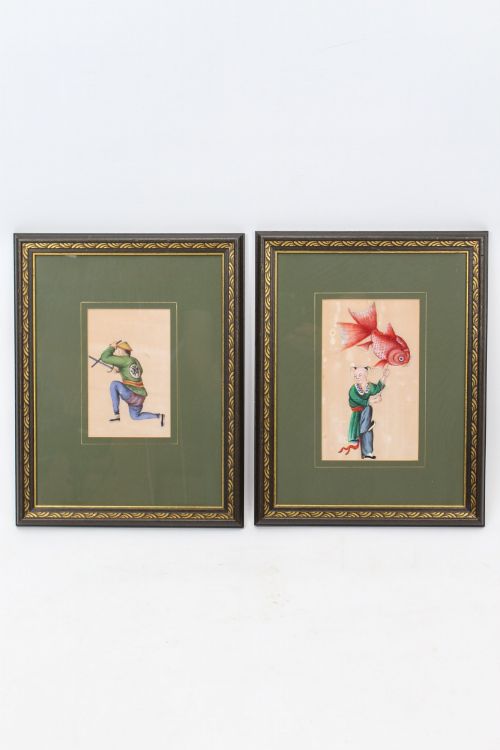
Frames play an integral structural and aesthetic role, constructed from ebonised wood, beech, or moulded gesso enhanced with gold leaf and brass accents. These protective housings range from simplehogarth profiles to ornate swept frames designed to complement the artwork within.
Listings feature works across multiple supports, including oil on copper, tin, canvas, panel, and watercolour on paper.
Quality variations
The standard of execution in miniature painting dictates the visual impact, separating hurried decorative output from highly detailed portraiture with subtle tonal modulation. Brushwork precision and the preservation of pigment vibrancy on delicate surfaces like ivory or paper define superior examples.
Original framing contributes significantly to the integrity of the piece, where period surrounds matching the date of the artwork elevate the overall cohesion. The handling of light and perspective within restricted dimensions demonstrates the skill of the painter.
Henri Fradelle·Richard Cosway·Maud Raphael Jones·Florence Small·Evelyn Chester·J. Phipps·M. C. Hider·George Hargreaves·Andreas Schelfhout·Richard Wilson·John Scougall
The Small Framed Wall Art Glossary
- Portrait miniature
- A small, highly detailed painting, often executed on ivory, vellum, or card during the eighteenth and nineteenth centuries. These intimate pieces were frequently housed in protective cases or wall frames.
- Ebonised wood
- Timber treated to resemble ebony, providing a deep black finish commonly utilised for nineteenth century picture frames. This dark border creates a sharp visual contrast with gilt inner mounts and bright watercolours.
- Gilt gesso
- A plaster-like material applied to wooden frame bases and carved before being coated in gold leaf. This technique produced ornate decorative patterns across nineteenth century frames.
- Grand tour
- A cultural journey undertaken by wealthy young Europeans visiting continental art centres, frequently resulting in the acquisition of small-scale paintings and watercolours. These souvenirs typically depicted classical ruins or landscape scenes.
- Oil on panel
- A painting executed on a flat wooden board rather than canvas, providing a rigid support favoured for small-scale historical works. This technique allowed for smooth blending and fine detail.
Small Framed Wall Art: Frequently Asked Questions
How were portrait miniatures displayed?
Historical portrait miniatures were designed to be worn, kept in protective cases, or hung in compact wall frames. Their small scale allowed owners to group multiple family members or notable figures together in tight arrangements.
Over time, many of these intimate pieces found permanent homes on drawing room walls, mounted in dark ebonised or gilt frames that emphasised their fine detail.
What subjects appear in small landscape paintings?
Landscape paintings in small formats frequently depict river scenes, coastal views with fishing boats, and rural villages. Artists captured these outdoor subjects on panels, canvas, or paper during travels across Britain and continental Europe.
These portable works allowed Victorian and Georgian households to bring picturesque scenery and maritime views into smaller interior spaces.
How do I identify a nineteenth century frame?
Nineteenth century frames often feature moulded gesso decoration finished with gold leaf, alongside simple wooden profiles like ebonised wood or beech. The construction methods and patination of the timber offer clues to their age and origin.
Examining the backboards and fixings can also reveal whether a frame has remained with its artwork since the original period of creation.
Where were botanical watercolours hung?
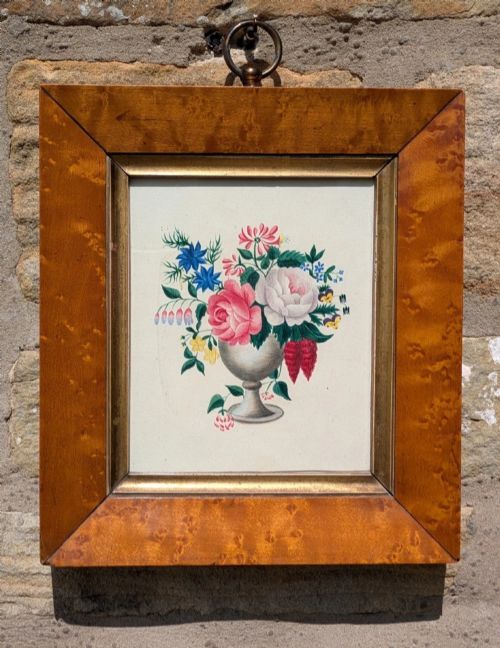
Botanical watercolours were popular additions to domestic interiors, particularly during the Regency period. They brought natural colour and delicate plant studies into parlours, bedrooms, and informal sitting rooms.
Framed simply in glass and wood, these studies complemented the domestic gardening interests of the era.