




Edwardian Still Life Art
Edwardian still life art comprises oil paintings and watercolours on canvas, board, and paper from the turn of the twentieth century.
Edwardian Still Life Art
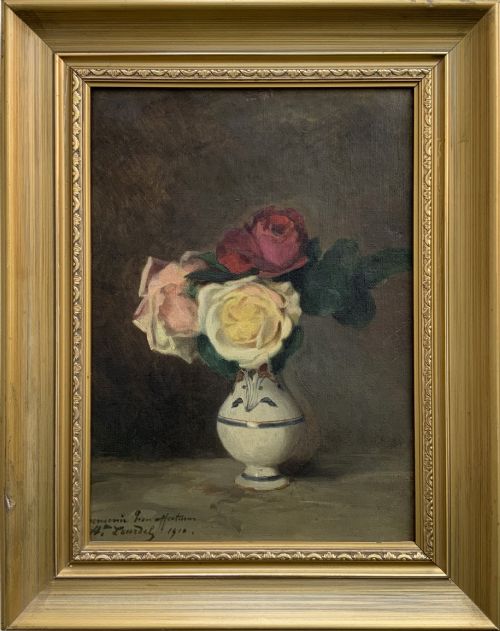
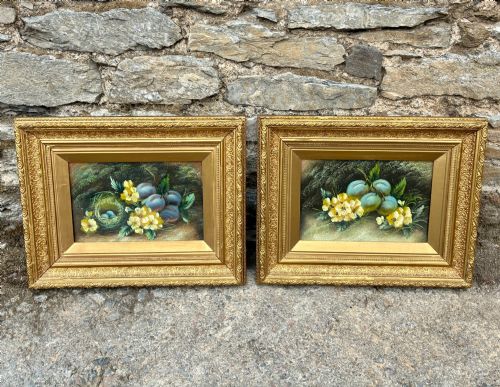
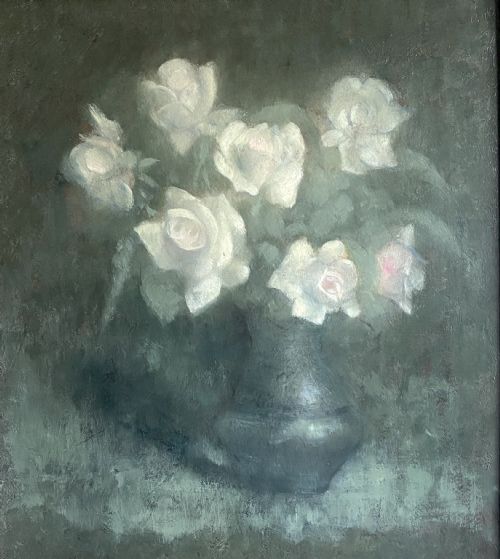
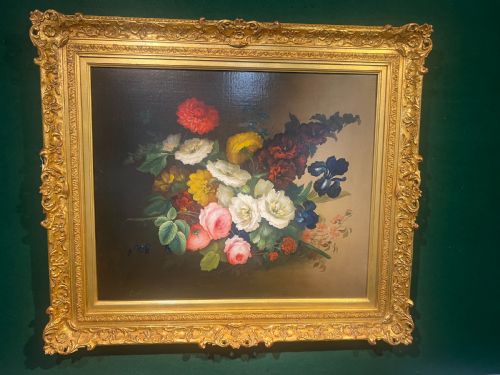
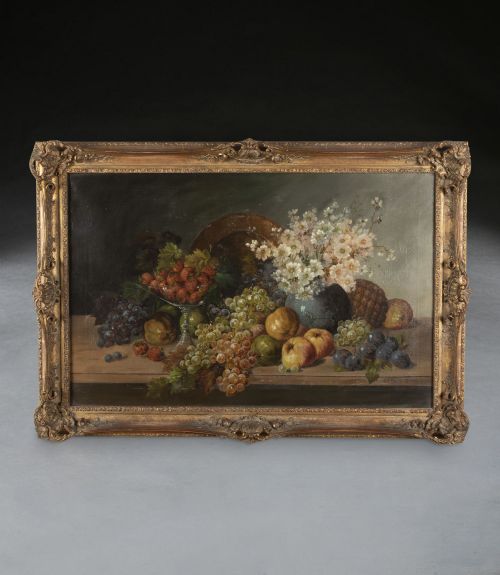
Edwardian still life art encompasses oil paintings and watercolours depicting floral subjects, fruit, and related compositions from the early twentieth century and surrounding decades. When examining edwardian still life art, buyers encounter works executed in oil on canvas, oil on board, and watercolour on paper, often housed in gilt frames. The period encompasses traditional Victorian survivals as well as Art Nouveau floral studies and early British Impressionism.
The selection ranges from intimate studies of roses and anemones to larger canvas works recording spring and summer flowers. Works frequently date from the Edwardian era itself, alongside pieces from the late nineteenth century and the decades immediately following the First World War.
Materials and Technique
Artists utilised oil paint and watercolour as primary mediums, applying pigment to prepared canvas, wooden boards, and heavy paper. Canvases and boards provided a stable support for oil layers, whilst watercolours captured delicate floral translucency on paper.
Framing played an integral role in presentation, with gesso and gold leaf applied to wooden moulding frames to complement the painted compositions.
Edwardian Still Life Art Retail Price Guide 2026
Typical asking prices for edwardian still life art among the pieces listed under this phrase on Sellingantiques today, from the lower quarter to the upper quarter. They describe what is for sale here now, not the wider market.
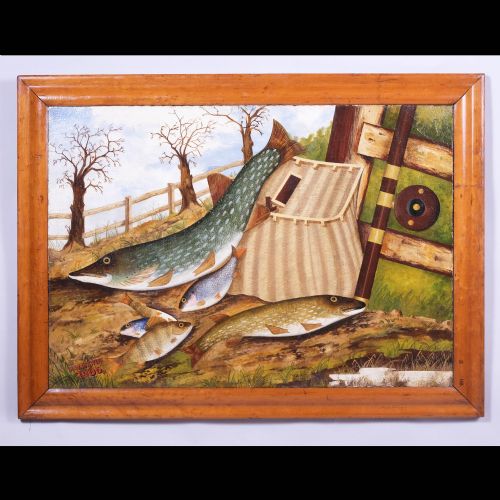
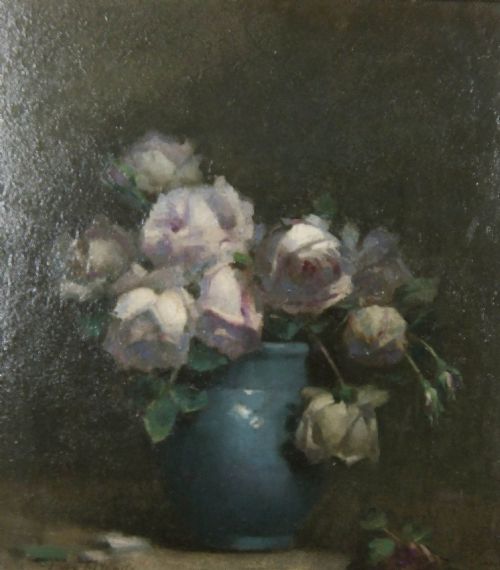
Fish with float and assorted garden roses share wall space amicably.
Assessing Quality and Execution
Quality in these paintings rests upon the confidence of brushwork, compositional balance, and the accurate rendering of light upon organic forms such as petals and fruit. Finer examples demonstrate a nuanced handling of colour and texture that elevates simple floral arrangements into accomplished studies.
The integration of the painted surface with its original gilt or wood frame contributes significantly to the integrity of the piece.
Edwin Steele·Arthur Dudley·William Thomas Wood·Lester Sutcliffe·John Robertson Reid
The Edwardian Still Life Art Glossary
- Oil on canvas
- Pigment bound in drying oil applied to a woven fabric support stretched over a wooden frame. This technique allowed artists to build rich layers of colour and texture.
- Gilt frame
- A wooden picture frame coated with gold leaf or metallic powder applied over a prepared gesso base. These frames provided a decorative and protective border for paintings of the period.
- Watercolour
- A painting method in which natural pigments are suspended in a water-based solution and applied to paper. It yielded transparent washes well suited to botanical subjects.
- Art Nouveau
- An international style of art and design characterised by intricate-flowing patterns and organic motifs. It influenced floral paintings through sinuous compositional lines and naturalistic subject matter.
Edwardian Still Life Art: Frequently Asked Questions
What subjects appear in these paintings?
Paintings from this group predominantly feature floral arrangements including roses, peonies, anemones, and summer flowers. Fruit studies and occasional sporting or fish compositions also occur.
Artists focused on naturalistic representations, capturing the transient forms of cut blooms and harvested fruit against neutral or domestic backgrounds.
How do I care for an oil painting?
Oil paintings require stable indoor environments away from direct sunlight and excessive humidity. Keep canvas surfaces clean using a soft, dry brush to remove dust gently.
Avoid hanging works near heat sources that might cause wood panels or canvas supports to warp and crack over time.
How should watercolours be displayed?
Waterworks on paper must be displayed away from direct sunlight to prevent the fading of delicate pigments. Glazing with protective glass helps shield the paper surface from atmospheric moisture and dust.
Ensure framing materials are acid-free to protect the paper support from chemical degradation over long periods.
How are periods distinguished?
Stylistic markers and framing techniques help separate Victorian works from Edwardian and later twentieth-century pieces. Subject handling and framing styles often reflect the aesthetic preferences of the decade in which the work was produced.
Signatures, dates, and inscriptions recorded on canvases or paper margins provide further chronological reference points.