


Small Framed Portrait Miniature
These small framed portrait miniature works capture intimate likenesses in delicate watercolours and oils, offering a tangible connection to historical figures and ancestors.
Small Framed Portrait Miniature
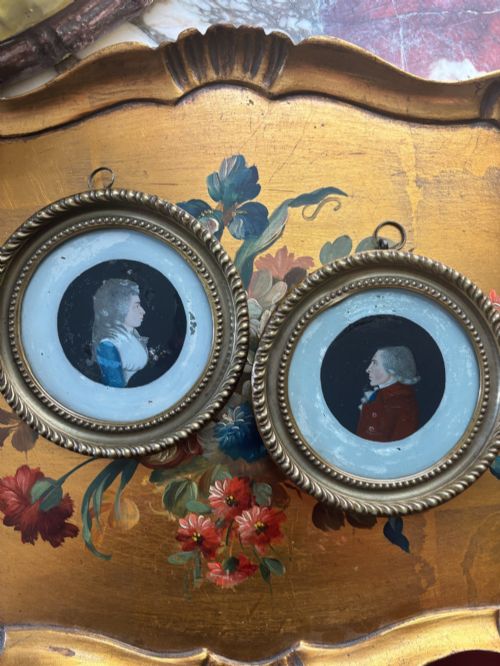
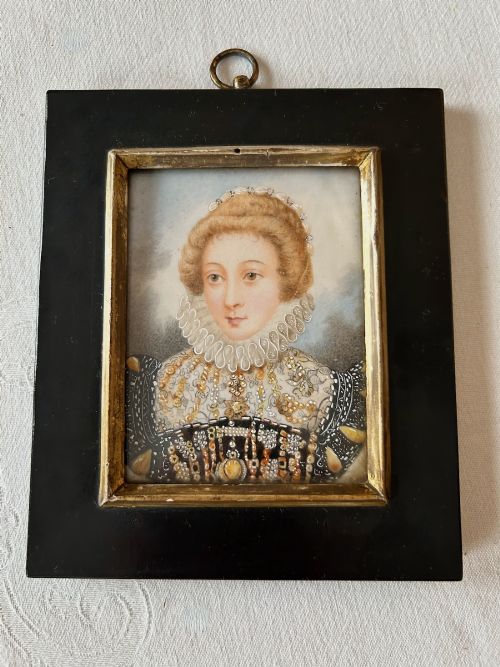
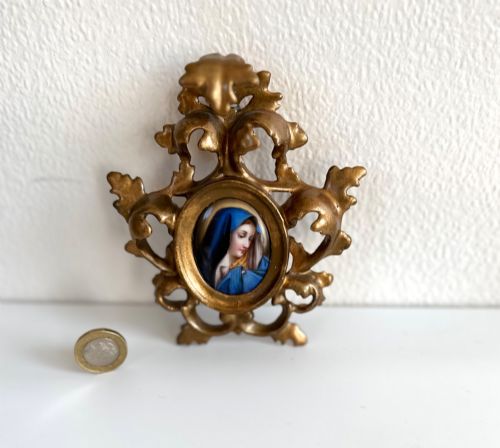
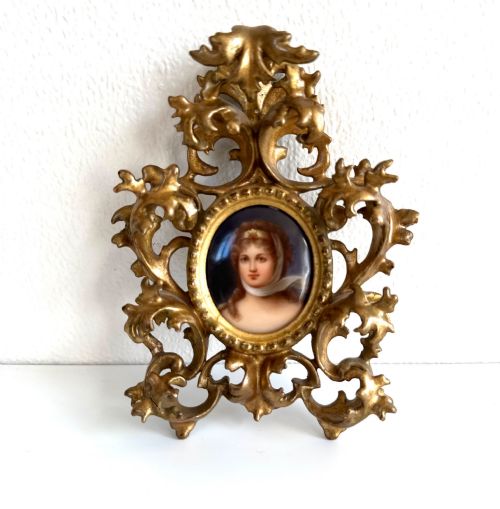
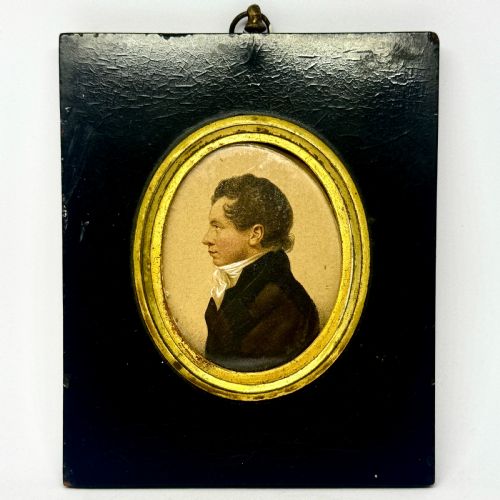
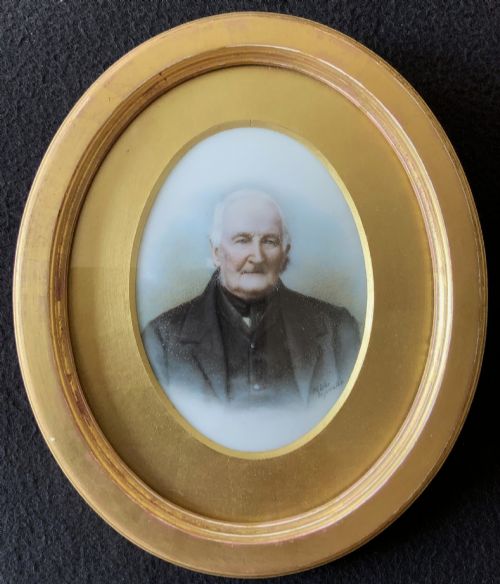
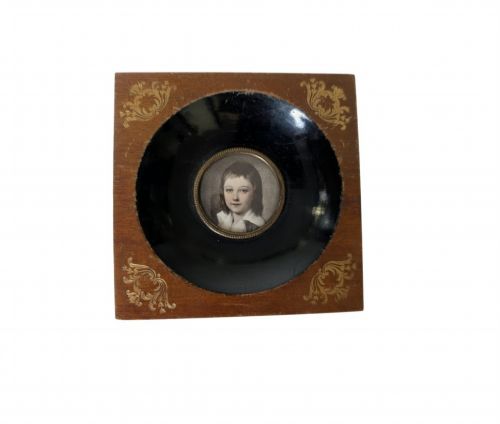
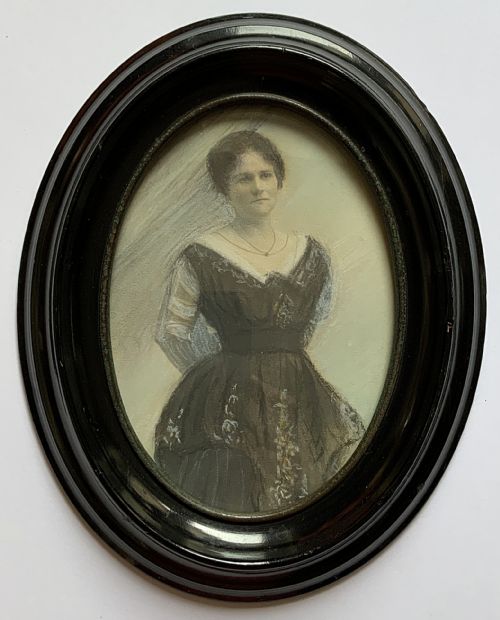
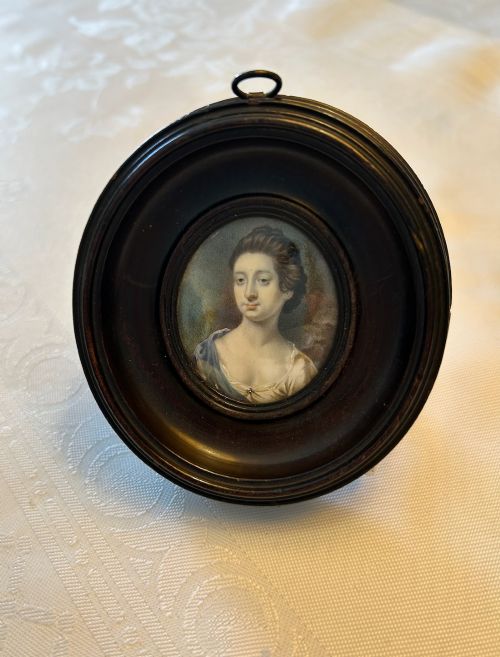
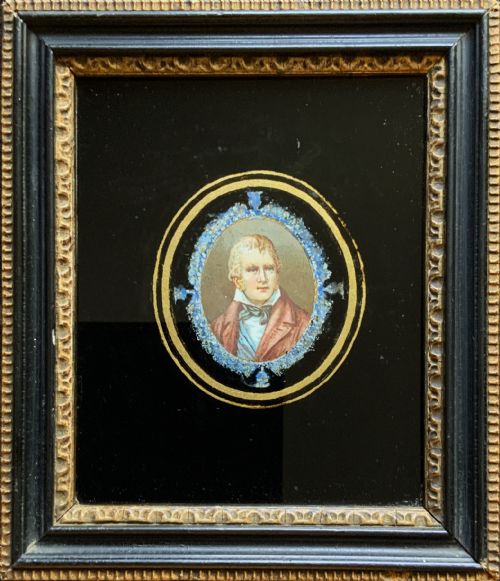
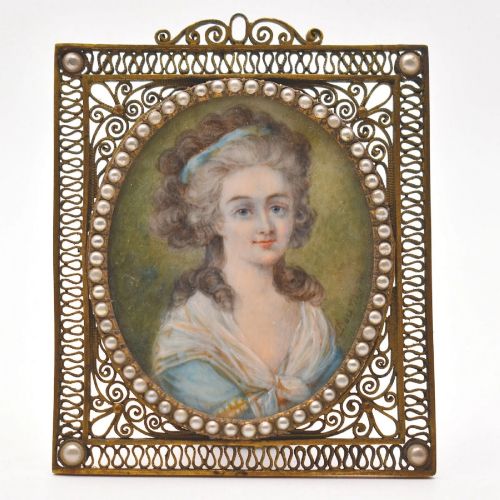
A small framed portrait miniature is a portable painting capturing the likeness of an individual, produced across centuries ranging from the seventeenth to the twentieth. Buyers encounter these pieces mounted in protective brass, gilt metal, or ebonised wood frames, often designed to hang on a wall or stand on a surface.
The format encompasses subjects from British and Continental royalty to notable historical figures and private sitters. Most examples found on this page date from the Georgian, Regency, and Victorian periods, reflecting the height of popularity for these intimate likenesses.
Makers utilised various surfaces including paper, card, and glass to support fine hand-painted details. These works frequently present oval profiles, aligning with the traditional framing choices common to the eras in which they were created.
Materials and techniques
Artists created these works primarily using watercolour, gouache, or oil paints applied with meticulous brushwork to small surfaces. Many examples incorporate delicate media on paper or glass, while others utilise oil on copper or canvas.
Framing forms an integral part of the construction, employing ebonised wood, brass, and gilt metal often accented with seed pearls or gold leaf. Glazing protects the fragile paint layers beneath from dust and atmospheric moisture.
Listings span periods from the seventeenth century through the Victorian era, utilising glass, watercolour, brass, and gold leaf.
What separates the finest examples
Henri Fradelle·Richard Cosway·Dumont·George Hargreaves·Emma Kendrick·Isaac Wane Slater·John Scougall·Elisabeth Vigee Le Brun
The Small Framed Portrait Miniature Glossary
- Miniature painting
- A small-scale artwork, typically a portrait, executed with high detail using fine brushes. These pieces require magnification and steady hands to achieve precision.
- Ebonised wood
- Timber treated to imitate ebony, producing a dark, uniform black finish. It provides a stark, traditional border for works on paper.
- Gilt metal
- Base metal treated with a thin layer of gold or gold-coloured wash. It offers the appearance of solid gold while providing structural rigidity for frames and stands.
- Gouache
- An opaque watercolour paint containing a binding agent. It allows artists to apply solid highlights and dense colour passages.
- Provenance
- The documented history of ownership surrounding an artwork. It helps establish authenticity and historical context for the sitter.
Small Framed Portrait Miniature: Frequently Asked Questions
How were portrait miniatures displayed?
Owners typically hung these small artworks closely together on parlour walls or placed them on desks utilising attached gilt metal stands. Their compact scale allowed individuals to carry likenesses of loved ones during travel.
Some pieces were also designed to be worn as personal ornaments or kept within protective travel cases, serving as private tokens of affection or allegiance.
Who sat for these portraits?
Sitters ranged from prominent historical figures, such as royals and military commanders, to prosperous middle-class families and private individuals. Commissioning a miniature served to record likenesses before the widespread adoption of photography.
Artists also painted copies of famous historical portraits, allowing collectors to own smaller representations of works hanging in major European galleries.
How do I identify the period of a frame?
Georgian and Regency frames frequently feature simple ebonised wood profiles or slender brass bezels, focusing attention entirely on the painted subject. Victorian examples often display heavier ornamentation, including Rococo revival motifs, cast gilt metal, and expanded oval apertures.
Examining the reverse of the frame often reveals period backing papers, old handwritten labels, or hardware consistent with nineteenth-century construction methods.
Are these paintings signed by artists?
Some miniatures bear artist signatures, initials, or inscriptions along the edges of the painted surface or on the backing materials. Signed works provide a direct link to known miniaturists working during the Georgian and Victorian eras.
Many high-quality pieces remain unsigned, as attribution often relies on stylistic comparisons, brushwork analysis, or historical documentation associated with the sitter.