



Small Folding Tea Table
A small folding tea table is a practical piece of antique furniture designed for easy storage and serving.
Small Folding Tea Table
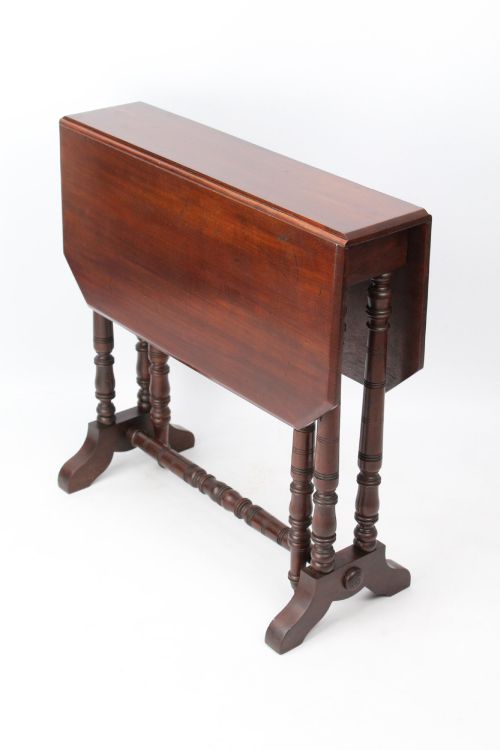
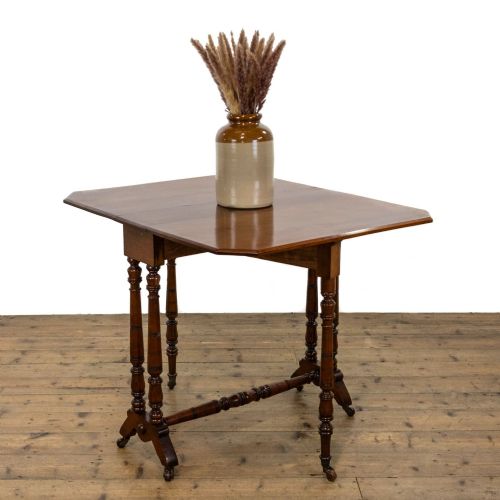
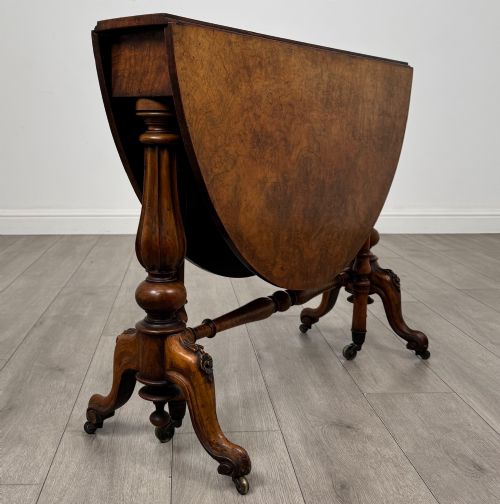
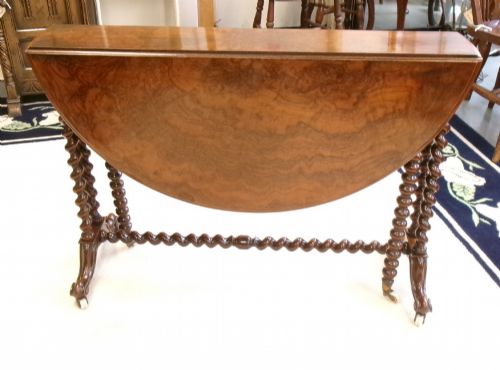
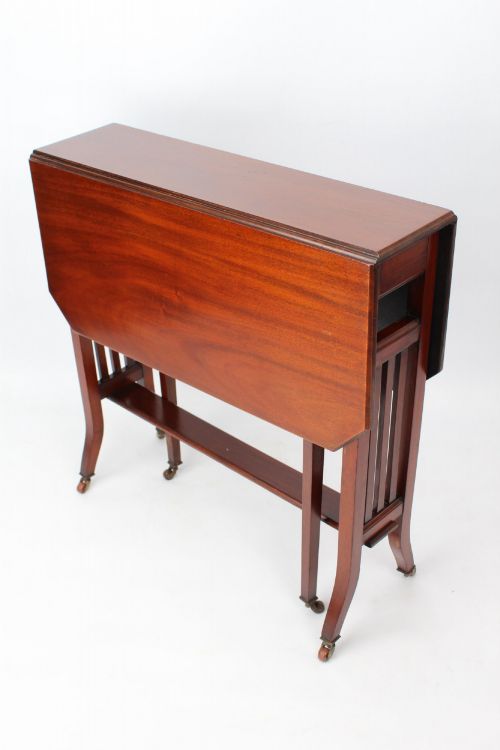
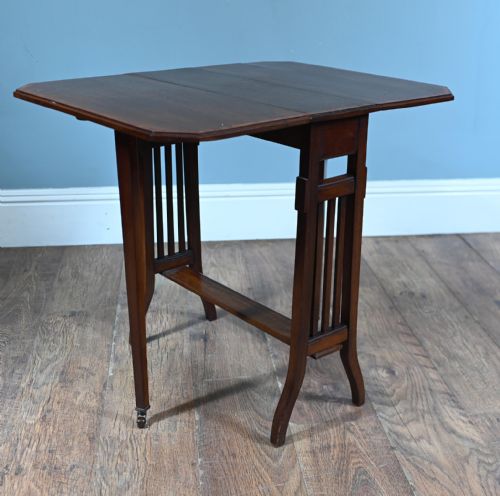
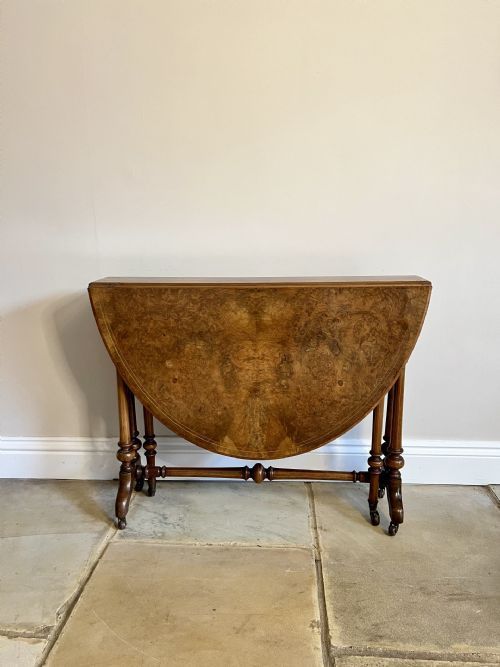
When you search for a small folding tea table, you encounter practical drop-leaf designs intended for flexible use in nineteenth and early twentieth-century homes. The listings here consist largely of Sutherland tables, alongside occasional tables, Pembroke tables, and drop-flap variations from the Victorian and Edwardian eras.
You will most frequently meet mahogany and walnut examples, often featuring oval drop leaves supported by swinging gate legs. These pieces range from standard parlour sizes down to baby Sutherland formats and compact occasional tables suited to tight spaces.
The selection also includes regional and stylistic variants such as Anglo-Moresque, Arts and Crafts, and inlaid pieces originating from British workshops or imported traditions. Each form provides a surface that collapses neatly when floor space is required.
How they were made
Cabinetmakers constructed these tables using timbers such as mahogany, walnut, and burr walnut, frequently pairing solid frames with figured veneers on the top surfaces. Satinwood, boxwood, and brass were often utilised for inlay work, stringing, and marquetry details to embellish the tops.
Structural integrity relied upon hinged drop leaves and pivoting gate legs that swung outward to support the extended flaps. Joinery techniques included tight tenons and stable framing to ensure the folding mechanism withstood regular use without loosening.
Listings feature woods including mahogany, walnut, burr walnut, satinwood, and rosewood, alongside brass and ceramic elements.
What varies in quality
The degree of figuration in the timber veneer dictates much of the visual appeal, with highly grained burr walnut or rich satinwood inlay marking out the superior examples. Plain mahogany versions rely on clean joinery and balanced proportions for their distinction.
The refinement of the folding mechanism and the stability of the gate legs when extended separate everyday workshop output from finer cabinet work. Original hardware and crisp marquetry also distinguish the better pieces from simpler utilitarian items.
Maple & Co·Jenks & Woods·Liberty & Co
The Small Folding Tea Table Glossary
- Sutherland table
- A type of narrow drop-leaf table with exceptionally slim gate legs that support the folding flaps when raised. It drops down flat for storage against a wall.
- Pembroke table
- A rectangular table featuring two hinged drop leaves on opposing sides and frequently incorporating a small drawer. The flaps are typically supported by pivoting wooden brackets.
- Burr walnut
- A prized timber harvested from the gnarled growths of walnut trees, displaying intricate, swirling grain patterns. Cabinetmakers utilised it as a veneer on statement table tops.
- Gate leg
- A hinged leg that swings outward from the main frame to hold up a drop leaf. It provides physical support while maintaining the ability to fold flat.
- Marquetry
- The art of forming decorative patterns using fitted pieces of various coloured woods and veneers. It appears frequently on Victorian table surfaces.
Small Folding Tea Table: Frequently Asked Questions
What is a Sutherland table?
A Sutherland table is a narrow drop-leaf table equipped with slender gate legs that swing out to support the leaves. When not in use, the leaves drop vertically and the legs fold inward to create a very flat profile.
Originating in the Victorian period, these pieces served as tea tables or occasional tables that could be tucked away against a wall to save space in smaller parlours.
How were folding tea tables used?
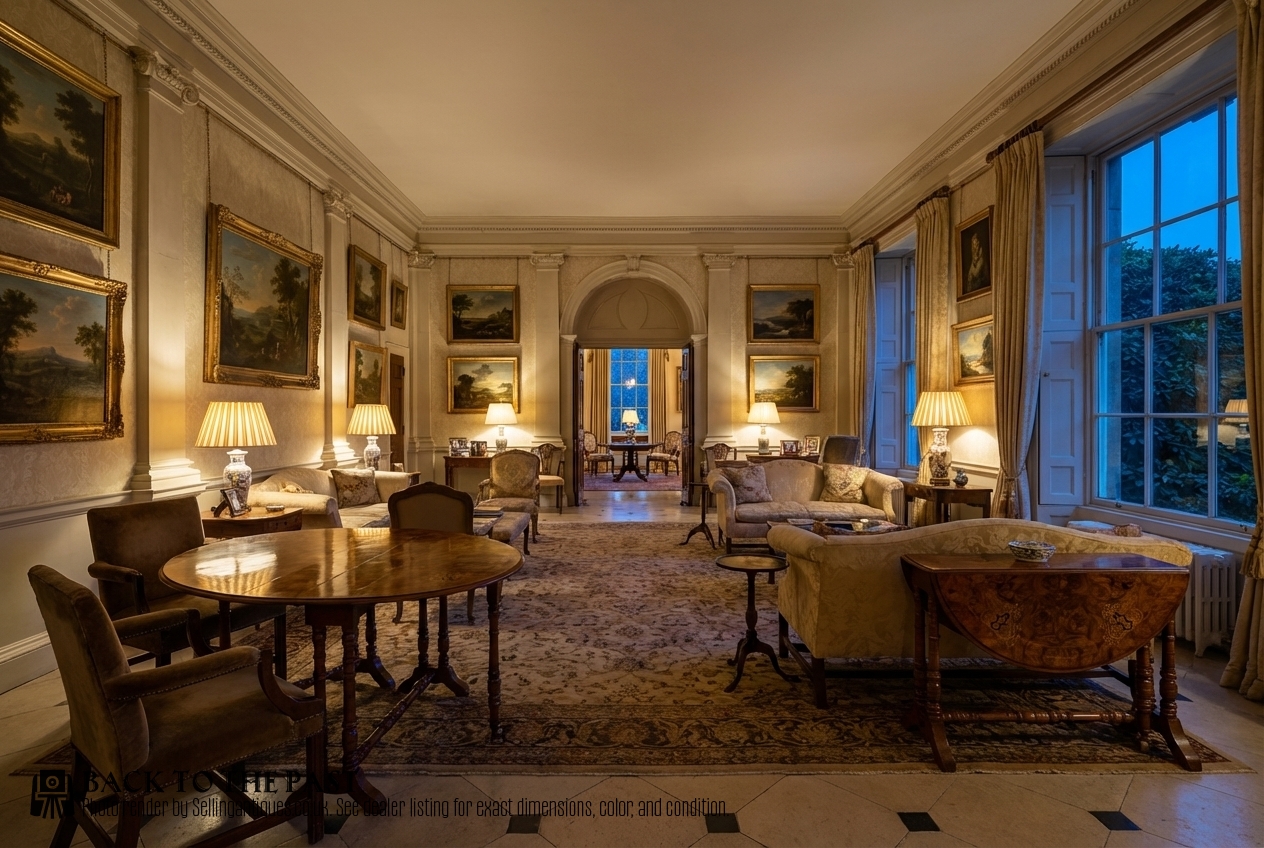
These tables were kept against a wall or in a corner until needed for afternoon tea, card games, or holding lamps. The drop leaves allowed households to expand surface area quickly when guests arrived.
Once tea was finished, the flaps were lowered and the table folded back down to restore floor space in the reception room.
How do I date a folding tea table?
Dating relies on identifying the timber choices, decorative styles, and construction methods characteristic of specific periods. Victorian pieces often feature heavy walnut or mahogany with dark finishes, while Edwardian examples tend to show lighter satinwood inlays and more slender frames.
Later pieces from the early twentieth century may also reflect Arts and Crafts simplicity or imported craftsmanship such as Anglo-Moresque brass work.
Are these tables sturdy when opened?
Well-made examples remain stable when the gate legs are fully extended and locked into their proper position under the leaves. The tightness of the hinges and the alignment of the wooden pivots determine how firmly the leaves rest.
While designed to hold tea sets, books, or lamps, they should not be subjected to heavy downward pressure on the outer edges of the leaves.