

Small Edwardian Bureau
A small edwardian bureau is a compact writing cabinet designed for domestic correspondence, offering hidden pigeonholes and a fold-down flap within limited floor space.
Small Edwardian Bureau
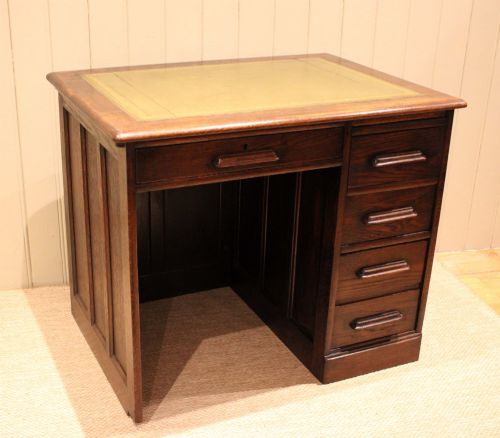
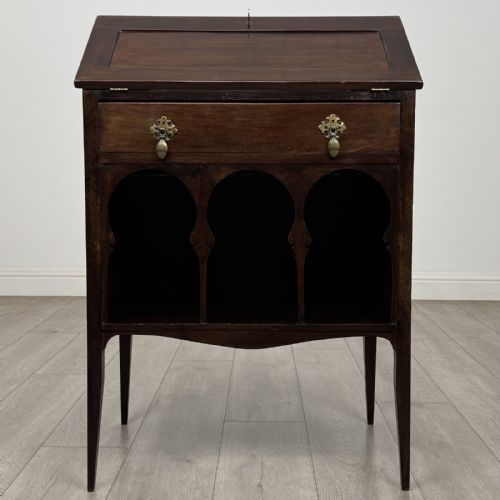
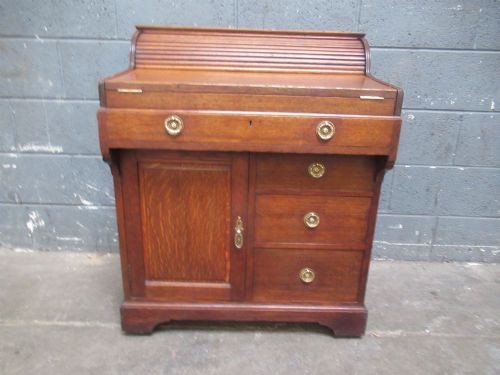
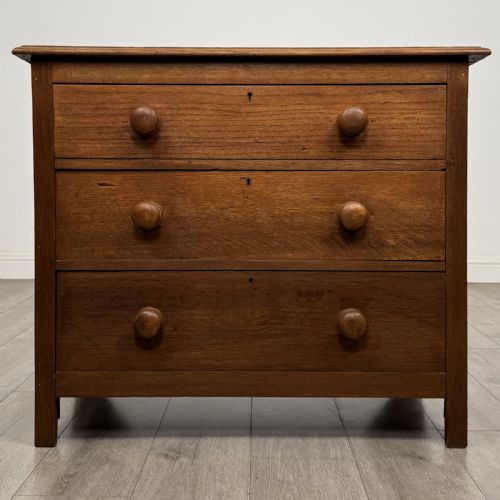
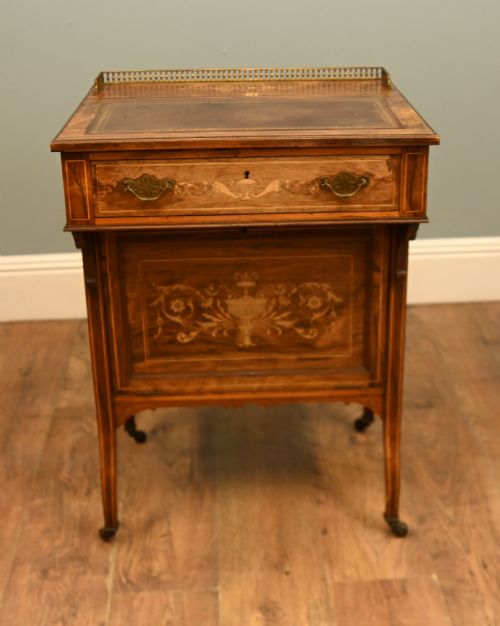
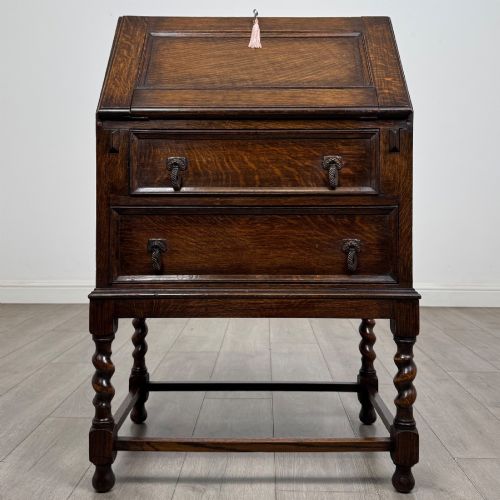
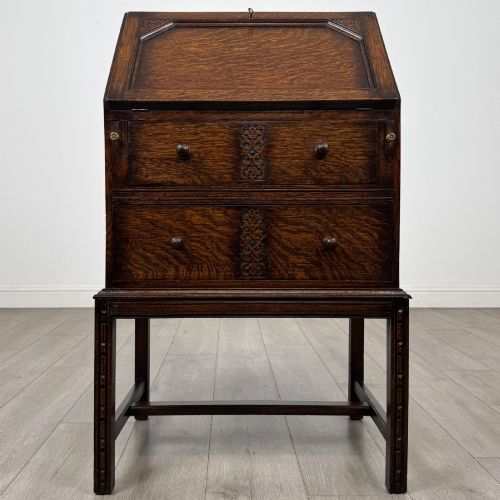
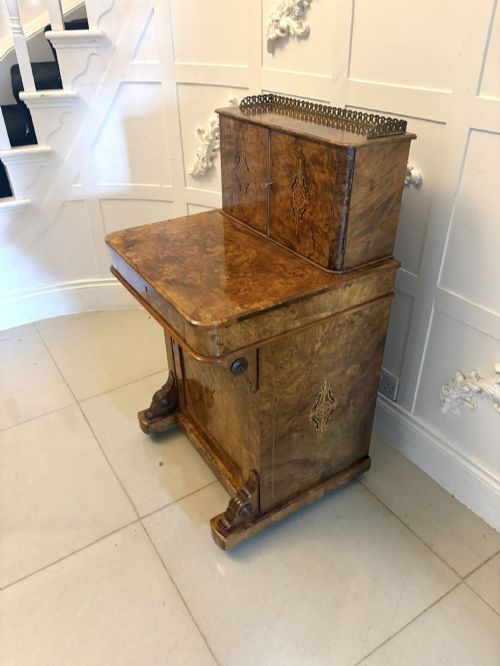
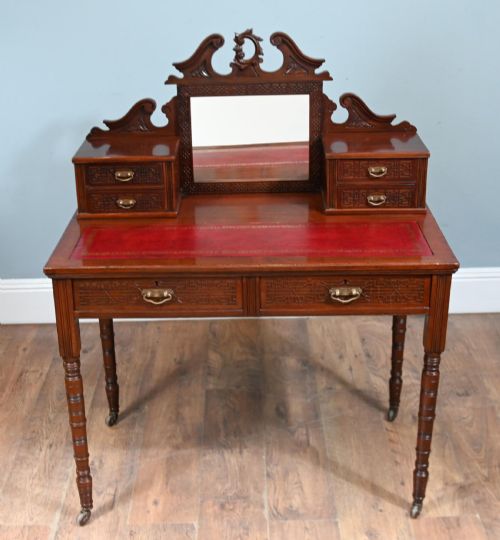
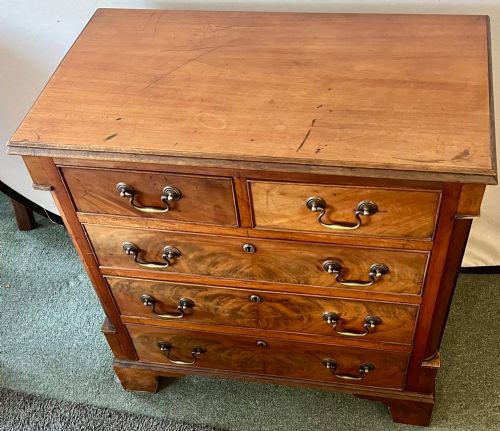
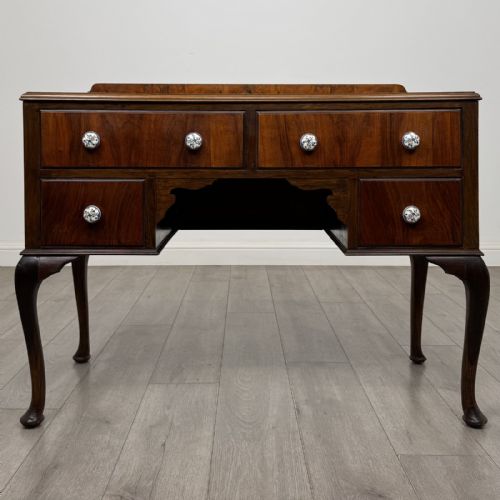
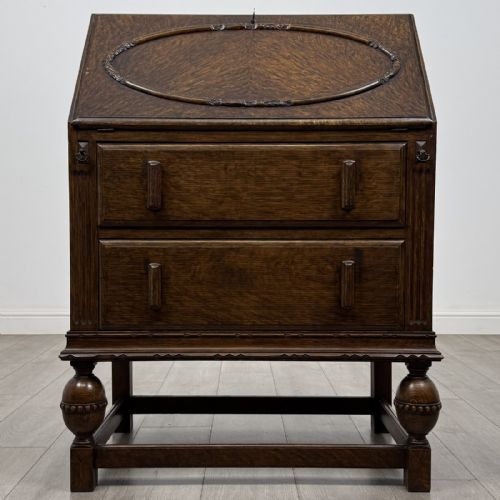
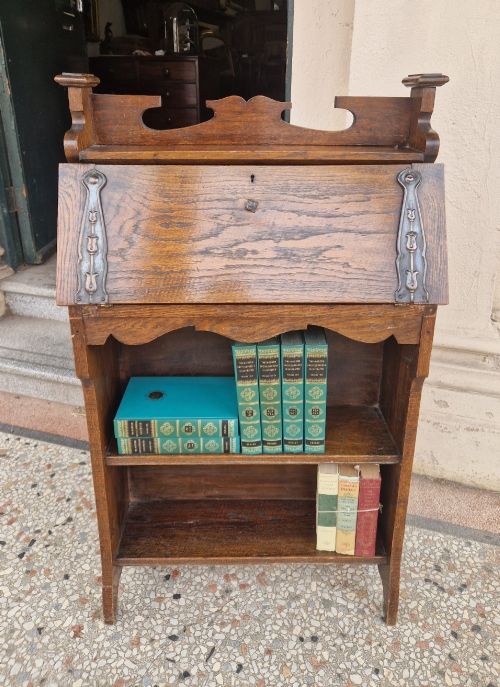
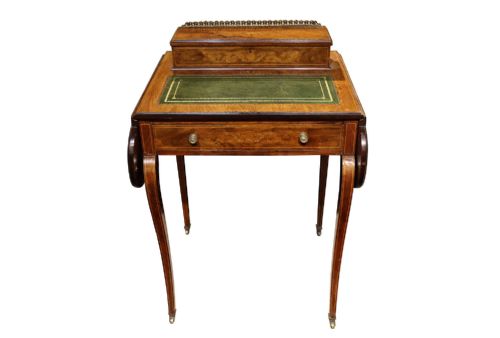
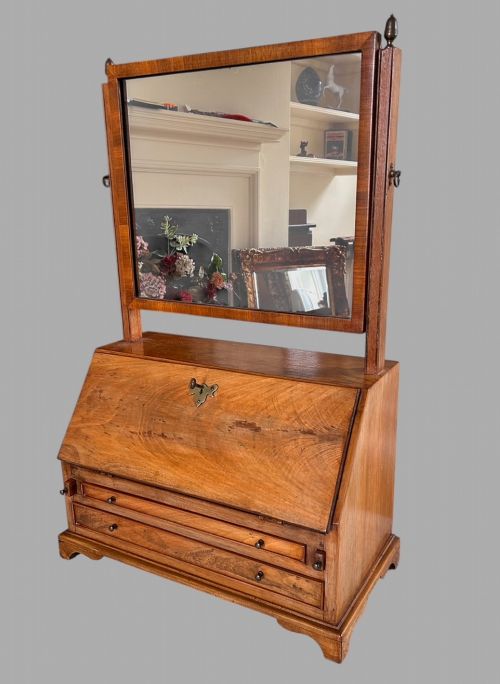
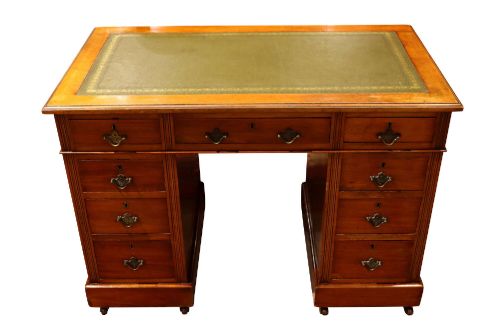
A small edwardian bureau typically takes the form of a fall-front writing desk, though related writing tables, Davenport desks, and compact chests of drawers also appear under this search. These pieces originate predominantly from the Edwardian era and the early twentieth century, alongside Victorian and nineteenth-century examples.
The domestic workspace of the period required furniture that balanced utility with modest proportions. Buyers find fitted interiors with small drawers and pigeonholes enclosed beneath a sloping lid or a cylinder front.
Makers utilised revival styles such as Sheraton Revival, Georgian Revival, and Arts and Crafts alongside straightforward Edwardian designs. Oak and mahogany serve as the primary woods, often complemented by satinwood, walnut, and rosewood.
Materials and Construction
Cabinetmakers built these desks using solid oak, mahogany, walnut, and rosewood, frequently applying decorative veneers to the fall fronts and drawer facades. Inlaid satinwood stringing, marquetry motifs, and brass hardware provide the primary surface enrichment.
Structural integrity relies on traditional joinery, with dovetailed drawer construction and stable framing designed to support the downward pressure of a folding writing flap. Interior compartments feature small-scale pigeonholes and stationery drawers assembled with fine dovetails.
Small Edwardian Bureau Retail Price Guide 2026
Typical asking prices for small edwardian bureau among the pieces listed under this phrase on Sellingantiques today, from the lower quarter to the upper quarter. They describe what is for sale here now, not the wider market.
Many small desks hide secret compartments behind miniature interior drawers, designed to guard private correspondence and lost postage stamps.
Craftsmanship and Proportion
The distinction between standard commercial pieces and finer examples rests upon the selection of timber figures, such as burr walnut or figured oak, and the precision of inlaid details. Superior desks display crisp marquetry, balanced grain matching, and well-executed secondary woods within the interior drawers.
Hardware choice and mechanical execution also divide the range, distinguishing simple turned knobs and plain brass pulls from cast or chased brass escutcheons and smoothly operating drop-front hinges supported by internal brass arms or wooden lopers.
Edwards and Roberts·Jenners
The Small Edwardian Bureau Glossary
- Bureau
- A writing desk featuring a sloping lid that folds down to create a writing surface, concealing an interior arrangement of small drawers and pigeonholes.
- Davenport desk
- A compact pedestal desk with a sloping writing surface, typically fitted with side drawers and a stationery compartment on top.
- Marquetry
- Decorative patterns formed by the insertion of different woods, veneers, or shell into a solid wood matrix.
- Escritoire
- A small writing cabinet or desk, often fitted with drawers and a drop front for correspondence.
- Pigeonhole
- A small, open compartment within a desk interior used for sorting letters and papers.
Small Edwardian Bureau: Frequently Asked Questions
What is a small edwardian bureau?
A small edwardian bureau is a compact domestic writing desk featuring a hinged fall-front flap that opens to reveal an organised interior of pigeonholes and small drawers. These pieces were manufactured around the turn of the twentieth century for home correspondence and study.
They combine practical storage with modest dimensions, making them suitable for smaller rooms where a full-sized desk would overwhelm the floor plan.
How were these desks used?
Owners used these cabinets for writing letters, managing household accounts, and storing personal stationery within the fitted interior compartments. The fall-front flap provided a stable horizontal or sloped writing surface when lowered.
When closed, the desk concealed writing materials and correspondence, maintaining a tidy appearance in a parlour, bedroom, or home office.
What woods are most common?
Mahogany and oak appear most frequently in these listings, often found alongside walnut, satinwood, and rosewood veneers. Cabinetmakers selected these timbers for their durability and grain patterns.
Inlaid decoration in contrasting woods and brass hardware frequently accompany the primary timbers, reflecting popular revival styles of the period.
How do I tell an Edwardian piece from a Victorian one?
Edwardian furniture generally exhibits lighter proportions, simpler lines, and brighter satinwood or mahogany veneers influenced by Sheraton and neoclassical revivals. Victorian pieces tend to be heavier in construction, utilising darker timbers and denser carvings.
Construction details, secondary wood choices, and hardware styles also help distinguish the manufacturing period of individual desks.