


Small Carved Coffer
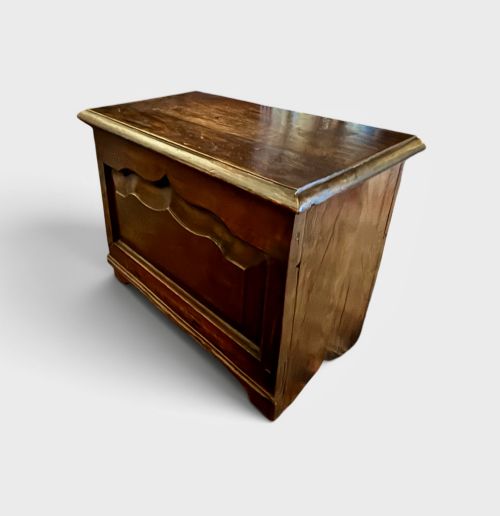
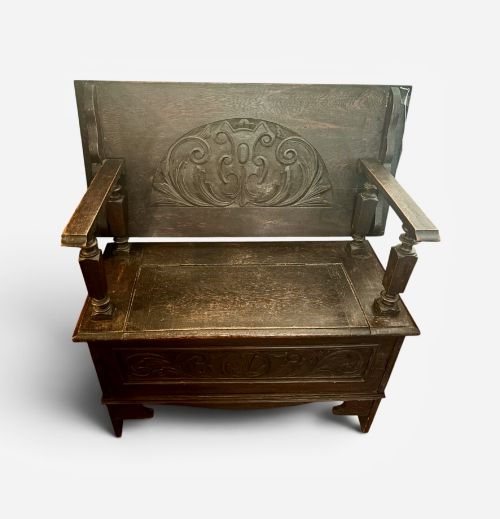
When you search for a small carved coffer, you are looking at compact timber storage chests built for documents, textiles and household valuables.
Small Carved Coffer
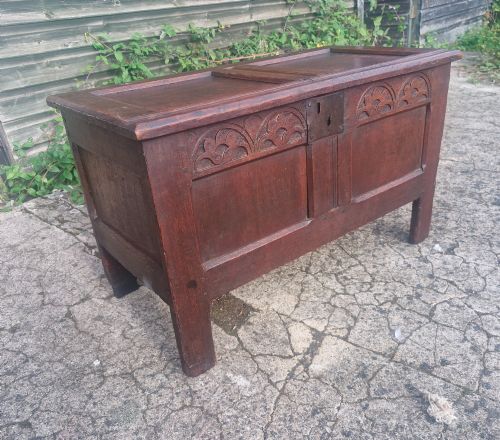
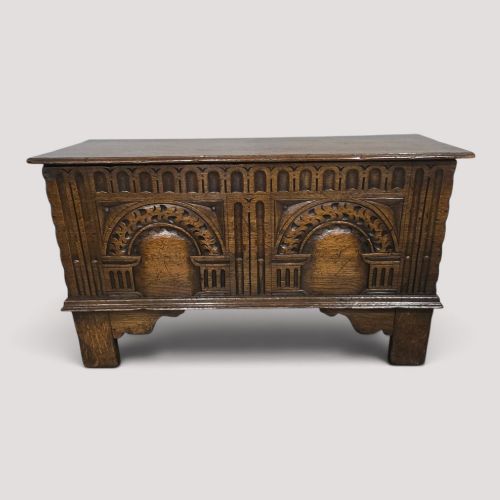
A small carved coffer serves as a compact storage chest designed to hold valuable documents, linen and personal items within domestic spaces. Buyers searching this phrase meet pieces originating primarily from the seventeenth and eighteenth centuries, alongside regional variants like the Welsh coffor bach.
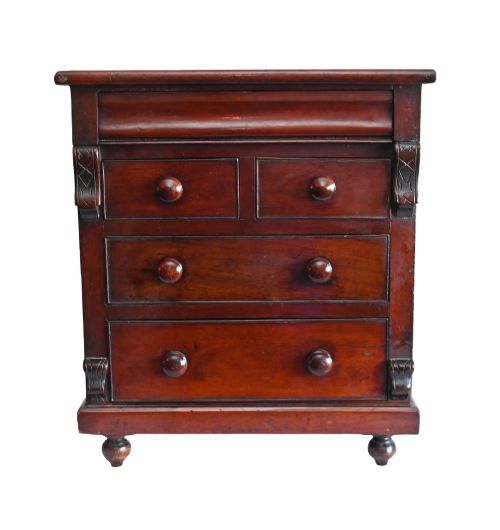
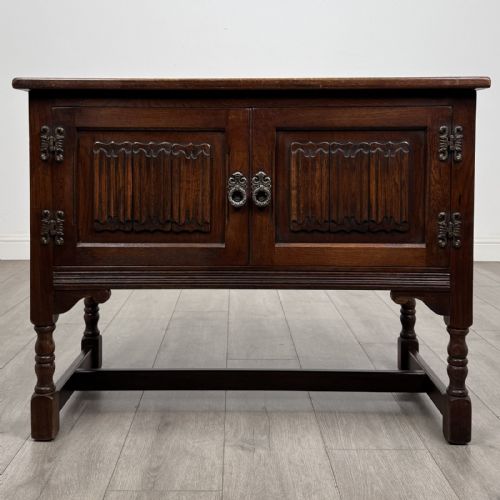
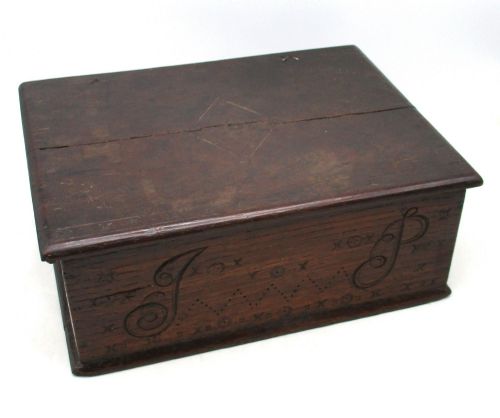
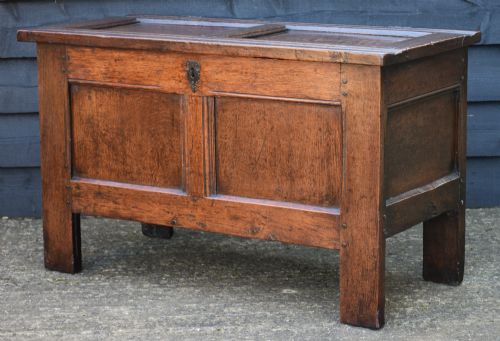
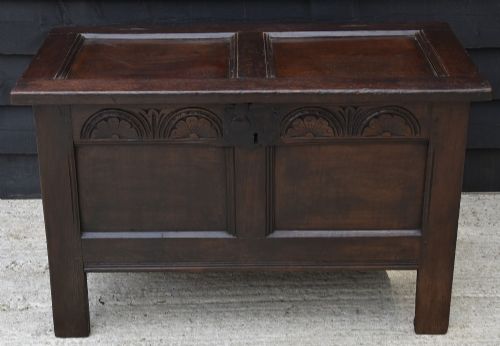
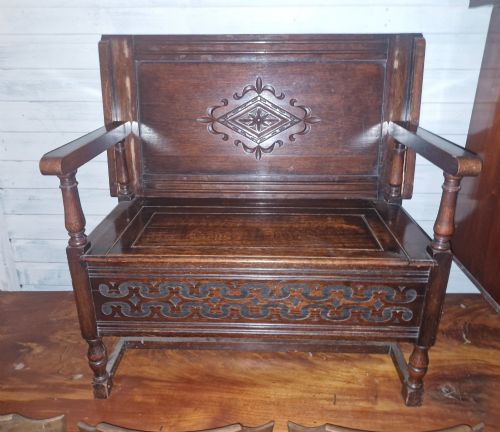
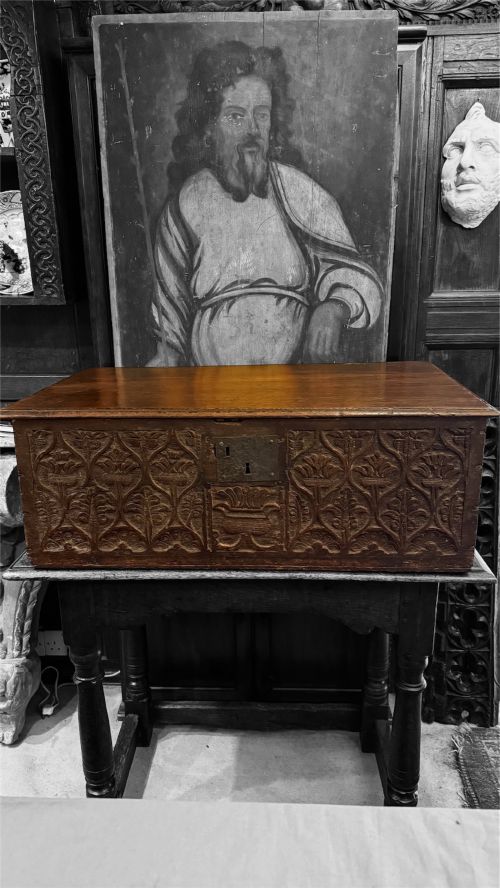
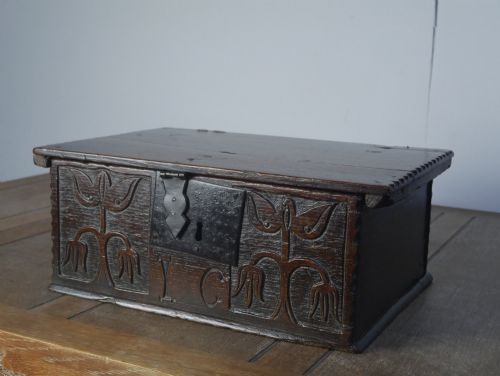
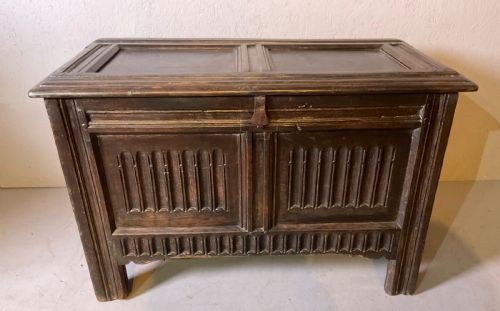
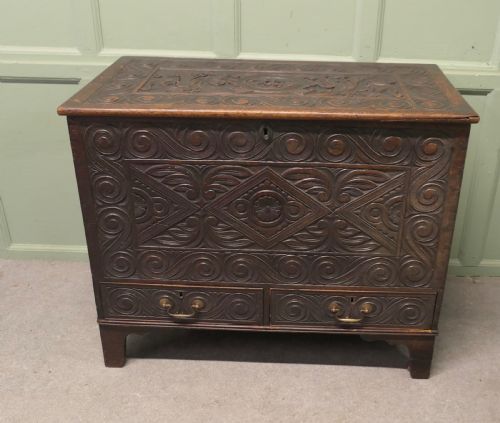
The dominant material on this page is solid oak, frequently embellished with carved panels, geometric patterns, or linenfold motifs. Forms range from low document boxes and Bible boxes to miniature chests on stands and mule chests with lower drawers.
Regional British vernacular styles predominate, spanning English, Welsh, and occasional continental European workshops. These smaller proportions reflect a domestic need for secure, movable storage before fitted closets became common.
Materials and Technique
Joinery relies on traditional frame-and-panel construction using seasoned oak, which allowed the timber to expand and contract naturally without splitting the structure. Pegs or trunnels secure the joints instead of modern metal fasteners.
Carving is executed directly into the solid wood panels, utilising gouges and chisels to create strapwork, foliate designs, and initials. Iron hinges and latches, often hand-wrought, provide functional security to the lids.
Regional forms span English paneled boxes, Welsh coffor bach variants, and continental European deed chests.
Assessing Quality
Quality rests upon the crispness of the hand-carving and the integrity of the original timber surfaces. Pieces retaining their early boards and authentic structural fixings command greater attention than those rebuilt from later timber.
Proportion and regional character dictate desirability, particularly in specialised forms such as miniature coffers where the scale must balance the traditional decorative motifs.
The Small Carved Coffer Glossary
- Coffer
- A timber chest with a hinged lid, traditionally used for storing valuables, textiles, or documents.
- Coffor Bach
- A small Welsh miniature coffer, often featuring a drawer beneath the main compartment and traditionally used as a marriage or love token.
- Linenfold
- A style of wood carving that imitates folded linen, commonly found on sixteenth and seventeenth-century panels.
- Bible Box
- A small tabletop or desk box designed to hold family scriptures and writing materials securely.
- Trunnel
- A wooden peg or treenail used to secure mortise and tenon joints in early furniture construction.
Small Carved Coffer: Frequently Asked Questions
What were small carved coffers used for?
These chests stored important documents, deeds, precious textiles, and household silver securely in domestic interiors. Their compact size allowed them to be placed on tables or transported easily.
Over time, specific regional variants like the Welsh coffor bach emerged to serve as presentation pieces or dowry chests for personal belongings.
How do I date a seventeenth-century coffer?
Dating relies on construction methods, timber choice, and the style of the carved decoration on the front panels. Hand-wrought ironwork, pegged joints, and patinated oak surfaces provide key chronological indicators.
Inscriptions or carved initials with dates occasionally appear on the woodwork to confirm the exact period of manufacture.
Where should I place a coffer in a modern home?
Their modest proportions make these chests versatile enough to sit on sideboards, low tables, or directly on the floor as accent pieces. They function well in hallways for small items or in living areas for hidden storage.
Keeping them away from direct heat sources helps protect the historic oak timber and prevents the original wood from drying out.
What is the difference between a coffer and a Bible box?
A Bible box is typically smaller and shallower, designed for desk use or tabletop placement to hold sacred texts and writing gear. A coffer provides deeper floor or chest-level storage for bulkier textiles and valuables.
Both share similar seventeenth and eighteenth-century panel-carving techniques and sturdy oak construction.