


Small Brass Mantel Clock
A small brass mantel clock brings mechanical precision and nineteenth-century craftsmanship directly to a desk or shelf.
Small Brass Mantel Clock
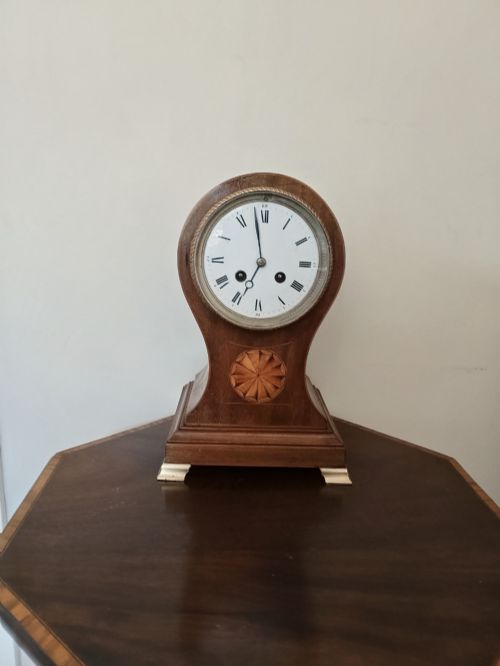
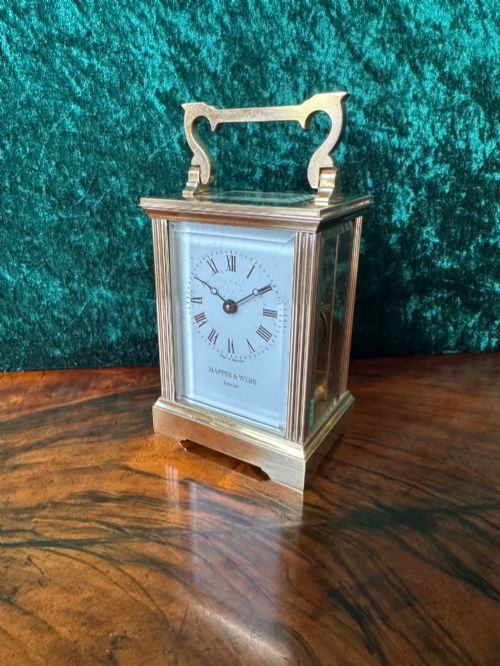
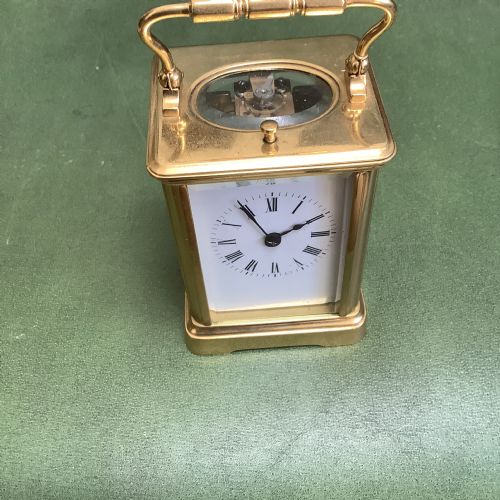
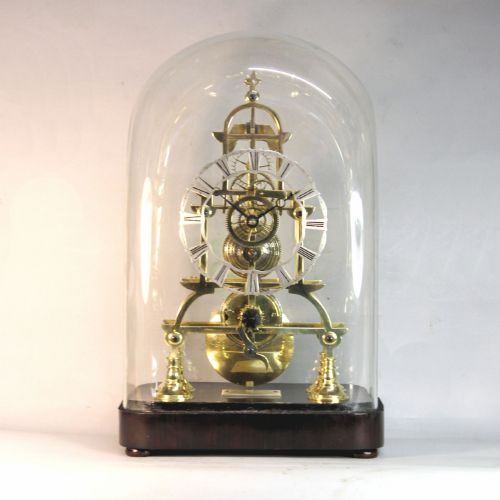
A small brass mantel clock encompasses compact timepieces designed for domestic interiors, frequently taking the form of carriage clocks, four-glass designs, or bracket clocks. These objects emerge primarily from nineteenth-century English and French workshops, utilising polished metal frames paired with glass panels or wooden cases.
Buyers encountering this selection will frequently meet carriage clocks and miniature mantel timepieces housed in gilt brass, alongside wooden bracket models accented with ormolu mounts. These pieces balance portability with intricate mechanical movements, spanning Victorian, Edwardian, and Regency periods.
Materials and Construction
Maker assemblies rely heavily on brass, gilt bronze, and glass, often housing mechanical movements driven by fusee chains or eight-day spring mechanisms. Cases incorporate secondary materials including mahogany, walnut, ebonised wood, and tortoiseshell, providing structural rigidity and rich exterior surfaces.
Dial construction involves enamel, hand-painted details, and silvered brass plates, protected behind bevelled glass panels. Engraved brass casing and cast ormolu mounts complete the exterior ornamentation across French and English examples.
Materials span brass, glass, enamel, mahogany, ormolu, gilt bronze, gilt brass, ebonised wood, silver, tortoiseshell, oak, burr walnut, and rosewood.
Quality Variations
Distinctions across these timepieces rest on the crispness of brass engraving, the presence of fully engraved or signed movements, and the integration of complications like repeaters or striking trains. Plain brass cases differ from those featuring intricate gilt bronze mounts, tortoiseshell inlays, or finely figured walnut and mahogany veneers.
The sophistication of the internal movement, whether a standard eight-day timepiece or an intricate fusee mechanism by a known maker, separates standard production items from masterworks. Furthermore, the preservation of original enamel dials and matching keys indicates superior historical survival.
Mappin and Web·Richard Winter of Chieveley·Tiffany·Louis Recordon·Lenzkirch·Payne and Co·Joseph Jump·Perigal of London·Perigal and Duterrau·J C Vickery·McCabe·Purvis of London·Baldwin of Loughborough·Greaves, Birmingham
The Small Brass Mantel Clock Glossary
- Carriage clock
- A portable spring-driven timepiece developed for travel, typically fitted with a carrying handle and glass panels revealing the movement.
- Fusee
- A conical pulley used in clock movements to equalize the declining power of the mainspring as it unwinds.
- Four glass clock
- A mantel clock featuring glass panels on the front, back, and sides, exposing the entire movement to view.
- Ormolu
- Gilded bronze applied as a decorative mount on furniture and clock cases during the eighteenth and nineteenth centuries.
- Timepiece
- A clock that indicates the time without striking hours or quarters.
Small Brass Mantel Clock: Frequently Asked Questions
How do I wind a small brass mantel clock?
Wind the clock using the appropriate key inserted into the winding square on the dial or backplate, turning it gently until resistance is felt.
Avoid overwinding the mainspring, as this can damage the internal tension mechanism and stop the movement.
What is the difference between a carriage clock and a mantel clock?
Carriage clocks were originally built for travel, featuring a flat base, a folding handle on top, and glass panels on all sides.
Mantel clocks are generally stationary domestic pieces housed in wood, marble, or metal cases designed to sit permanently on a shelf.
How do I tell an English clock from a French clock?
English examples frequently employ fusee movements housed in wooden cases made of mahogany, walnut, or ebonised wood.
French pieces commonly utilise platform escapements within solid gilt brass or four-glass cases carrying floral or geometric engravings.
Where should I place a antique brass clock?
Position the clock on a stable, level surface away from direct sunlight, draughts, and extreme temperature fluctuations.
Keeping the clock steady on a firm mantelpiece or desk ensures the pendulum or platform escapement beats evenly.