


Mappin Webb Brass Clock
These Mappin Webb brass clock pieces offer dependable mechanical timekeeping and classic desk or mantel presence for the discerning home.
Mappin Webb Brass Clock
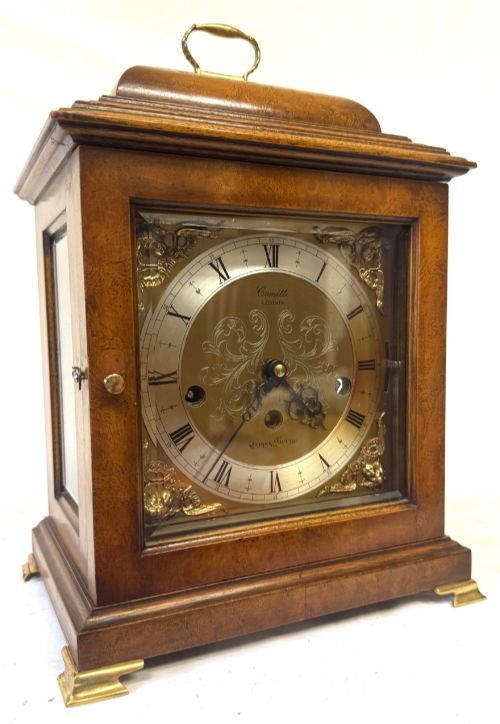
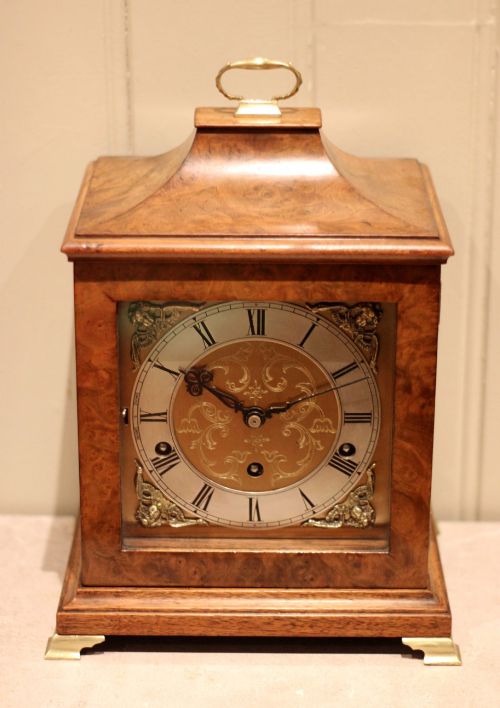
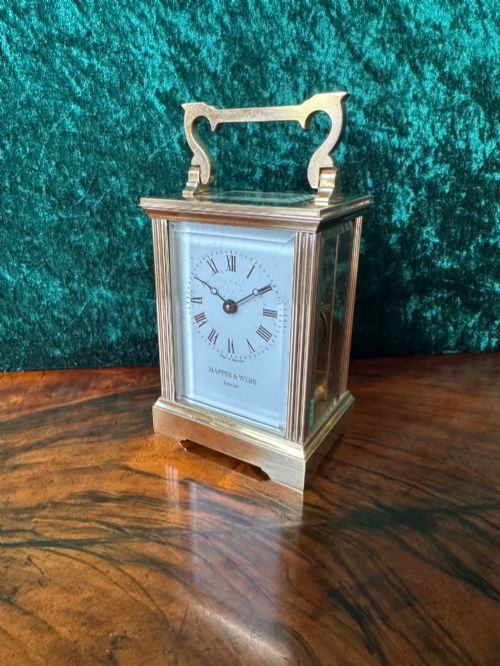
A mappin webb brass clock generally takes the form of a portable carriage clock encased in bevelled glass panels, or a more substantial mantel or bracket clock. These timepieces stem from various periods including the Victorian era, the Edwardian period, and the mid-twentieth century.
The carriage clock is the form most frequently encountered in these selections, often featuring a polished metal handle and visible escapement. Alongside these portable designs, the inventory occasionally includes larger table clocks and longcase variants.
Originating predominantly from traditional English and French workshops, these items blend utility with decorative cabinet work. Collectors encounter them in styles ranging from Victorian classical revival to George II style and French belle epoque.
How they were made
Makers constructed these housings primarily from solid brass, sometimes employing gilt finishes to enhance the metallic lustre. Panels of bevelled glass were fitted tightly into the brass framework to allow an unobstructed view of the internal gear trains.
Clock dials frequently incorporated white enamel with painted Roman or Arabic numerals, sometimes protected by hinged bezels. Wood variations for related bracket and longcase models utilise mahogany, oak, and burr walnut veneer.
Listings feature wood types including burr walnut, mahogany, and oak alongside traditional brass and glass constructions.
What varies in quality
The standard of execution depends heavily on the crispness of the brass casting and the precision of the engraving on dial masks. Finer examples display meticulous attention to the movement components, such as platform escapements and strike mechanisms.
Cabinetry and veneer selection also determine the standing of a piece, particularly in larger bracket and longcase formats where burr walnut or mahogany surfaces receive hand-polished finishes. The presence of original cases and fully functioning chime movements elevates the overall merit of the item.
Mappin and Webb·Comitti Of London
The Mappin Webb Brass Clock Glossary
- Carriage clock
- A small, portable spring-driven clock designed for travelling, featuring a handle on top and glass panels on all sides. These typically date from the nineteenth and early twentieth centuries.
- Escapement
- The mechanism within a clock that controls the unwinding of the spring by releasing the gear train at regular intervals. Visible platforms allow the owner to watch the balance wheel oscillating.
- Bracket clock
- A portable table clock originally designed to sit on a bracket to project sound further into a room. Later versions dispensed with the wall bracket entirely while retaining the descriptive name.
- Fusee
- A conical pulley used in mechanical clocks to maintain an even pull on the gear train as the mainspring loses tension. This device ensures more accurate timekeeping throughout the running cycle.
- Repeater
- A complication in a clock mechanism that chimes the hours and quarters on demand when a lever or button is pressed. This feature proved particularly useful during the hours of darkness.
Mappin Webb Brass Clock: Frequently Asked Questions
How do I wind my carriage clock?
Most portable clocks use a small square-ended key inserted into winding holes on the backplate. Turn the key gently until you feel resistance, taking care not to over-wind the mainspring.
Ensure you identify the correct arbours for timekeeping and striking functions before applying the key. Regular, moderate winding preserves the integrity of older gear trains.
What is a repeater mechanism?
A repeater mechanism allows the clock to strike the most recent hour and quarter-hour upon the activation of a lever or button. This historical feature was designed to let owners check the time in a dark room.
Such complications require careful handling during operation. They represent a higher tier of watchmaking complexity in portable timepieces.
Are these clocks suitable for daily use?
These mechanical timepieces function reliably when given proper maintenance and professional service every few years. They require a stable surface away from direct sunlight and damp environments to protect the metal and wood.
Treating the spring-driven movements with care ensures they keep accurate time. Avoid rapid adjustments to the hands while the striking train is operating.
How do I distinguish Edwardian from Victorian models?
Victorian models often exhibit heavier ornamentation and classical revival influences in their brass framing and dial decorations. Edwardian pieces generally lean towards lighter proportions and restrained decorative motifs.
Examining the hallmarks, casework, and interior movement signatures helps clarify the manufacturing era. Stylistic shifts reflect broader design transitions at the turn of the twentieth century.