


Sloping Front Desk
A sloping front desk is a practical writing cabinet built with an angled fall-front lid that opens to reveal a fitted interior of drawers and pigeonholes.
Sloping Front Desk
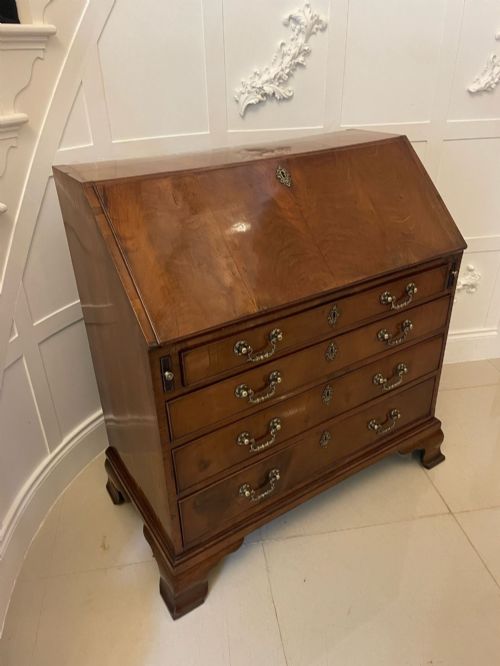
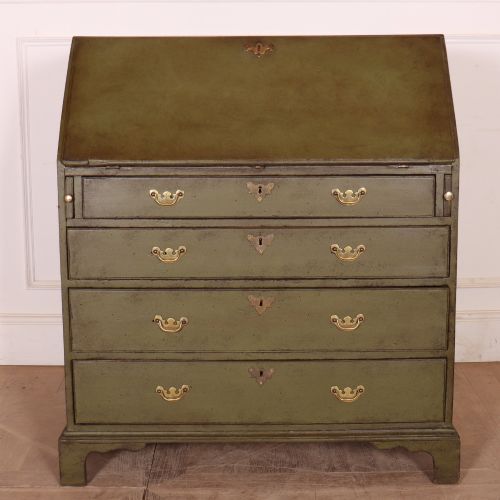
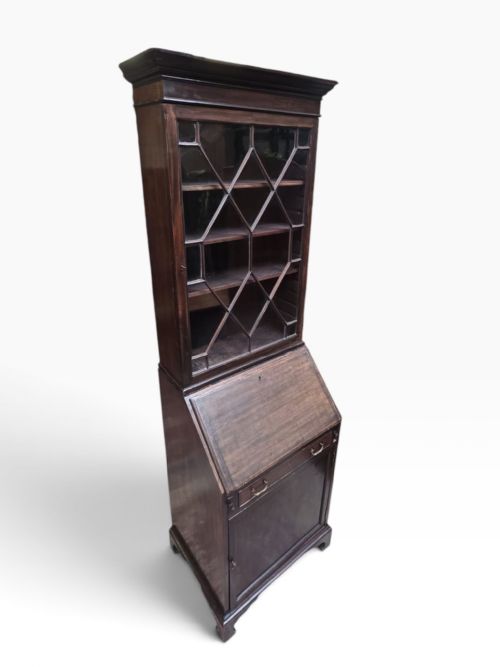
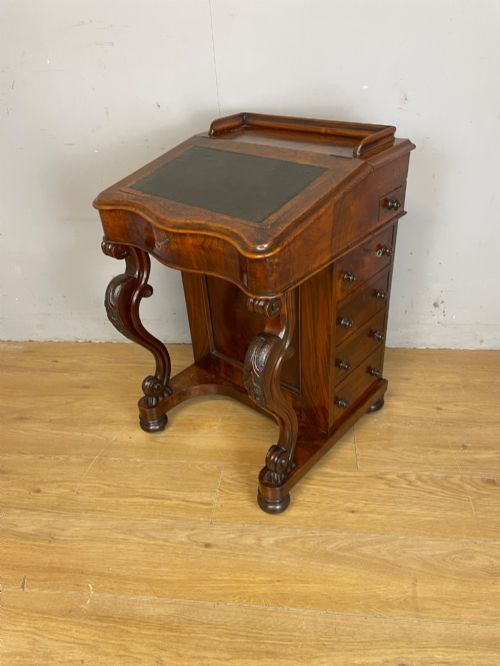
A sloping front desk is fundamentally a piece of writing furniture designed to keep correspondence and paper safe beneath a hinged, angled flap. These items appear primarily as traditional bureaux, bureau bookcases, and compact davenports spanning several centuries of cabinet-making.
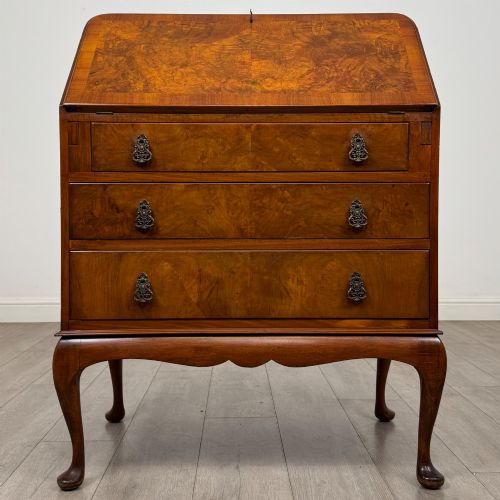
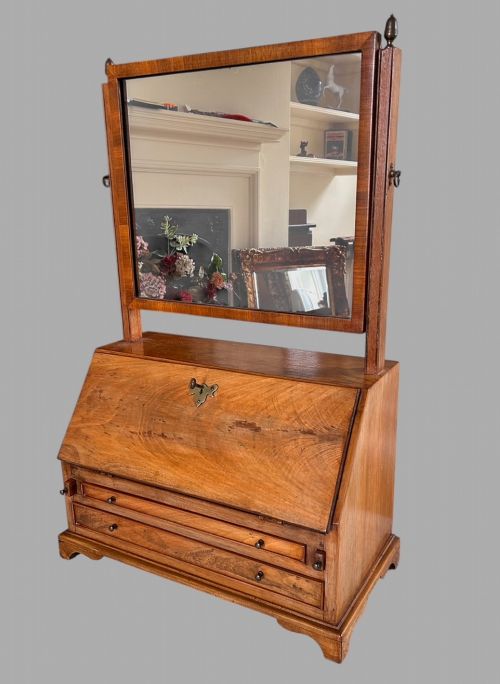
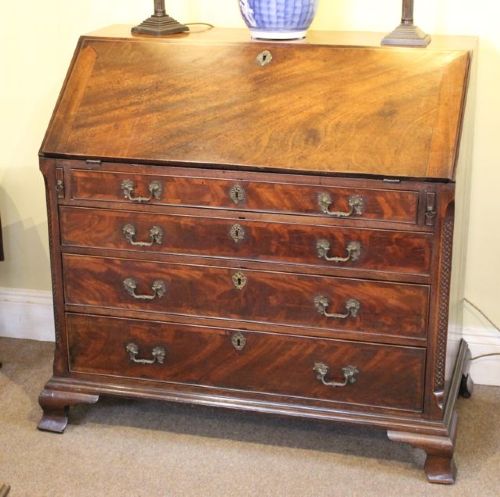
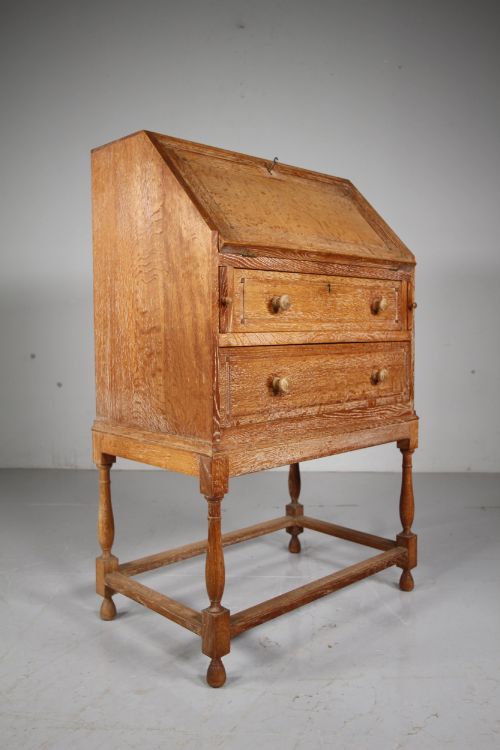
The versions most commonly met on this page range from walnut and mahogany examples originating in the Georgian and eighteenth-century periods to later oak and figured walnut specimens from the Edwardian era. Alongside these large freestanding cabinets, smaller table-top bureau boxes and writing slopes offer alternative writing surfaces.
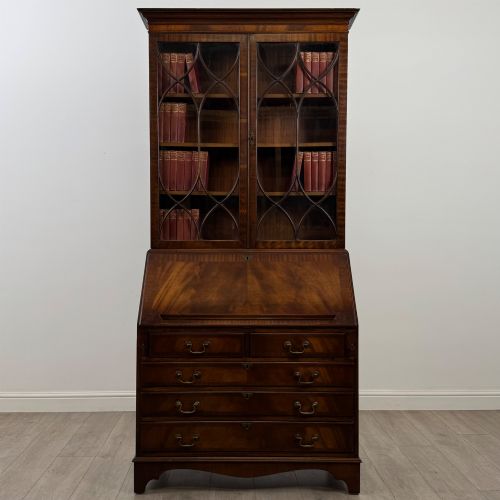
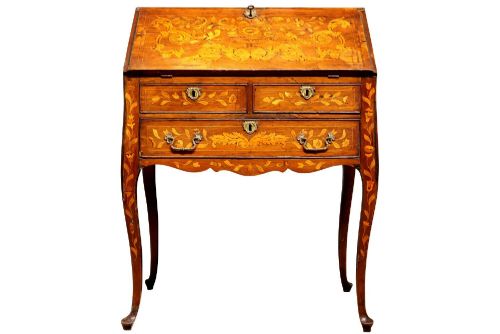
Makers and workshops across different centuries adapted the form to suit changing domestic interiors, incorporating upper bookcase sections or standing bases. Buyers encounter everything from simple oak provincial pieces to elaborate marquetry and painted satinwood models.
Materials and construction
Makers constructed these cabinets using dense native and imported timbers, relying heavily on mahogany, oak, and walnut, often enhanced with burr walnut veneers or satinwood details. Brass hinges, escutcheons, and drawer pulls provided functional hardware, while leather inserts frequently lined the writing surfaces.
Cabinet-makers employed traditional joinery to build the structural carcase, securing the heavy fall-front lid with robust hinging mechanisms to withstand the pressure of writing. Interior compartments utilised fine drawer construction with dovetail joints to create small pigeonholes and secret drawers hidden behind sliding panels.
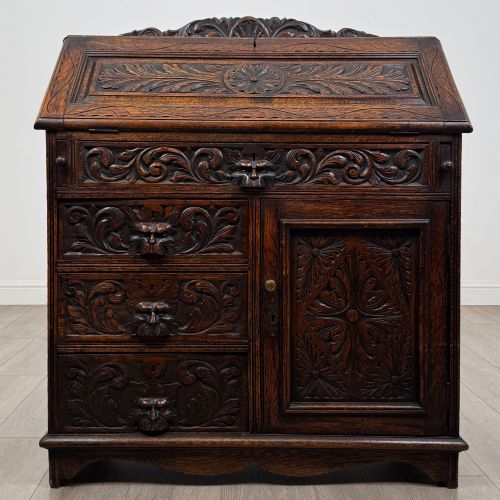
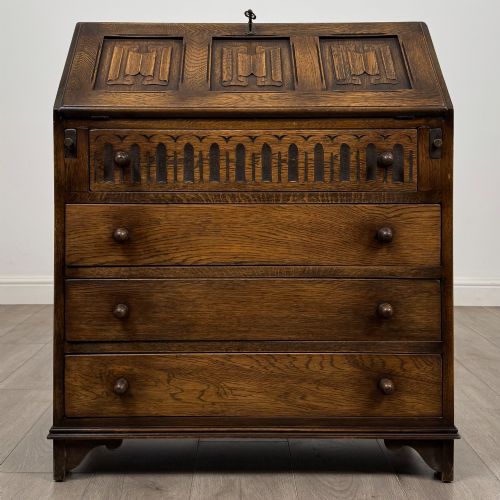
A Green Man carved into oak stares out from the Victorian era, watching over your inkwell.
Variations in quality
The standard of a sloping front desk rests upon the choice of timber figure, the crispness of any carved decoration, and the complexity of the interior joinery. Finely figured burr veneers and intricate marquetry floral patterns distinguish exceptional pieces from plainer provincial examples.
Structural integrity and the retention of original interior fittings dictate the desirability of each piece. Superior examples exhibit harmonious proportions, sympathetic timber matching across the fall-front lid, and high-grade secondary woods within the drawer linings.
Heals of London·Stanley Webb Davies
The Sloping Front Desk Glossary
- Bureau
- A writing cabinet featuring an angled fall-front flap that opens to form a desk surface. It usually rests atop a chest of drawers.
- Fall-front
- The hinged sloping lid of a desk or bureau that lowers to provide a flat writing platform. When closed, it conceals the inner compartments.
- Marquetry
- Decorative veneer work formed by fitted pieces of different coloured woods and materials to create pictorial patterns. It appears frequently on Dutch and floral-styled furniture.
- Davenport
- A compact form of small desk featuring a sloping top and drawers opening to one side. These were popular throughout the nineteenth century.
- Pigeonhole
- A small open compartment within the desk interior used for sorting letters and papers. These compartments are often flanked by secret drawers.
Sloping Front Desk: Frequently Asked Questions
What is a sloping front desk?
A sloping front desk is a cabinet designed for writing that uses an angled lid. When lowered, this lid provides a flat surface for correspondence.
Beneath this flap lies a fitted interior containing small drawers and letter compartments. These pieces range from tall bureau bookcases to compact table-top boxes.
How do I date an antique bureau?
Dating requires examining the timber species, construction methods, and hardware styles used by the cabinet-maker. Eighteenth-century pieces often feature solid mahogany or figured walnut with hand-cut dovetails.
Later Edwardian versions frequently utilise golden oak or machine-sawn elements. Labels and stamps left by makers can also provide precise chronological markers.
Where were these desks placed?
These desks served as functional writing centres in private studies, libraries, and withdrawing rooms. They kept personal papers and writing equipment secure and neatly organised.
Smaller table-top versions and davenports allowed owners to write in various reception rooms without needing a dedicated study.
How do I care for wooden writing furniture?
Preserving these surfaces involves maintaining stable room humidity to prevent the timber and veneers from splitting. Regular dusting with a soft cloth keeps the polish intact.
Harsh chemical cleaners should be avoided in favour of traditional beeswax polishes. Leather writing inserts benefit from occasional gentle conditioning.