
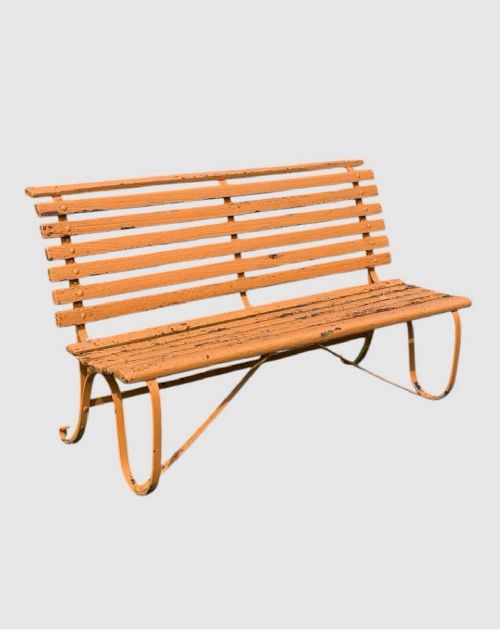
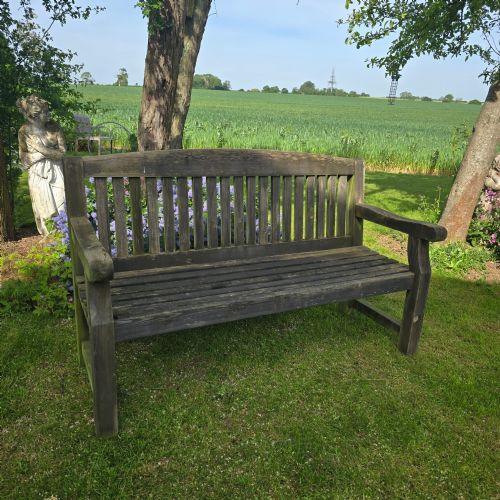
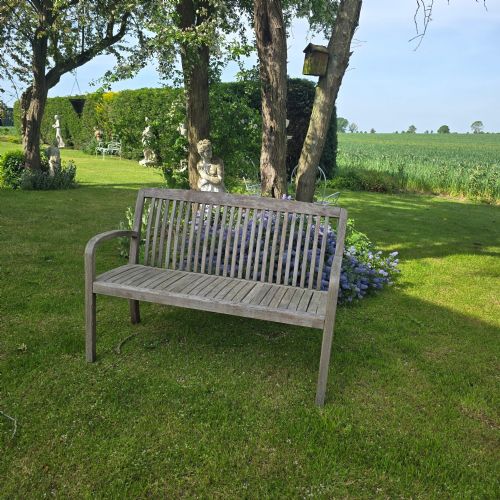


Slatted Park Bench
The slatted park bench brings enduring form to the terrace, offering a solid timber seat built to weather the seasons.
Slatted Park Bench
A slatted park bench combines timber laths with robust metal supports, creating a sturdy seat designed for outdoor use. These pieces span from the Regency and Victorian eras through the Edwardian period and into the nineteen-thirties.
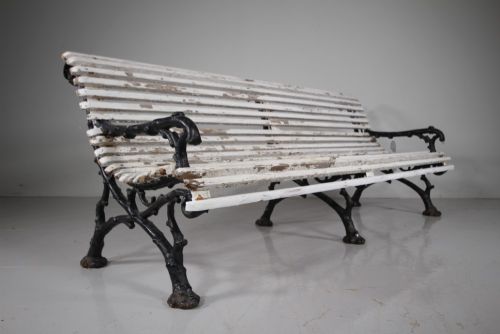
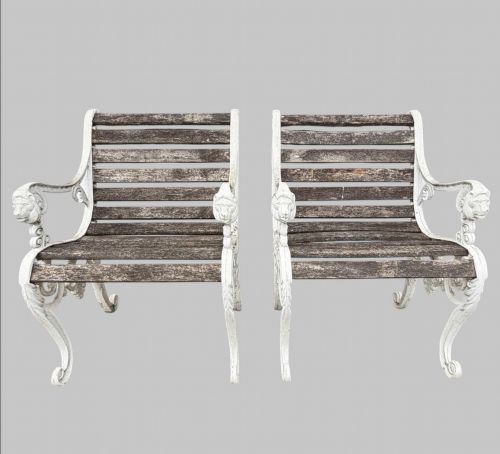
Victorian examples frequently pair cast iron ends with timber slats, while later twentieth-century pieces lean towards durable teak construction. Garden armchairs and matching seats also appear alongside standard benches within this tradition.
Materials and Construction
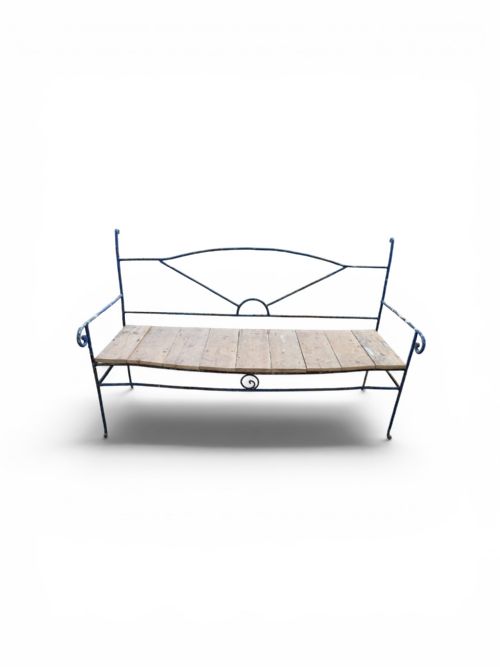
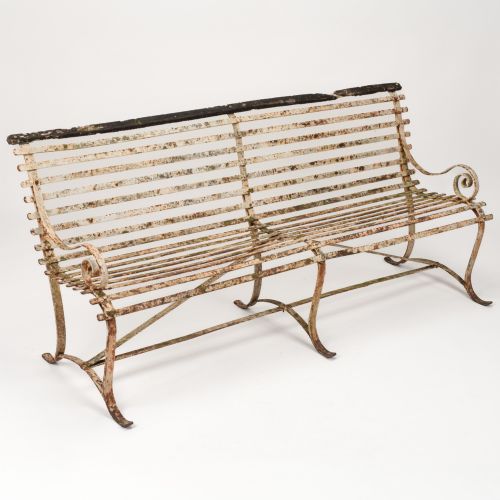
Makers construct these benches using robust timbers like teak and general wood or painted timber, paired with structural cast iron and wrought iron strapwork. Metal frames provide heavy support, while wooden slats form the comfortable seating surface.
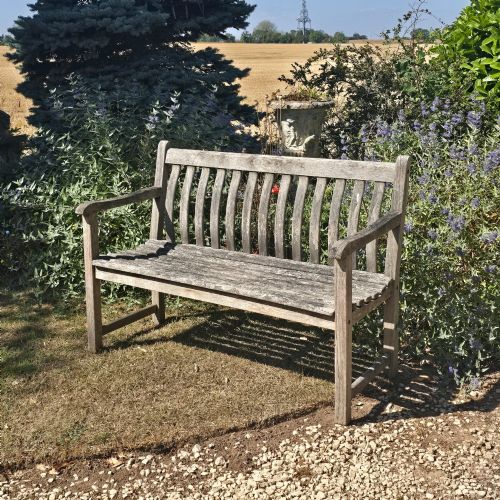
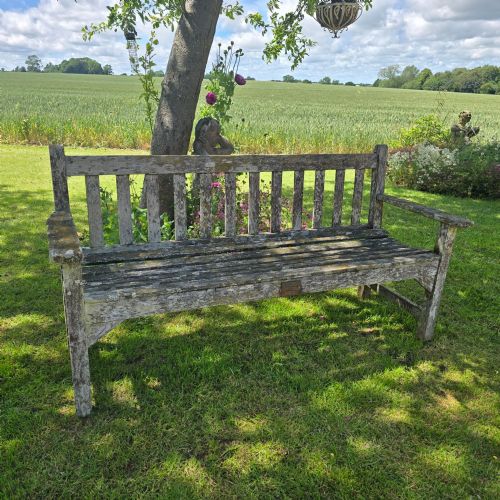
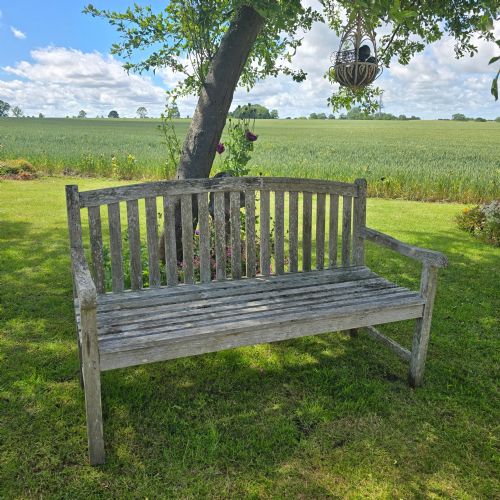
Surfaces often show layers of original paint or natural weathering that silvered the exposed wood over decades outdoors.
Listings feature pieces spanning the nineteenth century through the nineteen-thirties, utilising teak, cast iron, and wrought iron.
Judging Quality and Character
The distinction lies in the crispness of the ironwork casting, particularly on decorative ends featuring scrollwork, rustic patterns, or lion masks. Heavier gauge strapwork and dense, well-weathered teak indicate superior durability.
The integrity of the timber joints and the depth of the silvered patina on the wood determine the overall visual success of the piece.
The Slatted Park Bench Glossary
- Teak
- A dense, durable tropical timber prized for outdoor furniture because its natural oils resist decay when exposed to weather.
- Wrought Iron
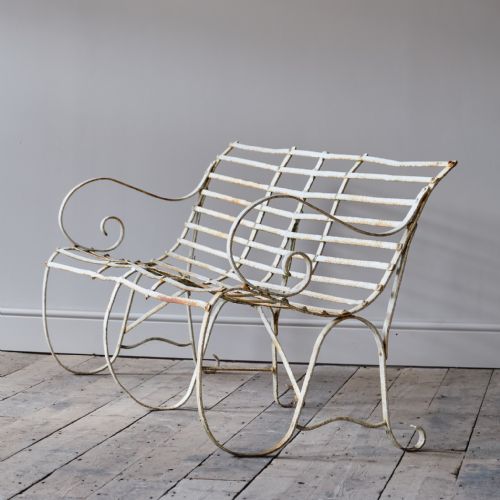
- Iron beaten into shape while hot, utilised for strapwork and scroll designs on lighter structural frames.
- Cast Iron
- Molten iron poured into a mould, employed for the heavy decorative ends and armchairs of nineteenth-century garden seats.
- Strapwork
- Flat strips of metal interwoven or arranged in geometric patterns to form supportive bench backs and seats.
- Weathering
- The natural silver-grey transformation of exposed timber surfaces caused by sun and rain over long periods.
Slatted Park Bench: Frequently Asked Questions
How do I care for a weathered teak bench?
Leave well-weathered teak untouched to preserve its silvered appearance, as the natural oils protect the wood without requiring oils or varnishes.
Cleaning simply requires a soft brush and water to remove surface debris after winter.
Can these benches stay outdoors all year?
Robust materials like cast iron and teak allow these seats to remain outside through all seasons without structural damage.
Sheltering them slightly during harsh winter months helps preserve original painted surfaces on older metalwork.
How do I distinguish Victorian from later Edwardian benches?
Victorian examples frequently feature heavier cast iron ends with elaborate rustic patterns or strapwork, alongside substantial timber.
Edwardian and later pieces tend towards simpler lines and heavier reliance on all-teak construction.
What is the difference between a garden seat and a bench?
Makers and sellers often use these terms interchangeably to describe long outdoor seating for multiple people.
Armchairs and smaller pairs also appear under these broader category names in historical records.