



Country Garden Seat
These country garden seat pieces bring enduring British and continental character to lawns and conservatories.
Country Garden Seat
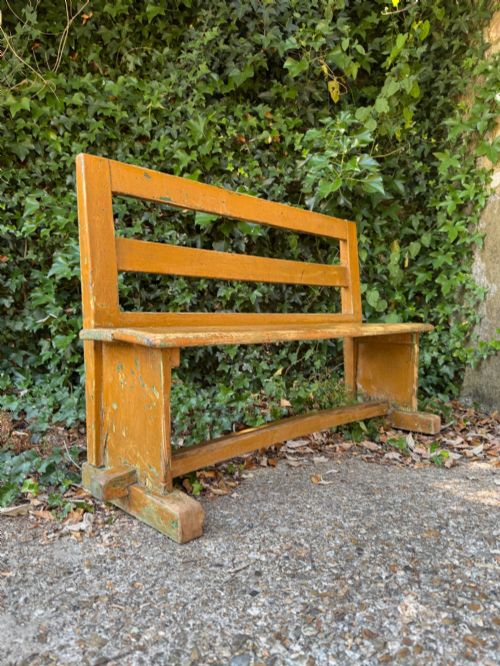
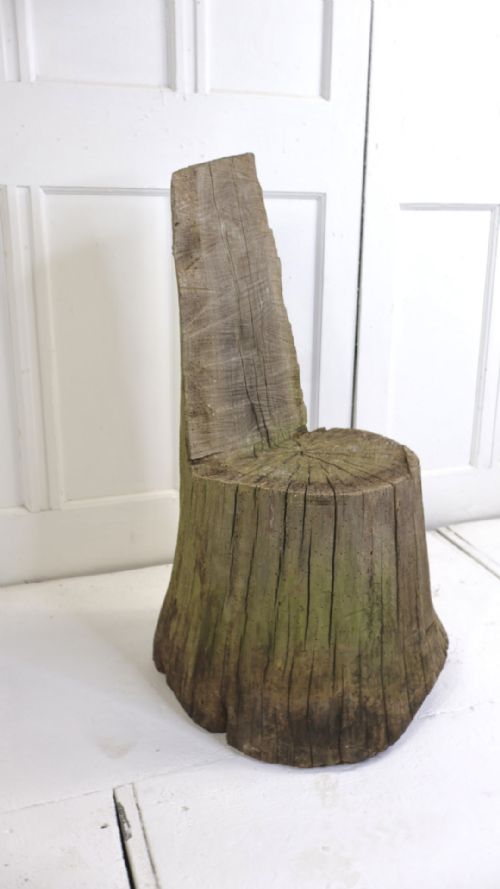
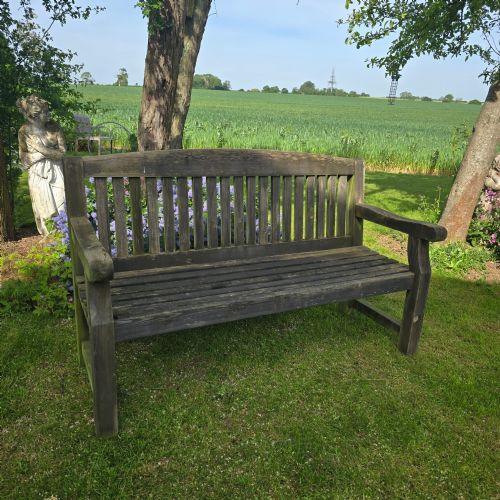
A country garden seat brings together practical outdoor seating and rustic architectural forms from the nineteenth and twentieth centuries. The selection here ranges from Edwardian tree seats and early twentieth-century teak benches to French elm and iron faux bois examples.
Buyers will most frequently encounter sturdy timber benches alongside iron and wood combinations from periods spanning the nineteenth century through to the 1930s. These seating forms served as functional focal points in both English country landscapes and French provincial settings.
The category extends beyond standard benches to encompass armchairs, folding chairs, conservatory suites, and sculptural terracotta works. Each piece reflects the shifting domestic tastes in garden design across the Edwardian era and the interwar decades.
Materials and construction
Makers utilised durable timbers such as teak, elm, pine, and weathered wood to withstand the elements. Teak and elm provided natural resilience against moisture, while pine and painted woods offered straightforward domestic utility.
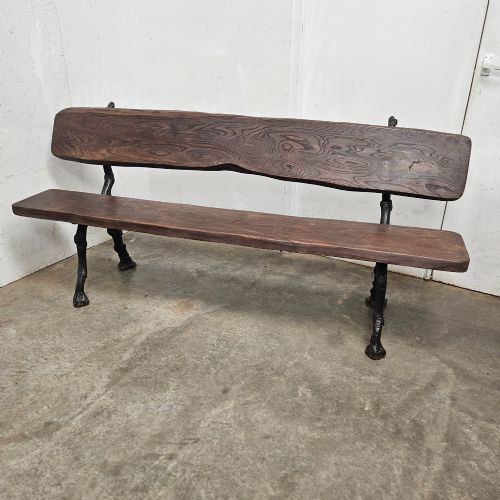
Metal components relied on cast iron and wrought iron, frequently paired with wooden slats or shaped into faux bois branches. This combination of timber and forged metal gave these benches structural rigidity alongside sculptural flair.
One determined nineteenth-century canine sits quietly among the benches as a lifesize terracotta dog.
Judging quality in a country garden seat
Superior quality in these pieces is dictated by the integrity of the original materials and the sophistication of the joinery or forge work. Examples that retain their authentic weathered surfaces and patination show greater craftsmanship than heavily restored counterparts.
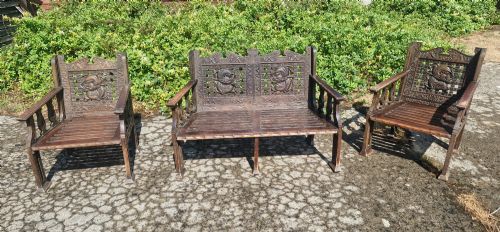
The distinction between standard utility items and finer pieces lies in decorative detailing, such as carved Burmese woodwork or sculptural faux bois branch work. Structural honesty and balanced proportions elevate certain garden benches into genuine works of folk art.
The Country Garden Seat Glossary
- Faux bois
- Imitation wood. This technique involves rendering concrete, iron, or plaster to resemble natural branches and tree trunks.
- Tree seat
- A circular bench. These structures are built to enclose the trunk of a mature tree, providing shaded seating.
- Teak
- A dense hardwood. This material is prized for outdoor use due to its natural oils that resist decay.
- Wrought iron
- Hammered metal. Artisans shaped this material while hot to create durable and decorative scrollwork.
- Edwardian
- A historical period. This era spans the reign of King Edward VII, noted for domestic comfort and lighter garden furniture designs.
Country Garden Seat: Frequently Asked Questions
How do I protect a wooden garden seat?
Historic timber pieces benefit from being stored under cover during the harshest winter months to prevent excessive moisture absorption.
Allowing the wood to breathe naturally preserves the historical patination without the need for heavy modern varnishes.
Can iron garden benches stay outside?
Cast and wrought iron elements tolerate outdoor placement well if the metal is monitored for surface corrosion.
Applying a traditional wax or neutral oil helps protect the iron while maintaining its antique finish.
What defines an Edwardian garden bench?
Edwardian examples often feature simpler, lighter construction compared to heavily ornate Victorian counterparts, reflecting a shift toward relaxed outdoor living.
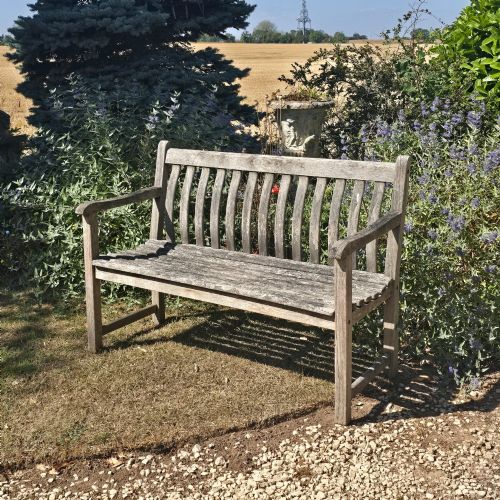
These benches frequently utilise teak or local timbers shaped for comfort in country house grounds.
Are faux bois benches heavy?
Combinations of elm and iron built in the faux bois style possess substantial weight due to the density of the materials used in their construction.
Positioning these pieces requires deliberate placement on stable ground or paved garden terraces.