

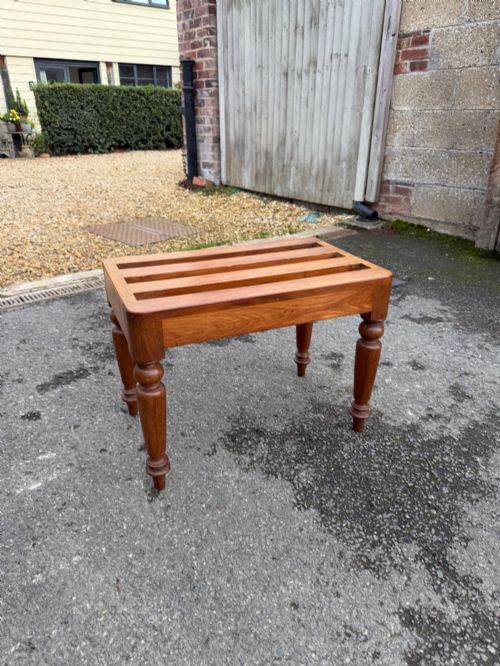
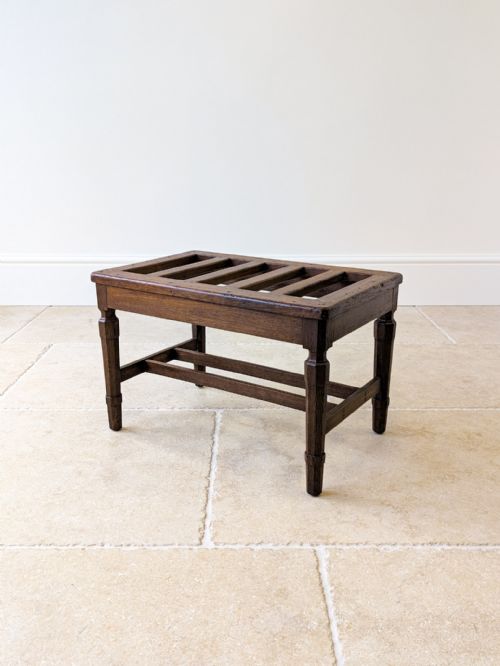
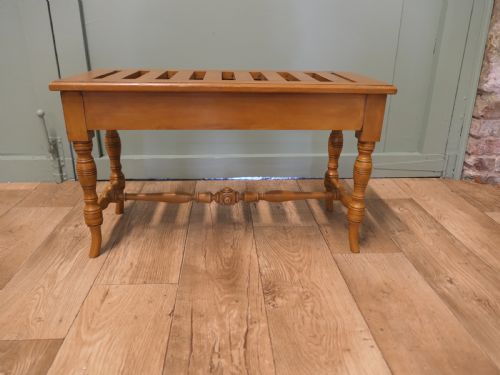
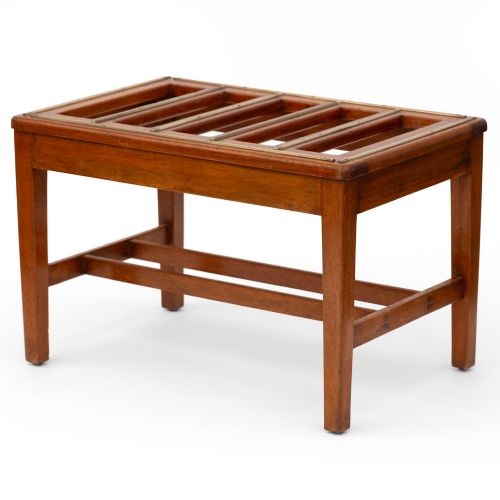

Slatted Luggage Rack
A slatted luggage rack keeps guest quarters orderly, bringing practical surface space and traditional joinery together.
Slatted Luggage Rack
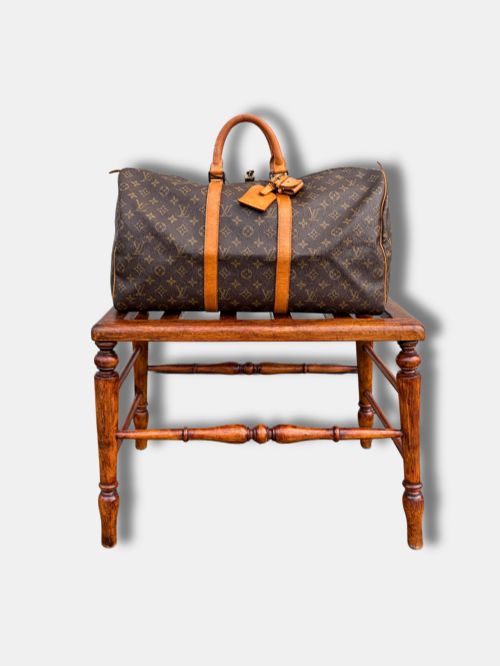
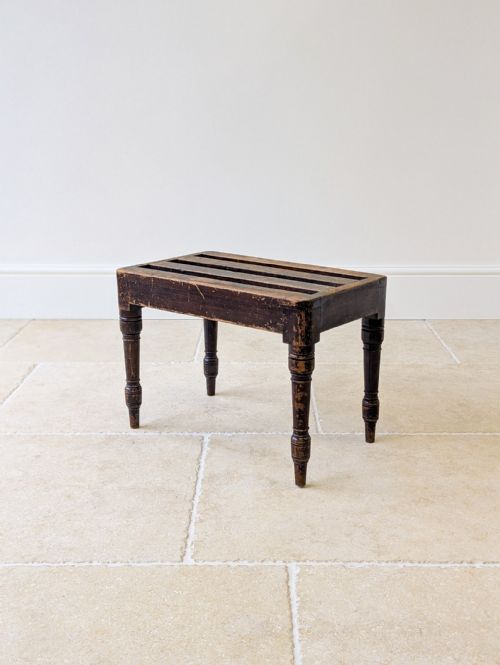
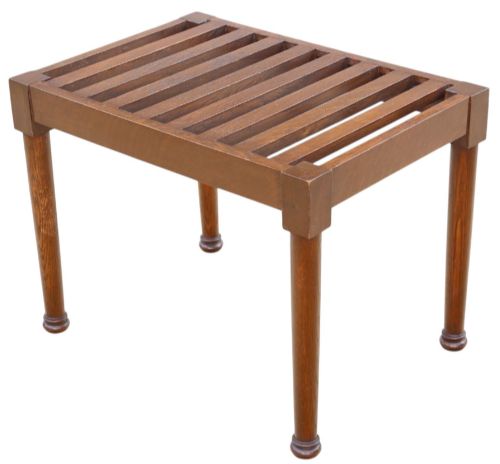
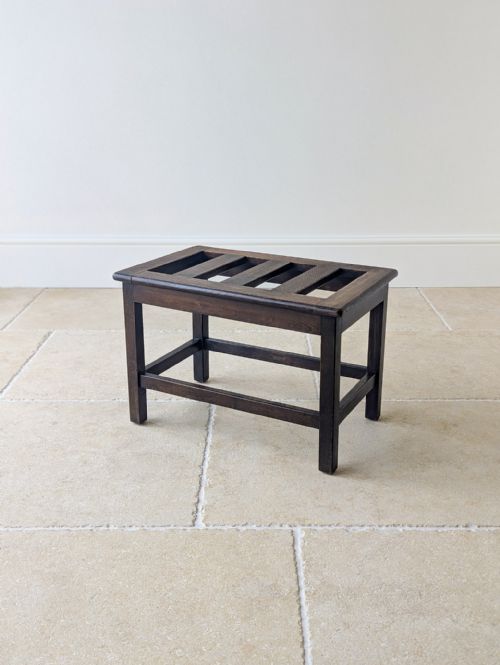
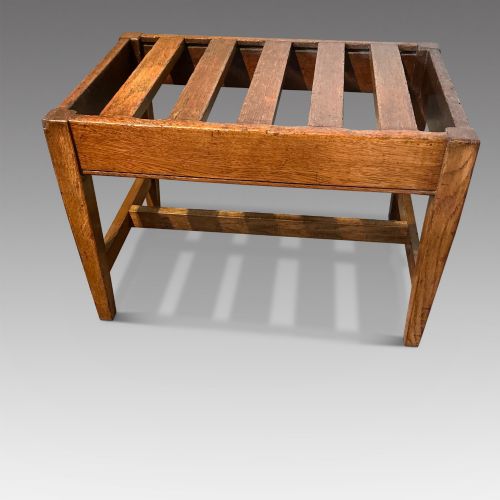
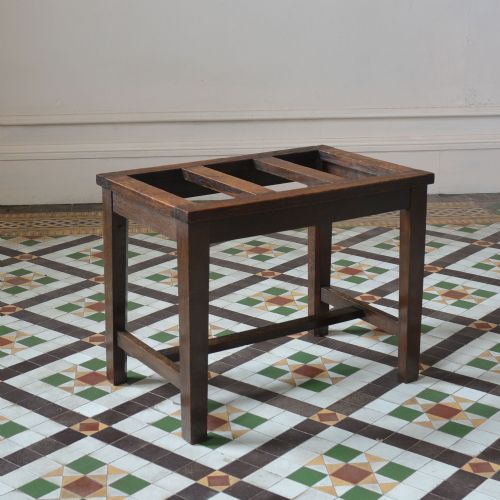
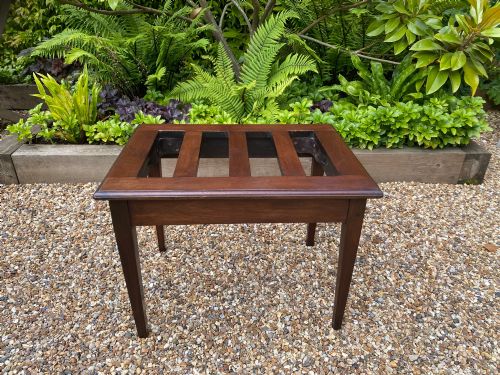
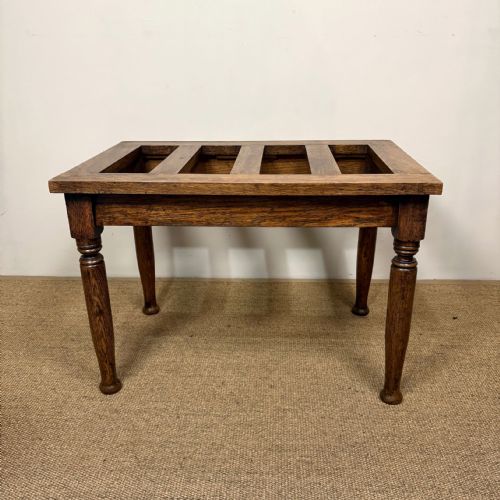
A slatted luggage rack is a dedicated stand designed to hold travel bags off the floor at a convenient height in a bedroom or guest room. These pieces range from simple utilitarian frames to substantial folding stands with raised ends.
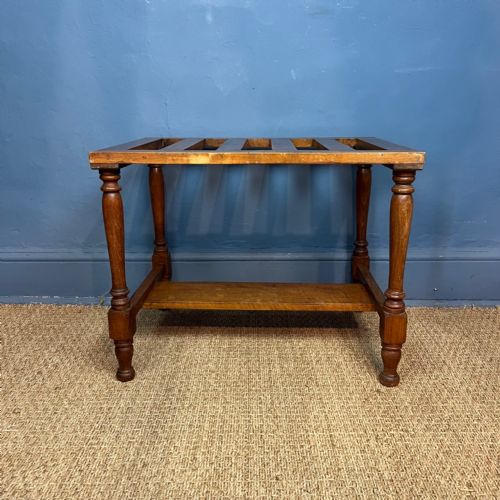
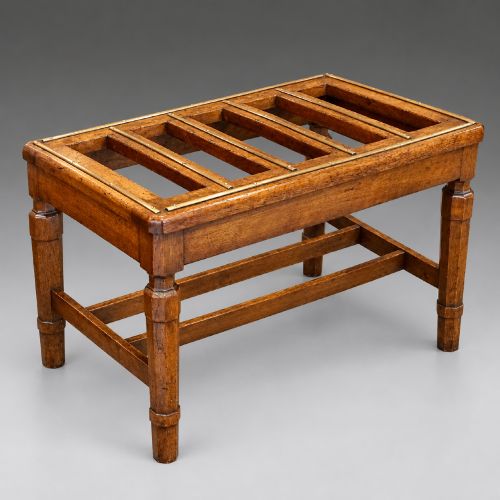
Most examples encountered here date from the Victorian and Edwardian eras, constructed to serve in grand hotels and private country houses alike. They appear in forms that utilise parallel timber laths across sturdy legs, often equipped with lower shelves or folding mechanisms.
Originating from domestic and hospitality settings, the surviving pieces reflect a period when guest luggage required a sturdy, dedicated resting place. The selection leans heavily towards British and Canadian workshops producing honest, timber-framed furniture.
Construction and materials
Makers relied on durable hardwoods such as oak, mahogany, walnut, ash, beech, and yew to build frames capable of supporting heavy trunks. These timbers were joined using traditional methods to ensure stability under regular folding and loading.
Metal elements like brass and iron appear in fittings, hinges, and bracing to reinforce the wooden structures. Some variations include painted pine surfaces or polished finishes that highlight the natural grain of the wood.
Slatted Luggage Rack Retail Price Guide 2026
Typical asking prices for slatted luggage rack among the pieces listed under this phrase on Sellingantiques today, from the lower quarter to the upper quarter. They describe what is for sale here now, not the wider market.
Listings feature timbers including oak, mahogany, walnut, ash, beech, and yew across the Victorian and Edwardian eras.
Judging the standard
The distinction between ordinary and superior pieces rests on the choice of timber and the refinement of the joinery. Selected hardwoods with rich grain patterns and tight, clean joints elevate a piece beyond basic utility.
Proportions and clever design details, such as a raised and raked rear upstand support or maker stamps, mark out better examples. The integrity of the folding action and the weight of the frame also indicate the care put into its manufacture.
Beatty Bros Fergus Canada·Brown & Lamont·Waring & Gillow
The Slatted Luggage Rack Glossary
- Slats
- The parallel strips of wood forming the top surface of the rack. These allow air circulation around luggage while providing a flat plane for support.
- Upstand
- A raised barrier at the back of the rack. This feature prevents bags from sliding off and damaging the wall behind.
- Luggage stand
- A piece of furniture standing on legs at waist height, synonymous with a rack. It provides an accessible surface for unpacking without bending.
- Hardwood
- Timber derived from broad-leaved trees such as oak, mahogany, and walnut. These dense woods form the durable structure of period stands.
Slatted Luggage Rack: Frequently Asked Questions
How were slatted luggage racks used?
They were placed in guest bedrooms to hold heavy leather or canvas travel trunks off the floor. This kept belongings at a convenient height for unpacking during a stay.
Servants also used them in grand houses to move luggage between rooms without damaging carpets or furniture. Their sturdy build ensured they could bear significant weight day after day.
Where should I put one at home?
A spare bedroom or master suite provides the most traditional setting, offering guests a place to open their bags. They function equally well as low display tables or blanket holders in a living space.
Because many fold flat, they can also be stored away easily when not in use. Their compact footprint makes them practical for hallways or dressing rooms.
How do I date a luggage rack?
Cabinetmakers used specific timbers and joinery styles that shift across the decades, from heavy Victorian ash to lighter Edwardian oak. Examining the turning of the legs and any metal hardware provides further clues to the era.
Maker stamps or hotel labels stamped into the wood can pinpoint a workshop or original context. Comparing the construction methods to dated pieces helps narrow down the decade of origin.
Are these stands sturdy enough for daily use?
Period racks were engineered from dense hardwoods to support heavy Victorian luggage without buckling. Their robust construction suits modern suitcases and travel bags without trouble.
Routine checks of the joints and folding mechanisms ensure they remain safe and stable. They are built for practical service rather than mere display.