

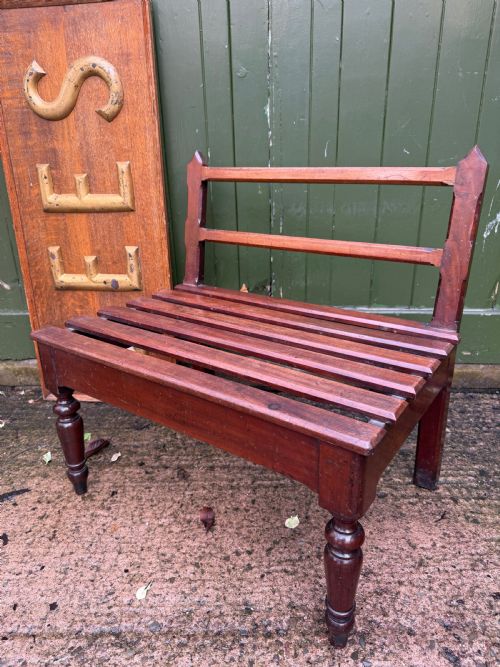


Edwardian Suitcase Rack
An edwardian suitcase rack offers sturdy, raised convenience for luggage, bringing practical country-house elegance to a guest bedroom.
Edwardian Suitcase Rack
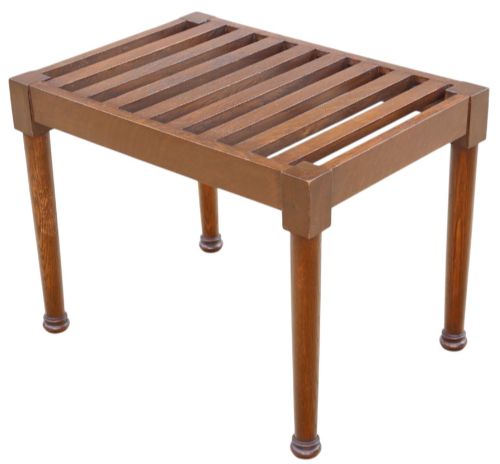
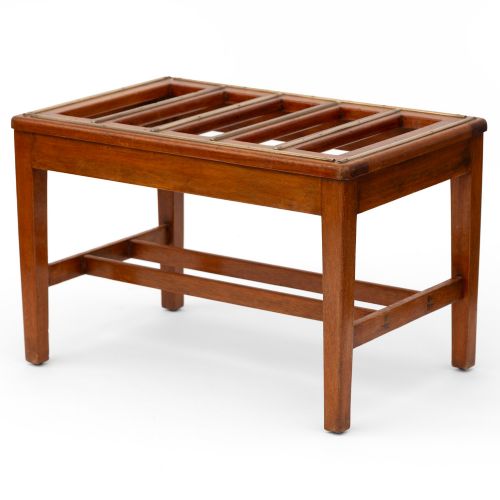
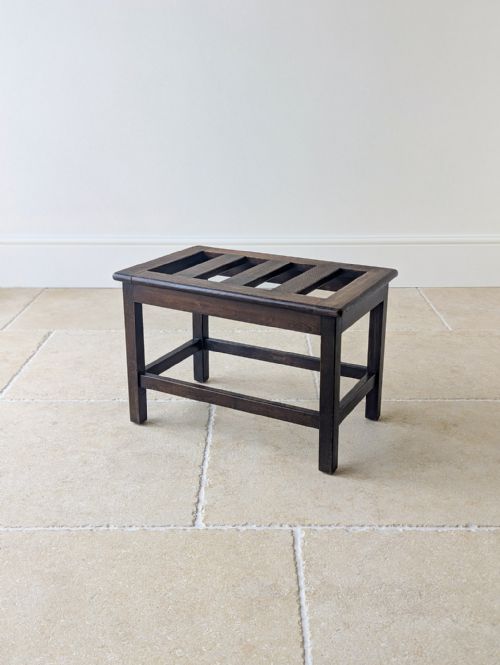
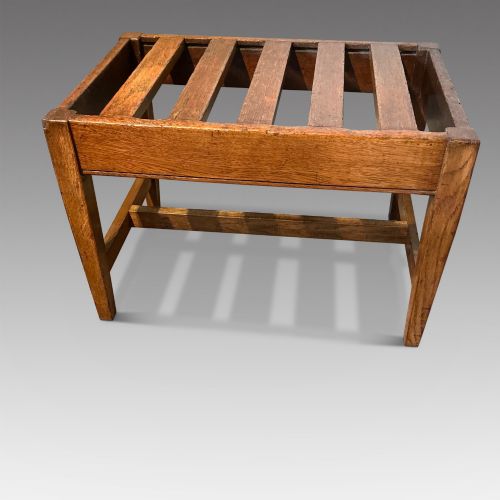
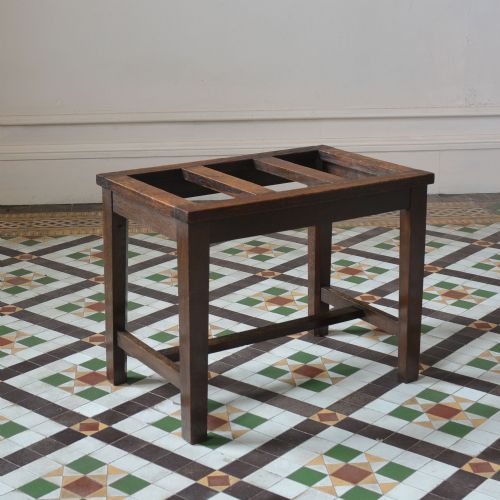
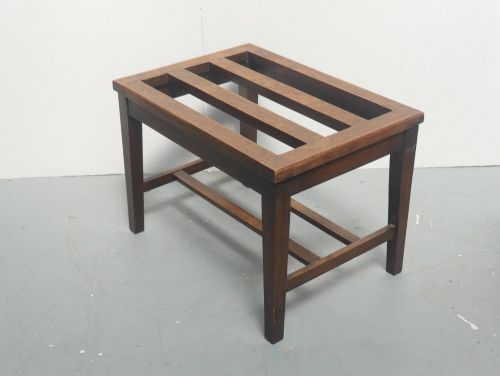
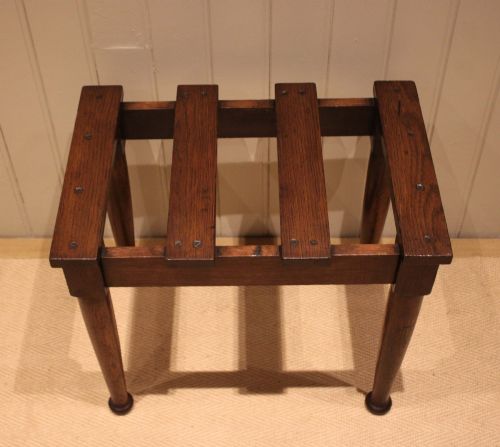
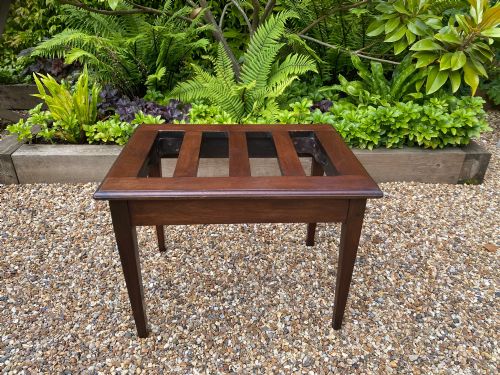
An edwardian suitcase rack is a dedicated stand designed to hold luggage at a comfortable height off the floor, saving guests from bending down to unpack. You will most commonly encounter solid oak and mahogany versions dating from the Edwardian period, alongside Victorian and early twentieth-century examples.
The form typically comprises a low, rectangular frame supported by four legs, often featuring slatted tops and occasionally incorporating a raised rear upstand or lower shelf for boots. These practical pieces originated in grand hotels and English country houses where servants managed guest belongings.
While many retain their traditional domestic utility, today they serve equally well as tray tables, blanket holders, or permanent bedroom furniture. Their straightforward construction makes them adaptable to both period interiors and modern minimalist spaces.
How they were made
Cabinetmakers constructed these stands predominantly from hardwoods like oak and mahogany, though utilitarian examples in ash, pine, and painted woods also appear. Timber selection determined the formality of the piece, with polished mahogany reserved for public hotel spaces or fine bedrooms and sturdy oak favoured for country houses.
Joinery techniques relied on solid framing and secure joints to support the weight of heavy leather and canvas luggage without flexing. Metal elements such as brass fittings or iron supports frequently reinforced the structure and added durability to folding or rigid joints.
Listings feature oak and mahogany predominantly, with occasional ash, pine, and painted wood examples spanning the Victorian and Edwardian periods.
What varies in quality
The distinction between standard utility items and finer examples lies in the timber selection, the crispness of any carved detailing, and the substance of the proportions. Heavy, deep-proportioned frames with raised rear supports demonstrate superior construction intended for heavy hotel use.
Makers such as Waring & Gillow introduced branded excellence through refined finishing and precise cabinetwork. The overall integrity of the frame, the quality of the wood polishing, and the retention of original brass or iron hardware separate basic pieces from superior survivals.
Waring & Gillow
The Edwardian Suitcase Rack Glossary
- Upstand
- A raised barrier at the rear of the luggage rack designed to prevent bags from sliding backward against the wall. This feature often appears on deeper proportions intended for formal country-house guest rooms.
- Luggage stand
- An alternative term for a suitcase rack denoting a rigid or folding piece of furniture built specifically to elevate baggage. They share the same low, rectangular footprint.
- Slatted top
- The surface formed by parallel strips of wood allowing air circulation beneath luggage and reducing overall weight. This construction method keeps the frame light yet rigid.
- Edwardian
- The historical period spanning the reign of King Edward VII from 1901 to 1910, though the style extends slightly beyond these dates. Furniture from this era often lighter in scale than heavy Victorian predecessors.
Edwardian Suitcase Rack: Frequently Asked Questions
How were suitcase racks used originally?
These stands sat in guest bedrooms to hold heavy leather or canvas luggage at a comfortable height for unpacking. Porters and domestic staff placed trunks and suitcases upon them so guests did not need to bend down to the floor.
In grand hotels and English country houses, they formed part of the standard guest room inventory. Their sturdy slatted tops supported the weight while protecting expensive luggage from damp or dusty floors.
Where can I use an edwardian suitcase rack today?
A suitcase rack fits naturally at the end of a bed or inside a spare room wardrobe alcove. They provide guests with a convenient spot for overnight bags without taking up permanent floor space.
Beyond bedrooms, many people repurpose them as low display tables or accessory stands in hallways and living rooms. Their compact footprint and traditional timber finishes suit both period and modern interiors.
How do I distinguish Edwardian pieces from Victorian ones?
Edwardian furniture generally exhibits lighter proportions, simpler lines, and brighter wood finishes compared to heavier Victorian examples. While Victorian stands often feature robust ash or deep mahogany with substantial framing, Edwardian pieces frequently employ lighter oak.
Makers working around the turn of the twentieth century moved away from heavily ornate carving towards cleaner, more functional designs. Examining the timber weight and overall heft usually reveals the transition between these two eras.
What woods were commonly used for these stands?
Oak and mahogany dominate the surviving examples, reflecting the preference for durable hardwoods in domestic furniture. Oak appears frequently in both plain and carved Edwardian pieces, suiting country house aesthetics.
Mahogany was often chosen for hotel environments and finer chambers due to its smooth grain and capacity for high polish. Utilitarian workshops also utilised ash, pine, and painted woods for simpler back-of-house furniture.