


Mahogany Bench Stand
These mahogany bench stand pieces offer practical furniture forms in rich timber, built to organise halls and guest rooms with traditional utility.
Mahogany Bench Stand
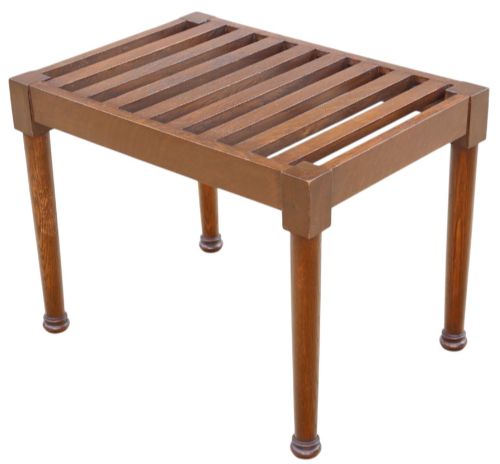
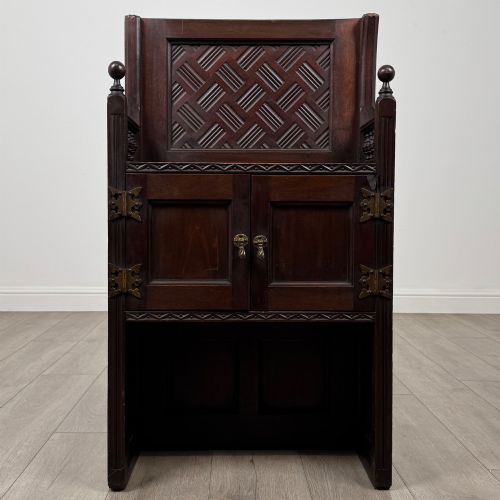
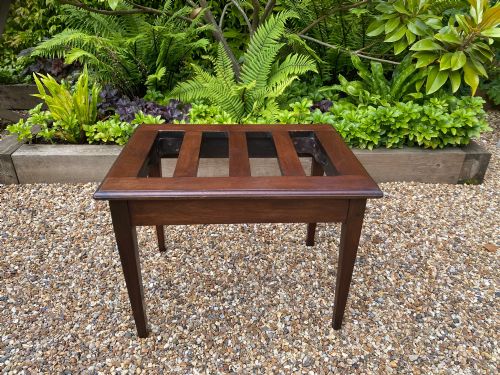
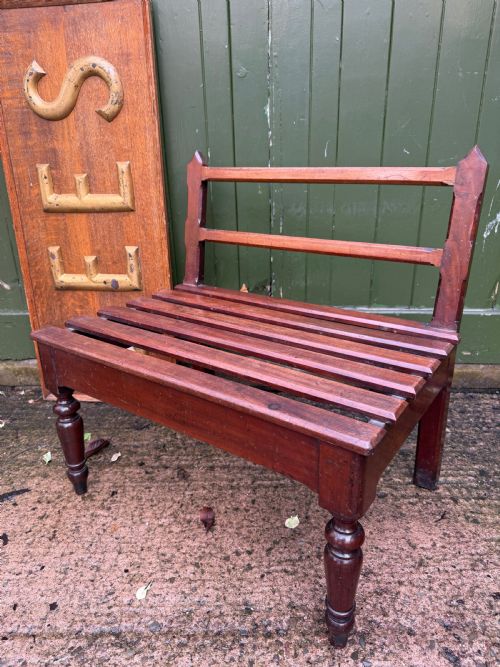
When you search for a mahogany bench stand, you meet functional furniture designed for hallways and bedrooms, principally taking the form of luggage stands, hall seats, and hall stands. These pieces use mahogany timber, often complemented by brass, glass, ceramic, marble, or textile elements.
The selections span the nineteenth century and the early twentieth century, taking in Victorian, Edwardian, Arts and Crafts, and George III styles. You are most likely to encounter luggage stands and hall stands from the Victorian and Edwardian periods on this page.
How they were made
These items are constructed from solid and veneered mahogany, frequently incorporating brass fittings, ceramic tiles, or inset marble panels. Makers shaped the wood using traditional cabinet-making techniques appropriate to each period, from George III workshops to Edwardian factories.
Structural additions such as mirror glass, metal rails, and textile straps were integrated to serve specific daily functions like holding luggage, hanging coats, or seating visitors.
What varies in quality
Quality in these pieces rests on the depth of the timber grain, the precision of the joinery, and the integrity of secondary materials such as marble slabs and ceramic tiles. Superior examples display refined proportions, thoughtful details like raised rear upstands, and well-executed decorative carvings.
The standard of hardware, including brass hooks and rails, distinguishes standard utility items from more ambitious cabinet-making commissions by notable makers.
Ellen E. Houghton of Minton·I.M. Gillows of Lancaster
The Mahogany Bench Stand Glossary
- Upstand
- A raised barrier at the back of a piece designed to protect walls and retain items. It adds a finished architectural line to luggage stands and hall furniture.
- Hall stand
- A multi-functional piece for an entranceway combining coat hooks, umbrella storage, and often a mirror or seat. These items organise outer garments and accessories in domestic halls.
- Luggage stand
- A low folding or rigid rack designed to hold a trunk or suitcase at a convenient height. They appear frequently in nineteenth-century bedrooms and guest quarters.
- George III Period
- The era spanning from 1760 to 1820 characterised by classical proportions and refined cabinet work. Furniture from this time often shows exceptional timber selection.
Mahogany Bench Stand: Frequently Asked Questions
What is a mahogany bench stand used for?
These pieces serve practical functions in hallways and bedrooms, acting as luggage racks, coat storage units, or seats. They organise everyday items while providing traditional timber furniture for the home.
Different forms suit different rooms, with hall stands managing outerwear and luggage stands supporting guest bags.
How do I identify Victorian pieces?
Victorian examples often feature heavier proportions, dark mahogany surfaces, and functional additions such as brass hooks, mirror glass, or marble inserts. Their stylistic details frequently incorporate Victorian and Gothic influences.
Examining the construction methods and secondary materials helps confirm the nineteenth-century origin of the piece.
What materials are used alongside mahogany?
These items regularly incorporate brass for hooks and rails, ceramic tiles for decorative panels, and marble for durable surfaces. Glass mirrors and textile elements also appear on hall stands.
These combined materials enhanced both the utility and the decorative appeal of the furniture.
How do I care for mahogany furniture?
Maintain the timber by keeping it away from direct heat sources and sudden humidity changes to protect the wood and veneer. Regular dusting with a soft, dry cloth preserves the finish.
Avoid harsh chemical polishes that can damage the historical surface over time.