


Bedroom Luggage Rack
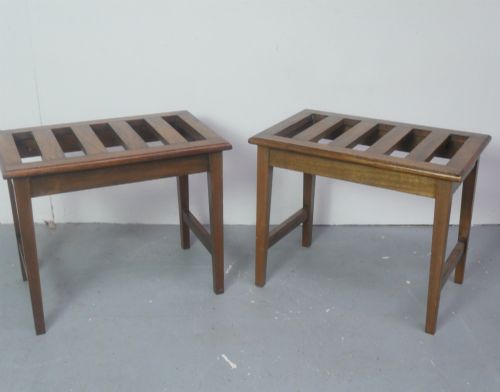
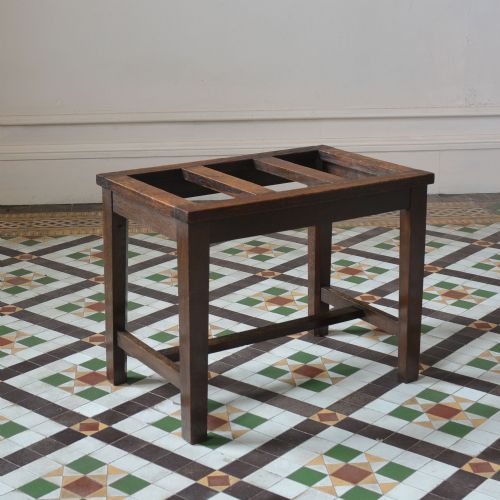
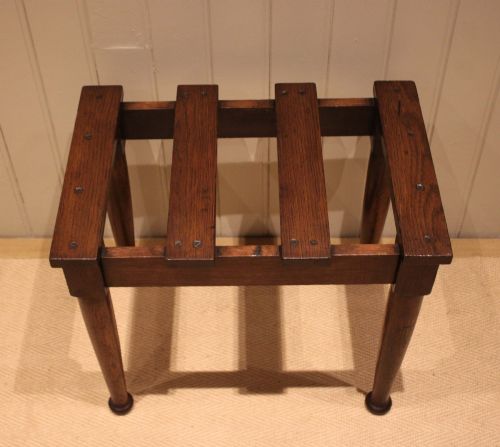
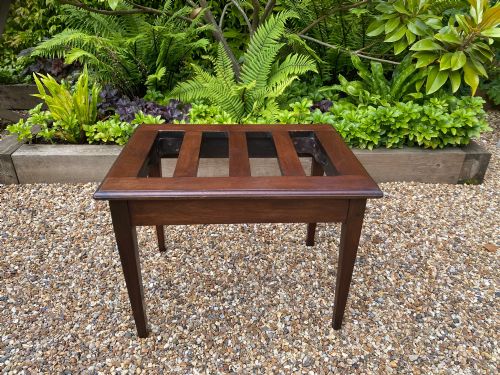
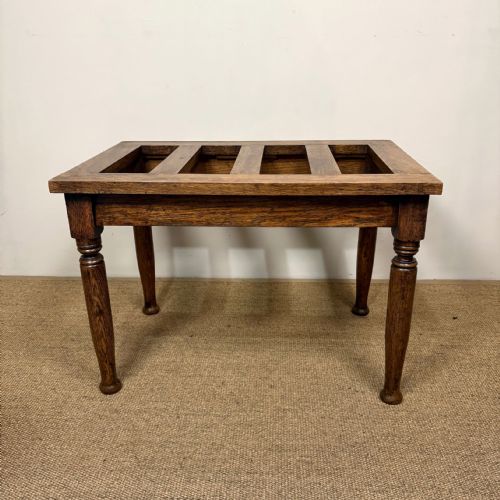
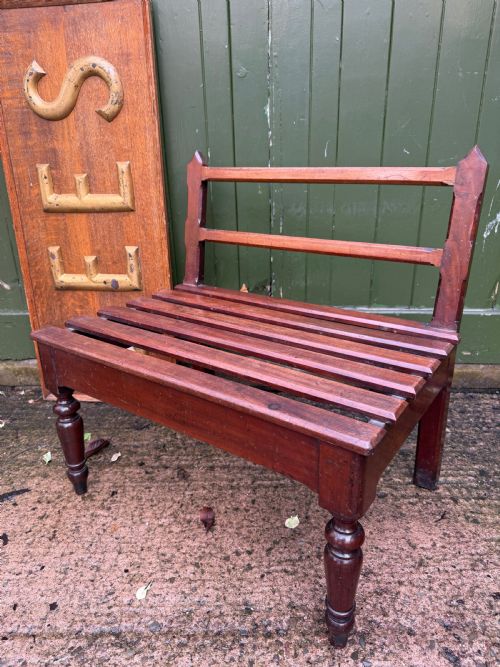
These bedroom luggage rack pieces are sturdy stands designed to hold cases, appearing here in oak, mahogany, and walnut from the Victorian and Edwardian eras.
Bedroom Luggage Rack
When you search for a bedroom luggage rack, you encounter practical stands designed to hold cases off the floor in domestic spaces. The pieces listed on this page span the 19th Century, Victorian, Edwardian, and mid-century modern periods, reflecting a long tradition of guest room hospitality.
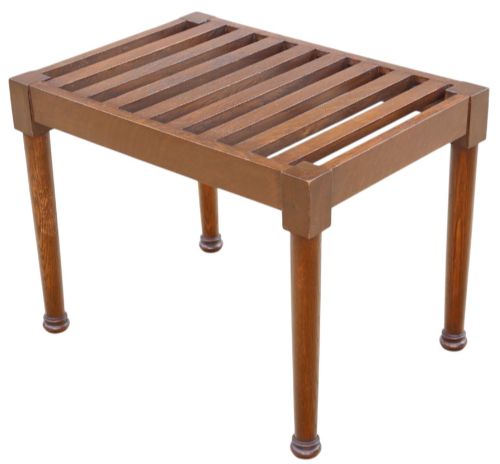
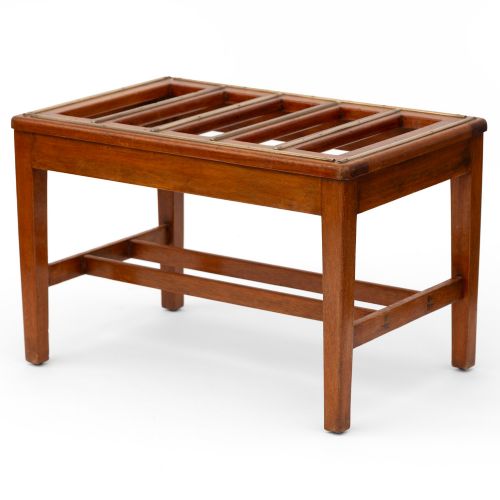
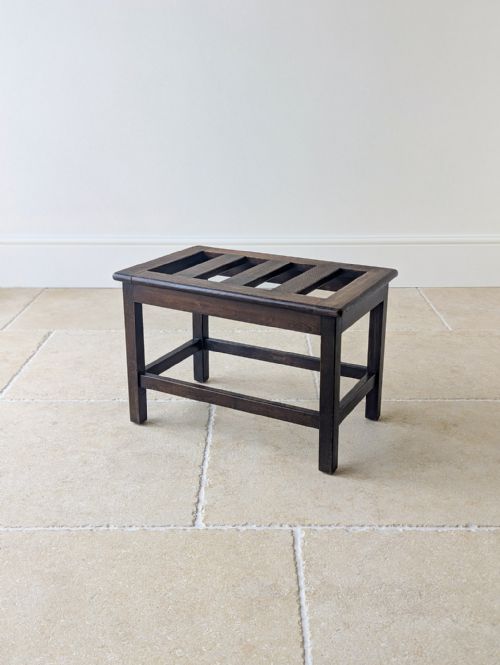
Most examples take the form of folding luggage stands or luggage racks, originating from English country houses and hotels. You find sturdy varieties built from oak and mahogany, often featuring raised rear upstands to protect walls from luggage scuffs.
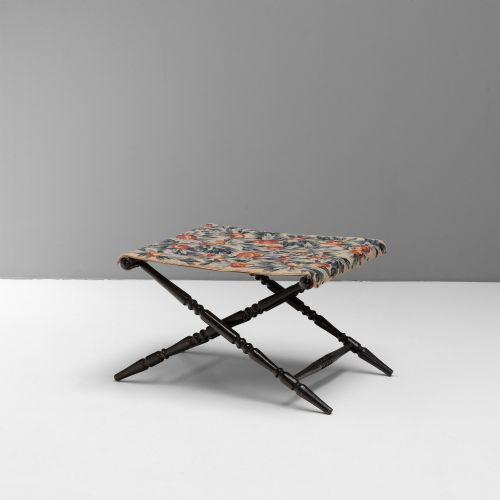
The selection includes timber frames supplemented by textile and tapestry webbing to support heavy bags. Variants range from standard bedroom stands to pieces adapted for hallway use.
What varies in quality
The distinction in a bedroom luggage rack lies in the density of the timber and the robustness of the folding mechanism. Denser hardwoods like mahogany and solid oak offer greater structural integrity than softer or lighter alternatives.
Detailing such as raised and raked rear upstands or superior joining techniques elevate certain pieces beyond standard utilitarian furniture. The condition and tension of the original textile or tapestry webbing also influence the overall standard of the object.
Periods represented span from the mid-nineteenth century through the Edwardian era to mid-century modern.
The Bedroom Luggage Rack Glossary
- Webbing
- The strong textile or tapestry straps interwoven across the frame to support luggage. It provides a flexible yet durable platform.
- Ebonised wood
- Timber treated with a chemical stain or finish to imitate ebony. This dark, formal surface appears on specific period stands.
- Folding stand
- A hinged furniture form designed to collapse flat for storage when not in use. This mechanism is common among hotel and country house examples.
Bedroom Luggage Rack: Frequently Asked Questions
How were bedroom luggage rack stands originally used?
These stands were placed in guest bedrooms and country house chambers to elevate visitors' heavy luggage off the floor. This made unpacking easier and kept leather or canvas cases accessible.
They also served temporarily as bedside surfaces or hallway stands when not in use for travel gear.
Can I use a bedroom luggage rack in a modern home?
They fit naturally at the foot of a bed or inside a dressing room to hold bags and clothes. Their folding design allows you to tuck them away when floor space is needed.
Many people also utilise them as convenient tray stands or temporary storage ledges in hallways.
How do I identify a Victorian bedroom luggage rack?
Victorian examples typically feature dense mahogany or oak construction with deep proportions and robust turnings. They often display nineteenth-century joinery methods and heavier framing.
Look for structural integrity and traditional polished wood surfaces rather than lighter Edwardian treatments.
What is the difference between oak and mahogany stands?
Oak stands generally present a pronounced grain pattern with a warm, heavy character typical of English country house furniture. Mahogany versions often offer a smoother, red-brown surface associated with finer formal interiors.
Both timbers provide the necessary strength to support heavy luggage safely.