

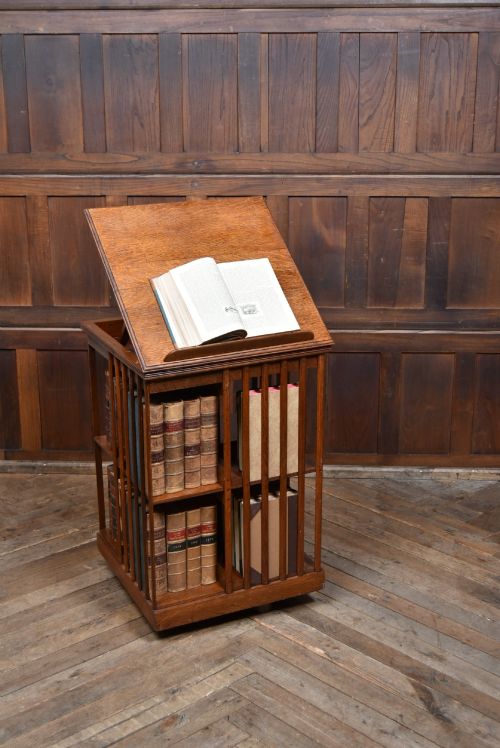
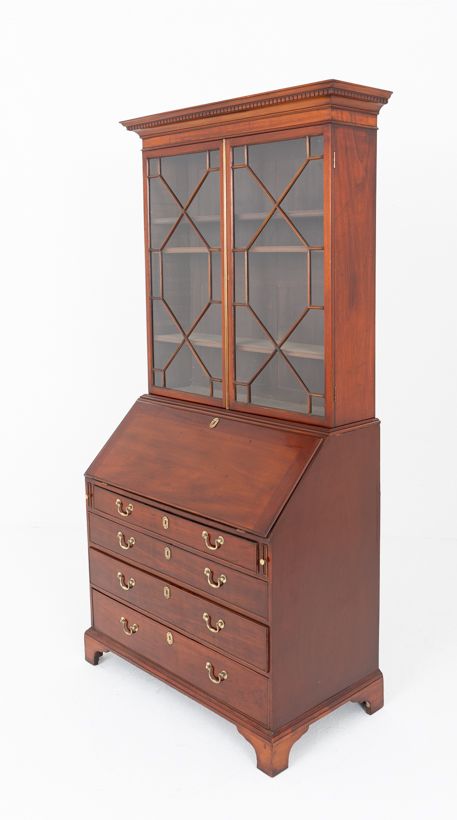
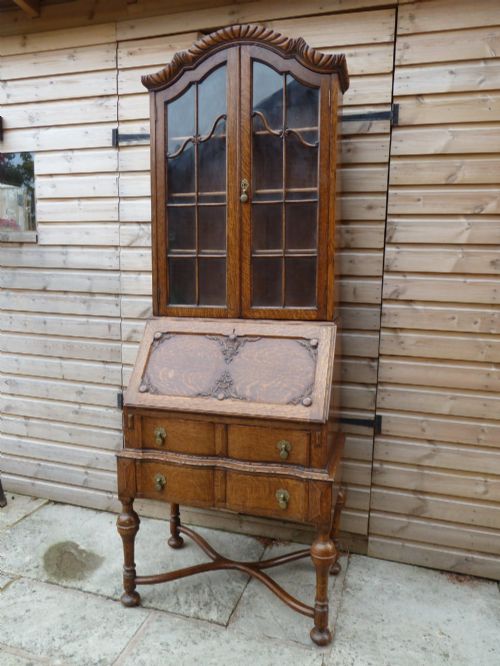


Slanted Top Bookcase
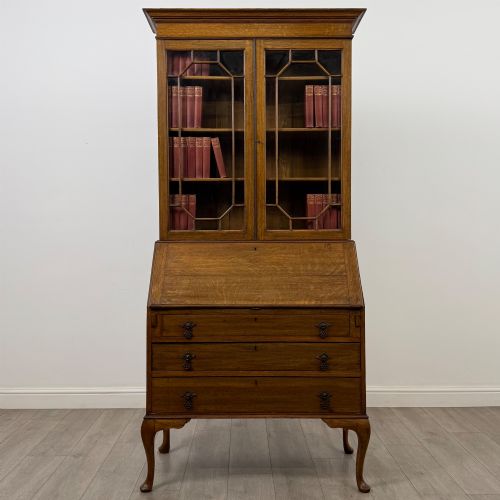
A slanted top bookcase combines a writing desk and a glazed display cabinet into one imposing piece of furniture.
Slanted Top Bookcase
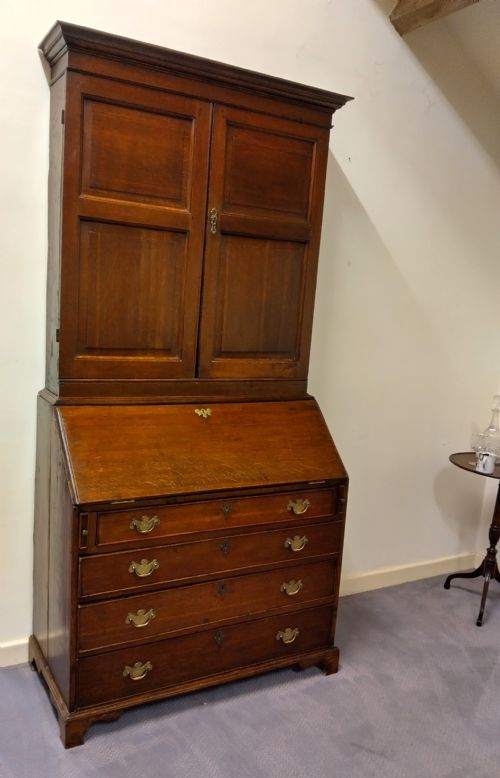
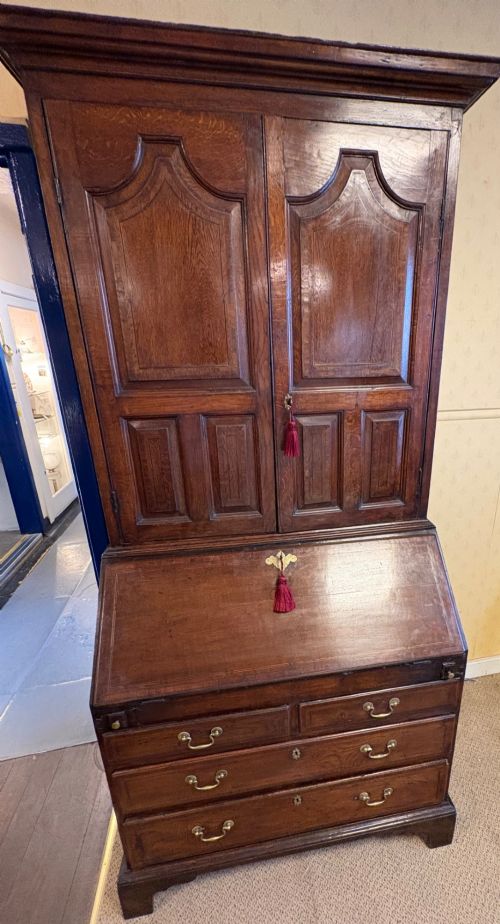
A slanted top bookcase integrates a sloping writing flap above drawers with shelving enclosed by glass doors above. These hybrid pieces span the eighteenth century, the Georgian period, and Edwardian revivals, appearing in forms such as bureau bookcases and bureau cabinets.
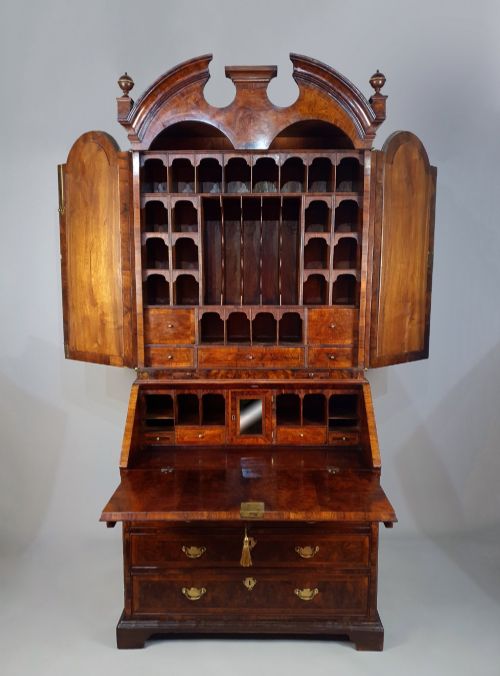
The most common version on this page pairs a walnut, mahogany, or oak lower bureau with a glazed upper bookcase section, often divided into three distinct sections or fitted with interior pigeonholes and candle slides.
How they were made
Cabinetmakers constructed these pieces using dense hardwoods like mahogany, oak, and walnut, frequently selecting burr walnut veneers or applying intricate Chinoiserie decoration to the exterior surfaces. Brass hardware, leather writing inserts, and glass panes for the upper cabinet doors completed the construction.
Joinery techniques included sectional building, such as three-section carcass designs, alongside specialised interior fittings like stepped compartments, tambour panels, and candle slides integrated into the writing desk area.
Period styles span George I, Queen Anne, Georgian, Edwardian, Jacobean Revival, Chinoiserie, and Scandinavian Country designs.
What varies in quality
Quality rests in the choice of timber and the precision of the cabinetwork, distinguishing finely figured burr walnut or Cuban mahogany from simpler domestic oak. The sophistication of the interior fitments, such as stepped writing compartments and well-executed glazing bars on the upper doors, separates standard production from superior examples.
The architectural harmony between the lower bureau and the upper bookcase determines the visual success of the piece, particularly in dome top or multi-section formats where proportions must remain balanced.
GILES GRENDY
The Slanted Top Bookcase Glossary
- Bureau bookcase
- A dual-purpose piece combining a sloping desk compartment with an upper shelving unit enclosed by doors. These units typically house fitted drawers and pigeonholes behind the fall-front flap.
- Candle slide
- A pull-out wooden board positioned beneath the upper bookcase doors to hold lighting for the writing surface. They slide back flush into the cabinet frame when not in use.
- Burr walnut
- A highly figured wood veneer harvested from walnut tree growths, prized for intricate swirling grain patterns. Cabinetmakers applied it to high-status furniture fronts during the early eighteenth century.
- Glazed top
- The upper section of the bookcase fitted with glass panes to display books. These doors often feature wooden or brass framing bars arranged in geometric patterns.
- Stepped interior
- An arrangement of internal drawers and pigeonholes set in ascending tiers inside the bureau section. This layout provides organised storage for correspondence and documents.
Slanted Top Bookcase: Frequently Asked Questions
What is a slanted top bookcase?
A slanted top bookcase is a tall dual-purpose furniture form that combines a sloping fall-front writing desk with an upper shelving cabinet enclosed by glass doors. These hybrid pieces served as both working desks and personal libraries in period homes.
Most examples split into distinct upper and lower sections to ease transport, housing internal drawers, pigeonholes, and document compartments behind the writing flap.
How do I date a bureau bookcase?
Dating relies on timber choices, construction methods, and stylistic details such as bracket feet, cornice designs, and glazing bar patterns. Early eighteenth-century pieces frequently feature solid walnut or burr walnut veneers, while later Georgian examples often utilise mahogany.
Edwardian and later twentieth-century interpretations typically display revival styles, incorporating machine-cut dovetails and distinct internal secondary woods that contrast with earlier hand-worked construction.
Where should I place a bureau bookcase?
These tall pieces require a sturdy wall placement with adequate clearance in front of the lowered writing flap for a chair. Positioning them away from direct sunlight and heat sources protects fragile wood veneers and antique glass panes.
Because many designs feature glazed upper doors and fitted desk interiors, placing them in well-lit studies or living rooms allows both the display shelves and the working desk to be fully utilised.