

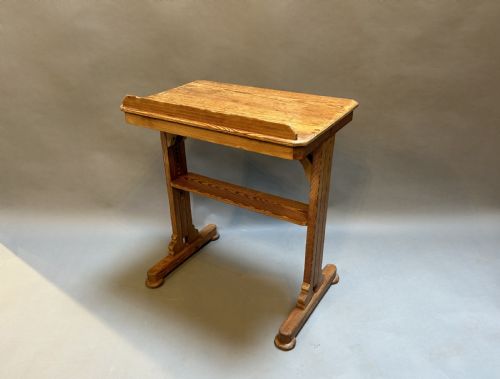

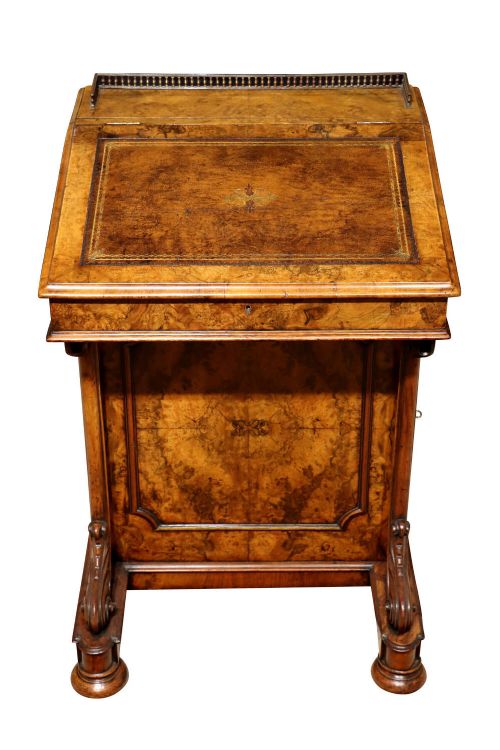


Slant Top Writing Table
When you search for a slant top writing table, you encounter compact desks, bureaux, and davenports designed for correspondence and estate management across several centuries.
Slant Top Writing Table
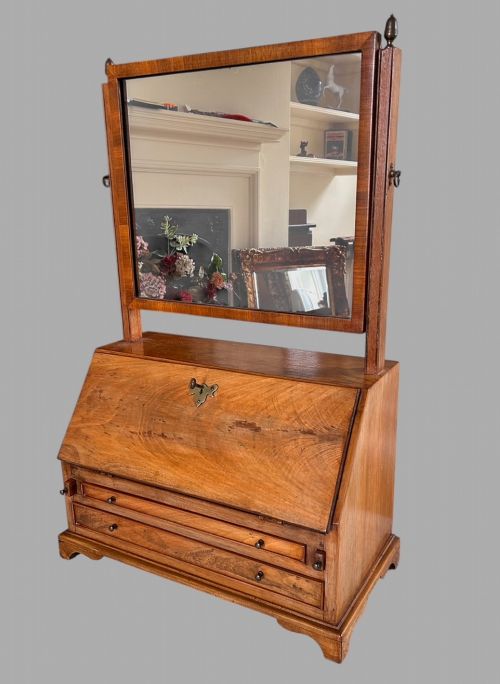
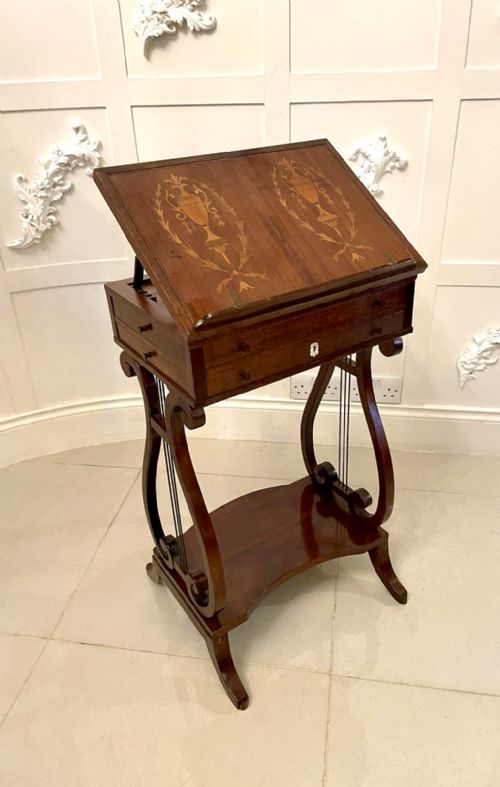
A slant top writing table encompasses a wide variety of writing furniture, from compact table-top bureaux and davenports to large architectural and pedestal desks. Buyers searching this phrase frequently encounter pieces from the Georgian and Victorian eras, alongside earlier oak examples from the seventeenth century and revival pieces from later periods.
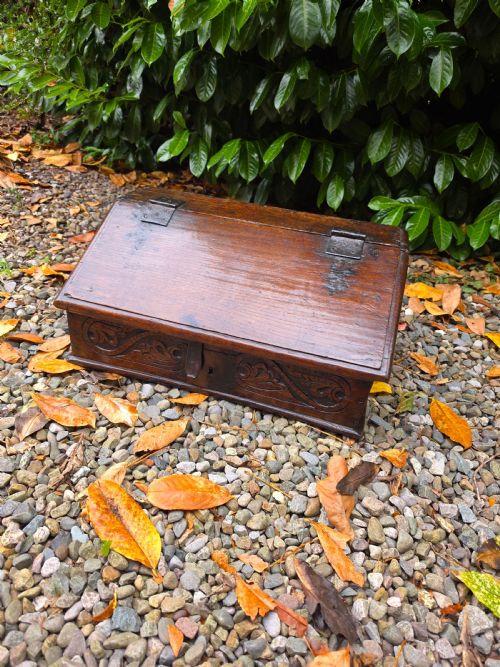
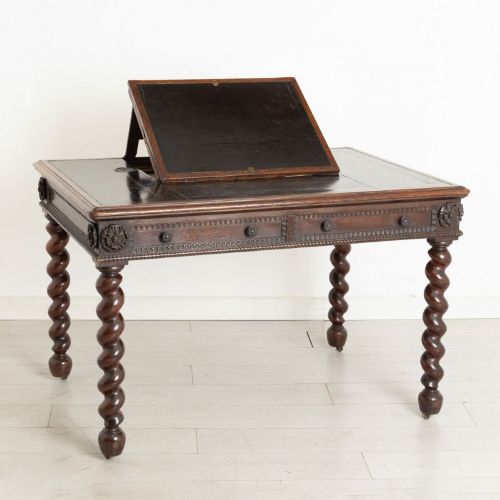
The selection ranges from small elm and oak table-top boxes to substantial mahogany and burr walnut library desks equipped with drawers and leather writing surfaces. French bureau de dame examples in rosewood and satinwood also appear alongside English estate rent tables and reading desks.
Materials and construction
Cabinet makers utilised dense hardwoods including mahogany, oak, walnut, and rosewood, often pairing primary timbers with secondary woods and decorative veneers like burr walnut and satinwood. Many surfaces incorporate fitted leather writing panels and brass hardware, such as galleries and drawer pulls.
Construction methods vary from vernacular pegged oak joints in seventeenth-century pieces to fine dovetailing in nineteenth-century mahogany and rosewood davenports. Marquetry, stringing, and brass inlay frequently decorate the exterior surfaces of refined nineteenth-century pieces.
Some nineteenth-century davenports feature secret spring-loaded compartments hidden behind the main drawer banks for confidential papers.
Quality and craftsmanship
The distinction between standard utility writing furniture and finer pieces lies in the selection of timber and the precision of cabinet work. Superior examples exhibit well-figured veneers, balanced proportions, and intricate internal fittings such as hidden compartments and satinwood pigeonholes.
Maker attribution and the integrity of the original surfaces heavily influence the standing of a desk. Pieces bearing documented signatures or brass maker plaques from established cabinet makers demonstrate higher levels of execution in carving and joinery.
Edwards and Roberts
The Slant Top Writing Table Glossary
- Buren
- A sloping desk with a hinged lid enclosing small drawers and pigeonholes. It often sits upon a frame or pedestal base.
- Davenport
- A compact form of writing desk featuring a sloping top above a bank of side drawers, popular throughout the nineteenth century.
- Gallery
- A decorative raised rail, typically made of brass or wood, fitted around the top edge of a desk or table.
- Pigeonhole
- A small compartment within a desk interior used for sorting letters and documents.
- Veneer
- A thin layer of figured wood applied over a secondary timber base to create decorative exterior surfaces.
Slant Top Writing Table: Frequently Asked Questions
What is a davenport desk?
A davenport is a compact writing desk with a sloped, hinged writing surface that typically lifts to reveal storage space. Below the writing slope, drawers open from the side.
Originating in the nineteenth century, these pieces were designed to occupy minimal floor space while offering functional storage for stationery and correspondence.
How do I date a slant top desk?
Dating relies on timber selection, construction techniques, and decorative styles. Seventeenth-century examples utilise solid oak with pegged joints, while Georgian pieces favour mahogany with hand-cut dovetails.
Victorian items often introduce exotic veneers like burr walnut and rosewood alongside machine-sawn components. Comparing hardware and interior drawer construction helps refine the period.
Where were table top bureaux used?
Table top bureaux served as portable or secondary writing spaces designed to sit upon existing tables, chests, or stands. They provided lockable storage for letters and documents without requiring a dedicated floor-standing desk.
These pieces appear in oak, elm, and mahogany across the seventeenth, eighteenth, and nineteenth centuries.
What is an estate rent table?
An estate rent table is a large circular or polygonal desk utilised by landowners and stewards for managing estate accounts and collecting rents. The top often rotates or contains multiple wedge-shaped drawers labelled for different categories.
These large pieces date primarily to the Georgian period and incorporate high-quality mahogany construction.