



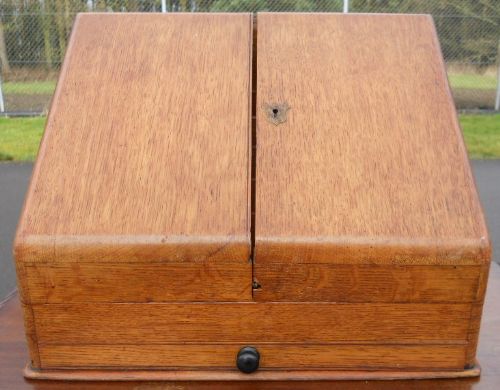


Slant Top Writing Box
These slant top writing box pieces combine practical storage with historical craftsmanship, offering a compact workspace that anchors any traditional study.
Slant Top Writing Box
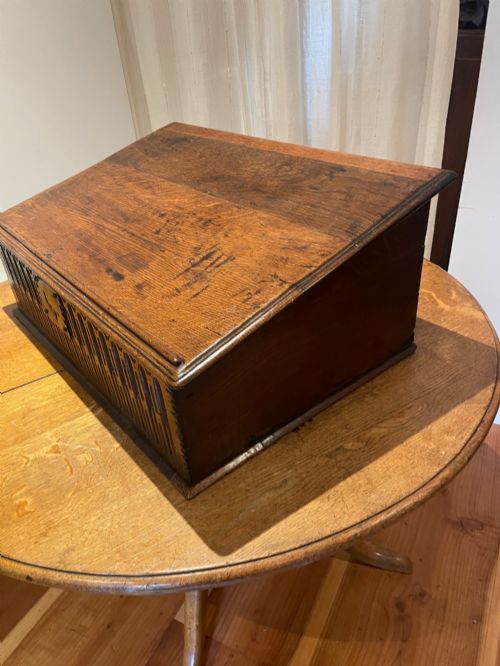
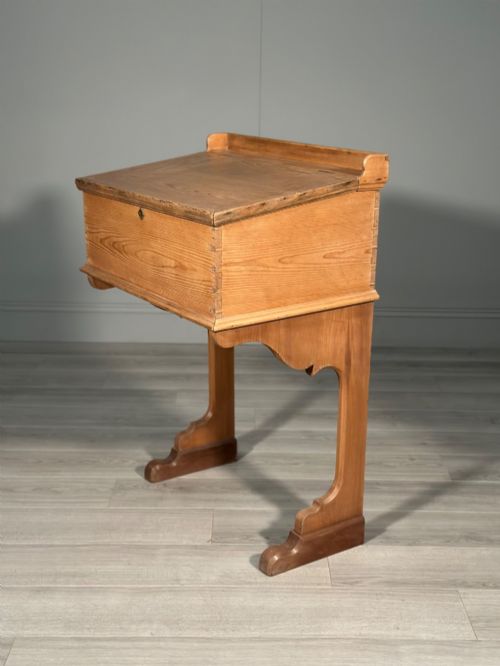
A slant top writing box provides a sloping surface for correspondence alongside fitted compartments for paper and ink. The pieces gathered here span from the seventeenth century through the Victorian era, showing how portable writing desks evolved over generations.
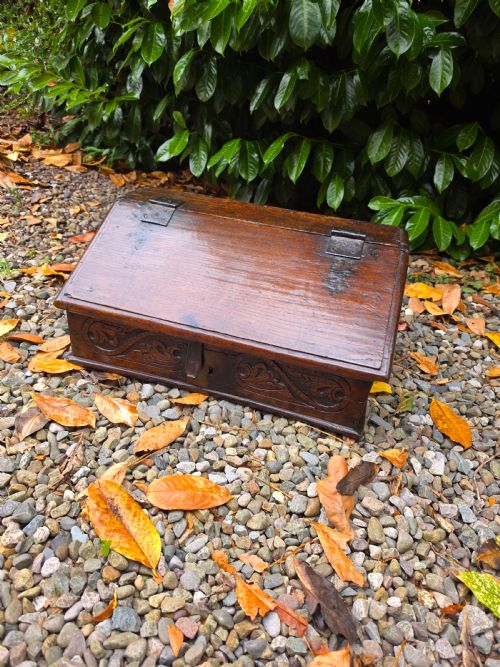
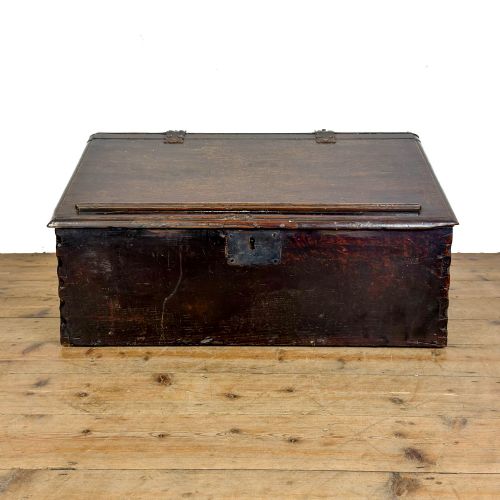
Buyers encounter formats ranging from simple hinged Bible boxes to elaborate stationery cabinets with brass and iron hardware. Some seventeenth-century oak pieces appear mounted on later stands, while others remain strictly tabletop containers.
How They Were Made
Cabinetmakers utilised sturdy hardwoods like oak and elm, shaping panels to withstand daily handling and the weight of writing materials. Joinery relied on traditional methods appropriate to each period, from early peg-joined frames to later Victorian box construction.
Iron and brass featured prominently as functional hardware, securing lids, hinges, and internal compartments. Selected pieces incorporated leather writing surfaces, paper linings, or exterior paintwork to finish the exterior and interior.
Slant Top Writing Box Retail Price Guide 2026
Typical asking prices for slant top writing box among the pieces listed under this phrase on Sellingantiques today, from the lower quarter to the upper quarter. They describe what is for sale here now, not the wider market.
What Varies in Quality
Quality rests in the integrity of the timber selection and the retention of original hardware such as hinges and locks. Pieces that maintain their early fitted interiors and uncompromised structural timber command greater attention from traditionalists.
The refinement of the joinery and the presence of period-correct secondary woods distinguish exceptional examples from simpler utilitarian items. Alterations like later stands or replaced elements shift a piece away from its original state.
The Slant Top Writing Box Glossary
- Bible Box
- A hinged wooden box originally designed to store sacred texts, often serving as a precursor to portable writing desks.
- Table Top Bureau
- A small desk designed to rest on a table or stand, featuring a sloping lid that opens to reveal pigeonholes and small drawers.
- Stationery Cabinet
- An upright wooden case fitted with internal partitions and shelves for organising paper, envelopes, and writing implements.
- Folk Art
- Decorative or utilitarian objects made within a specific cultural tradition, often featuring hand-painted finishes unique to regions like Scandinavia.
Slant Top Writing Box: Frequently Asked Questions
What is a slant top writing box?
A slant top writing box is a portable or tabletop container featuring an angled lid designed to provide a comfortable writing surface. Inside, these pieces typically house compartments for inkwells, quills, and paper.
Historically used for private correspondence, these boxes allowed writers to work away from large permanent desks. The sloping lid kept papers from sliding and positioned the writing surface at an ergonomic angle.
How were these boxes used historically?
These boxes served as personal writing desks for merchants, scholars, and households before dedicated stationery rooms became common. Owners stored letters, legal documents, and writing supplies securely inside the locked compartments.
Because many examples are portable, users moved them between rooms or packed them for travel. The flat or sloping top also doubled as a solid surface for reading heavy volumes like family Bibles.
How do I identify seventeenth-century oak pieces?
Seventeenth-century oak boxes display heavy timber construction with visible grain, pegged joinery, and minimal hardware. The wood often exhibits a dark, rich patina accumulated over centuries of handling.
Makers of this era favoured sturdy native woods like oak and elm rather than exotic veneers. Carved details or simple geometric mouldings frequently decorate the front panels and lids.
Where should I place one in my home?
These boxes sit well on sturdy side tables, chests of drawers, or dedicated desk surfaces where their historical character stands out. Placing them in studies, living rooms, or hallways provides a focal point for traditional interiors.
Keep them away from direct sunlight and strong heat sources to protect antique wood and leather components from drying out. Many owners use the internal compartments today to store modern stationery or keepsakes.