
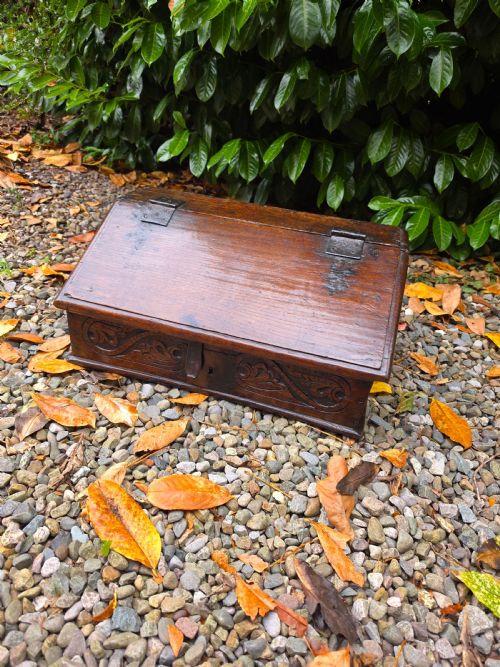


Slant Front Desk Box
A slant front desk box is a compact writing cabinet designed for portable correspondence, offering fitted storage beneath an inclined lid.
Slant Front Desk Box
When you search for a slant front desk box, you encounter compact writing receptacles and table top bureaux from the seventeenth to the nineteenth century. These items include oak bible boxes, elm table top bureaux, and mahogany stationery cabinets designed for domestic correspondence. Most pieces sit upon tables or stands, featuring hinged sloping lids that open to reveal internal compartments for writing materials.
The material palette spans native timbers like oak, elm, and mahogany, alongside occasional walnut and satinwood variations. Regional vernacular examples from Wales and Scandinavia sit alongside formal Georgian and Victorian pieces. Buyers frequently encounter nineteenth-century stationery boxes and late Victorian oak cabinets alongside earlier seventeenth-century desk forms.
Table top bureaux and miniature bureaux represent common variants within this grouping, often incorporating internal drawers beneath the sloping front. Some pieces retain original stands, whilst others function purely as tabletop units. Stationery cabinets and writing slopes broaden the selection, providing specialised compartments for paper, ink, and pens.
Construction and materials
Makers utilised solid timbers including oak, mahogany, elm, and walnut, frequently constructing carcases with dovetailed joints for stability. Iron and brass hardware, such as hinges, escutcheons, and carrying handles, secured the movable components and facilitated transport. Selected pieces incorporate bone inlay or marquetry decoration to enhance the primary wood surfaces.
Surface finishes range from polished mahogany and satinwood to painted Scandinavian folk art treatments and waxed seventeenth-century oak. Internal fittings comprised small pigeonholes, concealed drawers, and partitions constructed from thin secondary woods. Joinery techniques reflect the period of origin, transitioning from early pegged oak construction to refined nineteenth-century cabinetmaking.
Objects range from seventeenth-century bible boxes to Victorian stationery cabinets and painted Scandinavian desks.
Factors determining quality
Quality reveals itself in the selection of timber, the crispness of internal joinery, and the integrity of the original hardware. Superior pieces display thoughtful grain matching and well-executed dovetailing on internal drawers rather than hasty assembly. The survival of fitted interiors, original brasses, and operational locking mechanisms elevates an example significantly.
Proportion and decorative restraint distinguish finer vernacular and formal pieces from routine boxes. Finer surfaces exhibit a warm, undisturbed patina developed through age and regular use, whilst poor alterations or replaced stands diminish historical coherence.
The Slant Front Desk Box Glossary
- Table top bureau
- A small desk designed to rest upon a table, featuring a sloping fall-front that opens for writing. These units often contain internal tiers of small drawers.
- Stationery box
- A desk accessory or cabinet configured specifically to hold writing paper, envelopes, and occasionally inkwells. They frequently date from the Victorian period.
- Bible box
- An early hinged-lid wooden box, often seventeenth-century in origin, utilised initially for holding sacred texts before serving general writing purposes.
- Writing slope
- A portable box with an angled lid that folds down to form a slanted writing surface. Internal compartments store pens and stationery.
Slant Front Desk Box: Frequently Asked Questions
What is a slant front desk box?
A slant front desk box is a portable or tabletop writing cabinet featuring an angled lid that opens for correspondence. These pieces provide internal storage for paper, pens, and documents.
They bridge the gap between portable writing boxes and full-sized standing desks. Domestic interiors utilised them extensively before the widespread adoption of fitted study furniture.
How were these boxes used?
Owners placed them on tables or sideboards to write letters, manage accounts, and store important documents securely. The sloping lid provided an ergonomic surface for handwriting.
Fitted internal compartments kept inkwells, sealing wax, and quills organised. Many examples include small secret drawers for valuables.
How do I date an oak desk box?
Dating relies on construction methods, timber choice, and surface wear. Seventeenth-century examples often feature pegged oak joints and simple board construction.
Later pieces incorporate machine-sawn elements, finer dovetails, and different secondary woods. Hardware styles also shift from iron hinges to refined brass mountings over time.
Where should I place one at home?
These compact boxes sit well on sturdy side tables, chests of drawers, or dedicated desk surfaces. Their small footprint allows them to function in living rooms or studies.
Direct sunlight and extreme temperature fluctuations should be avoided to protect the aged wood and historical finishes.