
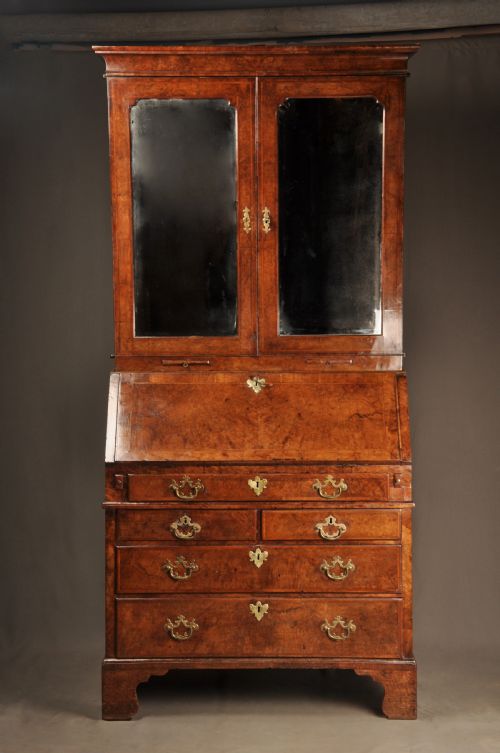
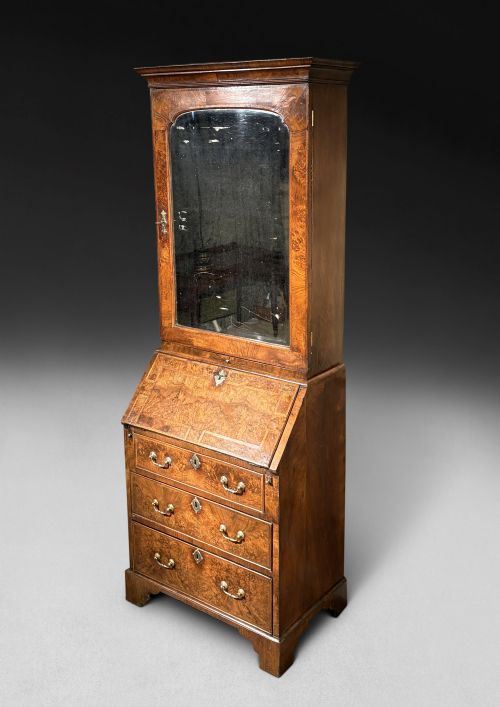
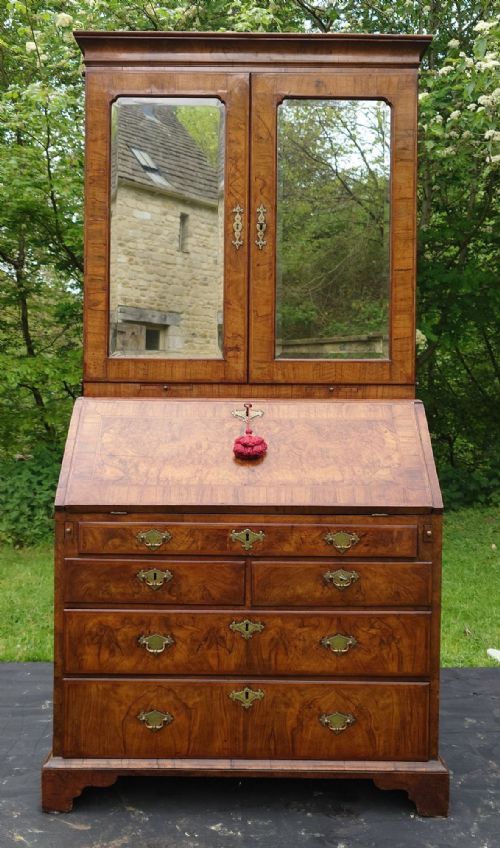


Slant Front Bureau Mirror
A slant front bureau mirror combines a sloping writing flap with mirrored doors or a dressing glass, bringing practical workspace and reflective depth together.
Slant Front Bureau Mirror
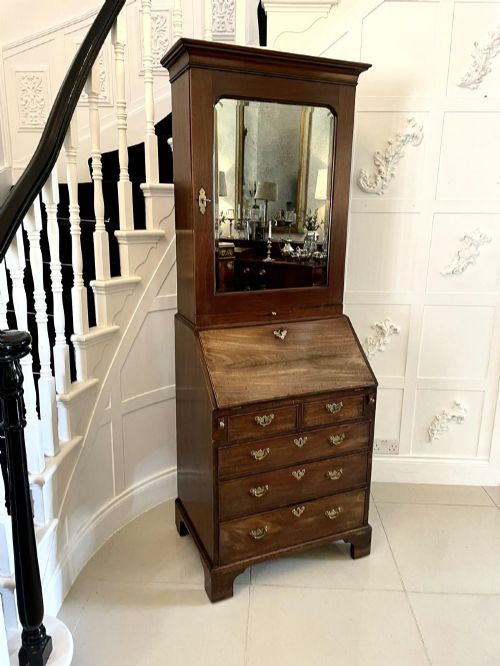
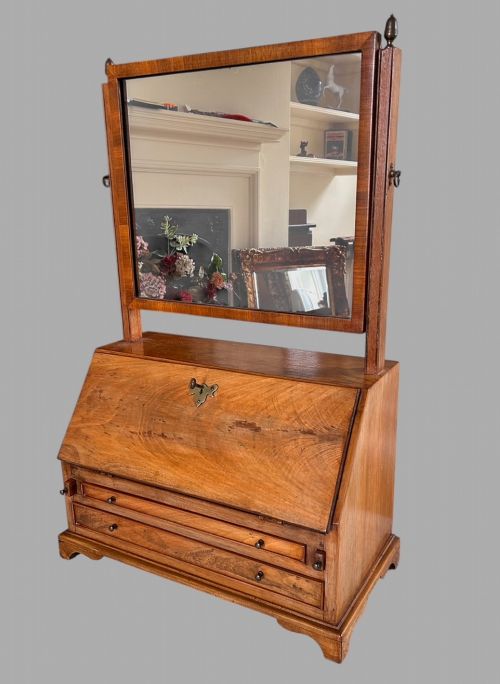
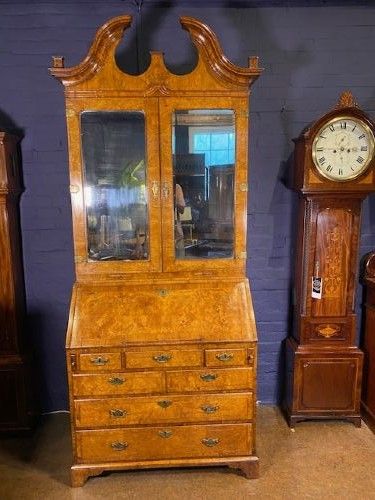
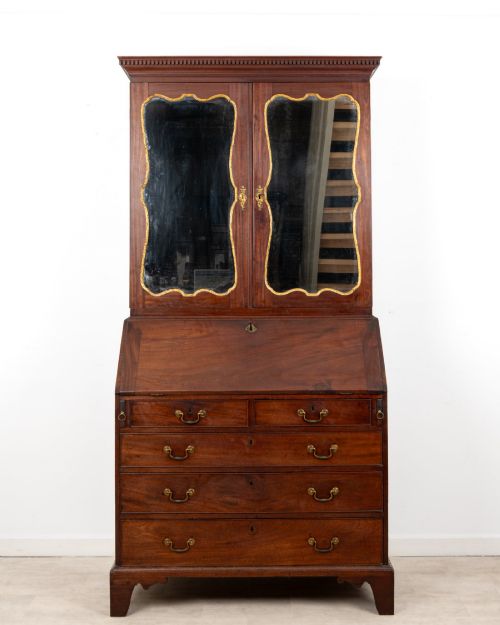
A slant front bureau mirror typically refers to bureau bookcases featuring mirrored panels on their upper doors alongside larger toilet mirrors and table-top bureau designs. These forms combine a slanted writing flap that opens to reveal compartments with the reflective addition of mirror glass.
The pieces appearing here span centuries from the seventeenth period through to Victorian and Edwardian examples, taking shapes such as bureau bookcases, toilet mirrors, and tabletop bureaux. Buyers meet walnut, mahogany, and burr walnut constructions influenced by Queen Anne, William and Mary, and Georgian styles.
How they were made
Cabinet makers utilised dense timbers including walnut, burr walnut, mahogany, and oak, often mounting figured veneers over solid wood carcases. Brass hardware secured the interior compartments and supported the fall-front writing surfaces.
Mirrored doors and dressing plates incorporated specialist mirror glass, sometimes set within architectural upper cabinets or framed in lacquered and marquetry woods. Lacquering techniques in black and red finishes also appeared alongside traditional polishing methods.
Listings span centuries of cabinet making, recording periods from the seventeenth century through Georgian and Victorian eras, utilising walnut, mahogany, and oak.
What varies in quality
The choice of timber grain defines much of the distinction, with heavily figured burr walnut and Cuban mahogany sitting at the higher end of craftsmanship. Selection of matching veneer patterns across the fall-front and drawer fronts indicates greater workshop skill.
The treatment of the mirror glass and the integration of original mirrored doors dictate overall integrity. Finely executed interior compartments, known as nests, with secret drawers and well-fitted pigeonholes show the maker's dedication.
The Slant Front Bureau Mirror Glossary
- Bureau bookcase
- A writing cabinet featuring a sloping fall-front desk base beneath an upper shelving section enclosed by doors. These tall items often incorporate mirrored door panels.
- Toilet mirror
- A smaller dressing glass mounted on a pivoting frame above a miniature chest or bureau base. They sit upon tabletops and dressing tables.
- Burr walnut
- A prized wood harvested from walnut tree growths that produces intricate, swirling grain patterns. Cabinet makers utilised these veneers on primary surfaces.
- Fall-front
- A hinged writing flap that pulls down at an angle to create a flat desk surface. It conceals internal pigeonholes and small drawers when closed.
- Marquetry
- The decorative craft of applying small pieces of veneer to form geometric or pictorial designs. Makers applied this technique to surface panels.
Slant Front Bureau Mirror: Frequently Asked Questions
Where were these pieces used?
These items served primarily in private bedchambers, parlours, and studies for correspondence and personal grooming.
Larger bureau bookcases stood against drawing room walls, while smaller toilet mirrors rested on dressing tables.
How do I identify a Queen Anne piece?
Queen Anne examples frequently display rich walnut timbers, restrained cabriole lines, and compact proportions.
Cabinet makers of this era focused on figured veneers rather than heavy carving.
Are the mirrored doors original?
Original mirror glass often exhibits subtle bevels, slight foxing, and minor imperfections due to early manufacturing methods.
Examination of the rebate behind the door helps determine if the glass has been replaced.
What is a bureau de dame?
A bureau de dame is a feminine writing desk typically produced during the Victorian era in woods such as rosewood or burr walnut.
These compact writing pieces often included inlaid decoration and internal compartments tailored for letters.