




Skeleton Movement Clock
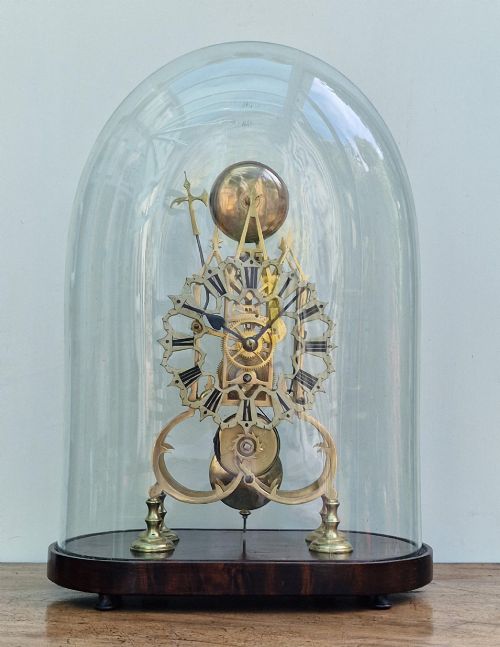
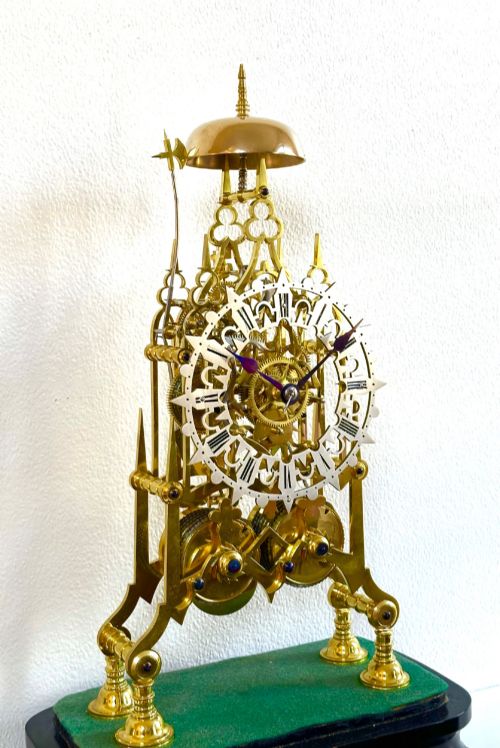
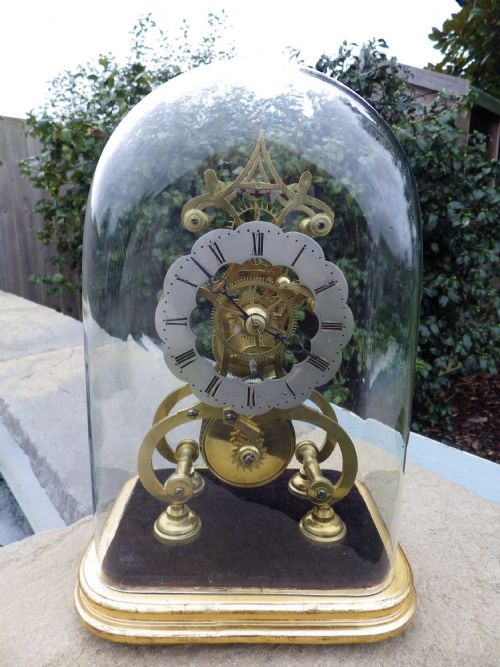
A skeleton movement clock exposes its intricate brass and steel gear trains to view, offering a fascinating mechanical spectacle for any mantel or desk.
Skeleton Movement Clock
When you search for a skeleton movement clock, you are looking at timepieces designed with open brass frames that reveal the internal wheel work and escapements. The pieces seen here span the Victorian era, the nineteenth century, and the mid-twentieth century.
Mantel clocks, desk clocks, and table clocks dominate the selection, often protected beneath glass domes or housed within four glass cases. You will encounter English fusee models alongside French nineteenth century examples and later Swiss or electric designs.
Victorian English fusee skeleton clocks and French miniature timepiece versions represent the primary forms available on this page. These objects combine precision horology with architectural brass frameworks.
What varies in quality
The refinement of the wheel work and the complexity of the escapement dictate the standing of an individual piece. Six-spoke wheel work and signed movements by known makers demonstrate superior horological ambition.
The presence of original glass domes and matching bases preserves the integrity of the object. Hand-finished brass skeleton frames and delicate French miniature movements distinguish finer examples from standard production.
The listings here feature materials including brass, glass, steel, enamel, wood, marble, mahogany, and silvered metal across periods spanning the Victorian era to the mid-twentieth century.
William Evans of Handsworth·Jaeger LeCoultre·Allen Colyer
The Skeleton Movement Clock Glossary
- Fusee
- A conical pulley used on the mainspring of a clock to ensure even power delivery as the spring unwinds. This mechanism maintains consistent force on the gear train for greater accuracy.
- Escapement
- The mechanism in a clock that controls the rotation of the wheels by releasing the gear train at regular intervals. It gives the clock its characteristic ticking sound.
- Four glass clock
- A clock housed in a rectangular case with glass panels on all four sides, allowing the movement to be observed from multiple angles.
- Torsion clock
- A clock regulated by a pendulum that twists and untwists on a suspension spring rather than swinging back and forth. These pieces often run for extended periods without rewinding.
- Timepiece
- A clock that indicates the time but does not include a striking mechanism or chime. Many miniature skeleton clocks are built as simple timepieces.
Skeleton Movement Clock: Frequently Asked Questions
How do skeleton clocks work?
A skeleton clock operates through a series of exposed brass gears and wheels that transfer power from a mainspring or weight to the escapement. The open frame allows observers to watch the entire mechanical train in motion.
Regulating components like the balance wheel or pendulum control the speed at which the gear train turns, ensuring accurate timekeeping while remaining fully visible.
What is a fusee movement?
A fusee movement uses a conical pulley connected to the mainspring by a fine chain or cord. As the mainspring loses tension, the chain moves to a wider part of the cone to maintain steady torque.
This clever design compensates for the decreasing power of an unwinding spring, resulting in more consistent timekeeping across the running period.
Why do some clocks have glass domes?
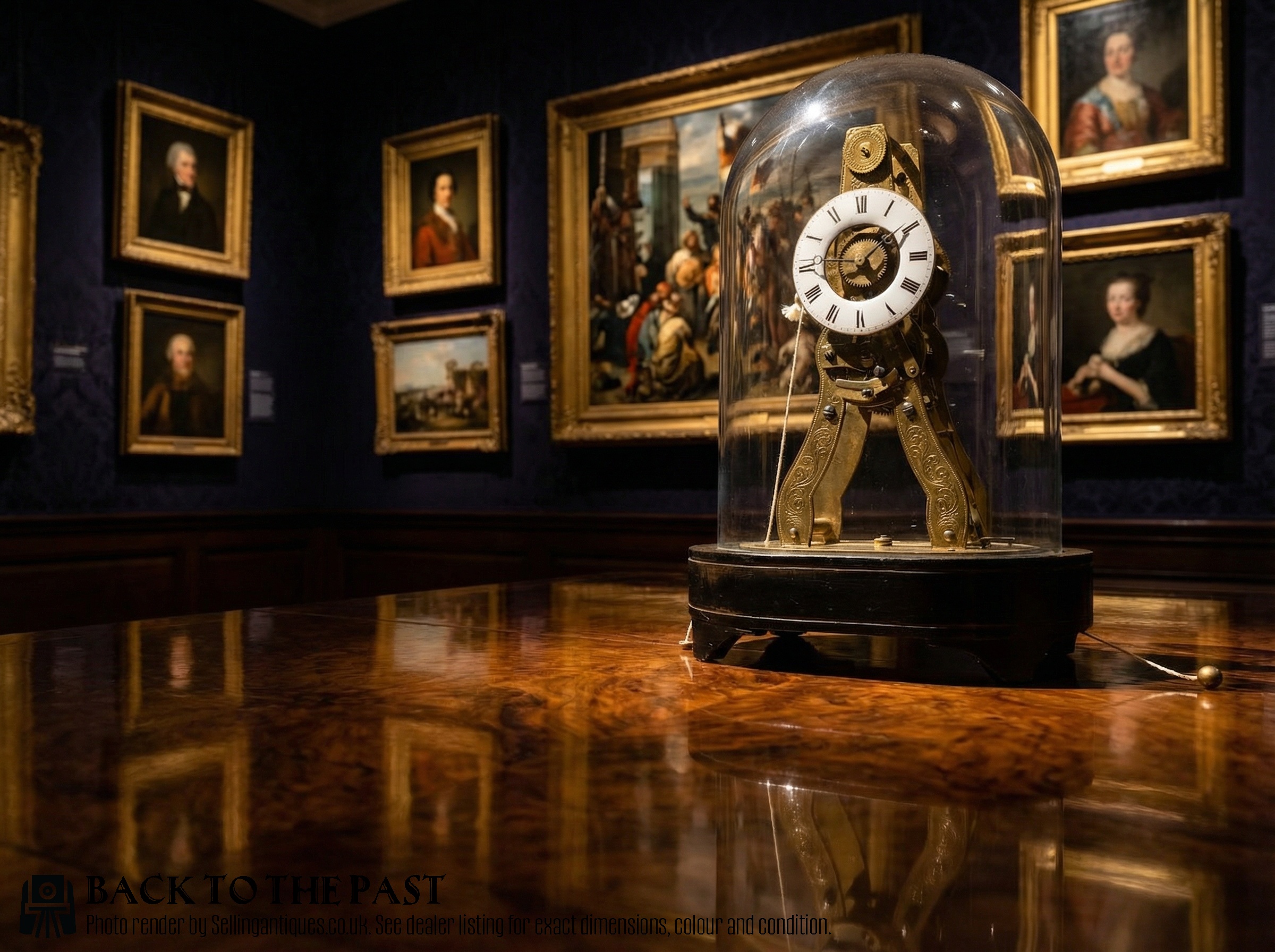
Glass domes were manufactured to protect delicate exposed brass movements from dust and atmospheric grime. They also allowed the intricate skeleton framework to remain on display while safeguarding the delicate escapement.
Many Victorian and nineteenth-century English skeleton clocks retain their original blown or cast glass covers and fitted wooden or marble bases.
How do I wind a skeleton clock?
Winding a skeleton clock involves using a specific key to turn the arbour that tensions the mainspring or winds the fusee chain. Care must be taken not to overwind the mechanism.
Consulting the specific movement type helps determine the correct winding frequency, as some torsion or fusee models run for eight days while others require attention after a longer duration.